

You count on the 16 ampere circuit breaker to keep your home safe from electrical problems. This device stops too much electricity from flowing. Too much current can make wires get very hot or even cause a fire. Most homes use this breaker for normal sockets and common appliances. If you pick the right circuit breaker and take care of it, you help keep your family and your home safe from big dangers.
Key Takeaways
- A 16 ampere circuit breaker keeps your home safe. It stops too much electricity from flowing. This helps prevent fires or damage. – Picking the right breaker size is important. It should match your wiring. This keeps your electrical system safe and working well. – This breaker acts quickly if there is too much power. It also works fast during short circuits. This stops harm to wires and appliances. – Checking and taking care of your breaker is important. This helps it work better and last longer. It also keeps your home safe. – Only trained electricians should put in or check breakers. This makes sure everything is safe and works right.
16 Ampere Circuit Breaker Basics
KC6-KU-3-pole-circuit-breaker.webp)
What Is a 16 Ampere Circuit Breaker
You will see the 16 ampere circuit breaker in many homes. It protects circuits that use up to 16 amps of current. People use it for normal sockets, water heaters, and some kitchen tools. Picking the right size is important. If the breaker is too small, it will trip a lot. If it is too big, it might not stop wires from getting too hot.
Tip: Always use a breaker that matches the wire size. This helps stop fires and keeps your system safe.
Here is a table that shows how the 16 ampere circuit breaker compares to other types:
| Specification Aspect | 16 Ampere Circuit Breaker Details | Comparison with Common Alternatives |
|---|---|---|
| Purpose | Protects circuits with about 16 amps; pick a breaker just above the load (like 20A) | 15A breakers are for lights and outlets; 20A for kitchens and bathrooms; 30A+ for big appliances |
| Common Residential Ratings | 15A, 20A, 30A, 40A+ | 16A is in the lower to middle range, good for medium loads |
| Safety Margin | Use a 20-25% safety margin above the load to stop overloads | Bigger breakers are for heavy appliances but need the right wire and load time |
| Safety Considerations | The breaker rating must match the wire size; do not use a breaker that is too strong for the wire | NEC rules say breakers should not go over 80% of the load; picking the right breaker stops problems |
| Breaker Types and Applications | There are MCBs, AFCIs, ELCBs, RCCBs, and ACBs for different uses | The right panel and breaker type are important for safety and working well |
| Expert Recommendation | Pick a breaker just above the load but not more than the wire can handle; for 16A, a 20A breaker is common | The right breaker stops overloads, fire, and keeps your system working |
How It Works
A 16 ampere circuit breaker uses smart design to keep your home safe. You can learn how it works by looking at its main parts and what they do:
- The breaker has thermal and magnetic trip units to find problems.
- A bi-metallic strip gets hot and bends if too much current flows. This makes the breaker trip and stops the current.
- For short circuits, a magnetic field forms fast and trips the breaker right away.
- The breaker can let 16 amps flow all the time without tripping.
- It acts faster if there is a bigger problem, so it keeps wires and devices safe.
- When the breaker trips, its contacts open and make an arc. Arc chutes and air put out the arc and stop the flow safely.
- You can reset the breaker after you fix the problem. You do not have to buy a new one each time.
You trust the 16 ampere circuit breaker to work fast and keep your home safe from electrical dangers. This device helps you feel safe and saves you from expensive repairs.
Protection and Safety
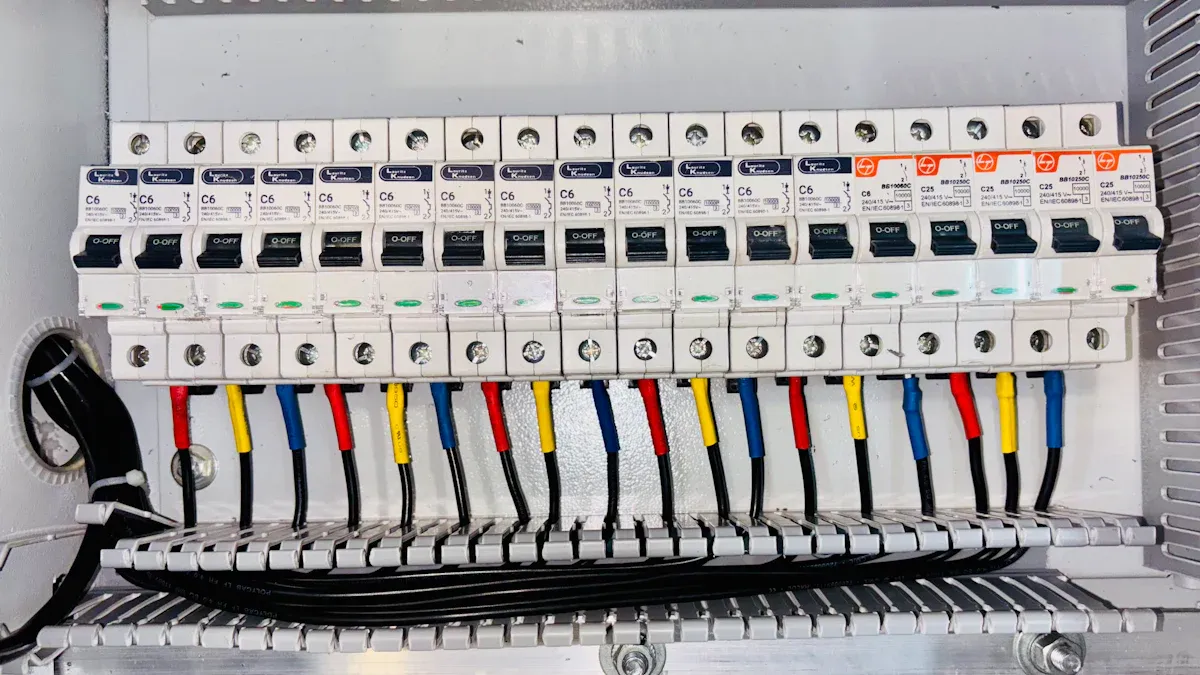
Overload and Short Circuit Prevention
A 16 ampere circuit breaker helps stop dangerous electrical problems. It keeps your home safe by stopping too much current. The breaker has a thermal-magnetic system that trips when needed. The thermal part bends a metal strip if there is a slow overload. The magnetic part acts fast if there is a short circuit. This quick action protects your home from sudden power spikes.
If there is an overload, the breaker lets a little extra current pass for a short time. For example, if the current gets close to 20 amps, it will trip after about two and a half minutes. This gives you time to turn off extra devices but keeps wires from getting too hot. In a short circuit, the breaker trips almost right away, even if the current is as high as 10,000 amps. This fast action keeps your wires and devices safe from big damage.
Note: The National Electrical Code says these breakers must protect your home from too much current. You can trust that a 16 ampere circuit breaker meets strict safety rules.
Fire Risk Reduction
Electrical fires can start if wires get too hot. Using the right circuit breaker lowers this risk. The 16 ampere circuit breaker stops electricity before wires get too hot. It keeps insulation from melting and stops sparks that could cause a fire.
Experts test these breakers to make sure they work well. They use primary injection testing to see if the breaker can handle high currents. They also use trip tests to check how fast the breaker reacts to problems. These tests follow strict rules and show the breaker works as it should. You can feel safe knowing your breaker will act fast in an emergency.
- Trip tests check how quickly the breaker reacts to overloads and short circuits.
- Insulation resistance tests make sure wires stay safe and do not leak current.
- Contact resistance tests check that connections stay cool and do not waste energy.
Appliance and Wiring Protection
Your appliances and wiring need to be safe from both small and big electrical problems. The 16 ampere circuit breaker keeps you safe and lets you use your devices easily. You can use things like water heaters, kitchen tools, and sockets without the breaker tripping for small surges. But it will trip fast if there is real danger.
Data shows that during a ground fault, the breaker stops the circuit quickly, even if the current is about 5,000 amps. This keeps your appliances from burning out and stops wires from getting hurt. The breaker also lets small overloads happen for a short time, so you do not have to worry about it tripping when you use a vacuum or hair dryer.
Tip: Regular testing and care help your breaker work well. You can ask a professional to check the breaker’s trip time and connection quality.
A 16 ampere circuit breaker gives strong protection for your home’s wiring and devices. You can trust it to keep your family and home safe from electrical dangers.
Why Choose 16 Amperes
Common Household Uses
Many homes use 16 ampere circuit breakers. They fit most home circuits well. Most circuits are rated for 15 or 20 amps. Electricians only load them to about 80%. This means they use about 16 amps for safety. This helps stop wires from getting too hot. It keeps your home safe from electrical problems. In Europe, many circuits are set at 16 amps. That is why this size is very popular there.
You use a 16 ampere circuit breaker for many things. It works for living room outlets and bedroom sockets. It also protects small appliances in your home. These breakers handle TVs, lamps, and computers. They also work for some kitchen tools. You get enough power for daily needs and stay safe.
Tip: Look at the label on your breaker panel. You can find which circuits use 16 ampere breakers. You can also see what they power in your home.
Efficiency and Reliability
You want your circuit breakers to work every time. A 16 ampere circuit breaker is both efficient and reliable. Makers use strong parts and smart designs. Some brands use thicker coil wires. They also add more arc quenching grids. These things help the breaker stay cool. They also make it trip fast when needed.
Here is a table that shows how a good 16A breaker compares to others:
| Feature | ONESTOP 16A MCB | Other Brands |
|---|---|---|
| Coil Wire Diameter | Ø1.7 mm (lower temperature rise) | Ø1.5 mm |
| Arc Quenching Grids | 11 (more reliable) | 9 |
| Stopper Reliability | High, robust design | Poor, easy to deform |
| Shell Design | Compact, 6 rivets | Less compact, 5 rivets |
| Marking Method | Laser marking (permanent) | Printing (less durable) |
| Busbar Structure | Optional, more convenient | Not available |
| Transparent Cover | Yes, easy labeling | Not available |
| Customization Options | High | Limited |
| Phase Configurations | Supports 1P+N and 3P+N | Does not support |
A well-made breaker works better and lasts longer. You can feel safe knowing your home is protected.

Maintenance and Upgrades
Signs of Circuit Breaker Issues
You should look for signs that your circuit breakers have problems. Many people see these signs before something worse happens. Here are some things to watch for:
- Your breakers trip more often than they used to. If you reset them and they trip again soon, something is wrong.
- Sometimes, a breaker will not stay on or bring back power. This can mean the circuit has too much load or the breaker is old.
- You might smell burning or see dark spots near the breaker. These can mean the breaker is too hot or there was a small fire.
- Older homes, especially with panels over 20 years old, have more of these problems. Homes with fuse boxes instead of breakers are at even higher risk.
Tip: If you see any of these signs, call a licensed electrician. Acting fast can stop bigger dangers.
Reports show most home electrical fires come from old wiring. Breakers that trip a lot or signs of burning mean you need an inspection or upgrade. Problems like flickering lights or buzzing sounds can also mean loose wires or bad breakers.
When to Upgrade or Replace
Do not wait for a total failure before you change a breaker. Regular checks and upgrades keep your home safe. Most 16 ampere circuit breakers last about 30 years. Heavy use or tough weather can make them wear out faster.
Here are some steps to help keep your system working well:
- Change a breaker right away if you see burning, cracks, or if it does not trip when needed.
- Plan to upgrade if your breaker is old, worn out, or if your home uses more power now.
- Have a professional check your breakers every year. They can use special tools to find hidden problems.
- Write down all repairs and checks. This helps you know how old each breaker is.
Regular care, like tightening wires and cleaning, can make your breakers last twice as long and stop sudden problems.
Safety experts say to replace old or broken breakers before they cause trouble. Inspectors use scores to pick which breakers need fixing first. If you follow a good plan, you lower the chance of power loss and keep your home safe.
Picking the right circuit breaker helps keep your home safe. You also need to take care of it and check it often. This can stop fires and other electrical problems. Experts say only trained people should fix or check breakers. Electricians have special tools to find problems early. This keeps your system working well and safe. Doing these things lowers danger and makes your home safer for your family.
FAQ
What happens if you use a circuit breaker with the wrong ampere rating?
If you use a breaker that is too high, it may not trip during overloads. This can cause wires to overheat. If you use one that is too low, it will trip often and interrupt power.
How often should you test or check your 16 ampere circuit breaker?
You should check your breaker at least once a year. Look for signs of wear, burning, or loose wires. Ask a licensed electrician to do a full inspection for best results.
Can you replace a 16 ampere circuit breaker by yourself?
You should not replace a breaker by yourself. Only a trained electrician should do this job. Working with electrical panels can be dangerous and needs special tools and knowledge.
What appliances can you safely use on a 16 ampere circuit?
You can use TVs, computers, lamps, and small kitchen tools. Water heaters and some power tools also fit. Always check the total load to make sure it does not go over 16 amps.
Why does your 16 ampere breaker keep tripping?
Your breaker trips if you plug in too many devices or if there is a short circuit. Sometimes, old wiring or a faulty appliance can also cause this problem. You should find the cause and fix it quickly.
The following information may be of interest to you
20 Ampere Circuit Breaker Price Guide
Molded case circuit breaker 125 ampere 4P
32 ampere 3-pole miniature circuit breaker prices you can trust
The cost to replace a 100 ampere circuit breaker panel