
Molded Case Circuit Breaker Supplier
Molded Case Circuit Breakers for Coordinated Power Distribution
Select an MCCB from the actual system, not the ampere label alone. SENTOP supports model matching for frame size, rated current, poles, breaking capacity, trip unit, accessories, installation method, target-market documents and bulk supply.
What an MCCB Does
Protect feeders and equipment within a defined power system
A molded case circuit breaker is a low-voltage circuit breaker used for overload and short-circuit protection, switching and isolation where the exact model is suitable. Compared with a typical miniature circuit breaker, an MCCB commonly offers larger frame sizes, higher current and interruption options, adjustable protection on selected models and a broader accessory system.
It is still one part of a coordinated installation. Cable capacity, available fault current, upstream and downstream devices, earthing, residual-current protection, enclosure conditions and local rules remain part of the design.
Overload protection
The long-time or thermal function responds when current remains above the permitted value. Settings and operating time depend on the exact trip unit and reference conditions.
Short-circuit protection
The magnetic or electronic function opens the circuit under high fault current. Interrupting capacity must be adequate at the actual operating voltage.
System coordination
Instantaneous, short-time and long-time settings can affect selectivity and backup protection. Use verified manufacturer tables or project studies.
Control and indication
Compatible auxiliaries may provide remote trip, undervoltage release, status contacts, alarm contacts, motor operation and external handles.
MCCB Selection Process
Choose the breaker from the one-line diagram
An accurate MCCB request connects the load, conductor, fault level, protection settings, installation method and target market to one model.
System voltage and current type
Confirm AC or DC, rated voltage, frequency, phase arrangement, earthing system and voltage per pole. DC interruption, polarity and poles in series are model-specific.
Frame size and rated current
Separate the maximum frame rating from the actual rated current or trip setting. Confirm load current, conductor capacity, ambient temperature, enclosure temperature and duty.
Breaking capacity
Match Icu and Ics at the project voltage to the prospective short-circuit current and continuity requirement. Do not compare kA values without the voltage and standard.
Trip unit and settings
Choose fixed or adjustable thermal-magnetic protection, or an electronic unit with the required long-time, short-time, instantaneous and ground-fault functions.
Poles and neutral treatment
Confirm 2P, 3P or 4P, which conductors are protected and switched, neutral rating, neutral protection and the required isolation arrangement.
Installation and terminals
Define fixed, plug-in or withdrawable construction where available, front or rear connection, busbar or cable lugs, conductor size, enclosure space and operating handle.
Coordination, accessories and documents
Review selectivity, backup protection, auxiliaries, interlocking, standard, approval scope, destination market, drawings, test documents and replacement compatibility.
MCCB Product Directions
Start with the protection duty
These groups organize an enquiry. The exact model must still be confirmed against ratings, trip data, dimensions, terminals, accessories and approval scope.
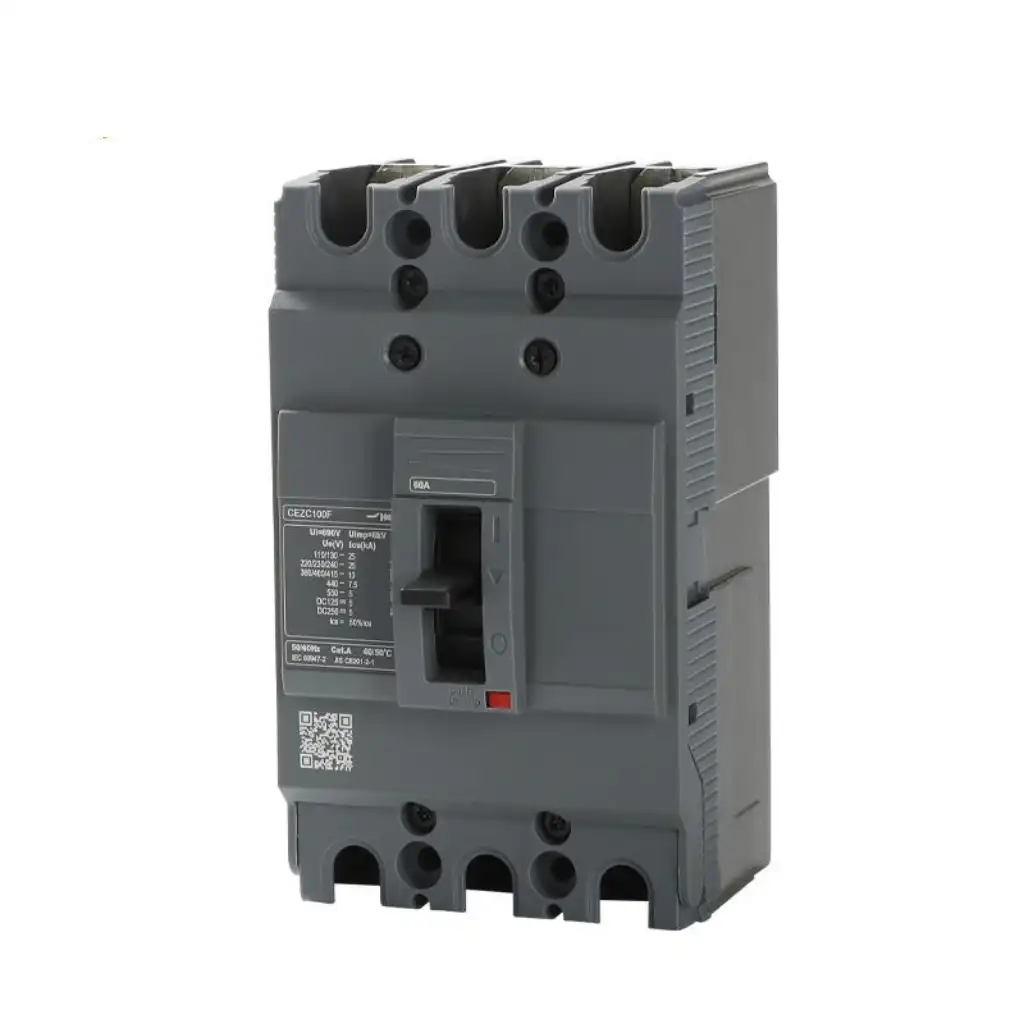
Fixed Protection MCCB
A practical direction for repeatable feeder and equipment protection where fixed trip characteristics meet the circuit study.
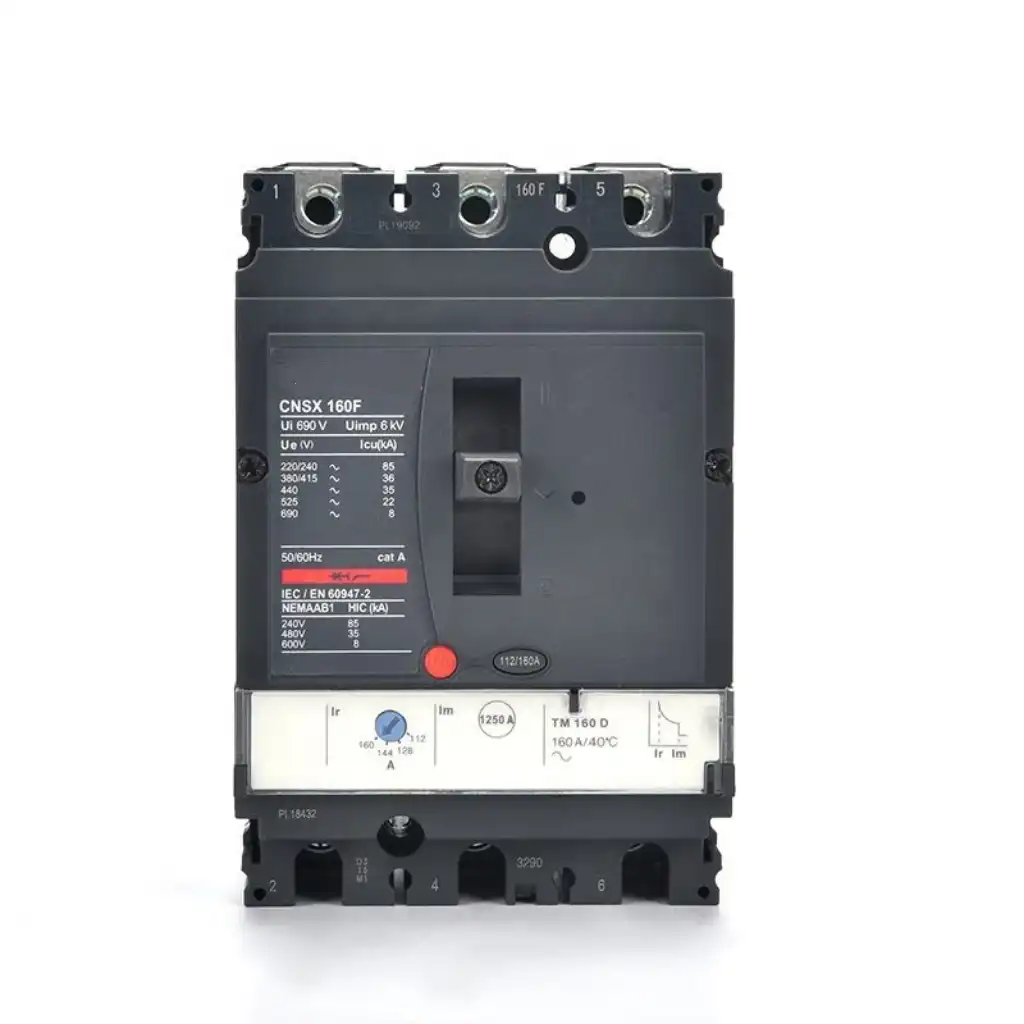
Thermal-Magnetic MCCB
A direction for projects that need model-specific overload or magnetic adjustment while retaining a straightforward protection platform.
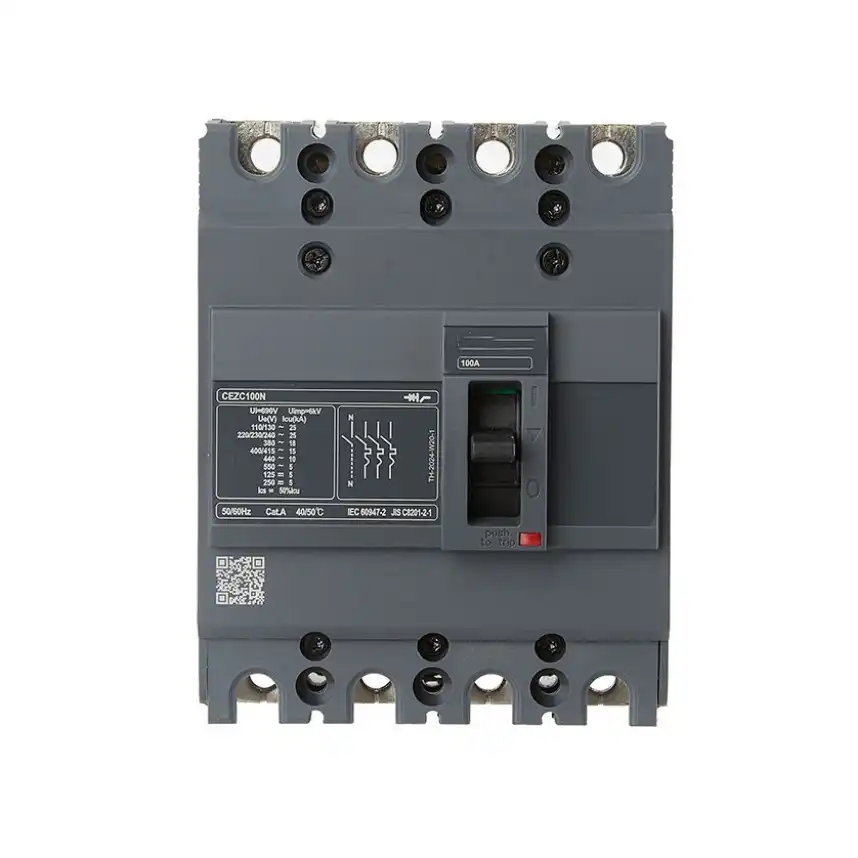
4-Pole MCCB
A direction for three-phase systems where the project requires coordinated neutral switching or protection according to the system design.

Feeder & Main MCCB
A direction for larger feeder or main incomer duties that require closer review of fault level, settings, coordination and installation space.
Replacement reminder: similar dimensions do not prove interchangeability. Send the full old model, front and side photos, terminals, accessories, mounting arrangement and panel dimensions before selecting a replacement.
MCCB Trip Unit Selection
Match protection functions to the coordination study
The trip unit determines how the breaker responds to overload and short-circuit conditions. Available functions, setting ranges, tolerances and communication options vary by product family.
Basic feeder protection
Uses thermal response for overload and magnetic response for short circuit. Depending on the model, settings may be fixed or adjustable.
Adjustable coordination
Electronic trip units can provide long-time, short-time and instantaneous functions with broader adjustment for feeder coordination.
LSIG and connected functions
Selected electronic platforms may add ground-fault protection, measurement, alarms or communication for monitored distribution systems.
Do not change a trip setting only to prevent nuisance operation. Confirm load behavior, conductor protection, fault-disconnection requirements and upstream/downstream coordination before adjustment.
MCCB Ratings and IEC 60947-2
Read the nameplate as a complete rating set
IEC 60947-2 covers low-voltage circuit breakers within its stated scope. Market approval, standard edition and every rating still need verification against the exact product documentation.
In and frame rating
The operational current or trip rating is not automatically the same as the maximum current assigned to the physical frame.
Icu
Rated ultimate short-circuit breaking capacity at a stated operational voltage and specified test conditions.
Ics
Rated service short-circuit breaking capacity, commonly expressed as a percentage of Icu for the exact breaker.
Icw
Rated short-time withstand current where assigned, relevant to breakers and coordination arrangements designed for short-time delay.
Ue, Ui, Uimp
Operational, insulation and impulse withstand voltage values describe different aspects and are not interchangeable.
North American project reminder
IEC and UL rating systems, interruption values, application rules and approvals are not interchangeable by appearance. Confirm the exact UL listing, voltage, interrupting rating and installation role required for the destination.
| Selection item | What to verify | Why it matters |
|---|---|---|
| IEC 60947-2 | Certificate, exact model scope, edition, voltage and declared ratings | A family name or molded case alone does not establish conformity |
| Operational voltage | AC or DC, Ue, frequency, voltage per pole and wiring arrangement | Breaking capacity and pole use change with system voltage |
| Rated current | Frame rating, sensor or trip rating, setting, load, conductor and ambient conditions | The same frame can be supplied with different protection ratings |
| Breaking capacity | Icu and Ics at the exact project voltage | The breaker must interrupt the prospective fault safely and meet continuity needs |
| Utilization category | Category A or B where applicable, short-time delay and Icw | It affects coordination strategy and short-time withstand requirements |
| Isolation | Suitability-for-isolation marking, operating mechanism and installation requirements | Not every switching device can be assumed to provide isolation |
| Approvals | Certificate owner, model, accessories, markings and destination market | Approval is confirmed per exact configuration, not by visual similarity |
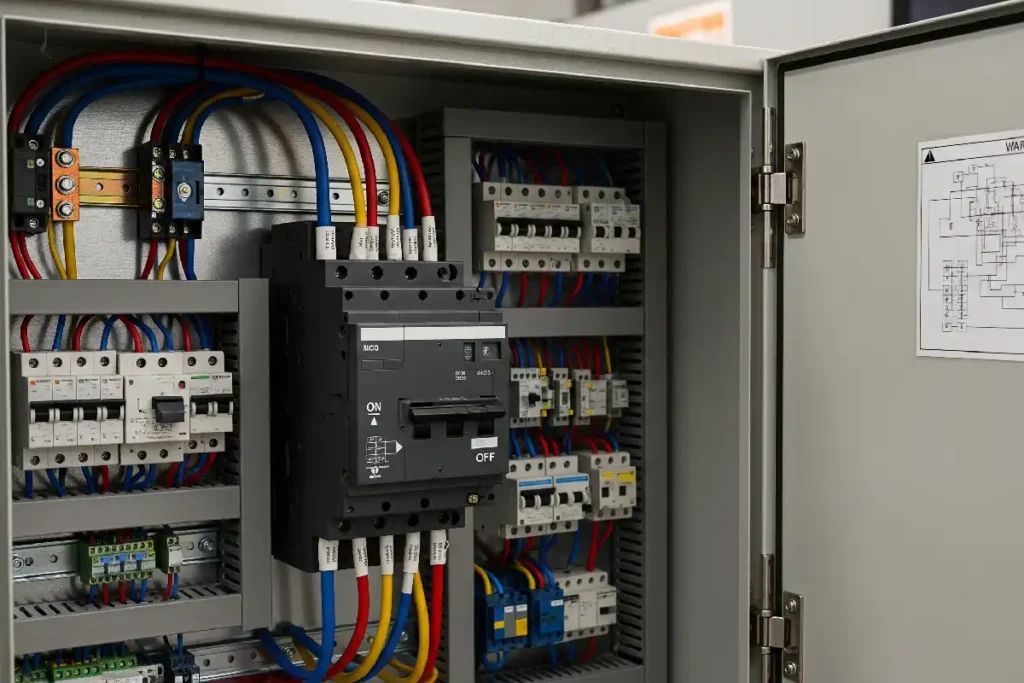
MCCB Applications
Define the breaker from its position in the system
A main incomer, bus coupler, feeder, motor circuit and generator output can all use molded case construction while requiring very different protection and accessories.
Main distribution incomer
Confirm transformer or source data, fault level, busbar rating, short-time duty, metering, interlocking and downstream selectivity.
Sub-distribution feeder
Coordinate cable protection, load diversity, voltage drop, downstream breakers, required continuity and remote indication.
Motor and machinery feeder
Review starting current, starting time, overload method, contactor coordination, phase-loss needs and emergency-stop strategy.
Generator and transfer system
Confirm source fault current, neutral arrangement, transfer sequence, interlocking, auxiliary contacts and generator protection study.
Solar and DC distribution
Use a specifically DC-rated MCCB and verify maximum system voltage, polarity, poles in series, fault direction and isolation requirements.
OEM switchboard and equipment
Standardize the approved breaker, terminals, operating accessories, drawings, labels, packaging and repeat-order reference.
MCCB Quotation Checklist
Send the one-line diagram or breaker data for a faster quotation
You can begin with an existing model, panel schedule, nameplate photo or basic project information. We will identify the remaining details that need confirmation.
Describe the system
AC or DC, voltage, frequency, source, earthing, prospective short-circuit current, load type, design current, conductor and enclosure.
Define protection
Frame, rated current, poles, Icu, Ics, trip unit, settings, coordination, neutral treatment, terminals and accessories.
Confirm the order
Model or replacement reference, quantity, destination, approval, drawings, OEM label, packaging and requested delivery schedule.
MCCB Accessories and Installation
Specify the breaker and its operating system together
Accessories are not generic. Mechanical fit, coil voltage, contact logic, terminal location and approval scope must match the exact MCCB family.
MCCB Model Verification and Bulk Supply
Build repeat orders around an approved configuration
For panel builders, equipment manufacturers and distributors, a stable MCCB order depends on configuration control. A frame name without its trip unit, accessories and rating data is incomplete.
Related Low-Voltage Protection
Continue planning the complete distribution system
Molded Case Circuit Breaker FAQ
MCCB selection questions
Use these answers to prepare the technical information required for model matching, replacement and procurement.
How do I select the correct molded case circuit breaker?
Confirm AC or DC system voltage, source and earthing arrangement, design current, conductor capacity, frame size, rated current, poles, prospective short-circuit current, Icu, Ics, trip unit, settings, installation method, accessories, coordination and target-market requirements.
What is the difference between MCB and MCCB?
An MCB commonly serves smaller modular branch circuits with compact DIN rail construction and fixed characteristics. An MCCB commonly covers larger frames, broader current and interruption duties, selected adjustable trip functions and more operating accessories. The correct boundary depends on the exact products and system study.
What is the difference between MCCB frame rating and rated current?
The frame rating identifies the maximum current assigned to the physical breaker platform, while the actual rated current or trip rating defines the protection configuration. One frame can be offered with several current ratings, so both values must be confirmed.
What do Icu and Ics mean on an MCCB?
Icu is the rated ultimate short-circuit breaking capacity and Ics is the rated service short-circuit breaking capacity at stated conditions. Compare both at the actual operational voltage and according to the applicable standard.
When should I use a thermal-magnetic or electronic trip unit?
Thermal-magnetic units suit many straightforward overload and short-circuit duties. Electronic units can provide broader setting ranges, short-time delay, ground-fault options, measurement or communication where supported. Selection should follow the protection and coordination study.
Does an MCCB provide earth-leakage protection?
A standard MCCB provides overcurrent protection and does not automatically provide residual-current protection. Use an integrated earth-leakage function or a coordinated external device only when its exact ratings, sensing arrangement and application meet the project requirement.
Can an AC MCCB be used on DC?
Only when the exact manufacturer documentation assigns a suitable DC voltage, breaking capacity, pole connection and polarity arrangement. Otherwise use a specifically DC-rated MCCB.
What is the difference between a 3-pole and 4-pole MCCB?
A 3-pole breaker operates the phase conductors. A 4-pole breaker also switches the neutral, but neutral protection and rating vary by model. Select from the earthing system, source arrangement, harmonics and project rules.
Can an MCCB be used as an isolator?
Only when the exact breaker is marked and documented as suitable for isolation and the installation follows the required operating and safety conditions. Do not assume every molded case breaker provides an isolation function.
What information is needed to replace an existing MCCB?
Send the full model and trip-unit code, clear front and side photos, nameplate, frame, current, poles, voltage, Icu, Ics, settings, dimensions, terminals, mounting, handle, internal accessories, external accessories, one-line diagram and required quantity.
Can SENTOP support OEM and bulk MCCB orders?
Eligible MCCB configurations can be reviewed for samples, model matching, repeat supply, labels, packaging, documentation and other OEM requirements. Feasibility, approval scope, quantity and technical impact are confirmed for the requested model and destination.
MCCB Supply Support
Send your MCCB model, one-line diagram or panel requirements
SENTOP can review molded case circuit breaker requirements for new projects, replacements, samples, OEM switchboards, distributor ranges and bulk orders.