Cold Pressed Terminal Manufacturer
Reliable Cold Pressed Terminal Manufacturer
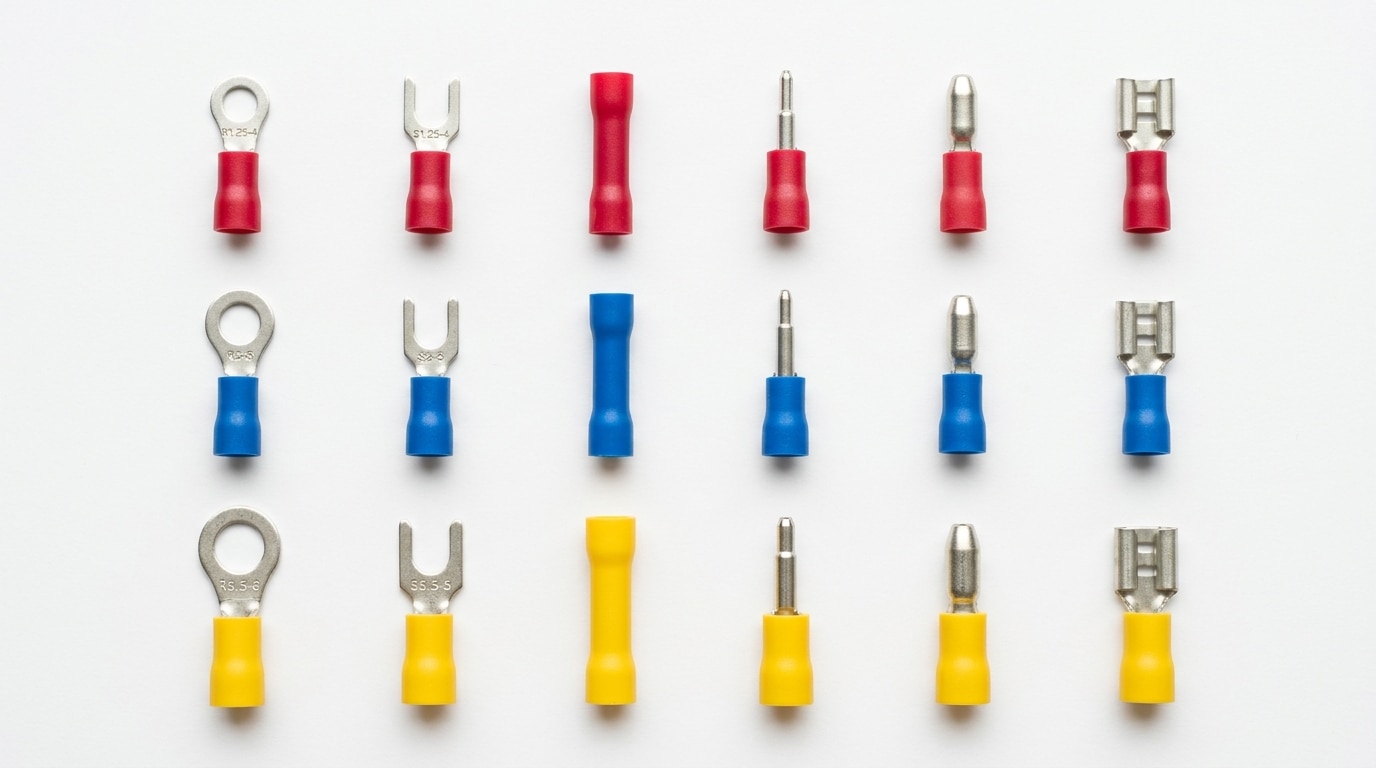
SENTOP supplies cold pressed terminals and crimp terminal solutions for control panels, wire harnesses, electrical equipment, industrial machinery, and power distribution systems. Our product range includes insulated and non-insulated ring terminals, fork terminals, pin terminals, blade terminals, wire ferrules, and splice connectors.
- Insulated and Non-Insulated Crimp Terminals
- Multiple Wire Sizes, Stud Sizes and Terminal Types
- Bulk Supply, Model Matching and OEM Packaging
Cold Pressed Terminal Series We Supply
SENTOP supplies insulated and non-insulated cold pressed terminals for control panels, wire harnesses, industrial machinery, electrical equipment, appliances, and power distribution systems. Different terminal types are available for various wire sizes, stud sizes, connection methods, and installation requirements.
Ring Type
Ring Terminals
Ring crimp terminals provide a secure closed connection for screws, studs, grounding points, busbars, and electrical equipment.
- Insulated and non-insulated options
- Multiple wire and stud sizes
- Suitable for power and grounding
Fork Type
Fork & Spade Terminals
Fork terminals allow conductors to be installed or removed without completely removing the terminal screw.
- Fast screw connection
- Easy inspection and maintenance
- Suitable for control panel wiring
Pin Type
Pin Terminals
Pin crimp terminals create a compact wire end for terminal blocks, control components, power supplies, and narrow wiring positions.
- Compact pin structure
- Clean conductor termination
- Suitable for limited wiring space
Blade Type
Blade Terminals
Blade terminals are designed for flat contact points in appliances, control systems, machinery, and electrical equipment wiring.
- Flat electrical contact design
- Multiple blade dimensions
- Suitable for equipment wiring
Quick Disconnect
Quick Disconnect Terminals
Male and female quick disconnect terminals support fast installation, disconnection, maintenance, and component replacement.
- Male and female terminal options
- Fast plug-in connection
- Suitable for wire harness assembly
Splice Type
Butt Splice Connectors
Butt splice connectors join two conductors end to end for wire extension, harness production, maintenance, and cable repair.
- Reliable conductor splicing
- Insulated versions available
- Suitable for wiring repair
Bullet Type
Bullet Connectors
Bullet terminals provide compact detachable connections for machinery, electrical devices, vehicles, and wire harness systems.
- Male and female matching
- Compact plug-in design
- Suitable for detachable wiring
Ferrule Type
Wire Ferrules
Wire ferrules organize stranded conductors and create a clean wire end for terminal blocks, control components, and electrical cabinets.
- Single and twin ferrules
- Color-coded insulation collars
- Suitable for terminal block wiring
Different Terminal Types for Different Wiring Requirements
The appropriate cold pressed terminal should be selected according to conductor size, terminal shape, stud dimensions, insulation requirements, connection method, application environment, and required order quantity.
Insulated and Non-Insulated Cold Pressed Terminals
Cold pressed terminals are available in insulated and non-insulated designs. The suitable option depends on conductor size, electrical insulation requirements, installation space, application environment, and the wire harness manufacturing process.
Insulated Cold Pressed Terminals
Insulated crimp terminals include a protective sleeve around the terminal barrel, helping improve electrical insulation, wire identification, and installation convenience.
Non-Insulated Cold Pressed Terminals
Non-insulated crimp terminals use a compact metal terminal structure without a pre-installed insulation sleeve, making them suitable for customized wire harnesses and limited installation spaces.
| Comparison Factor | Insulated Terminals | Non-Insulated Terminals |
|---|---|---|
| Terminal Protection | Includes an insulation sleeve around the terminal barrel | Requires separate insulation treatment when necessary |
| Product Identification | Color coding can help identify conductor size ranges | Usually identified by model, size, or packaging label |
| Installation Space | Requires space for the insulation sleeve | More compact for limited installation spaces |
| Customization | Suitable for standard electrical installation | Suitable for customized wire harness processing |
| Typical Use | Control panels, appliances, electrical equipment | Machinery, cable assemblies, compact equipment |
Which Cold Pressed Terminal Type Should You Choose?
Choose insulated terminals when integrated electrical protection and easier size identification are required. Choose non-insulated terminals when installation space is limited or when customized heat-shrink tubing and wire harness processing are needed.
Explore 1,000+ More SENTOP Models
Can't find the exact terminal block for your specific project? We offer a vast range of specialized connection solutions and customized OEM options to meet every industrial requirement.
How to Select the Right Cold Pressed Terminal
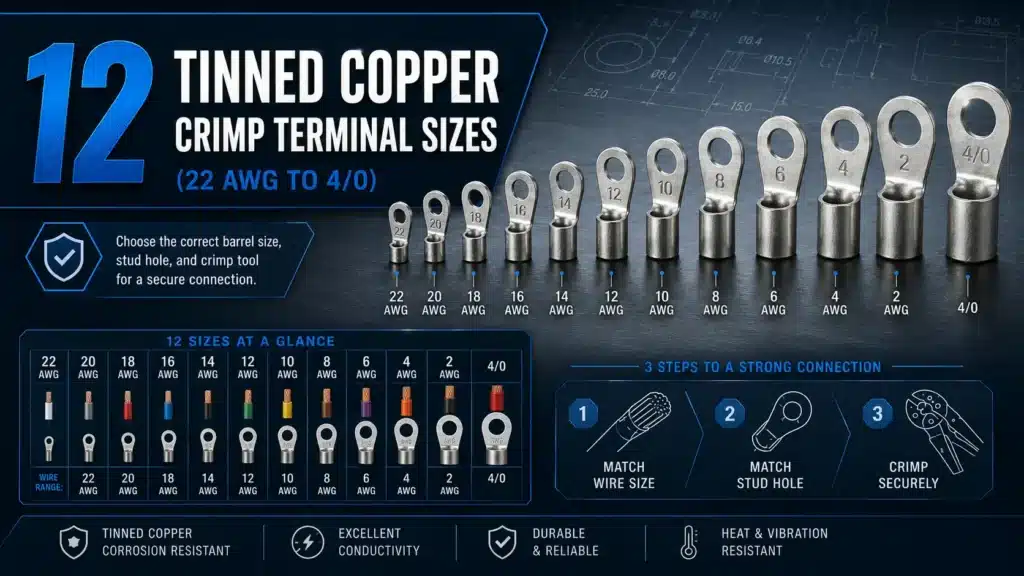
Selecting the correct cold pressed terminal requires matching the terminal structure with the conductor size, stud diameter, insulation requirement, connection method, and actual electrical application. The following information helps SENTOP recommend a suitable crimp terminal model.
| Selection Factor | What You Should Confirm | Why It Matters |
|---|---|---|
| Terminal Type | Ring, fork, pin, blade, bullet, quick disconnect, wire ferrule, or butt splice. | The terminal shape must match the electrical connection point and installation method. |
| Wire Size | Confirm the conductor size in AWG or mm² and whether the wire is solid or stranded. | The wire size must fit the terminal barrel to achieve a stable crimp connection. |
| Stud Size | Confirm the screw, bolt, or stud diameter for ring and fork terminals. | The terminal hole or fork opening must fit the mounting point correctly. |
| Insulation Type | Choose insulated, non-insulated, heat-shrink compatible, or other required structures. | Insulation affects electrical protection, terminal size, and installation space. |
| Connection Method | Confirm screw connection, plug-in connection, wire-to-wire splice, or terminal block connection. | Different electrical connections require different terminal contact structures. |
| Terminal Material | Confirm any requirements for conductive material, insulation sleeve, or product finish. | Material selection affects conductivity, durability, and application suitability. |
| Application | Control panel, wire harness, machinery, electrical cabinet, appliance, or power equipment. | The application determines the required structure, dimensions, and packaging method. |
| Order Quantity | Confirm sample quantity, small batch, bulk order, mixed models, or long-term demand. | Quantity information helps confirm packaging, production, and supply arrangements. |
| Documentation | Confirm whether project specifications, product data, CE, RoHS, or other documents are required. | Documentation requirements may vary according to product series and destination market. |
Not Sure Which Terminal Fits Your Wire?
Send the wire size, terminal photo, stud dimensions, reference model, quantity, or application details. SENTOP will help you identify a suitable cold pressed terminal solution.
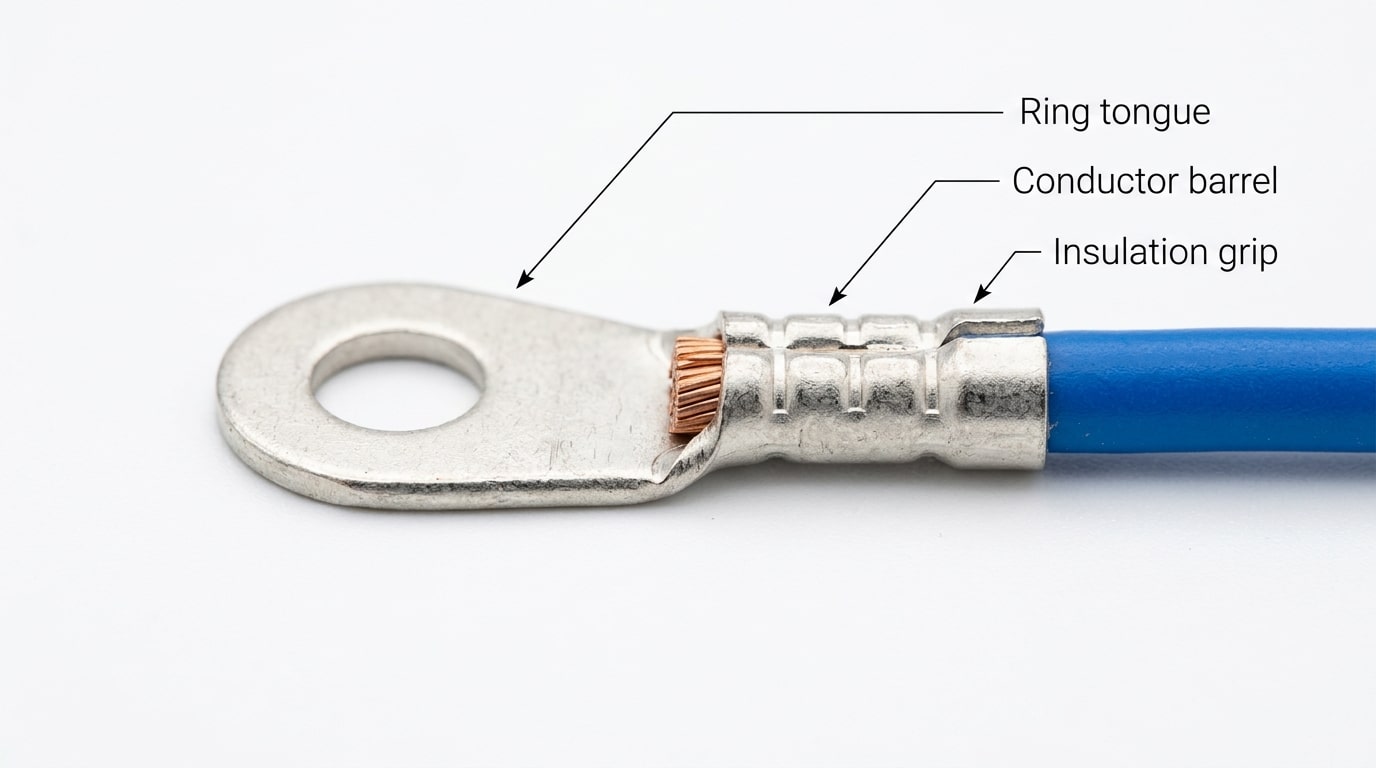
Replace this image with a clear close-up showing the terminal contact end, conductor barrel, insulation support area, or a completed crimp sample.
Terminal Structure Designed for Reliable Crimping
The structure of a cold pressed terminal directly affects conductor insertion, crimping stability, electrical contact, insulation support, and installation reliability. SENTOP helps customers match the terminal structure with the required wire size and connection method.
Terminal Contact Area
The contact end connects the wire to a screw, stud, terminal block, equipment contact, or another conductor. It may use a ring, fork, blade, pin, bullet, or splice structure.
Conductor Crimping Area
The conductor barrel holds the stripped wire strands during crimping. Its internal diameter and length should match the conductor cross-section and crimping die.
Insulation Support Area
Depending on the terminal design, the rear section can support the wire insulation and help reduce movement between the conductor and the insulated cable.
Insulation Sleeve
Insulated cold pressed terminals use a protective sleeve around the barrel. Different colors, materials, and sleeve shapes can be selected according to the terminal series.
Dimensions to Confirm Before Ordering
Wire Range
Required conductor size in AWG or mm².
Terminal Length
Overall length required for installation space.
Barrel Diameter
Internal size of the conductor crimping area.
Stud or Contact Size
Hole, fork, blade, pin, or mating dimensions.
Insulation Diameter
Outer cable diameter and sleeve compatibility.
Material & Finish
Conductive material, plating, and sleeve material.
Terminal Dimensions Must Match the Wire and Connection Point
A suitable terminal should allow the conductor to enter the barrel correctly, match the required stud or contact dimensions, and provide enough space for the selected crimping tool and installation environment.
Basic Cold Pressed Terminal Crimping Process
Reliable cold pressed terminal installation depends on correct terminal selection, wire preparation, conductor insertion, crimping tool matching, and final inspection. Following a consistent crimping process helps improve wiring quality and reduce loose or incomplete connections.
Confirm the Wire and Terminal Size
Check the conductor size in AWG or mm² and select a cold pressed terminal with a suitable barrel, contact structure, stud size, and insulation type.
- Confirm wire cross-section
- Check terminal barrel size
- Match stud or contact dimensions
Strip the Correct Insulation Length
Remove enough insulation to allow the conductor to enter the crimping barrel without leaving excessive bare wire outside the terminal.
- Avoid cutting conductor strands
- Use a suitable stripping tool
- Keep the conductor end clean
Insert the Conductor Fully
Insert the stripped conductor into the terminal barrel until the wire reaches the correct crimping position and the insulation aligns with the support area.
- Insert all conductor strands
- Avoid folded or exposed strands
- Confirm the wire position
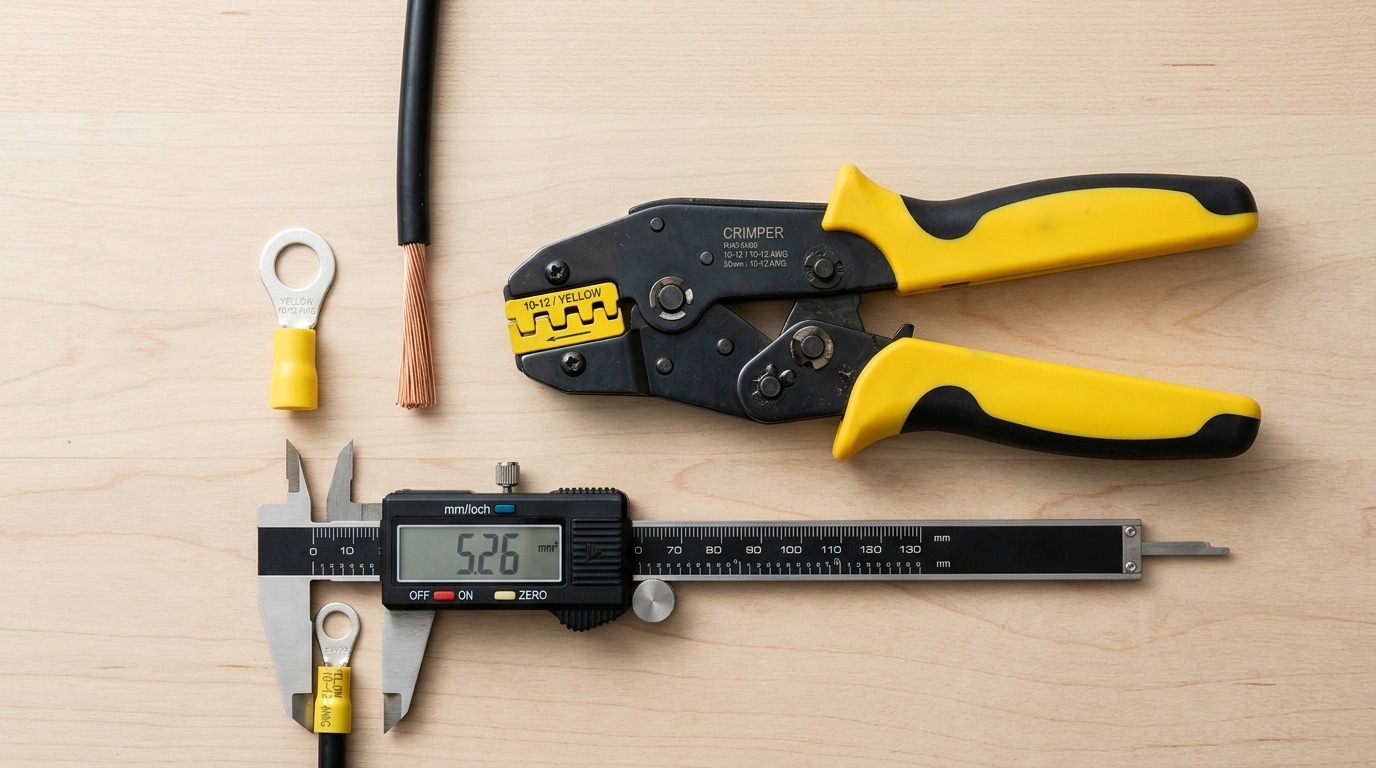
Crimp with the Correct Tool and Die
Position the terminal inside the matching crimping die and complete the crimp using a suitable hand tool, pneumatic tool, or automatic processing equipment.
- Match the terminal and die size
- Keep the terminal correctly positioned
- Complete the crimping cycle
Inspect the Finished Crimp
Check the terminal shape, conductor position, insulation support, and mechanical stability before the completed wire is installed in the equipment.
- Inspect terminal deformation
- Check for loose conductors
- Perform a pull check when required
Use a Crimping Tool That Matches the Terminal Series
The crimping tool and die should match the terminal type, conductor size, barrel structure, and production quantity. Incorrect tooling may create an incomplete, unstable, or over-compressed terminal connection.
What to Inspect After Crimping
The conductor is fully inserted without missing or folded strands.
The barrel is evenly compressed without severe distortion or cracking.
The wire insulation is positioned correctly inside the support area.
The terminal remains firmly attached during normal handling or testing.
Avoid Common Cold Pressed Terminal Crimping Problems
Using an incorrect terminal size, stripping too much insulation, leaving conductor strands outside the barrel, or using an unmatched crimping die may reduce connection stability. Crimping requirements should be confirmed according to the terminal series, wire size, and customer application.
Cold Pressed Terminals for Industrial Wiring Applications
SENTOP cold pressed terminals are used in electrical wiring systems that require organized conductor termination, reliable crimp connections, convenient installation, and efficient wire harness assembly. Different terminal types can be selected according to wire size, connection point, equipment structure, and operating environment.
Control Panels
Ring, fork, pin, and wire ferrule terminals are commonly used for connecting relays, contactors, terminal blocks, switches, and control components inside electrical panels.
Wire Harness Manufacturing
Cold pressed terminals help wire harness manufacturers create repeatable conductor connections for machinery, appliances, power supplies, and electrical equipment.
Industrial Machinery
Crimp terminals are suitable for motors, sensors, switches, internal power wiring, and control circuits in packaging machines, production lines, and automation equipment.
Power Distribution Equipment
Ring terminals, cable lugs, fork terminals, and wire ferrules can be used for power input, branch circuits, grounding, and equipment connection in distribution systems.
HVAC & Building Control
Cold pressed wire terminals support organized wiring for HVAC controllers, lighting systems, building automation, ventilation equipment, and electrical control cabinets.
Renewable Energy Equipment
Suitable terminal solutions can be used in solar control equipment, energy storage systems, inverters, charging equipment, and related power connection applications.
Select the Terminal According to the Actual Wiring Position
The correct cold pressed terminal depends on the conductor size, connection point, mounting method, required insulation, available space, equipment environment, and whether the connection needs to be fixed or detachable.
SENTOP as Your Cold Pressed Terminal Manufacturer
As a professional cold pressed terminal manufacturer, SENTOP supplies insulated and non-insulated crimp terminals for distributors, wire harness manufacturers, control panel builders, electrical equipment factories, and industrial project purchasing. We support product matching, bulk supply, OEM packaging, and export order coordination.
Wide Product Range
Ring, fork, pin, blade, bullet, quick disconnect, butt splice, wire ferrule, and other cold pressed terminal series are available.
Model Matching Support
Send a reference model, product photo, drawing, wire size, stud size, or sample dimensions for terminal identification and matching.
Bulk Production Supply
Support is available for mixed models, repeated orders, distributor purchasing, OEM production, and long-term supply programs.
OEM Packaging Service
Packaging can include model labels, quantity labels, inner bags, product boxes, assortment kits, and export cartons.
Product Documentation
Product specifications, dimensional information, quotation details, and available certification documents can be provided.
Export Order Support
SENTOP assists with order confirmation, packing requirements, carton information, shipment preparation, and delivery coordination.
From Product Matching to Bulk Delivery
- Standard and mixed terminal models
- Sample and bulk order support
- OEM labeling and packaging
- Export carton and shipment preparation
Need a Reliable Cold Pressed Terminal Manufacturer?
Send your terminal type, wire size, stud size, reference model, product photo, quantity, and packaging requirements. SENTOP will help you confirm a suitable crimp terminal solution.
Quality Control for Consistent Cold Pressed Terminal Supply
SENTOP checks key product details according to the cold pressed terminal series, conductor range, application requirements, and order specifications. Inspection helps maintain consistent terminal dimensions, appearance, crimping compatibility, and packaging accuracy.
Raw Material Inspection
Conductive terminal material, insulation sleeves, product finish, and related components are checked according to the product series and order requirements.
Terminal Dimension Check
Key dimensions can include terminal length, barrel diameter, stud hole, fork opening, blade width, pin size, and insulation sleeve dimensions.
Appearance & Surface Check
Terminals are checked for visible deformation, burrs, surface defects, insulation sleeve damage, incorrect colors, or inconsistent product appearance.
Wire & Crimp Matching
Terminal barrels can be checked with the specified conductor range and suitable crimping tool to confirm wire insertion and crimp compatibility.
Connection Stability Check
Finished crimp samples can be inspected for conductor position, barrel compression, terminal deformation, insulation support, and mechanical stability.
Packaging & Quantity Check
Product model, quantity, labels, inner bags, boxes, mixed specifications, and export carton information are confirmed before shipment.
What We Check for Cold Pressed Terminal Orders
Quality Checks Are Matched to the Terminal Series and Application
Inspection requirements may vary according to the terminal type, wire size, crimping method, project specification, destination market, and customer requirements. Relevant product information and available certification documents can be confirmed before ordering.
Flexible Packaging for Bulk Cold Pressed Terminal Orders
SENTOP supports practical packaging solutions for cold pressed terminal distributors, wire harness manufacturers, electrical equipment factories, panel builders, and project purchasing. Products can be organized according to terminal type, model, wire size, quantity, warehouse management, and OEM branding requirements.
Standard Bulk Packaging
Suitable for factories, distributors, production lines, and customers purchasing large quantities of the same terminal model.
Efficient Bulk SupplySmall Bag Packaging
Cold pressed terminals can be divided into smaller bags according to model, wire range, color, quantity, or customer requirements.
Easy Model ManagementTerminal Assortment Kits
Different ring, fork, pin, splice, quick disconnect, and wire ferrule models can be combined into organized terminal kits.
Mixed Terminal SetsOEM Labeling Support
Labels can include customer information, terminal model, conductor range, quantity, barcode, batch number, and packaging details.
Custom Label InformationBoxed Product Packaging
Product boxes help organize different terminal sizes and provide additional protection for warehouse storage and distribution.
Organized Product StorageExport Carton Packaging
Inner packaging, carton quantity, carton markings, model information, and shipment preparation can be confirmed before delivery.
International Shipment Ready
Clear Classification for Easier Receiving
Terminal models can be separated and labeled clearly to help customers inspect, store, distribute, and use products efficiently.
- Model and wire-size identification
- Quantity labels and batch information
- Mixed-model order separation
- Export carton preparation
From Model Confirmation to Shipment Preparation
Packaging and delivery arrangements are confirmed according to the selected terminal models, quantities, labeling requirements, and destination market.
Confirm Product Models
Terminal type, wire range, color, dimensions, and quantity.
Confirm Packaging Method
Bulk bags, small bags, boxes, kits, or customized packaging.
Prepare Labels
Model, quantity, conductor range, barcode, or customer information.
Check Order Quantity
Confirm product quantity, mixed specifications, and packing lists.
Prepare Export Cartons
Arrange inner protection, carton markings, and shipment preparation.
Tell Us How You Need the Terminals Packed
When requesting a quotation, customers can provide the required quantity per bag, number of bags per box, label content, mixed-model requirements, retail packaging needs, or export carton markings.
Frequently Asked Questions About Cold Pressed Terminals
Find answers about cold pressed terminal types, crimp terminal selection, wire-size matching, insulated and non-insulated terminals, bulk purchasing, OEM packaging, and SENTOP manufacturing support.
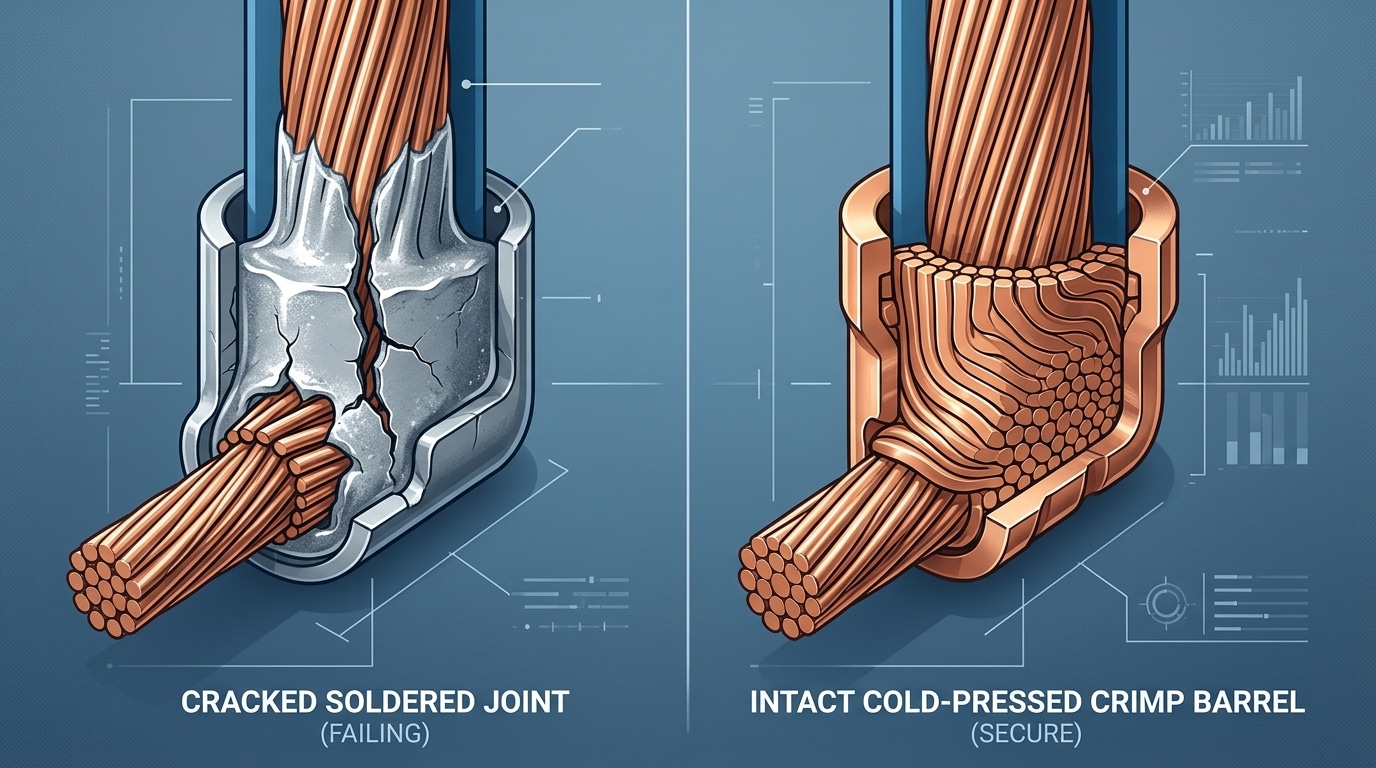
A cold pressed terminal is an electrical wire terminal attached to a conductor by mechanical crimping rather than soldering. The terminal barrel is compressed around the conductor using a suitable crimping tool and die.
In many purchasing markets, “cold pressed terminal” is used to describe a terminal installed by mechanical crimping. These products are also commonly described as crimp terminals, wire terminals, wire ferrules, cable lugs, quick-disconnect terminals, or terminal splices.
SENTOP supplies ring terminals, fork and spade terminals, pin terminals, blade terminals, bullet connectors, quick-disconnect terminals, butt splice connectors, wire ferrules, and other insulated or non-insulated crimp terminal products.
Confirm the conductor size in AWG or mm² and whether the wire is solid or stranded. The conductor must fit the terminal barrel correctly, and the crimping die must match the terminal and wire-size range.
Insulated terminals include a protective sleeve around the crimp barrel and are convenient for electrical installation and size identification. Non-insulated terminals have a more compact metal structure and can be combined with heat-shrink tubing or customized insulation treatment.
Measure the diameter of the screw, bolt, or stud used at the electrical connection point. Ring-terminal holes and fork-terminal openings should fit the mounting point while providing enough contact area for stable installation.
Yes. You can send a clear product photo, reference part number, dimensional drawing, sample measurements, wire size, stud size, insulation type, and application information. SENTOP can use these details to help identify a suitable terminal series.
The crimping tool and die should match the terminal type, barrel structure, conductor size, and production volume. Hand tools are suitable for sampling and installation, while pneumatic or automatic equipment may be used for repeated or high-volume production.
Yes. SENTOP supports bulk purchasing for distributors, wire-harness manufacturers, control-panel builders, electrical equipment factories, contractors, and long-term supply projects. Mixed terminal models can also be discussed according to order requirements.
SENTOP can support model labels, quantity labels, customer information, barcodes, inner bags, product boxes, assortment kits, mixed-model separation, and export carton markings according to the confirmed order.
Provide the terminal type, wire size, stud or contact dimensions, insulated or non-insulated design, product photo or model, required quantity, packaging method, destination market, and any project documentation requirements.