
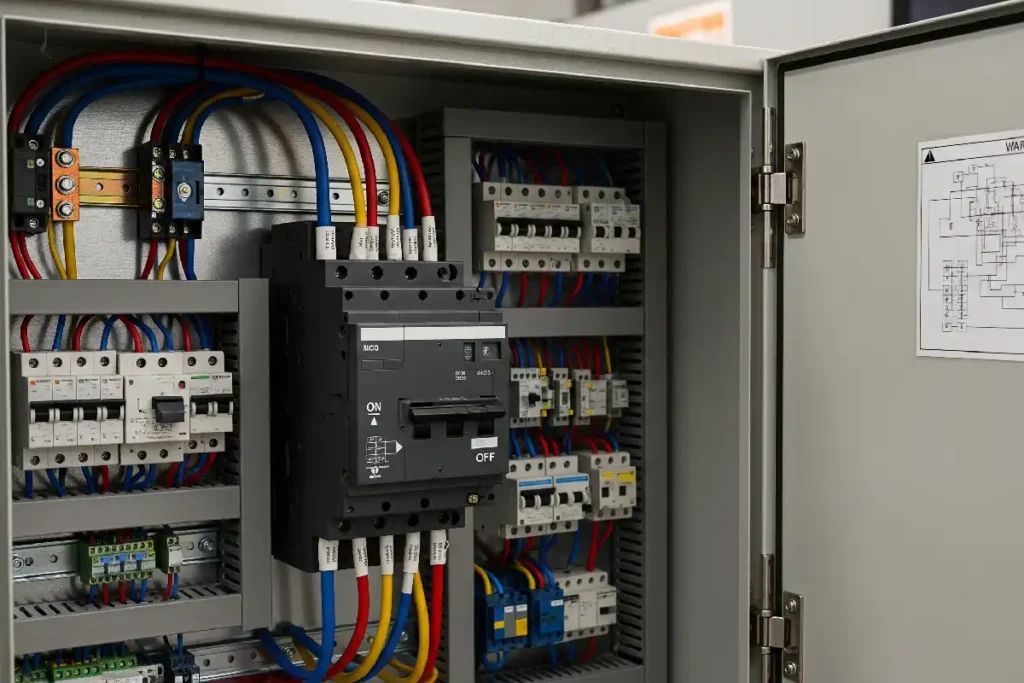
MCB vs MCCB Selection Guide
MCB vs MCCB: Choose by Circuit Duty, Not Size Alone
Both devices protect against overcurrent, but they are built for different standards, circuit roles, fault levels, trip functions and installation methods. Start with the one-line diagram and prospective short-circuit current, then match the exact breaker data.
Answer First
Use MCBs for modular final circuits; use MCCBs when the feeder duty demands more control
An MCB is usually the practical starting point for DIN rail branch circuits with a defined fixed trip curve and fault rating. An MCCB is usually the starting point for feeders, larger equipment, higher fault duties, adjustable protection, coordination or remote accessories.
The boundary is not a single ampere value. Product ranges overlap, some industrial miniature breakers are evaluated to IEC 60947-2, and not every MCCB is adjustable. The exact marked standard and datasheet decide what the breaker can do.
Start with circuit position
Final outgoing circuits commonly favor modular MCBs. Feeders, mains and large equipment commonly require MCCB capabilities.
Calculate the fault current
The breaker breaking capacity must be suitable for the prospective short-circuit current at its installation point.
Define the protection study
Load current, conductor capacity, inrush, coordination and required trip settings determine the protection direction.
Verify the exact model
Standard, voltage, poles, frequency, AC/DC duty, terminals, dimensions, accessories and approvals are model-specific.
Interactive Starting Point
Build an MCB or MCCB direction
Choose the project conditions below. The result organizes a technical enquiry; it is not a substitute for a protection study, local rules or the manufacturer data for the exact model.
Complete the project choices
Planning result only. Confirm the exact standard, voltage, current, breaking capacity, utilization data, trip behavior, coordination, installation conditions and approvals before ordering.
MCB vs MCCB Comparison
Compare the engineering decisions, not only the enclosure
These are common selection directions, not universal product limits. Always replace a general comparison with the exact model's marked ratings and technical documentation.
Important: IEC 60898-1:2015+A1:2019 has a scope up to 440 V AC, 125 A and 25 kA, but those are standard-scope ceilings, not a promise that every MCB reaches them. IEC 60947-2:2024 covers circuit breakers within its stated voltage scope; the selected MCCB still needs exact model verification.
Distribution Hierarchy
MCB and MCCB often work together
The question is often not "which one replaces the other?" but "where does each breaker belong in the protection system?"
Main incoming protection
Common starting direction: MCCB or ACB. Confirm source capacity, system fault level, main busbar rating, protection settings and source coordination.
Submain and equipment feeders
Common starting direction: MCCB. Review feeder conductor protection, motor or equipment duty, adjustable settings, accessories and downstream selectivity.
Final branch circuits
Common starting direction: MCB. Match load current, cable capacity, trip curve, poles, fault rating, installation temperature and grouping.
Residual-current and equipment protection
Additional functions may be required. An MCB or MCCB does not automatically provide every earth-leakage, personnel-protection, motor-protection or surge-protection function.
Trip and Coordination Logic
The protection function can decide before the current rating does
Two breakers with a similar ampere rating may behave very differently during overload, inrush and short-circuit conditions. Use complete time-current data and the actual system study.
Fixed curves simplify repeated final circuits
B, C, D and other marked characteristics define model-specific instantaneous behavior. The curve must suit the load inrush while protecting the conductor.
Adjustable protection supports feeder coordination
Depending on the exact product, a thermal-magnetic or electronic trip unit may provide adjustable overload, short-time, instantaneous or ground-fault functions.
kA values only make sense with the standard and voltage
MCB Icn and MCCB Icu/Ics are defined in their applicable standards. Do not compare the printed numbers without checking voltage and rating meaning.
The nearest breaker should clear the intended fault when coordination requires it
Selectivity can depend on current level, trip curves, settings, breaker combination and the full fault path. A current-rating ratio alone is not proof.
Application Directions
See where each breaker usually starts
These examples organize an enquiry. The exact breaker still depends on electrical calculations, the installation environment, the target market and approved product documentation.

Lighting, socket and control circuits
DIN rail MCBs provide a compact direction when the final-circuit current, cable, curve and short-circuit rating are defined.
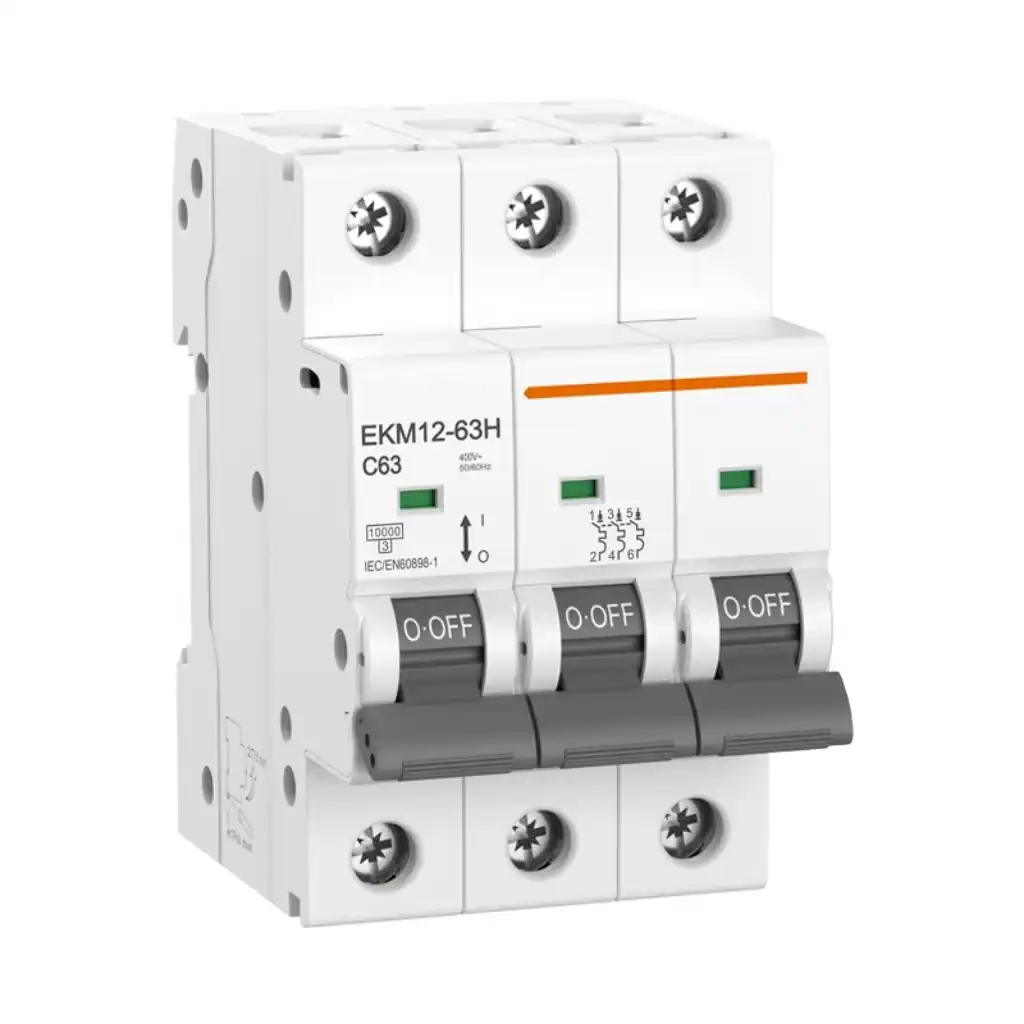
Small machinery and panel branches
An industrial MCB may suit a compact outgoing circuit when its standard, voltage, current, curve and kA rating meet the application.
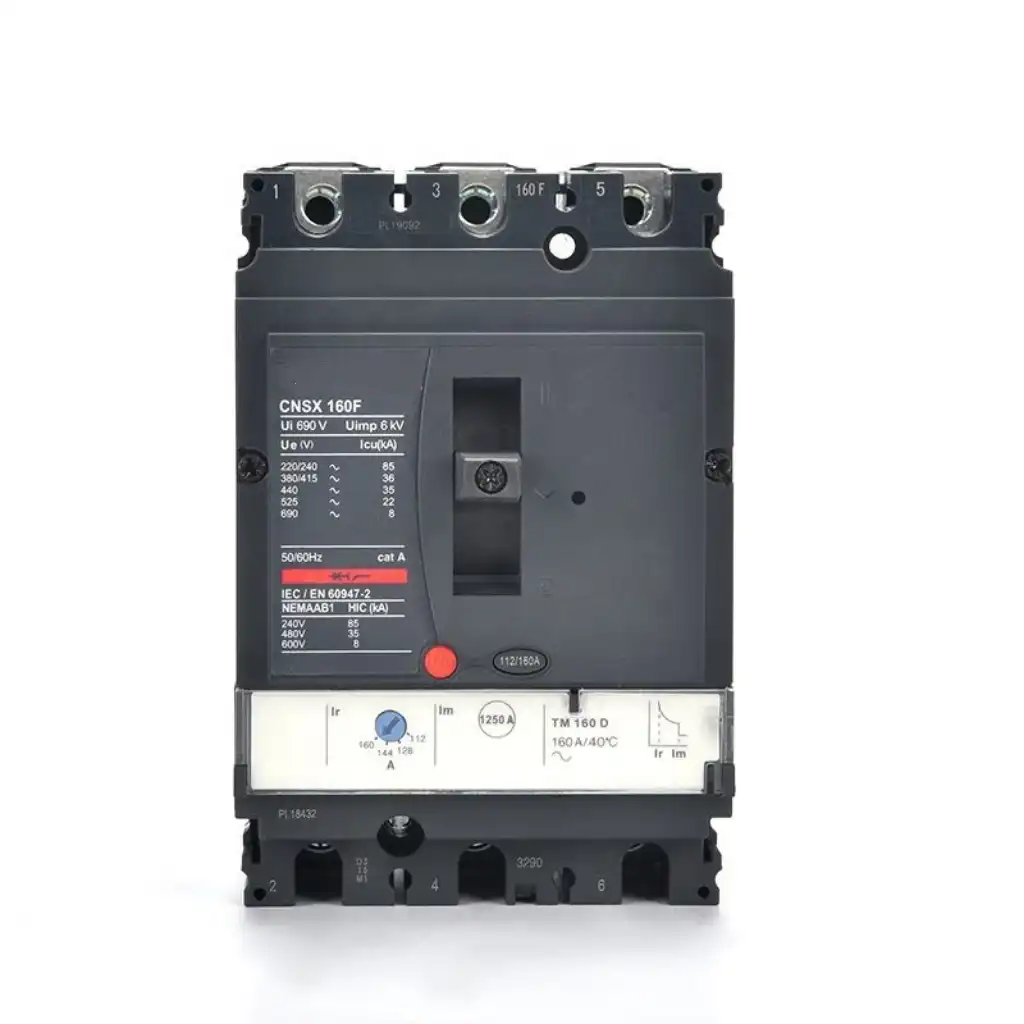
Equipment and motor feeder protection
An MCCB becomes the stronger starting point when the feeder needs adjustable settings, a higher fault duty or a panel-mounted connection.

Submain and incomer protection
Main and submain duties require close review of source fault level, busbar rating, settings, neutral treatment and downstream coordination.
Standards and Nameplate Data
Read the standard before comparing current and kA markings
The same-looking value can have a different definition or test context. Confirm the complete nameplate and technical file for the exact model, not only the product family.
Two standards commonly appear in an MCB vs MCCB discussion
IEC 60898-1:2015+A1:2019 addresses AC circuit breakers for overcurrent protection in household and similar installations within its scope. IEC 60947-2:2024 addresses circuit breakers for low-voltage switchgear and controlgear within its scope and states installation and operation by instructed or skilled persons.
A compact DIN rail breaker can be evaluated to IEC 60947-2, and a general category name does not prove compliance. Use the marking and certificate for the exact model.
Rated voltage
Confirm Ue or applicable voltage marking, frequency, AC/DC duty, poles and voltage per pole. DC polarity and series-pole arrangements are model-specific.
Rated current
Coordinate the breaker with design current, conductor ampacity, ambient temperature, enclosure temperature, grouping and any model-specific derating.
Breaking ratings
Compare Icn, Icu, Ics or other applicable ratings using their standard definitions and the exact system voltage.
Trip characteristic
For an MCB, verify the marked curve and complete time-current data. For an MCCB, verify fixed or adjustable settings, trip-unit type and setting range.
Isolation and use
Confirm suitability for isolation, operating category, utilization information, installation orientation, service conditions and switching limitations.
Certificate scope
Check model reference, poles, ratings, accessories, standard edition, certificate owner, required markings and target-market acceptance.
Breaker RFQ Checklist
Send the system data, not only "MCB" or "MCCB"
A one-line diagram, breaker schedule or existing nameplate photo can shorten model matching. SENTOP can help organize the remaining electrical, mechanical and commercial details.
System and fault data
One-line diagram, AC/DC voltage, frequency, earthing arrangement, prospective short-circuit current, source and upstream protection.
Load and protection data
Design current, conductor, load type, inrush, poles, trip curve or settings, selectivity objective and residual-current need.
Product and order data
Existing model or preferred frame, mounting, terminals, dimensions, accessories, target market, quantity, documents and delivery destination.
Continue Your Selection
Review the specific breaker range
MCB vs MCCB FAQ
Questions buyers ask before choosing
These answers explain the category difference. Final selection still requires exact system and product data.
What is the main difference between MCB and MCCB?
An MCB is usually a compact modular breaker for final or smaller outgoing circuits with a selected fixed trip characteristic. An MCCB is usually a molded-case platform for feeders, equipment or main circuits that can offer higher frame duties, adjustable protection and broader accessory options. Exact capabilities depend on the marked standard and model.
Is an MCCB always better than an MCB?
No. An MCB can be the better fit for a compact final circuit because it uses less panel space and integrates efficiently into modular distribution. An MCCB is appropriate when the circuit duty requires its ratings, settings, coordination or accessories. The better device is the one verified for the application.
Can I choose between MCB and MCCB using current rating alone?
No. Current is only one input. Also verify circuit role, voltage, poles, conductor capacity, fault current, breaking capacity, load inrush, trip behavior, coordination, mounting, accessories, standard and target-market approval.
Do MCB and MCCB current ranges overlap?
Yes. Some product ranges overlap. This is why an ampere boundary is not a reliable universal rule. A compact industrial breaker and a small-frame MCCB may have similar rated currents but different standards, breaking data, trip functions, dimensions and accessories.
Which breaker has adjustable trip settings?
MCBs usually use a fixed marked tripping characteristic. Many MCCBs offer fixed or adjustable thermal-magnetic trips, while selected electronic MCCBs provide broader adjustment such as LSI or LSIG functions. Not every MCCB is adjustable, so check the exact trip-unit data.
Does an MCCB always have a higher breaking capacity?
MCCB product families commonly offer higher breaking-capacity directions, but no category assumption replaces the actual rating. Compare the prospective short-circuit current with the exact breaker data at the system voltage and understand the applicable Icn, Icu and Ics definitions.
Can an MCB be used in an industrial panel?
Yes, when the exact breaker's standard, ratings, trip curve, fault capacity, environmental limits, approvals and coordination meet the industrial application. Some DIN rail miniature breakers are evaluated to IEC 60947-2. Verify the exact model rather than relying on its appearance.
Can I replace an MCB with an MCCB?
Only after an engineering and installation review. The devices differ in mounting, dimensions, terminals, trip behavior, breaking data, accessories and coordination. A physically larger or higher-rated breaker can reduce conductor protection or selectivity if it is not correctly selected and set.
Can I replace an MCCB with an MCB?
Only when the complete circuit study confirms that a specific MCB meets the voltage, current, fault duty, trip behavior, coordination, isolation, mounting and approval requirements. This is uncommon when the original MCCB provides adjustable protection or feeder accessories.
Do MCBs and MCCBs protect against earth leakage?
Not automatically. Standard overcurrent protection addresses overload and short circuit. Earth-leakage or additional shock protection may require an RCCB, RCBO, residual-current module or an MCCB ground-fault function selected for the applicable purpose. These functions are not interchangeable without technical review.
What fault-current value is needed for selection?
Use the prospective short-circuit current calculated at the breaker installation point. It depends on source capacity, transformer data, conductor impedance and network arrangement. The breaker's applicable short-circuit rating must be suitable at the exact system voltage.
What should I send for an MCB vs MCCB quotation?
Send the one-line diagram or breaker schedule, voltage, AC/DC duty, load current, load type, poles, prospective short-circuit current, trip requirement, mounting, terminals, accessories, target market, quantity and destination. For replacement, add clear nameplate and installation photos.
MCB and MCCB Supply Support
Send the one-line diagram, breaker schedule or existing model
SENTOP can review MCB and MCCB requirements for new panels, replacements, samples, OEM electrical equipment, distributor ranges and bulk orders.