UL 1059 Terminal Block Requirements: 7 Checks Before You Specify
UL 1059 certification is not a blanket approval for every panel or circuit. Verify the exact model, certification category, use group, electrical and conductor ratings, installation conditions, and traceability before the part reaches the BOM.
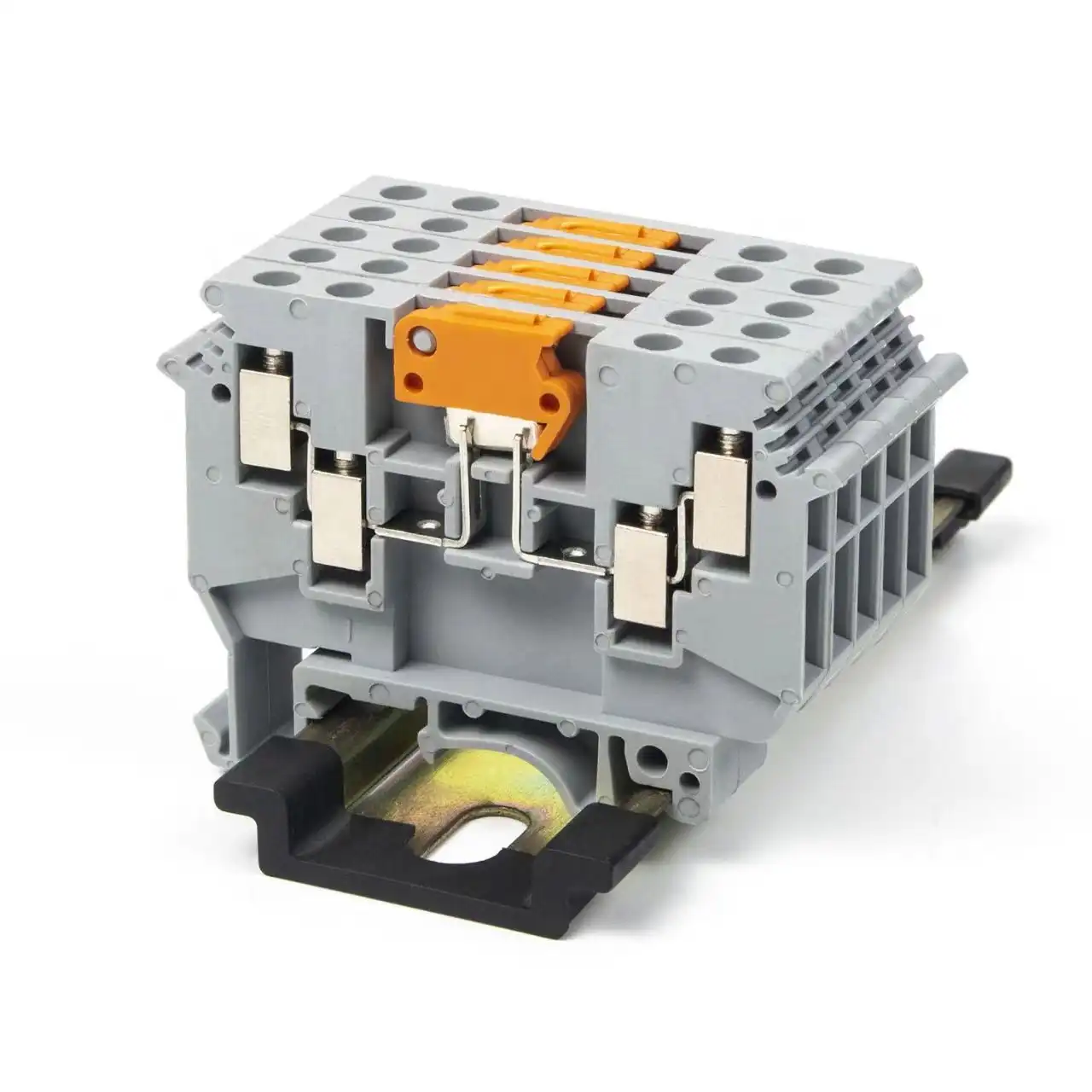
The safest way to apply UL 1059 is to verify the exact terminal block model in UL Product iQ, read its certification identity and Conditions of Acceptability, then match its use group, ratings, conductor range, installation instructions and accessories to the end product. A UL mark or family data sheet alone is not enough.
What UL 1059 does - and does not - establish
UL 1059 is the U.S. standard for terminal blocks and support blocks rated 1500 V or less. Its evaluation addresses the construction and performance of the terminal block within defined ratings and conditions. The sixth edition was published on December 11, 2024. However, the standard's public scope is explicit that compliance does not, by itself, establish that a component is suitable for every end product.
That distinction changes the buying question. Do not ask only, "Is this UL?" Ask, "Is this exact catalog number certified under the right category, and do its documented conditions match my conductor, circuit, enclosure, mounting, field-wiring and end-product requirements?" The authoritative answer comes from the current certification record, the manufacturer's instructions and the applicable end-product standard.
UL 1059 contains detailed requirements and test methods. Specific spacing, temperature, torque, secureness and dielectric values can change with construction, rating, use group and certification conditions. Use the current standard and model-specific record instead of copying a generic number from another terminal block.
Correct the first misconception: Listed is not the only acceptable status
Many terminal blocks used inside industrial equipment are UL Recognized Components. In the United States, the common category control number is XCFR2, Terminal Blocks - Component. The corresponding Canadian component category is commonly XCFR8. A Recognized Component is intended for use within a larger product under stated Conditions of Acceptability; this is not the same as being uncertified.
Evaluated as a complete product
A Listed product is generally evaluated for a defined standalone use and installed according to its listing and instructions. Its mark still does not authorize a different rating, conductor or installation method.
Evaluated for integration
A Recognized terminal block is evaluated for incorporation into an end product. The equipment builder must satisfy its ratings, intended use, installation instructions and Conditions of Acceptability.
For UL 508A industrial control panels, UL's public Supplement SA specifically identifies Recognized terminal blocks evaluated to UL 1059 under XCFR2. Their use depends on details such as field-connection suitability, conductor size, use group, spacings, electrical ratings and conditions of use. Therefore, rejecting every Recognized terminal block in favor of a "Listed" logo is not a sound compliance rule.
Seven UL 1059 checks that turn a logo into usable evidence
Run the checks in order. Each one should end with a record you can tie to the exact BOM line.
Exact certification record
Match the manufacturer, catalog number or defined series, file number and category in UL Product iQ. Confirm whether the record is U.S., Canadian or dual-market and whether it is Listed or Recognized. A logo on a marketplace image, a supplier certificate for another factory or an E-file covering a different product category does not establish this model's status.
Evidence: Product iQ record + exact part numberUse group and end-product fit
UL 1059 uses application groups to connect the terminal block's evaluation to its service context. Confirm the group shown for the model and the circuit voltage, then compare it with the end-product requirements. Also check mounting, number of poles, field- or factory-wiring use, barriers, covers, end plates and any required enclosure.
Evidence: use group + Conditions of AcceptabilityVoltage and spacing context
Clearance is the shortest path through air between conductive parts; creepage is the path along an insulating surface. The required evaluation depends on factors such as use group, voltage and construction. Verify the certified rating for the assembled configuration, including adjacent poles, jumpers, end barriers and grounded metal. Do not transplant a spacing value from a different group or IEC-only data set.
Evidence: certified voltage + assembled spacing configurationCurrent and temperature conditions
Current capability is tied to the evaluated terminal, conductor and conditions. Confirm current, conductor temperature rating, ambient limitations, pole loading and any derating or grouping instructions. The terminal block's current marking does not override the conductor, equipment termination, protective-device or installation-code limits. Avoid treating a universal temperature-rise number as the whole decision.
Evidence: current rating + temperature and derating dataWire range and conductor type
Match the complete conductor description: AWG or mm2 range, copper or aluminum, solid or stranded construction, strand class, number of conductors per opening and preparation method. Fine-stranded wire, ferrules and multiple-conductor terminations are acceptable only when the terminal block and instructions cover that configuration. Never trim strands or assume that a wire fitting into the opening proves compliance.
Evidence: conductor table + preparation instructionsTorque and mechanical securement
For screw-type products, obtain the specified tightening torque for the exact conductor range and terminal. For spring or push-in products, confirm the required tool, strip length and actuation method. UL evaluation can include conductor securement and mechanical tests, but the applicable values are model-specific. Production work instructions should control tools, calibration, inspection and re-torque policy.
Evidence: installation instruction + controlled work methodDielectric, materials and markings
Confirm that the evaluated construction covers the housing, conductive parts, insulation system and accessories you intend to buy. Public UL 1059 test guidance describes a 60-second power-frequency withstand test at 1000 V plus twice the rated insulation voltage, without flashover or breakdown. Markings and packaging should let receiving inspection trace the product to its manufacturer and catalog identity. A UL 94 material rating alone does not certify the finished terminal block, and an E-file alone does not prove every model is covered.
Evidence: markings + drawing + current certification scope
Use groups are not a ranking from weak to strong
UL 1059 use groups identify application contexts and the associated evaluation approach. They are not quality grades, and a letter cannot be selected from current alone. Public manufacturer guidance describes Groups A through G, with Group C commonly used as the default industrial application context.
The useful purchasing action is to record the use group shown for the exact model and ensure that it fits the end product and voltage. If the certification record lists different ratings by group, copy the rating for the group you will actually use.
UL 1059 and ANSI/UL or IEC 60947-7-1 are separate evaluation routes. A terminal block may carry both, but each rating must be read under its own standard and conditions.
| Use group | Publicly described application context | Specifier action |
|---|---|---|
| A | Operating elements, consoles, service equipment and similar applications | Confirm the record's voltage and spacing basis for this context. |
| B | Commercial equipment, including office and electronic data-processing equipment | Do not substitute Group B automatically into an industrial field-wiring application. |
| C | Industrial applications without the limited-rating context of Group D | Common industrial starting point; still verify every model-specific rating. |
| D | Industrial operating equipment with limited ratings | Check the stated voltage and current limitations before selection. |
| E | Terminal blocks with nominal voltage from 601 V through 1500 V | Confirm the exact higher-voltage evaluation and installation conditions. |
| F | Industrial equipment using an alternative approach to spacing | Follow the evaluated construction and conditions rather than a generic table. |
| G | LED lighting applications | Use only within the lighting context and ratings stated in the record. |
A five-step UL Product iQ workflow
Product iQ can be searched by items including keyword, category control number and file number. Keep the result with your controlled purchasing record.
Capture the product identity
Record the legal manufacturer, brand, full catalog number, suffixes and any series definition from the drawing and label.
Locate certification clues
Find the certification mark, file number and category information on the product, package, data sheet or supplier document. Treat each as a search lead, not final proof.
Search UL Product iQ
Search the file number or manufacturer and filter to the relevant terminal-block category. Confirm that the record is current and for the intended country.
Match model and conditions
Read the model scope, use groups, conductor details, ratings, accessories, installation limitations and Conditions of Acceptability that apply to your part.
Freeze the evidence with the BOM
Save the record date, URL or letter, data-sheet revision and approved model. Recheck after a supplier, material, factory or part-number change.
Possible causes include an incomplete part number, private-label relationship, series naming difference, country filter or an outdated document. Ask the supplier for a current certification letter that connects the exact sellable model to the certification record, then verify that evidence independently.
Component approval is not panel approval
UL 508A Supplement SA recognizes the use of UL 1059 terminal blocks as components, but the panel builder must apply them within the required conditions. The final panel still needs its own design review, construction control and SCCR determination.
Field-connection suitability
Confirm the terminal is permitted for field wiring when it will serve as a field-wiring point.
Conductor and use group
Match conductor size and the permitted use group; UL public guidance for this panel application excludes Group B.
Ratings and spacing
Apply the electrical ratings, spacing requirements and Conditions of Acceptability to the installed configuration.
Panel SCCR
UL states that terminal blocks have a default 10 kA SCCR under UL 508A Table SB4.1. Confirm how the component participates in the actual panel calculation.
Evaluate the assembled terminal strip, not only the base block
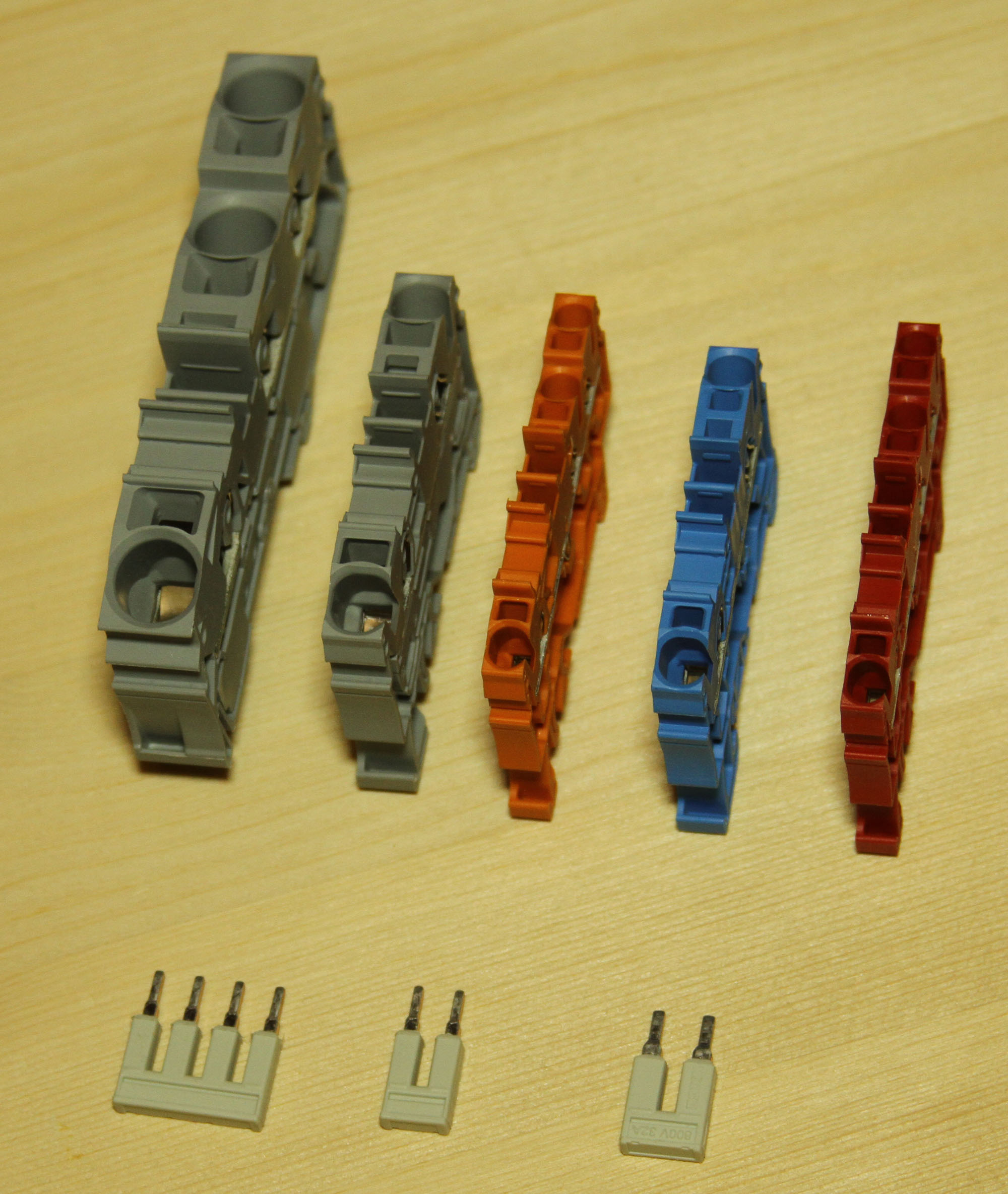
Jumpers, end plates, partition plates, covers, fuse carriers, disconnect elements, test plugs and markers can change the assembly's function or installation conditions. Confirm that each accessory is authorized for the series and that the final pole arrangement preserves the required ratings and spacings.
For a substitute series, compare the complete assembly: terminal function, conductor entry, DIN rail or panel mounting, pitch, height, end treatment, bridge current path, marking system and enclosure clearances. A same-pitch replacement is not automatically an approved equivalent.
Review SENTOP's DIN-rail terminal block range, screw terminal block series and spring terminal block series as sourcing starting points, then request model-specific ratings and certification evidence.
Eight red flags that deserve a document hold
None proves fraud by itself. Each means the model should remain unapproved until the discrepancy is resolved.
Logo without a searchable identity
No full model, manufacturer or file information connects the item to a current record.
Category mismatch
The cited E-file belongs to a different product category or does not cover terminal blocks.
Family name only
The supplier cites a broad series while the ordered suffix or pole configuration cannot be matched.
Mixed UL and IEC ratings
A current or voltage value is copied across standards without identifying the applicable test route.
Unqualified conductor claim
The data says "up to" a wire size but omits material, strand construction, number of conductors or preparation.
One torque for every wire
A generic torque appears without model, screw, conductor range or installation-instruction context.
Accessory substitution
Jumpers, end barriers or covers are visually matched from another series without documented compatibility.
Certificate and shipment differ
The brand, factory, material code, label or model on received goods does not match the approved evidence.
What to send - and request - before quotation
A traceable RFQ lets the supplier match a certified configuration instead of proposing a visually similar block.
Send these application details
- Circuit function, voltage, current, available fault current and required panel SCCR
- Wire standard, AWG or mm2 range, copper or aluminum, strand class and conductors per point
- Field- or factory-wiring use, connection technology, mounting method and pole arrangement
- Ambient, enclosure, contamination, vibration and destination-market requirements
- Reference models, photos, drawings, BOM, accessories, quantity and packaging needs
Request these supplier records
- Exact product drawing, data sheet, installation instructions and marking sample
- UL file, CCN, certification status, model scope, use groups and Conditions of Acceptability
- Conductor table, strip length, tool or torque instructions and accessory compatibility
- Applicable current, voltage, temperature and SCCR information for the proposed configuration
- Sample and lot traceability, change control, packaging label and current document revisions
SENTOP supports terminal-block model matching from part numbers, photos, drawings and BOM information. Explore the terminal block product range or review the catalogue. Confirm certification availability and all ratings for the exact quoted model before approval.
Send your BOM and certification requirements
Provide circuit ratings, conductor details, mounting and connection method, destination market, required UL file or category, reference models and quantity. SENTOP can review matching series and the documentation available before quotation.
Related SENTOP resources
Move from standard-level context to a model-level, documented specification.
UL 1059 terminal block FAQ
Short answers for engineering, panel-building and sourcing reviews.
What does UL 1059 cover for terminal blocks?
UL 1059 covers terminal blocks and support blocks rated 1500 V or less. It evaluates terminal-block construction and performance within defined ratings and conditions; the exact requirements that apply depend on the product design and intended use.
Does UL 1059 certification make a terminal block suitable for every end product?
No. UL 1059 compliance does not automatically establish suitability in every final product. The exact model must be applied within its ratings, intended use, installation instructions and Conditions of Acceptability, and the end product may require additional evaluation.
What is the difference between UL Listed and UL Recognized terminal blocks?
A Listed product is evaluated as a complete product for a defined use. A Recognized Component is evaluated for integration into a larger product under stated conditions. Many terminal blocks used in industrial control panels are Recognized under XCFR2; that status is not the same as being uncertified.
How do I verify a terminal block in UL Product iQ?
Search by the manufacturer, file number, category control number or model information. Match the exact catalog number or documented series logic, certification country and status, ratings, use group and Conditions of Acceptability, then retain the record with the approved BOM revision.
Are UL 1059 and IEC 60947-7-1 ratings interchangeable?
No. They are separate standards with different rating and evaluation frameworks. A product may be certified to both, but use the UL rating for the UL application and the IEC rating for the IEC application, each under its stated conditions.
What information should I send when requesting a UL terminal block quotation?
Send circuit voltage and current, available fault current or panel SCCR target, conductor range and type, number of conductors, connection and mounting method, field- or factory-wiring use, environment, destination market, required UL file or category, reference models, accessories, BOM and quantity.
References and verification links
Official UL pages and primary manufacturer guidance used to correct and substantiate this guide.
- UL Standards & Engagement - UL 1059, Sixth Edition - Current edition and referenced standards.
- UL Solutions - Connector Certification Services - Terminal-block standards for U.S., Canada and IEC-related markets.
- UL Solutions - Product iQ Certification Database - Official certification search capabilities and verification access.
- UL Solutions - Component Recognition and Classification - How Recognized Components differ from complete products.
- UL Solutions - UL 508A Supplement SA - Public component-selection guidance for industrial control panels.
- UL Solutions - Determining SCCR for Machinery - UL 508A SCCR context and terminal-block default SCCR guidance.
- Phoenix Contact - Electrical Tests for Terminal Blocks - Public technical overview of UL 1059 use groups and spacing context.
- SENTOP Terminal Block Solutions - Product range, model-matching inputs and sourcing support.