
Terminal Block Price List 2026: Compare Types, Costs, and Quotes
There is no reliable one-price-fits-all list for terminal blocks. A defensible comparison starts with an exact part number, quantity tier, currency, date, unit of measure, required approvals, and the full accessory BOM.

A usable terminal block price list shows an exact catalog number, product function, quantity break, unit of measure, currency, seller and capture date. For a project decision, add stock or lead time, quote validity, delivery terms, approvals, packaging, included accessories, taxes and freight. Without those fields, a low unit price is only a search result—not a comparable quotation.
Terminal blocks that look similar can differ in conductor range, current and voltage ratings, clamp design, material, pitch, number of levels, color, required end plates, jumper system, testing features, approvals, packaging, and supply status. Those differences change both the component price and the installed cost.
This guide therefore uses a small, date-stamped public-price sample to demonstrate the right comparison method. It does not rank brands or claim a permanent global average. If you are building a production BOM, send the exact electrical and mechanical requirements to the supplier and request a current, project-specific quote.
How to use this 2026 price guide
Start with the public snapshots below to understand how SKU and quantity affect a displayed price. Then identify the product family that matches the application, calculate the complete terminal-strip BOM, pass the technical and compliance gates, and issue the same RFQ to every shortlisted supplier. This sequence prevents a false comparison between unlike products.
If the part number is not yet fixed, use SENTOP's five-step terminal block selection checklist before requesting price. Cost optimization begins after the electrical, mechanical, environmental and approval requirements are defined.
Public distributor price snapshots — August 4, 2026
These displayed online prices illustrate the effect of exact SKU, quantity and sales region. They are not interchangeable-product comparisons and are not SENTOP quotations.
Read every row independently. Values below are public USD unit prices; no currency conversion was applied. Ratings are shown from the exact product information and may use different test standards or conductor conditions. Public prices, availability and tariff notices can change without notice.
| Exact product | Connection / nominal size | Published ratings | Quantity | Displayed unit price | Public source |
|---|---|---|---|---|---|
| Phoenix Contact UT 2,5 Part 3044076 |
Screw / 2.5 mm² | IEC 24 A, 1000 V UL 20 A, 600 V |
1 piece | US$1.31 | Mouser listing |
| WAGO 2002-1201 | Push-in / spring / 2.5 mm² class | IEC 32 A, 800 V UL 20 A, 600 V |
1 piece | US$2.33 | DigiKey US |
| WAGO 2002-1201 | Same exact SKU | Same exact SKU | 100 pieces | US$1.20470 | DigiKey US |
| WAGO 2002-1201 | Same exact SKU | Same exact SKU | 5,000 pieces | US$0.86527 | DigiKey US |
| Weidmüller WDU 2.5 Part 1020000000 |
Screw / 2.5 mm² | IEC 24 A, 800 V UL 25 A, 600 V |
1 piece | US$2.35 | DigiKey US |
| Weidmüller WDU 2.5 Part 1020000000 |
Same exact SKU | Same exact SKU | 100 pieces | US$1.21440 | DigiKey US |
| Weidmüller WDU 2.5 Part 1020000000 |
Same exact SKU | Same exact SKU | 5,000 pieces | US$0.87266 | DigiKey US |
Scope: The table records displayed public unit prices, not landed cost. Freight, tax, duty, brokerage, accessories, packaging, minimum order rules and formal quote validity may be separate. The three products also have different constructions and published ratings, so the table must not be read as a brand ranking.
Six fields every usable price list must state
If one of these fields is missing, ask the seller to clarify it before calculating savings.
Exact manufacturer part number
Record the full SKU, color and function. A family name such as “2.5 mm² feed-through” is not enough to identify ratings, dimensions, accessories or approvals.
Unit of measure and pack
Confirm whether the figure is per piece, pole, pair, strip, plug, header, tray or carton. State the standard pack, minimum order quantity and order multiple.
Quantity tier
Compare the same release quantity—not a one-piece price against a factory-volume price. Include annual forecast only when it affects the quotation.
Currency and commercial basis
Identify currency, tax treatment, delivery destination and Incoterm. A unit price without those details cannot be converted into a landed project cost.
Date, stock and validity
Record the capture or quotation date, current stock, production lead time and validity window. A dated snapshot is more useful than a claim of “latest price.”
Included BOM and documents
List end plates, end brackets, bridges, markers, test parts and rail hardware. Also identify which test reports, declarations and approvals are required.
Terminal block prices by product type
Each family uses a different buying unit and cost structure. Request exact SKUs instead of applying one universal per-piece range.
DIN-rail feed-through
Quote by exact conductor size, connection technology, color and rating. Add end plates, brackets, bridges and markers for the complete strip.
Explore feed-through terminal blocks →Protective-earth terminals
Do not price a green-yellow PE terminal as a color variant of a feed-through block. Its rail contact and product function must match the applicable design requirements.
Browse DIN-rail systems →Fuse and disconnect
Fuse size, disconnect method, indication option, test points and replacement components can materially change both the terminal price and maintenance BOM.
Compare feed-through and fuse types →Multi-level and distribution
Compare cost per completed circuit or connection point, not only per housing. Levels, commoning options, rail width and labeling access affect the design.
View combined terminal blocks →Fixed PCB terminal blocks
Price by position count, pitch, conductor entry, orientation, pin layout, packaging and assembly volume. Per-piece figures are misleading when pole counts differ.
Explore fixed PCB terminal blocks →Pluggable PCB connectors
State whether the quote covers the plug, header or mating set. Keying, flange options, pitch, pole count and packaging must match on both halves.
Explore pluggable terminal blocks →Barrier and fixed strips
Compare pole count, mounting style, cover requirements, screw and lug compatibility, barrier spacing and rating. A “12-position strip” is not a complete specification.
Browse barrier terminal blocks →High-current and special function
Larger conductors, higher current, test/disconnect features, sensors or unusual materials require an exact engineering review. Use “request quote” until the SKU is defined.
See the terminal block range →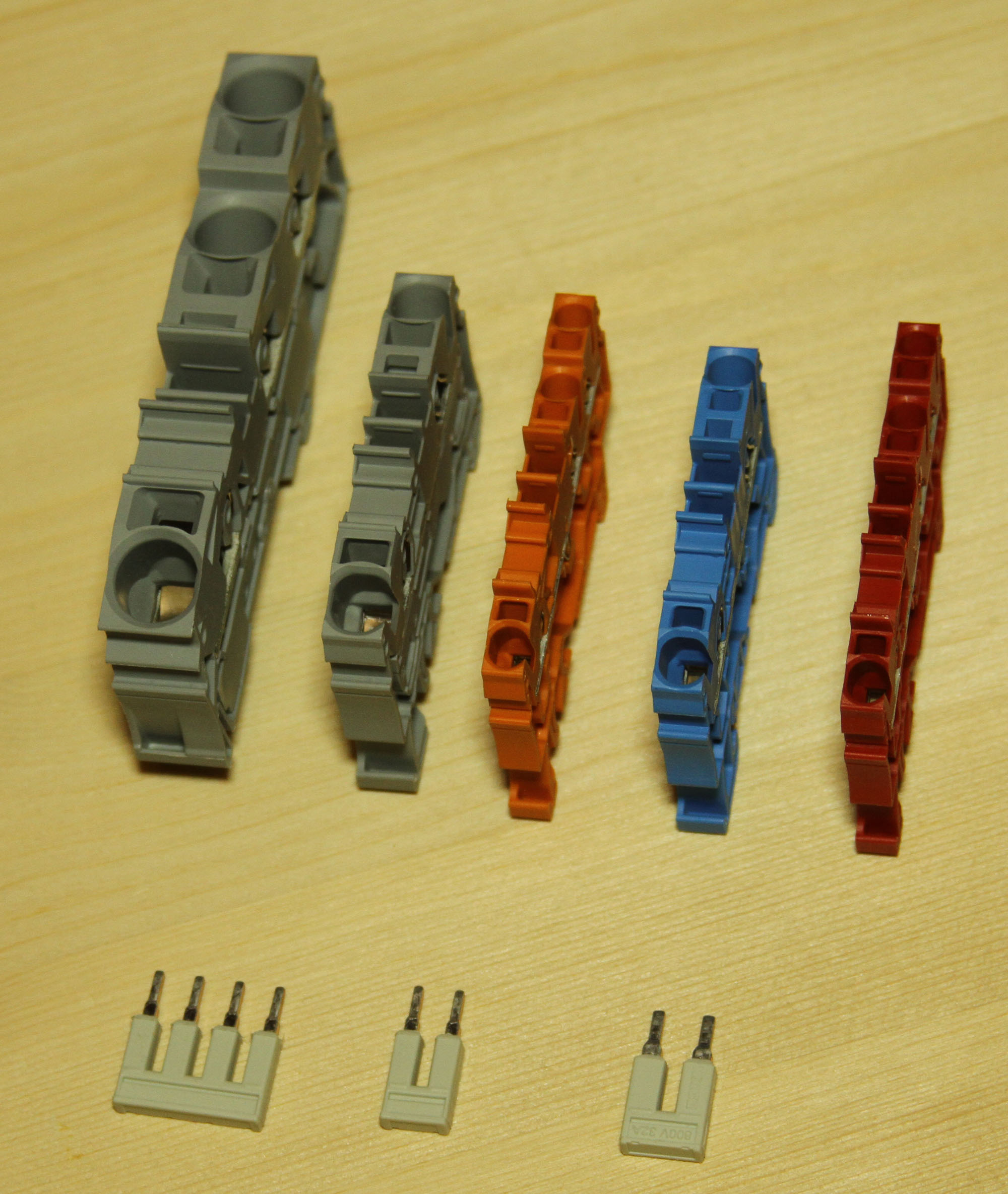

Calculate the complete installed cost
A lower terminal-body price can disappear after accessories, logistics, labor or rework are included. Compare three cost layers in the same currency and time window.
Feed-through, PE, neutral, fuse, disconnect, multi-level, distribution and spare terminals by exact part number and quantity.
End plates, end brackets, separators, bridges or jumpers, marker carriers, labels, test plugs, covers and any terminal-specific tools.
DIN rail, mounting fasteners, support components and panel-space effects. Confirm whether these items are supplied, purchased separately or already standardized.
Packaging, freight, insurance, duty, tax, brokerage, expedited delivery and the financial effect of minimum-order or carton-rounding requirements.
Wire preparation, insertion, tightening where applicable, marking, inspection, electrical testing, documentation and approved rework.
Quantity tiers: use exact examples, not fixed discount rules
The public snapshots below show why every comparison needs the same SKU and quantity. They do not establish a standard market discount.
WAGO 2002-1201
DigiKey US public listing, USD, captured August 4, 2026.
Weidmüller 1020000000
DigiKey US public listing, USD, captured August 4, 2026.
Displayed tiers can depend on seller, stock source, factory pack, order multiple, currency, region and date. For production purchasing, request the exact release quantity, annual demand, delivery schedule and quote validity. A blanket “10% at 100 pieces” rule is not reliable.
Pass the specification gate before comparing quotes
Two parts should enter the same commercial comparison only after their exact technical and compliance requirements have been verified.
Electrical ratings
Compare voltage, current, impulse rating, insulation data and applicable rating system for the intended conductor, installation and end use. Do not merge IEC and UL figures into one number.
Conductor and connection
Match conductor type, cross-section or AWG range, strip length, ferrule policy, connection technology and the manufacturer's preparation and operating instructions.
Mechanical fit
Check width, height, rail or PCB footprint, pitch, pole count, levels, wire-entry direction, tool access, touch protection and enclosure clearances.
Environment
Define operating temperature, pollution degree, vibration, corrosion exposure, material restrictions and any application-specific derating or maintenance requirements.
Approvals and evidence
Request documentation for the exact catalog number. A CE marking, UL Recognized Component status, UL Listing and conformance to an IEC standard are different claims.
Accessory system
Verify the compatible end plates, bridges, markers and test parts. A common IEC 60715 rail profile does not make accessories interchangeable across brands or families.

IEC 60947-7-1:2025 covers terminal blocks for copper conductors in the relevant low-voltage switchgear and controlgear context. PCB terminal blocks have a dedicated IEC 60947-7-4:2019 standard. Product suitability still depends on the exact part, ratings, conditions of acceptability and final equipment design.
Use the exact certification record or declaration requested by the project. Do not treat a logo, family brochure or distributor filter as proof for every catalog number.
Terminal block RFQ checklist
Give every bidder the same data. Ask them to return the same fields so engineering and purchasing can compare the offers line by line.
Identify every line item
Manufacturer or approved source, exact part number, function, color, number of positions or levels, and requested alternatives.
Define demand
Prototype quantity, production release quantity, annual forecast, delivery schedule, acceptable MOQ and any order-multiple constraints.
State technical requirements
Conductor data, current, voltage, connection method, mounting, environment, rail or PCB geometry, and required compatible accessories.
Request approval evidence
List the exact markets, standards, certification files, declarations, material documents and test reports required for the project.
Fix the price basis
Currency, price per piece or pack, standard pack, MOQ, quantity breaks, tax treatment, quote validity and any tooling or setup charge.
Define delivery terms
Incoterm, named destination, freight basis, stock location, current availability, production lead time and partial-shipment policy.
Clarify packaging and labels
Tray, reel, carton or bulk packaging; label content; lot traceability; barcode needs; date-code limits; and sample requirements.
Control substitutions
Require written approval before any alternate. The supplier should provide a cross-reference plus datasheets, drawings and accessory mapping.
A simple quote-comparison worksheet
Populate this structure for each supplier. Keep “not stated” visible instead of inventing assumptions.
| Field | Supplier A | Supplier B | Supplier C | Acceptance check |
|---|---|---|---|---|
| Exact part / revision | Enter value | Enter value | Enter value | Matches approved BOM |
| Unit price / UOM | Enter value | Enter value | Enter value | Same unit and quantity tier |
| Currency / tax | Enter value | Enter value | Enter value | Common comparison currency |
| MOQ / pack / multiple | Enter value | Enter value | Enter value | Excess inventory calculated |
| Accessories included | Enter value | Enter value | Enter value | Complete strip BOM |
| Incoterm / destination | Enter value | Enter value | Enter value | Same landed-cost boundary |
| Stock / lead time | Enter value | Enter value | Enter value | Fits release schedule |
| Validity / evidence | Enter value | Enter value | Enter value | Current and auditable |
Six price-list red flags
Pause the comparison when a price appears precise but the underlying commercial or technical basis is missing.
A brand name, photograph or generic specification does not define the supplied product.
The line may refer to one piece, a complete strip, a mating pair or a carton.
A sample price and production-volume price should never share the same comparison column.
A family-level claim or logo is not proof that the quoted catalog number carries the required status.
The terminal body is offered cheaply, but mandatory end plates, bridges or markers are absent.
Matching width or rail profile does not establish equivalent ratings, dimensions, accessories or approvals.
Send the BOM. Receive a comparable terminal block price list.
Include exact part numbers or application requirements, quantities, destination, approvals and accessory needs. SENTOP can review the request and return a project-specific commercial basis.
Terminal block price list FAQ
What is a realistic terminal block price?
There is no single realistic price without a defined part number and order basis. Product function, conductor size, ratings, connection technology, pole count, approvals, quantity, packaging, currency, region, stock and date all matter. Use the dated public examples on this page only as SKU-specific snapshots, then request a current quote for the project BOM.
Why do terminal block prices change by order quantity?
Public distributors and manufacturers may apply quantity tiers, factory-pack economics, order multiples or project pricing. The resulting unit price can also reflect stock source, region and date. Compare the same exact SKU at the same release quantity, and record MOQ, standard pack and quote validity.
How do I compare two terminal block quotes?
First confirm that both products meet the same electrical, conductor, mechanical, environmental and approval requirements. Then normalize the quantity, unit of measure, currency, tax, Incoterm, destination, accessories, stock, lead time and quote validity. Compare landed and installed cost only after noncompliant offers have been removed.
Are accessories included in the terminal block unit price?
Usually, the displayed unit price refers only to the exact catalog number shown. End plates, end brackets, jumpers, markers, covers, test components, DIN rail and tools may be separate line items. Ask the supplier for an included/excluded list and price the complete terminal-strip BOM.
Is a DIN-rail terminal block always more expensive than a PCB terminal block?
No. They are different product categories and buying units. A PCB part varies by pitch, pole count, orientation and packaging, while a DIN-rail system may require functional terminals and accessories. Compare each category against its own requirements and use cost per completed function when appropriate.
Does certification add a fixed percentage to terminal block price?
No defensible universal percentage applies. Testing, documentation, market access, factory controls and product construction vary. Specify the required approval or declaration for the exact catalog number and compare only offers that provide acceptable evidence.
Can I replace one terminal block brand with a cheaper equivalent?
Only after a controlled engineering review. Check ratings, conductor range, dimensions, rail or PCB fit, connection method, materials, accessories, work instructions and approvals. Sharing a rail profile or nominal size does not guarantee system compatibility or equivalent end-use suitability.
What information is needed for a formal terminal block quote?
Provide exact part numbers or full application requirements, quantity per SKU, release schedule, annual forecast, required approvals, accessory list, packaging and labeling needs, destination, preferred Incoterm and requested currency. Ask the supplier to state price basis, MOQ, pack, stock, lead time, tax, freight and validity.
Technical and price references
Public pricing pages were accessed August 4, 2026. Product pages and standards should be checked again for the exact catalog number and intended end use.
Phoenix Contact UT 2,5 (3044076): exact-product ratings and technical details on the official product page; displayed public price from the Mouser listing.
WAGO 2002-1201: displayed quantity tiers from the DigiKey US listing; exact-product details from the official WAGO page.
Weidmüller WDU 2.5 (1020000000): exact-product technical details from the official catalog; displayed quantity tiers from the DigiKey US listing.
Terminal and accessory scope: Phoenix Contact terminal blocks, terminal block accessories, and PCB connection technology.
Distributor category context: Mouser terminal blocks, DigiKey DIN-rail terminals, and DigiKey wire-to-board terminals.
Standards and certification: IEC 60947-7-1:2025, IEC 60947-7-4:2019, IEC 60715, UL component recognition guidance, and the European Commission CE marking guide.