Terminal Blocks for Clear, Reliable Panel Connections
Select terminal blocks by conductor, connection technology, mounting format, circuit function and accessory system. SENTOP supports spring, screw, DIN rail, plug-in PCB, fixed and barrier terminal directions for control panels, equipment and electrical assemblies.
A terminal block is one part of a complete wiring system
Products that look similar can use different conductor ranges, terminal widths, electrical ratings, rail systems and accessories. Define the circuit and installation first, then compare exact model documentation.
Define the circuit function
Feed-through, PE, neutral, distribution, disconnect, test, fuse, sensor, actuator or another documented function.
Record the conductor
Copper or specified material, solid or stranded class, cross-section or AWG, insulation diameter and preparation method.
Choose connection technology
Spring, push-in, screw clamp, crimp or plug-in interface selected for assembly method, vibration, service and tooling.
Confirm mounting and space
Rail profile, PCB pitch, panel fixing, terminal width, number of positions, levels, covers and service clearance.
Verify ratings and evidence
Current, voltage, insulation data, ambient conditions, exact standard, model scope, approval and installation instructions.
Choose the family from connection and mounting needs
These categories help narrow the enquiry. Final selection still depends on the exact conductor, circuit function, rating, dimensions and accessory family.
 01
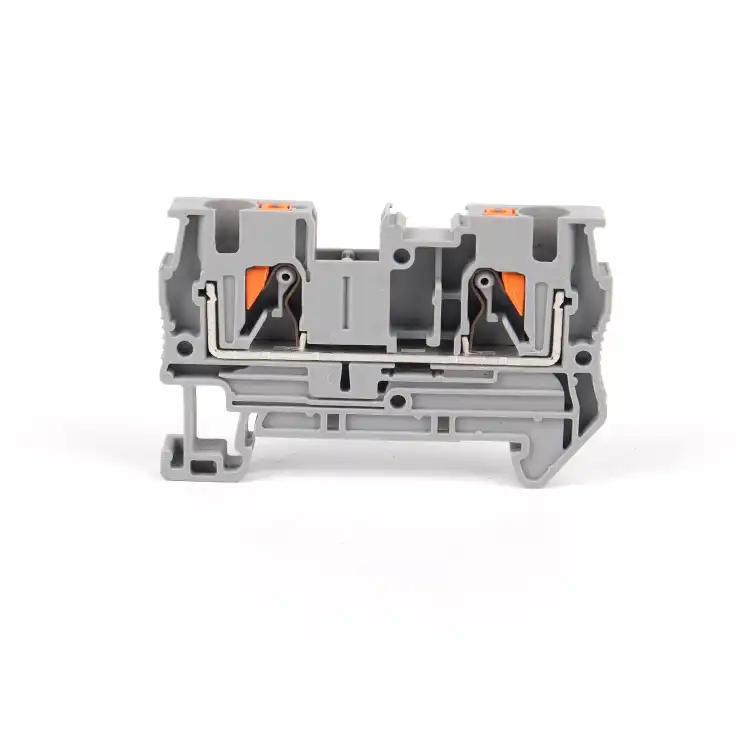
01Spring Terminal Blocks
Spring force maintains the conductor contact. Push-in and tool-operated spring designs support different wiring processes.
Best starting point: repeated panel wiring, vibration-sensitive equipment and projects seeking reduced torque dependence.
Explore spring terminals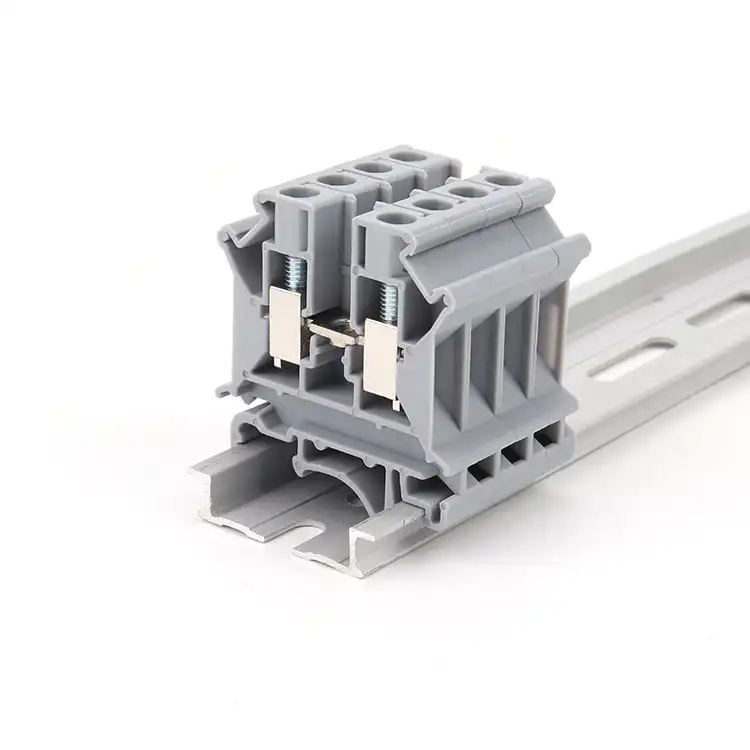 02
02Screw Terminal Blocks
A screw-actuated clamp secures the conductor using the specified preparation, tightening torque and tool.
Best starting point: conventional panel wiring, broad field familiarity and projects with controlled torque inspection.
Explore screw terminals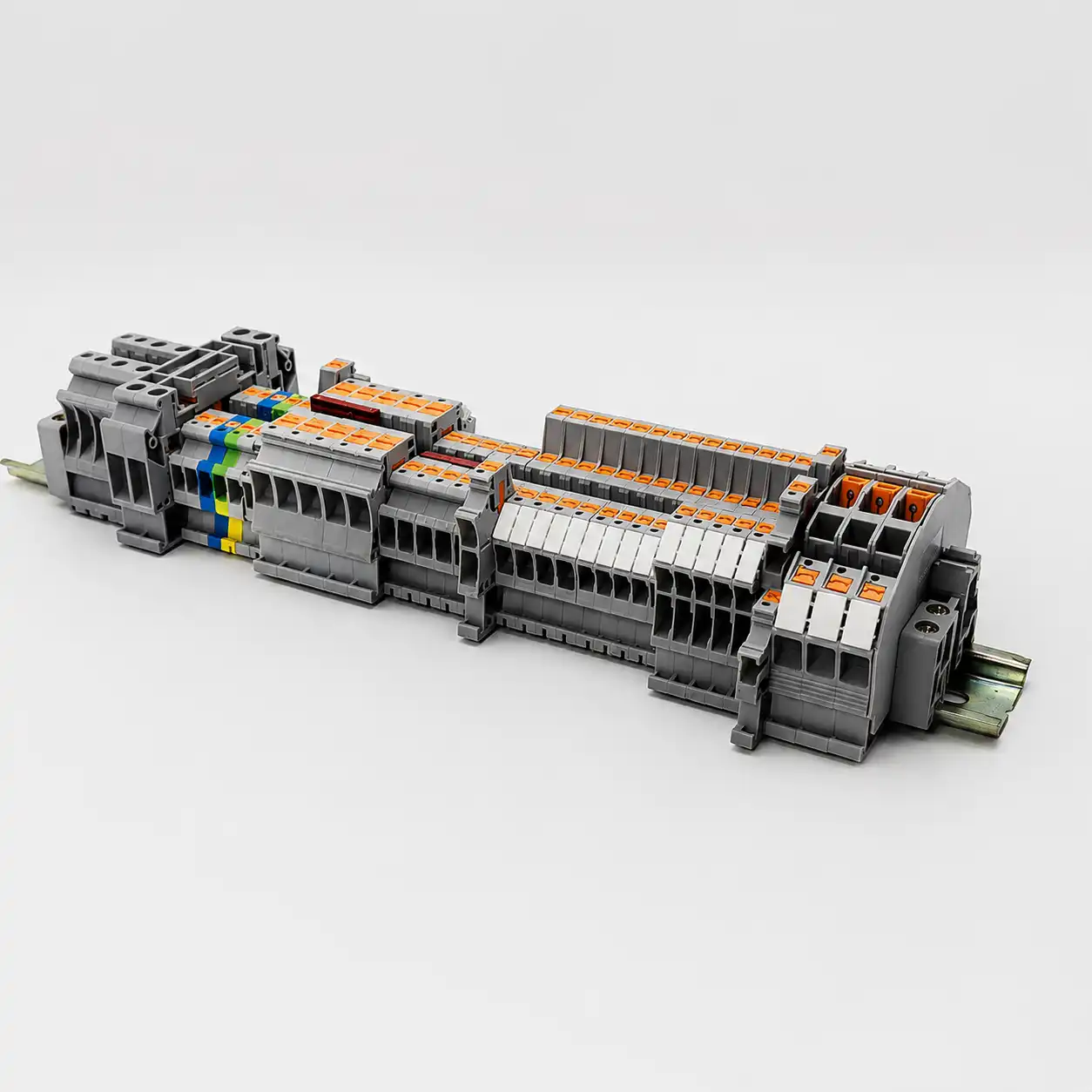 03
03DIN Rail Terminal Blocks
Rail-mounted modular terminals form organized strips for feed-through, PE, distribution, disconnect, test and other functions.
Best starting point: control cabinets, machinery, switchgear and assemblies requiring expandable terminal strips.
Explore DIN rail terminals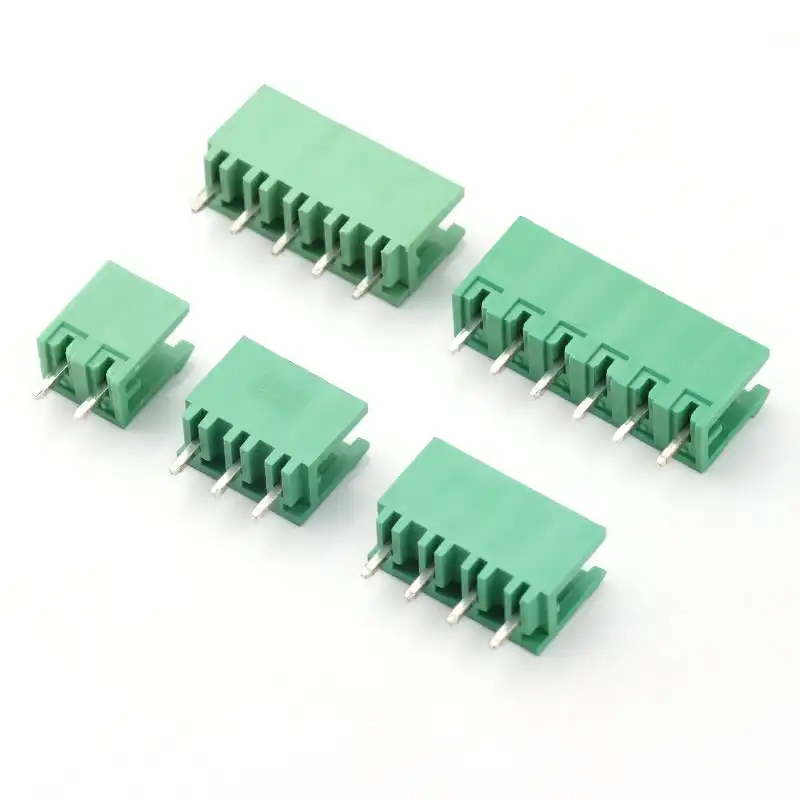 04
04Plug-in / PCB Terminal Blocks
Headers and removable plugs connect field wiring to a printed circuit board while supporting defined pitch, orientation and keying.
Best starting point: controllers, power electronics, replaceable modules and equipment needing separable wiring.
Explore plug-in and PCB terminals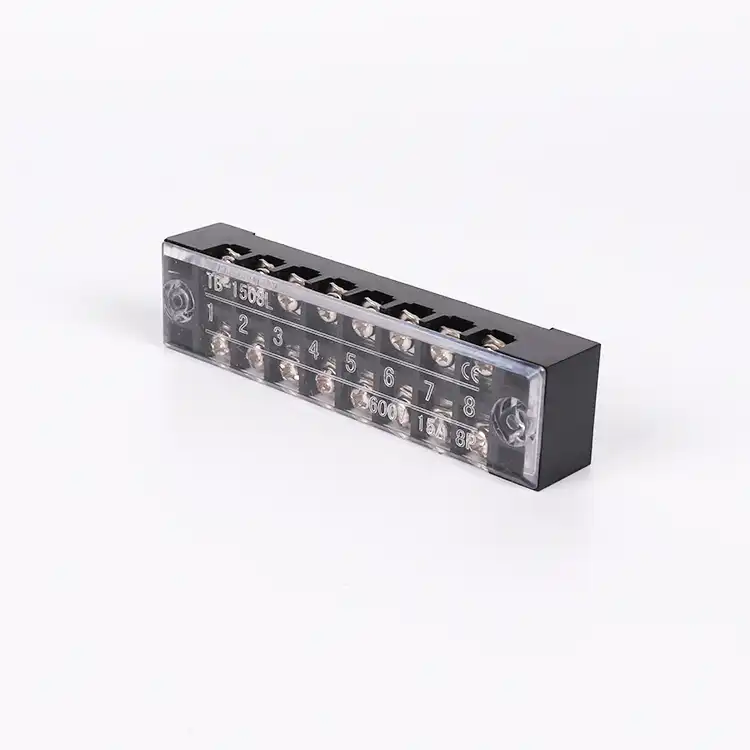 05
05Fixed Terminal Blocks
Multi-position terminal strips mount directly to a panel or chassis and keep a defined number of screw connection points together.
Best starting point: equipment, appliances and compact assemblies with stable terminal counts and fixed mounting.
Explore fixed terminals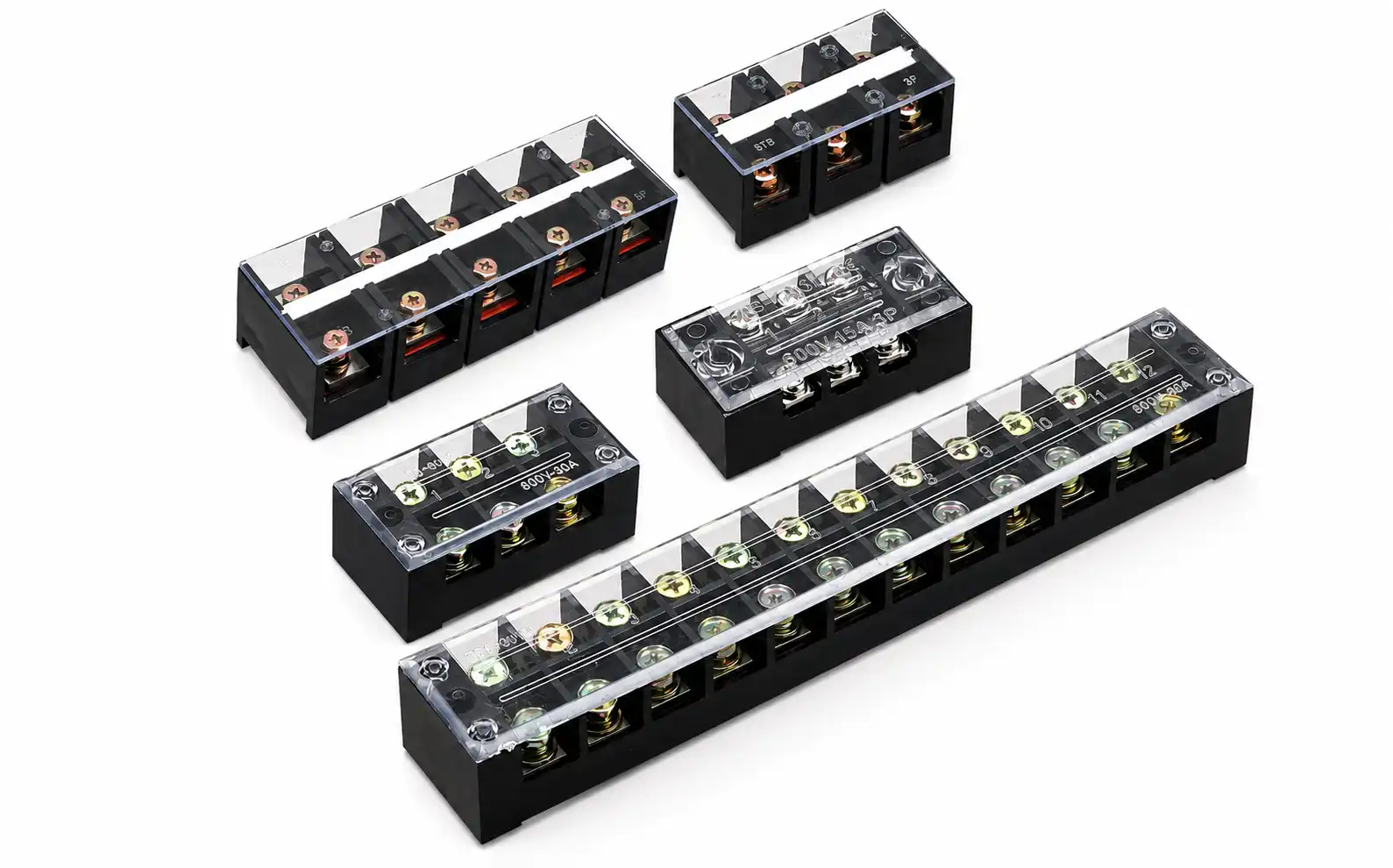 06
06Barrier Terminal Blocks
Raised barriers separate adjacent connection positions and support ring, fork or compatible conductor terminations.
Best starting point: power interfaces, equipment wiring and applications needing clear position separation.
Explore barrier terminalsConvert the application into model data
Use this sequence to compare product families and prepare a useful request. Do not infer a rating from appearance, color or terminal width.
Conductor
Record: material, solid/stranded class, cross-section or AWG, insulation diameter and ferrule.
Why it matters: physical entry does not prove that the conductor combination is approved.
Connection method
Record: spring, push-in, screw clamp, crimp, plug-in or another specified method.
Why it matters: wiring speed, tool, torque, vibration behavior and service procedure differ.
Electrical rating
Record: current, voltage, AC/DC, circuit type, load and protection.
Why it matters: ratings depend on exact model, conductor, standard and service conditions.
Mounting
Record: rail profile, PCB pitch, panel/chassis fixing, orientation and available dimensions.
Why it matters: products from different mounting systems and pitches are not interchangeable.
Circuit function
Record: feed-through, PE, neutral, distribution, disconnect, test, fuse or sensor.
Why it matters: internal current paths and accessories are designed for specific functions.
Environment
Record: ambient temperature, enclosure, pollution, vibration, altitude and corrosion exposure.
Why it matters: installation conditions can change rating, material and spacing requirements.
Target market
Record: destination country, applicable standard, approval and required documents.
Why it matters: approval must be confirmed for the exact model and stated scope.

The terminal block and its accessories must belong to one system
Rail terminals become a usable strip only after the circuit functions, bridges, markers, separators, end plates and rail fixing are coordinated with the exact product family.
Organize the terminal strip around circuit purpose
A mixed terminal strip can combine several functions. Keep each function identifiable in the drawing, marking system and assembled terminal plan.
Feed-Through
General conductor-to-conductor connection across one continuous current path.
Protective Earth
Identified PE connection coordinated with rail or mounting and the protective bonding design.
Potential Distribution
Common-potential distribution using bridges, distribution blocks or multi-connection designs.
Disconnect & Test
Defined isolation or measurement point using compatible disconnect and test accessories.
Fused Circuits
Terminal-level fuse integration for specified auxiliary or signal circuits within its ratings.
Multi-Level Wiring
Higher connection density while preserving level identification, bridging and service access.
Sensor & Actuator
Organized supply, signal and return connections for compact field-device interfaces.
Neutral Circuits
Identified neutral connection and distribution selected for the system and applicable rules.

Terminal systems for panels, machines and equipment
The connection technology may be similar, but conductor, function, environment, documentation and maintenance priorities change with the application.
Control Panels
Field boundaries, control power, PLC I/O, PE, distribution and maintenance test points.
Industrial Machinery
Repeat wiring, vibration, sensor/actuator interfaces, service access and model consistency.
Power Distribution
Control, indication, auxiliary circuits, protective earth and distribution interfaces.
Energy Equipment
Inverter, storage, monitoring and outdoor-cabinet wiring under defined AC/DC conditions.
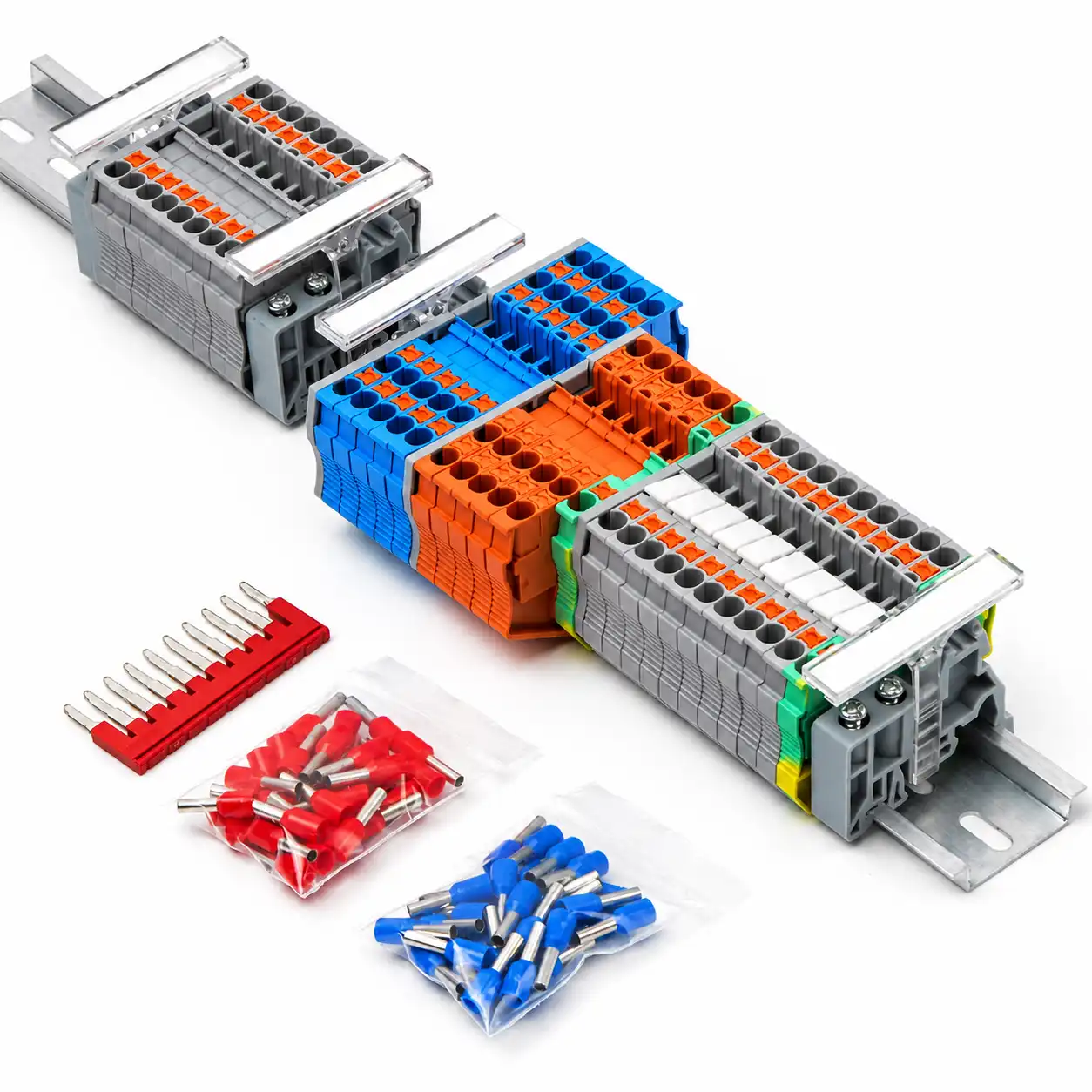
Keep the terminal body, accessory list and labeling requirement connected
SENTOP can review terminal block enquiries for samples, panel BOMs, equipment production, replacement matching and bulk supply. Clear product identity helps reduce mixing between similar terminal families.
Send the circuit data together with the product reference
If the exact model is unknown, provide the available conductor, electrical, mounting, functional and commercial information. Photos and drawings can make replacement review faster.
Technical guides for specific decisions
Questions before confirming a terminal system
These answers help separate product-family terms from the exact model data needed for purchasing and installation.
How do I choose between spring and screw terminal blocks?
Compare the approved conductor range, wiring process, tool and torque requirements, vibration conditions, service procedure, terminal functions and accessory system. Neither technology is automatically better for every project.
Are all DIN rail terminal blocks interchangeable?
No. Rail profile may be shared, but terminal width, electrical rating, connection technology, end plates, bridges, markers and test accessories can be family-specific.
Can a terminal block be selected only by conductor size?
No. Also confirm conductor material and class, current, voltage, circuit function, connection method, mounting, environment, accessories, standard and exact model scope.
When should I use a plug-in PCB terminal block?
Use it when the equipment needs a separable wire-to-board interface and the header/plug system matches the PCB pitch, orientation, keying, conductor, voltage, current and mating requirements.
What is the difference between a terminal block and a cold-pressed terminal?
A terminal block provides an insulated connection point or modular connection system. A cold-pressed terminal is crimped onto a conductor and then connects to compatible equipment, a stud, another conductor or a terminal block.
Do stranded conductors always require ferrules?
No. Ferrule use depends on the terminal instructions, conductor class, applicable standard and approved preparation method. Confirm the exact ferrule and crimp tool when required.
Can bridges from one terminal family be used in another?
Do not assume compatibility. Verify manufacturer, family, pitch, pole count, current, insulation, installation position and product documentation.
What information is needed for a terminal block replacement?
Send full label and product photos, conductor data, dimensions, rail or mounting, current and voltage, circuit function, accessories, target market and required quantity.
Can SENTOP supply a complete marked terminal strip?
SENTOP can review terminal bodies, bridges, markers, end parts and related accessories as a coordinated BOM. Send the terminal plan, circuit references, quantities, labeling format and assembly expectation.