
You often have to pick between vacuum circuit breaker and SF6 for electrical systems. Both have their own good points and bad points. Vacuum circuit breaker and SF6 types both keep your equipment safe, but their differences are important. Look at this comparison:
| Type of Circuit Breaker | Advantages | Disadvantages |
|---|---|---|
| SF6 Circuit Breaker | Works well, breaks current easily, simple to take care of, needs less fixing, small size, lasts a long time | Strong greenhouse gas, costs a lot at first, hard to fix, makes harmful stuff when gas breaks down |
| Vacuum Circuit Breaker | Easy to use, does not need much fixing, better for the environment | N/A |
You should think about how well it works, how much care it needs, cost, safety, and how it affects the environment. Many power companies now like vacuum breakers because they work well and are better for nature. SF6 breakers are still used a lot for high-voltage jobs.
Key Takeaways
- Vacuum circuit breakers are good for the environment. They do not make dangerous gases. This makes them safer for the Earth.
- SF6 circuit breakers are good for high voltage jobs. They work well in big power stations and factories. But you must watch the gas closely.
- You do not need to check vacuum circuit breakers often. You only need to look at them every six months. SF6 breakers need harder gas checks.
- Think about both starting costs and future costs. Vacuum circuit breakers might cost more at first. But they save money later because they need less fixing.
- Pick the right breaker for your system. Look at voltage, current, space, and how it affects the environment. This helps you choose the best one.
Vacuum Circuit Breaker Basics

Definition and Principle
A vacuum circuit breaker helps protect electrical systems. It is used for medium voltage over 1 kV. This device can turn circuits on or off. It keeps your equipment safe from problems. The main idea is arc quenching. When the contacts open, an electric arc appears. The vacuum inside the breaker stops the arc fast and safely.
Here is a simple table to show how the principle works:
| Aspect | Description |
|---|---|
| Device Type | Vacuum Circuit Breaker (VCB) |
| Function | Operational switching (on-off operations) of circuits or electrical equipment |
| Voltage Rating | Medium voltage over 1 kV |
| Operating Principle | Quenching an electric arc that occurs when the contacts open in a vacuum gap |
The vacuum gives strong dielectric strength. This makes it easy to clear the arc. It helps keep your electrical system safe and reliable.
Tip: Vacuum circuit breakers are liked because they do not make harmful gases. They are better for the environment than other types.
How It Works
There are many important parts inside a vacuum circuit breaker. Each part has a special job to do:
- The vacuum bottle stops and puts out the arc. It is made from ceramic or glass. It can handle high heat and pressure.
- Contacts are usually copper. They let electricity flow well and last longer.
- A spring helps pull apart the vacuum bottle and moving contact.
- The operating lever lets you turn the breaker on or off by hand or motor.
- The release mechanism opens the breaker fast if there is a problem.
- Insulation support keeps everything in place and keeps parts apart.
- The shell keeps dust and water out.
When you need to break the circuit, the contacts move apart quickly. The vacuum interrupter chamber keeps a strong vacuum below 10^-4 Pa. This stops the current from flowing. The arc goes away fast because there is no gas. This makes the disconnection safe and reliable.
Vacuum circuit breaker and SF6 both have important uses. But vacuum circuit breakers are cleaner and easier to take care of. You should know that vacuum circuit breakers can have problems at very high voltages. It can be hard to keep the vacuum and stop the contacts from wearing out fast. These problems can change how well it works sometimes.
SF6 Circuit Breaker Basics
Definition and Principle
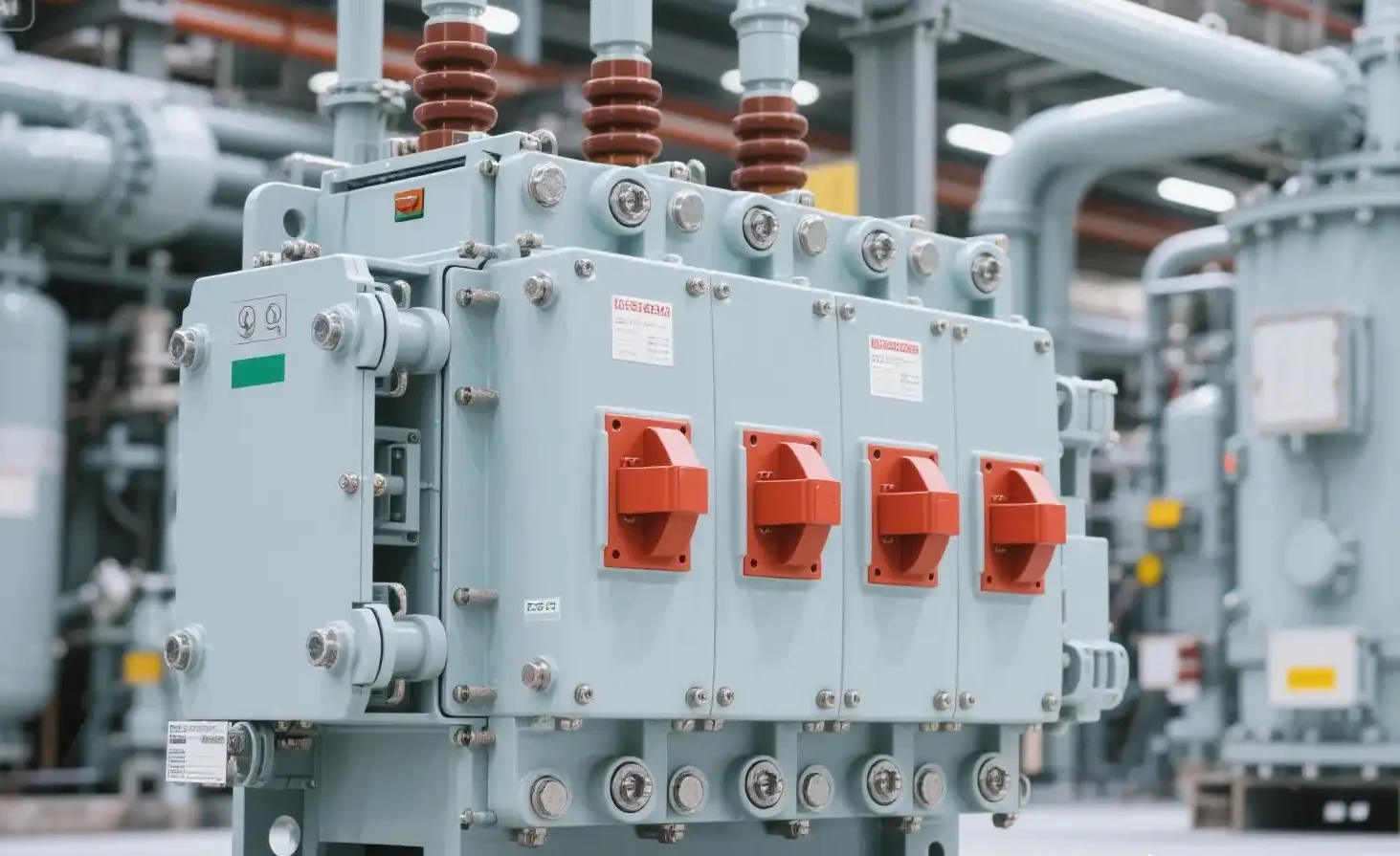
SF6 circuit breakers are used in many high voltage systems. These breakers use a gas called sulfur hexafluoride, or SF6, to keep things safe. The SF6 gas helps stop electric arcs when the contacts open. Here is why engineers pick SF6 for hard jobs:
- SF6 circuit breakers stop current in high voltage systems, usually above 72 kV.
- SF6 gas works as insulation and puts out arcs fast.
- The gas has strong dielectric strength, grabs free electrons, and moves heat well. These things make SF6 great for new switchgear.
Note: SF6 circuit breakers are good when you need strong insulation and safe arc quenching. You see them a lot in substations and big power plants.
How It Works
To understand SF6 circuit breakers, look at their main parts and how they work. When you turn off the breaker, the contacts move apart inside a closed chamber with SF6 gas. The gas covers the contacts and stops the arc from getting bigger. SF6 grabs free electrons and cools the arc fast. This keeps your equipment safe and stops damage.
There are some technical problems with SF6 circuit breakers. The table below shows what you need to watch out for:
| Challenge | Description |
|---|---|
| Environmental Impact | SF₆ has a very high global warming effect, so there are strict rules for using it. |
| Gas Management Complexity | You must keep the gas very pure; water must be less than 8 ppm, which makes it cost more to run. |
| Cost of Handling SF₆ | It costs about $300 per kilogram to recover and clean the gas, plus extra for broken-down gas. |
You also have to keep the SF6 gas clean. If water gets in, it can cause rust and cost a lot of money. Some companies have lost hundreds of thousands of dollars because of water problems. Special drying tools can make costs go up by about 15%.
Vacuum circuit breaker and SF6 both protect electrical systems. But SF6 breakers work with higher voltages and need careful gas control. You should think about these things when you pick the right breaker for your job.
Vacuum Circuit Breaker and SF6 Comparison
Arc Quenching and Insulation
The main job of a circuit breaker is to stop the arc. You want the arc to end fast and safely. Vacuum circuit breaker and SF6 do this in different ways. Vacuum circuit breakers use a vacuum to stretch and cool the arc. The arc stops at the first current zero. SF6 circuit breakers use a special gas to soak up the arc’s energy and cool it down. Both ways work well, but each has its own good points.
| Feature | Vacuum Circuit Breakers | SF6 Circuit Breakers |
|---|---|---|
| Arc Quenching Mechanism | Vacuum stretches and cools the arc, extinguishing it fast. | SF6 gas absorbs energy and cools the arc. |
| Efficiency | Rapid and reliable, prevents reignition. | Handles higher voltages and fault currents. |
| Application | Now used more in high voltage jobs. | Traditionally used for high voltage. |
Vacuum circuit breakers have strong insulation because the vacuum is very good at stopping electricity. SF6 circuit breakers use gas for insulation, which works well but needs careful handling.
Tip: Always check what kind of insulation your system needs before you pick a breaker.
Performance and Reliability
Performance means how well the breaker stops problems and keeps working. Reliability means how often the breaker fails or needs fixing. Vacuum circuit breaker and SF6 both work well, but there are some differences.
| Metric | Vacuum Circuit Breakers (VCBs) |
|---|---|
| Interruption Capacity | Higher than many traditional breakers |
| Lifespan | Longer service life than other options |
| Maintenance Frequency | Less frequent maintenance required |
Studies show vacuum circuit breakers are very reliable. Their failure rate is about 0.81%. SF6 circuit breakers are also reliable, but their failure rate can change a lot, from 0.46% up to 132.61%. Vacuum circuit breakers need only simple checks. SF6 circuit breakers need more gas checks.
| Aspect | Vacuum Circuit Breaker | SF6 Circuit Breaker |
|---|---|---|
| Reliability | High | High |
| Failure Rate | 0.81% | 0.46%–132.61% |
| Maintenance | Low, simple checks | Medium, gas checks |
Maintenance and Service Intervals
You want a breaker that does not need much fixing. Vacuum circuit breaker and SF6 need different care. Vacuum circuit breakers can work for 10,000 to 20,000 times before a full check. You should look at them every six months, test the contacts every year, and do a big check every one to two years if used a lot.
| Operation Count | Maintenance Action | Frequency |
|---|---|---|
| < 2000 times | Visual inspection | Every 6 months |
| 2000–10,000 | Contact resistance test | Annually |
| > 10,000 | Full disassembly + vacuum | Every 1–2 years |
Common care for vacuum circuit breakers includes:
- Looking at the breaker
- Testing the vacuum interrupter
- Checking the moving parts
- Keeping insulation clean
- Adding oil or grease
SF6 circuit breakers need more care. You must watch the gas, check for leaks, and keep the gas clean. This makes taking care of them harder and more expensive.
Cost Factors
Cost is important when picking a breaker. Vacuum circuit breakers usually cost more at first because they are made carefully. But the total cost can be close because you do not need much work to install them. SF6 circuit breakers often cost less at first, especially for high voltage jobs. Over time, vacuum circuit breakers save money because they need less fixing. You can wait 5 to 10 years between big checks. SF6 circuit breakers need more checks and cost more to keep up, like checking gas and looking for leaks.
The total cost for vacuum circuit breakers is often lower over 20 years. You can save more than $35,000 per breaker compared to others. SF6 circuit breakers cost more to keep up because you need special tools and checks.
Note: Think about both the starting price and the long-term costs before you choose.
Safety and Environmental Impact
Safety is very important for you and your team. You must wear the right safety gear to avoid burns, shocks, and injuries. Always follow warning signs and talk clearly to stop mistakes.
| Safety Risk | Description |
|---|---|
| Improper PPE | Can cause burns, shocks, and injuries. Use insulated gear. |
| Ignoring Warnings | May lead to equipment failure and safety hazards. |
| Poor Communication | Can result in skipped safety checks and accidents. |
Vacuum circuit breaker and SF6 are very different for the environment. SF6 gas can warm the planet 23,500 times more than CO2. It stays in the air for about 3,200 years. If it gets out, it can hurt the climate. Vacuum circuit breakers do not use SF6, so they do not make greenhouse gases. They use materials that can be recycled, which helps nature.
- SF6 has a very high global warming effect.
- SF6 stays in the air for thousands of years.
- Vacuum circuit breakers do not use SF6, so they are better for nature.
- Vacuum circuit breakers use recyclable materials.
Many states now have rules for using and getting rid of SF6 gas. For example, California will stop using SF6 in 2025. Massachusetts only allows 1% leaks for new equipment. New York will stop using SF6 in 2027 and set strict limits.
| State | Regulation Description |
|---|---|
| California | Phasing out SF6 starting in 2025, with updated emission limits. |
| Massachusetts | Limits SF6 leak rates to 1% for new equipment, requires action plans for higher leaks. |
| New York | Phasing out SF6 starting in 2027, with a 1% systemwide emissions limit beginning in 2030. |
Alert: Always follow your local rules for handling and getting rid of SF6 gas.
Vacuum circuit breaker and SF6 both keep your electrical system safe, but vacuum circuit breakers are safer and cleaner for the future.
Application Suitability
Best Uses for Vacuum Circuit Breakers
Vacuum circuit breakers are used in many new power systems. They work best for medium voltage, up to 84 kV. These breakers are good where safety and reliability are important. They also need little care. Here is a table that shows where you might use vacuum circuit breakers:
| Application Type | Description |
|---|---|
| Indoor Power Systems | Used in city substations and green energy sites for safety and reliability. |
| Industrial Plants | Manage heavy loads and protect against overloads in factories and mills. |
| Renewable Energy | Control power in solar and wind farms, where energy levels change often. |
| DC Systems | Improve efficiency in DC microgrids and electric vehicle charging stations. |
| Medium-Voltage Systems | Keep industrial systems safe up to 84 kV. |
Vacuum circuit breakers can be used for many current levels. They work in small systems at 630 amps. They also work in big factories up to 3,150 amps. Some special jobs use even more than 6,300 amps. These breakers are small, quiet, and last a long time. You do not have to worry about greenhouse gases or oil leaks.
Tip: Pick vacuum circuit breakers for indoor places, green energy, and when you want less work and a cleaner setup.
Best Uses for SF6 Circuit Breakers
SF6 circuit breakers are best for high voltage and high current jobs. They are used where strong insulation and small size are needed. Here are some common uses:
- Commercial Applications: Office buildings and malls use SF6 breakers for big power needs and to save space.
- Industrial Applications: Factories use SF6 breakers for high voltage machines and tough work.
- Agricultural Applications: Farms use them to protect motors and pumps, sometimes with remote control.
- Utility Applications: Power companies use SF6 breakers in substations to keep the grid safe.
- Public Services: Water plants and public buildings use SF6 breakers for safe power.
SF6 circuit breakers work at many voltage levels. They are used at 115–230 kV in substations and up to 420 kV for power lines. These breakers handle normal currents from 400 to 4,000 amps. You will see them in big projects, like data centers and heavy industry, where you need strong protection.
Note: SF6 circuit breakers are best for high voltage, high current, and places with little space.
Choosing the Right Breaker
You should look at your system before picking a breaker. Think about voltage, current, space, and the environment. Here are some things to help you choose:
- Compact Design: Vacuum circuit breakers save space and fit well indoors or in tight spots.
- Maintenance: Vacuum circuit breakers need less care. SF6 breakers need gas checks and leak checks.
- Environmental Impact: Vacuum circuit breakers do not use greenhouse gases. SF6 breakers can harm the planet.
- Performance: Both types protect your system. Vacuum circuit breakers work up to 84 kV. SF6 breakers work at much higher voltages.
- Reliability: Both types are reliable. Vacuum circuit breakers last long and are quiet.
When you plan a new substation or upgrade, check the voltage and short-circuit current. Make sure the breaker fits your system. Also, think about the site’s height and how wet it is for the best results.
Alert: Many states now limit SF6 because it can hurt the environment. Vacuum circuit breakers are becoming more popular as a green choice.
Future Trends and Versatility
You will see more vacuum circuit breakers soon. Many companies want to lower greenhouse gases. Vacuum circuit breakers and air-insulated switchgear are safe and do not use harmful gases. The need for circuit breakers is growing as power systems get better.
Vacuum circuit breaker and SF6 both have important jobs. You should pick one based on your voltage, current, and how it affects nature. As technology gets better, you will have more green and reliable choices for every job.
You now know how Vacuum circuit breaker and SF6 are not the same. They are different in how they stop arcs, how much fixing they need, how much they cost, and how they affect the earth. The table below shows these main differences:
| Feature | Vacuum Circuit Breaker | SF6 Circuit Breaker |
|---|---|---|
| Arc Medium | Vacuum | SF6 Gas |
| Maintenance | Low | Moderate to High |
| Environmental Impact | No harmful emissions | Potent greenhouse gas |
When picking a breaker, think about how much voltage and current you need. Also, check how much room you have and what safety is needed. If your project is tricky, ask an expert for help to make sure you pick the right one.
FAQ
What is the main difference between vacuum and SF6 circuit breakers?
You will see that vacuum circuit breakers use a vacuum to stop arcs. SF6 circuit breakers use a special gas. Vacuum types are better for the environment. SF6 types work well for high voltage.
How often should you maintain a vacuum circuit breaker?
You should check vacuum circuit breakers every six months. Test the contacts once a year. Full service is needed after 10,000 to 20,000 operations. This keeps your system safe and reliable.
Is SF6 gas dangerous for the environment?
Yes, SF6 gas is a strong greenhouse gas. It can stay in the air for thousands of years. You must handle it carefully and follow local rules to protect the planet.
Can you use vacuum circuit breakers for high voltage systems?
Vacuum circuit breakers work best for medium voltage up to 84 kV. For higher voltage, you should use SF6 circuit breakers. Always check your system’s voltage before choosing.
See also
What Is the Full Name of VCB Electrical
What You Need to Know About Industrial Circuit Breaker Types
What is the highest rated circuit breaker?
Understanding the Strengths and Weaknesses of ACB