

Choosing the right circuit breaker is very important for safety and system performance, especially in large buildings. Understanding the advantages and disadvantages of air circuit breakers is crucial because they impact how effectively these devices protect critical equipment, prevent fires, and ensure business continuity. New circuit breakers often come with features like arc flash protection, fast fault isolation, and predictive maintenance tools. These enhancements help reduce downtime and keep workers safe. Being aware of the advantages and disadvantages of air circuit breakers enables managers and engineers to select the best options for reliable and secure power systems.
Key Takeaways
- Air circuit breakers keep electrical systems safe. They stop dangerous currents fast by using air. This makes them safe and trusted in many industries.
- They can handle big fault currents well. They have smart features to find problems early. These features help lower downtime.
- Air circuit breakers need more room than some other types. They also need regular care. But they do not have fire risks like oil or gas breakers.
- They can be loud and big, which can be a problem. Picking the right breaker depends on what you need. You must also think about space and where you will use it.
- Testing often and following safety rules is important. This keeps air circuit breakers working well. It also helps stop failures and keeps power safe and steady.
Advantages and Disadvantages of Air Circuit Breakers
Knowing the advantages and disadvantages of air circuit breakers helps engineers and managers make good choices for safety and reliability. Here is a simple list of the main strengths and weaknesses of these devices.
Main Advantages
- High Breaking Capacity
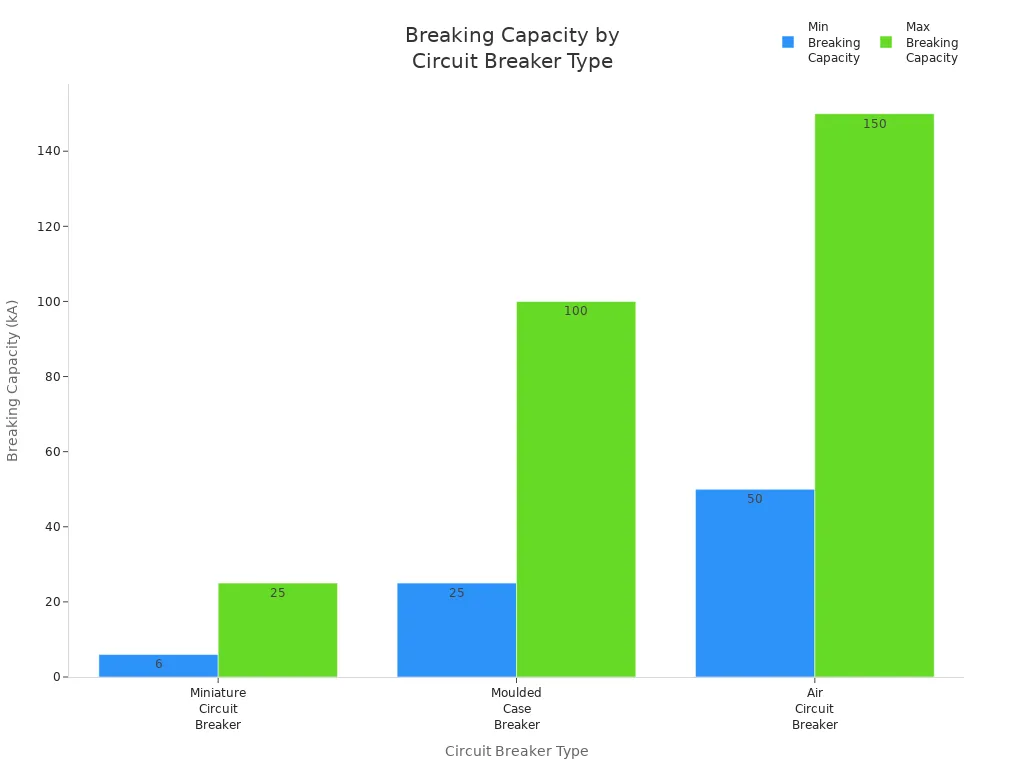
Air circuit breakers can stop large fault currents. This makes them good for heavy industry. The table below shows how their breaking capacity compares to other types:Circuit Breaker Type Breaking Capacity Range (Icu) Typical Application Voltage Typical Use Case Miniature Circuit Breaker (MCB) 6kA – 25kA 230V Domestic and small offices Moulded Case Circuit Breaker (MCCB) 25kA – 100kA 400V Commercial and light industry Air Circuit Breaker (ACB) 50kA – 150kA 690V Heavy industrial applications 
- Enhanced Safety and Reliability
Air circuit breakers protect systems from overloads and short circuits. They help stop fires and damage in homes, businesses, and factories. Their design removes fire risks found in oil circuit breakers, so they are safer in many places. - Support for Modern Technologies
Many new air circuit breakers have smart features. These include IoT, real-time monitoring, and predictive maintenance. These features help find problems early and lower downtime. - Environmental Friendliness
Air circuit breakers use air to stop arcs. They do not need oil or SF6 gas. This makes them better for the environment and easier to take care of. There are no worries about oil leaks or gas escaping. - Suitability for Frequent Operation
Air circuit breakers can switch on and off often. Their arc chutes cool and split the arc. This helps the contacts last longer and improves how well they stop faults. - Moderate Maintenance Needs
Air circuit breakers need less work than oil circuit breakers. You do not have to refill oil. Regular checks focus on arc chutes, heaters, and air flow.
Tip: Test and maintain air circuit breakers often. This helps find problems early and keeps failure rates low, usually under 1% each year if cared for well.
Main Disadvantages
- Size and Space Requirements
Air circuit breakers are bigger and heavier than some other types. They need enough room for setup, use, and repairs. Good air flow and space around them are important for safety.- Smaller designs save space, but you still need strong support and safe clearances.
- Installers must follow rules for cables, grounding, and alignment.
- Arc Extinguishing Limitations
Air circuit breakers use arc chutes to put out arcs. This is not as good as the methods used in vacuum or SF6 circuit breakers. The table below shows the main differences:Feature Air Circuit Breaker (ACB) SF6 Circuit Breaker Arc Quenching Medium Air (needs arc chutes) SF6 gas (no arc chutes needed) Arc Development High, more challenging to extinguish Low, easier to extinguish Breaking Capacity Lower, best for low voltage Higher, suitable for high voltage Maintenance Lower cost, no refilling Higher cost, needs gas handling - Noise Levels
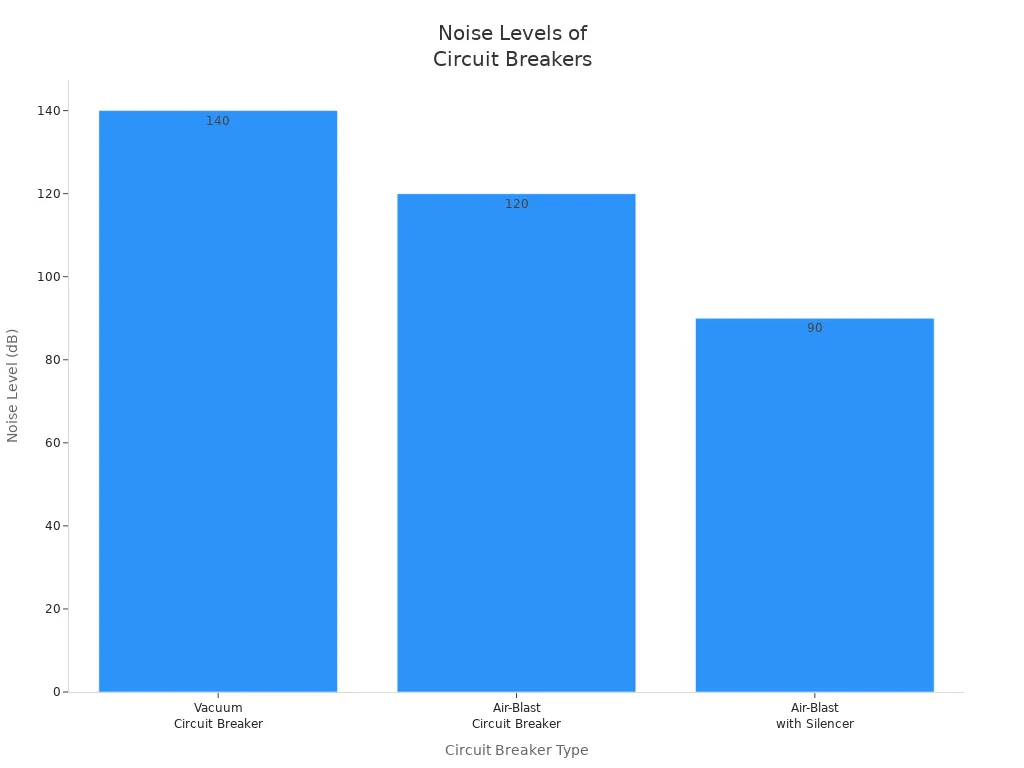
Air-blast circuit breakers can be very loud when working, sometimes up to 120 dB. Silencers can lower this to about 90 dB, but noise is still a problem in quiet places. Vacuum circuit breakers can be even louder, up to 140 dB. - Environmental Sensitivity and Maintenance
Air circuit breakers need regular checks on arc chutes, heaters, and the area around them. Water and dust can hurt how they work, so inspections are important. They need less work than oil circuit breakers, but more than vacuum circuit breakers.Circuit Breaker Type Maintenance Requirements Key Maintenance Details Air Circuit Breaker (ACB) Moderate Check heaters, arc chutes, and ventilation Vacuum Circuit Breaker (VCB) Low Inspect vacuum bottles for leaks Oil Circuit Breaker High Handle and refill oil, monitor for leaks - Arc Chute Wear and Contact Erosion
Using air circuit breakers a lot can wear out arc chutes and contacts. Over time, this can cause failures or make them work less well if not fixed with regular care. - Limited Application Voltage
Air circuit breakers work best for low to medium voltage. For higher voltages, vacuum or SF6 circuit breakers are better at stopping arcs and are more reliable. - Potential for Higher Failure Rates with Poor Maintenance
If air circuit breakers are not cared for or used in tough places, failure rates can go above 1% each year. Problems can include broken parts, trip unit failures, and worn contacts.
Note: New smart air circuit breakers help fix some old problems. They let you watch them in real time, do predictive maintenance, and react faster to faults.
By looking at the advantages and disadvantages, people can choose the right air circuit breaker for their needs.
What Are Air Circuit Breakers?
Definition
An air circuit breaker (ACB) is a device that keeps electrical circuits and equipment safe from too much current, short circuits, or ground faults. It uses air to stop the electricity when something goes wrong. Groups like ANSI, IEEE, and IEC have rules for how air circuit breakers are built and how they should work. These rules decide how strong and safe the ACBs need to be in power systems. Most air circuit breakers in businesses work at voltages up to 1,000 volts and can handle currents from 100 to 6,300 amperes. People use them in factories, offices, and homes because they protect well and are simple to take care of.
How They Work
Air circuit breakers use air to put out the arc that happens when the contacts open during a problem. When the breaker finds a fault, its mechanism pulls the contacts apart. This makes an arc in the air. The arc goes into special arc chutes made of metal plates. These plates break up and cool the arc, so it is easier to stop the electricity. The main parts of an air circuit breaker are:
- Poles with fixed and moving contacts
- Arc chutes with blowout coils and splitter plates
- A base frame
- An operating mechanism
The air inside the breaker cools and spreads out the arc, so the system does not get damaged. Checking air pressure and cleaning arc chutes often helps the breaker stay safe.
Comparison with Other Types
Air circuit breakers are different from oil, vacuum, and SF6 circuit breakers in many ways. Oil circuit breakers use oil that can catch fire, which makes fires more likely and can hurt the environment if it leaks. Vacuum circuit breakers have a sealed vacuum chamber, which stops arcs quickly and needs very little care. SF6 circuit breakers use a special gas that does not burn, so there is no fire risk, but SF6 is bad for the environment if it leaks.
| Circuit Breaker Type | Insulating Medium | Fire Risk | Environmental Impact | Maintenance Needs |
|---|---|---|---|---|
| Oil | Oil (flammable) | High | Oil leaks, disposal | High |
| Air | Air (non-flammable) | Low | None | Moderate |
| SF6 | SF6 gas | None | High (if leaked) | Moderate |
| Vacuum | Vacuum | Very Low | None | Low |
Note: Air circuit breakers are safe, reliable, and good for the environment in most businesses and factories.
Applications and Limitations
Typical Uses
Air circuit breakers are important in many electrical systems. Engineers often pick them for factories and big machines. They help protect equipment and keep power on in places like water plants and mines. Commercial buildings use air circuit breakers to share power safely and save money. You do not see them much in homes, but they help with low voltage and solar power.
| Electrical System Type | Usage Description | Market Share / Emphasis |
|---|---|---|
| Industrial | Strong protection for machines and steady power; used in mining, water plants, making things, utilities, building, and transport | Most common because of high need and safety rules |
| Commercial | Power sharing in offices, malls, and hospitals; works well with low voltage | Important but less than industrial |
| Residential | Low voltage, like solar power setups | Used but not as much |
Many companies use air circuit breakers because they handle big currents and switch often. These breakers find and stop problems fast, so things do not break and work keeps going. Utilities and transport also trust them for safe and steady power. Their design uses air to stop arcs, so they are safer for the earth than oil or gas types.
Tip: Air circuit breakers are best where safety, trust, and easy care are needed.
Where They Fall Short
Air circuit breakers are not good for every place. They are big and heavy, so they do not fit in small or tight spots. The compressed air system inside makes them harder and more costly. You need trained people to put them in and take care of them. In small spaces, air does not insulate well, and the gap may be too small. If air leaks from compressors, they may not work right. They also make loud sounds, which can bother quiet places.
- Complicated air systems cost more to put in and fix.
- Trained workers are needed to use them safely.
- Air does not insulate well in small or high-insulation places.
- Air leaks and current chopping can make them less reliable.
- Extra high-pressure systems need more room.
Places like hospitals or data centers may need quieter or smaller breakers. In those cases, vacuum or SF6 circuit breakers are often better.
Choosing the Right Breaker
Air-Circuit-Breaker-Solution.webp)
Assessing Needs
Picking the right circuit breaker starts with looking at the site and what the system needs. Engineers need to check the area, the amount of power used, and safety before choosing.
- Hot weather can make things too warm and hurt insulation. Breakers must be made for the right temperatures.
- Water and rust can make breakers not last as long. Using good seals and materials helps stop these problems.
- Places with high shock risk need breakers with strong insulation and good protection from dust and water.
- High places have thin air and less cooling. Breakers must work well here so they do not get too hot.
- The way the breaker sits (open or closed) matters for safety if power goes out.
- Breakers must fit the voltage and current of the equipment to stop overloads.
Tip: Always use safety rules like NFPA 70 (NEC) and think about future needs. Good planning means checking power use, space, and how to mount the breaker.
Decision Factors
When you compare air circuit breakers to vacuum or SF6 types, some things are different. The table below shows the main differences:
| Factor | Air Circuit Breaker (ACB) | Vacuum Circuit Breaker (VCB) | SF6 Circuit Breaker |
|---|---|---|---|
| Voltage Range | Up to 690V | 11kV to 33kV | High voltage |
| Maintenance | Frequent | Very low | Medium |
| Reliability | Moderate | High | High |
| Safety | No oil/gas fire risk | High, sealed interrupter | No fire risk, SF6 gas toxic |
| Environmental Impact | Benign (air) | Friendly (no harmful gases) | SF6 gas is a concern |
| Cost | Lower upfront, higher upkeep | Higher upfront, lower upkeep | High |
Other important things to know:
- Air circuit breakers need more room and care but are easy to see and fix.
- Vacuum breakers are best in dusty or wet places and need little care.
- SF6 breakers work well with high voltages but need careful gas handling because of the environment.
- Cost is important. Air circuit breakers cost more to put in and keep up than smaller breakers. But they give strong protection and smart features for important places.
Note: The best breaker depends on voltage, power, where it is used, and money. Always pick a breaker that fits the project for safe and steady power.
Choose ONESTOP air circuit breaker: With over 20 years of manufacturing experience, international certification assurance, and excellent quality, we help you comprehensively improve circuit safety protection.

Air circuit breakers can stop big currents and work quickly. They are safer because they do not use oil. But they take up more space and can be loud. They also need to be checked and fixed often. Every job is different and needs special things. Before picking one, people should look at what the system needs. They should also check the size of the breaker and safety rules. Talking to an expert or reading the details helps pick the right one for the job.
FAQ
What is the main job of an air circuit breaker?
An air circuit breaker protects electrical systems from too much current or short circuits. It uses air to stop the flow of electricity when a problem happens.
How often should someone maintain an air circuit breaker?
Engineers should check air circuit breakers every six months. Regular inspections help find worn parts and keep the system safe.
Can air circuit breakers work in outdoor settings?
Most air circuit breakers work best indoors. Outdoor use needs special enclosures to protect them from water, dust, and extreme temperatures.
Why do air circuit breakers make noise?
Air circuit breakers make noise when they interrupt large currents. The arc and air movement inside the breaker cause the sound.
Are air circuit breakers safe for the environment?
Yes. Air circuit breakers use air as the arc quenching medium. They do not use harmful gases or oils, so they have a low impact on the environment.
The following information may be of interest to you
What is the highest rated circuit breaker?
Understanding What an Air Circuit Breaker Is and Its Principle
What You Need to Know About Industrial Circuit Breaker Types
How Air Circuit Breakers Differ from Vacuum Circuit Breakers
Difference Between Multi-Oil and Low-Oil Circuit Breakers