
Why Wholesale Terminal Blocks Are Safer for Your Projects
Wholesale terminal blocks can reduce project risk only when bulk sourcing is controlled. The advantage comes from exact approved parts, compatible accessories, repeatable lots, traceability, incoming inspection, planned spares, and formal change control—not from quantity, price, or the word “wholesale.”
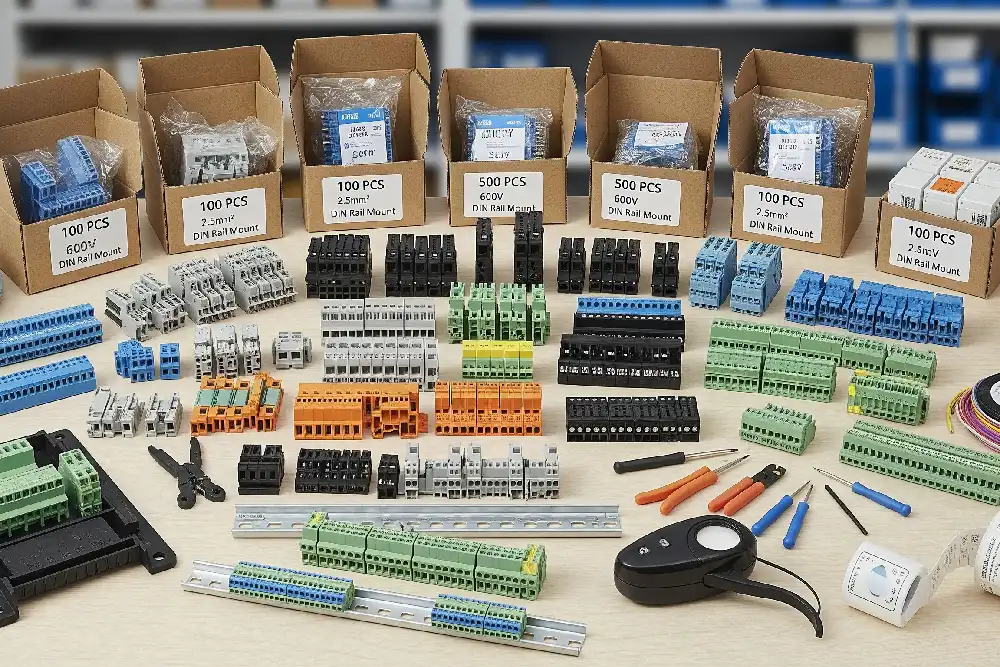
Wholesale becomes a safety tool when it makes the approved build repeatable
A volume agreement can keep one terminal family, accessory system, wire-preparation method, evidence file, packaging identity, and replacement route connected across many panels. That reduces the chance of informal substitutions and mixed installation practices. The same order becomes unsafe when identity or change control is lost.
Quantity is not conformity
A large lot does not prove that the terminal suits the conductor, circuit, end product, environment, or market.
Consistency must be verified
Common packaging can help control a lot, but samples and receiving checks still need to match the released specification.
Accessories are part of safety
Bridges, end plates, separators, covers, markers, test parts, rail hardware, and PE functions must form an approved system.
Supply continuity needs governance
Safety stock helps only when exact identity, storage, revision status, traceability, and field replacement instructions remain intact.
Build a six-link safety assurance chain
Wholesale sourcing improves control when each link creates evidence for the next. A missing link turns a repeat order into an assumption.
Repeat one approved baseline
Exact order codes, accessory relationships, approved wire process, source records, accepted sample, lot identity, receiving criteria, change notice, and replacement route remain connected.
Repeat the same unknown faster
A large order without exact identity, evidence, traceability, inspection, and substitution control can multiply one wrong assumption across many panels.
Release the terminal system
Define circuit function, conductor, ratings, environment, rail, spacing, connection technology, accessories, documentation, and target market.
Quote exact order codes
Hold manufacturer, item, color, pack unit, revision status, accessory quantities, and approved alternates constant across suppliers.
Approve a representative strip
Check rail fit, barriers, bridges, markers, covers, conductor preparation, torque or actuation, and functional terminal positions.
Receive by lot and identity
Match cartons, inner packs, labels, quantities, source documents, part markings, visible condition, and defined sample results.
Install by one work method
Use the released strip length, ferrule rule, tool, torque or spring actuation, insertion check, inspection, and labeling process.
Control service and change
Keep exact spares, notify revisions, approve substitutes, segregate old stock, update drawings, and preserve field-replacement instructions.
Connect every claimed safety benefit to a specific control and record
The purchasing model is useful only when it prevents or detects an actual failure mode. This table keeps the safety claim testable.
| Project risk | How uncontrolled sourcing contributes | Wholesale control that can reduce the risk | Evidence to retain |
|---|---|---|---|
| Wrong terminal | A family description or similar appearance replaces the released order code. | One approved manufacturer identity and written substitution gate for every lot. | Released BOM, quote, order acknowledgment, pack labels, and receiving record. |
| Wrong conductor process | Different clamping technology, strip length, ferrule rule, torque, or tool enters production. | A repeated product family supports one controlled work instruction and training basis. | Current installation data, work instruction, tool record, and inspection result. |
| Incompatible accessories | Bridges, markers, covers, end plates, or test parts are selected by visual similarity. | Quote and kit the complete approved accessory family with the terminal blocks. | Terminal-strip drawing, accessory BOM, first-article photo, and pack list. |
| Mixed approvals | A generic certificate or mark is assumed to cover every product, rating, and use. | Part-specific evidence is verified and linked to the exact received item. | Official database or certificate record, conditions of use, and approval review. |
| Untraceable replacement | Loose stock or local look-alike parts enter service inventory without identity. | Sealed or controlled packs and exact spare codes follow the installed terminal system. | Spare list, bin label, lot/source link, service procedure, and drawing revision. |
| Undocumented change | A supplier substitutes a revision, source, material, label, pack, or accessory. | Advance notification and written buyer approval precede shipment or use. | Change notice, impact review, deviation or requalification, and cutover record. |
| Repeated lot defect | Problems are handled as isolated returns without pattern analysis or containment. | Lot identity supports quarantine, affected-order search, replacement, and CAPA. | Nonconformance, containment, root cause, corrective action, and effectiveness review. |
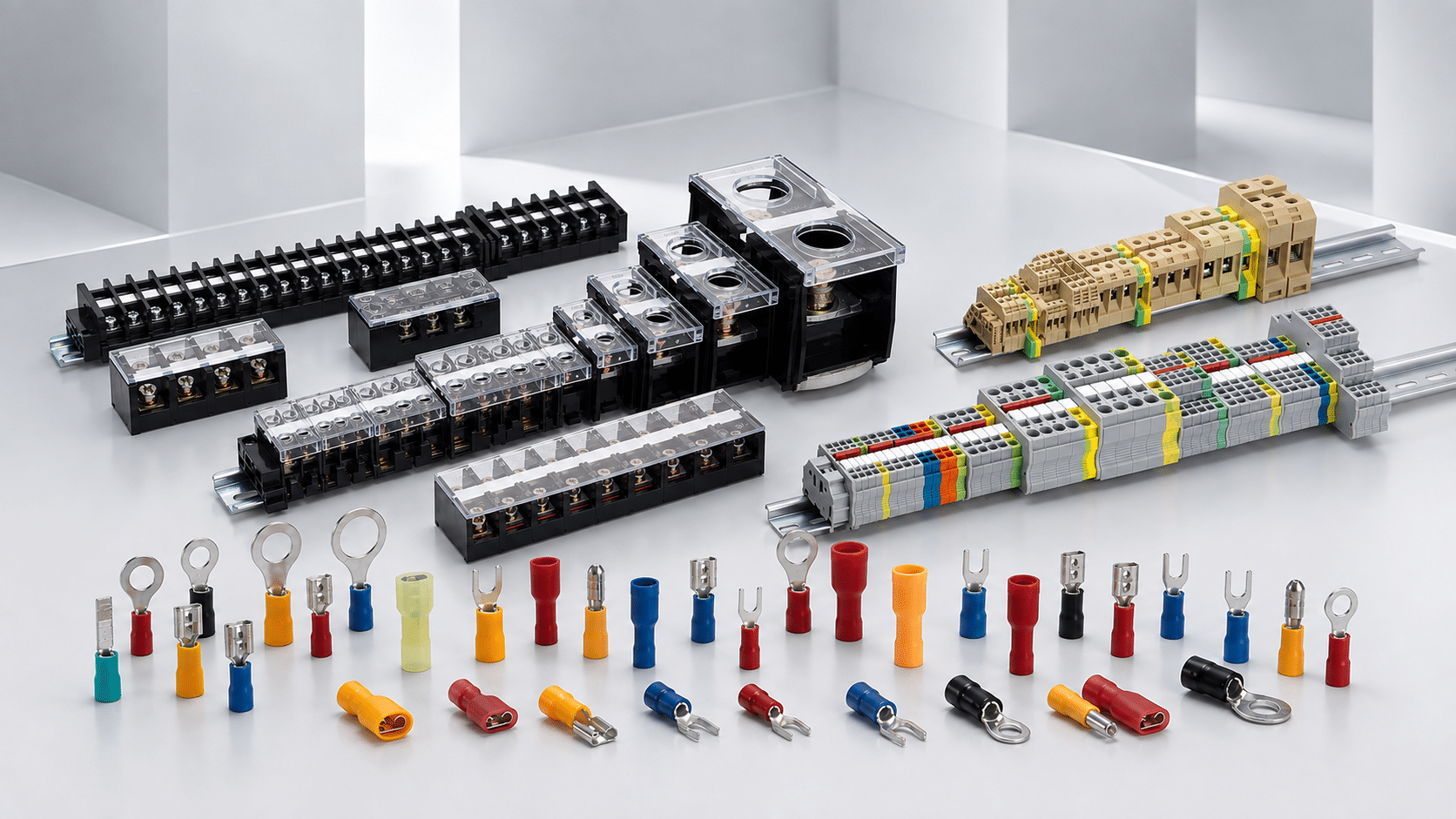
Safety begins with the complete terminal-strip identity
Do not release a bulk order from a broad description such as “terminal block, 2.5 mm².” Cross-section is only one input. The released record must identify the exact product and the way it will be used.
- Function: feed-through, protective earth (PE), neutral, fuse, disconnect/test, component, distribution, multi-level, shield, PCB, pluggable, barrier, or another declared role.
- Conductor: material, cross-section, strand class, conductor count, preparation, ferrule use, strip length, and entry direction.
- Electrical duty: current, voltage, frequency where relevant, fault/protective context, grouping, temperature, and manufacturer derating information.
- Mechanical fit: rail profile, width, pitch, height, end hardware, spacing, enclosure clearance, access, and retention.
- Accessory system: bridges, end plates, separators, covers, markers, test plugs, fuse/component inserts, operating tools, and spare positions.
- Evidence: manufacturer order code, revision status, data sheet, drawing, installation instructions, approval record, declarations, and target-market scope.
Equivalent is an engineering conclusion, not a sales adjective. A similar width or conductor range does not prove the same current path, touch protection, bridge compatibility, marking system, clearances, certification conditions, or service method.
A logo, standard number, or quality certificate does not approve every lot and application
UL Solutions lists terminal-block evaluation routes including UL 1059 and the ANSI/UL 60947-7 series. IEC 60947-7-1:2025 defines a specific scope for terminal blocks for copper conductors. Use these references to ask precise questions—not to turn a family-level claim into universal approval.
Standard scope
Confirm the product type, conductors, terminal function, rated values, environment, and referenced base standards covered by the applicable edition.
Exact model coverage
Match manufacturer, model or series, order suffix, rating table, file or certificate number, status, and any listed variations.
Conditions of use
Check conductor ranges, field/factory wiring status, torque or preparation, spacing, accessories, mounting, temperature, and other limitations.
Marking meaning
Do not treat UL Recognized, UL Listed, CE marking, CB certification, RoHS information, and a laboratory report as interchangeable claims.
Management system
An ISO 9001 certificate concerns a quality management system. It does not certify the terminal block or prove that a received lot matches an approved sample.
Buyer release
Component evidence supports the decision; the panel builder or OEM still controls end-product selection, installation, verification, records, and authorized changes.
Verify current records at quotation and release. A saved PDF or screenshot can become obsolete. Use the official certification database or manufacturer source and record what exact item and conditions were reviewed.
Turn one accepted sample into a repeatable receiving process
A sample proves only what was inspected. Connect it to the quoted source, production-intent configuration, packaging identity, first bulk lot, and replenishment controls. Otherwise, the sample can become a polished exception rather than the supply baseline.
First article
Verify markings, dimensions, rail fit, conductor entry, clamping action, accessories, documents, and a representative terminal-strip build.
First bulk lot
Compare cartons, inner packs, labels, part identity, lot/date data, quantities, visible condition, and defined sampled features.
Routine receipts
Apply the approved inspection plan, preserve source/lot identity, trend discrepancies, and protect unopened or split-pack traceability.
Escalation
Tighten control after a change, defect pattern, lost identity, packaging variation, certificate transition, or supplier-performance decline.
There is no universal sample quantity. Use a documented plan based on part criticality, supplier history, lot size, failure consequence, and end-product controls. ISO 2859-1:2026 provides current attribute-sampling schemes, but the buyer must define the application, inspection level, AQL or other criteria, switching rules, and disposition.

Safety stock helps only when the spare remains identifiable, current, and suitable
Bulk supply can reduce emergency substitution pressure, but excessive or poorly controlled stock creates its own risk. Manage the exact item through storage and field service.
Segment by exact code
Separate manufacturer, family, order code, color, revision, approval basis, accessory system, and pack status—not only nominal size.
Protect identity after opening
Keep inner labels, lot/source links, controlled bins, quantity records, and a rule for loose or repacked components.
Set consequence-based spares
Use demand, replenishment lead time, shortage consequence, service life, change risk, and approved alternatives—not a generic percentage.
Review for change and obsolescence
Assess PCNs, end-of-life notice, drawing updates, approval changes, damaged packs, mixed revisions, and remaining project demand.
Keep the approved terminal identity visible after the production line
Many failures enter through maintenance and replacement rather than the first build. A controlled wholesale program should give warehouse, production, quality, and service teams the same answer.
Drawing and BOM
Installed order codes, functions, positions, bridges, markers, end hardware, spares, and approved alternates.
Work instruction
Wire preparation, permitted ferrules, tools, torque or actuation, insertion check, labeling, inspection, and rework.
Spare identity
Exact part, pack and bin labels, source/lot linkage, revision status, quantity, location, and storage condition.
Substitution gate
Engineering comparison, evidence review, accessory and process impact, customer need, approval authority, and recorded release.
Cutover plan
Old/new segregation, affected panels, stock disposition, document updates, production date, service strategy, and training.
Problem response
Lot containment, affected-order search, disposition, replacement, root cause, corrective action, and effectiveness check.
Do not test uncertainty by energizing it. Quarantine a questionable part or lot and obtain engineering, quality, manufacturer, certification, and jurisdictional guidance appropriate to the equipment.
Six warning signs that the “safer wholesale” claim is not controlled
“Same specification”
No exact order code, revision, accessory list, engineering comparison, or written alternate approval supports the statement.
“Certified terminal blocks”
The record is generic, expired, unrelated to the model, or missing the ratings and conditions required by the project.
“All from one batch”
Cartons or inner packs have no traceable source, part, lot/date, quantity, sealed-pack, or repacking information.
“Accessories fit”
Bridges, markers, covers, end plates, or tools were chosen by pitch or appearance rather than published compatibility.
“Stock is always available”
The seller cannot separate free stock, allocation, location, replenishment, forecast, lifecycle, and confirmed delivery.
“Any defect will be replaced”
No written quarantine, traceability, return, freight, replacement, containment, CAPA, or affected-order process exists.
Ask every supplier to return the same eight evidence groups
This turns a general safety claim into a comparable quotation and a release package that purchasing, engineering, quality, receiving, production, and service can use.
Continue from the safety claim to an auditable sourcing decision
Wholesale terminal block safety questions
Are wholesale terminal blocks automatically safer than retail terminal blocks?
No. Quantity and transaction type do not determine safety. Wholesale sourcing can reduce risk when the exact approved products, accessories, documents, lots, inspection, installation process, substitutions, and spares are controlled. An exact verified small-quantity part can be safer than an uncontrolled bulk lot.
How can bulk sourcing improve terminal block consistency?
A controlled bulk program can repeat one manufacturer order code, accessory family, packaging identity, work instruction, first-article baseline, receiving plan, and change-notification route. Consistency still needs verification because a common carton or sample does not prove every item and replenishment lot matches.
Does a certification mark make every terminal block suitable for my panel?
No. Verify the exact model, certification category or scheme, status, ratings, conductor data, conditions of use, required markings, and end-product context. A mark or standard number does not waive the panel builder's selection, installation, documentation, and verification duties.
Why are accessories part of terminal block safety?
Bridges, end plates, separators, covers, markers, test plugs, rail hardware, fuse or component inserts, and PE terminals affect current paths, separation, touch protection, identification, service access, and mechanical fit. Use published compatible accessories and include them in the approved terminal-strip BOM.
How many terminal blocks should I inspect from a wholesale lot?
There is no universal number. Use a documented plan based on part criticality, lot size, supplier history, failure consequence, and end-product controls. Define the sampling method, inspected features, acceptance criteria, switching rules, and disposition before receipt; increase control after changes or nonconformances.
Can I mix equivalent terminal blocks from different suppliers or brands?
Do not assume equivalence from color, width, nominal conductor size, or rail fit. Ratings, conductor preparation, bridge systems, markers, accessories, tooling, clearances, approvals, and service methods can differ. Any alternate needs documented engineering, quality, evidence, and customer approval where applicable.
Does buying extra terminal blocks make field service safer?
Only when the spares are exact, identifiable, properly stored, revision-controlled, and connected to the installed drawing and service procedure. Loose or obsolete look-alike stock can increase substitution risk. Base spare quantity on demand, lead time, shortage consequence, and lifecycle risk.
What should happen when a wholesale lot is found nonconforming?
Quarantine the suspect lot, preserve labels and records, identify affected orders and panels, document the nonconformance, and request disposition, replacement, containment, root cause, corrective action, and effectiveness evidence under the agreed process. Do not mix replacement stock until identity and traceability are restored.
Use current official records and keep their scope visible
These references support the standards, certification, and sampling boundaries in this article. They do not approve a particular supplier, terminal block, lot, panel, or installation.
- UL Solutions — Connector Certification Services: current terminal-block and connector certification categories, including UL 1059 and the ANSI/UL 60947-7 series.
- IEC 60947-7-1:2025: current IEC scope for terminal blocks and test disconnect terminal blocks for copper conductors with screw-type or screwless clamping units.
- UL Solutions — Product iQ: official route for checking current certification information and component records.
- ISO 2859-1:2026: sampling schemes indexed by acceptance quality limit for lot-by-lot inspection by attributes.
- ISO — Certification and accreditation: explains the difference between certification and accreditation and the need to check the exact claim.
Review the exact terminal system before calling the order safer
SENTOP can review a model, drawing, terminal plan, BOM, sample, conductor requirement, accessory set, quantity, destination, documents, packaging, and delivery need for product matching and supply coordination. Final component and end-product approval remains with the buyer's engineering, quality, and authorized process.
Application · exact model/BOM · conductor data · current/voltage · terminal functions · rail/accessories · target market · annual volume · first-article plan · inspection criteria · packaging/labels · change rules · delivery date