
Does the rail repeat?
Stable machine families and recurring panels give removed touches enough volume to matter. A one-off retrofit may favor locally stocked parts.

OEM terminal blocks create value when a controlled, repeatable terminal-strip system removes engineering search, loose-part handling, assembly touches, accessory errors, rework and service ambiguity. The decision belongs to total installed cost—not the price of one pole.
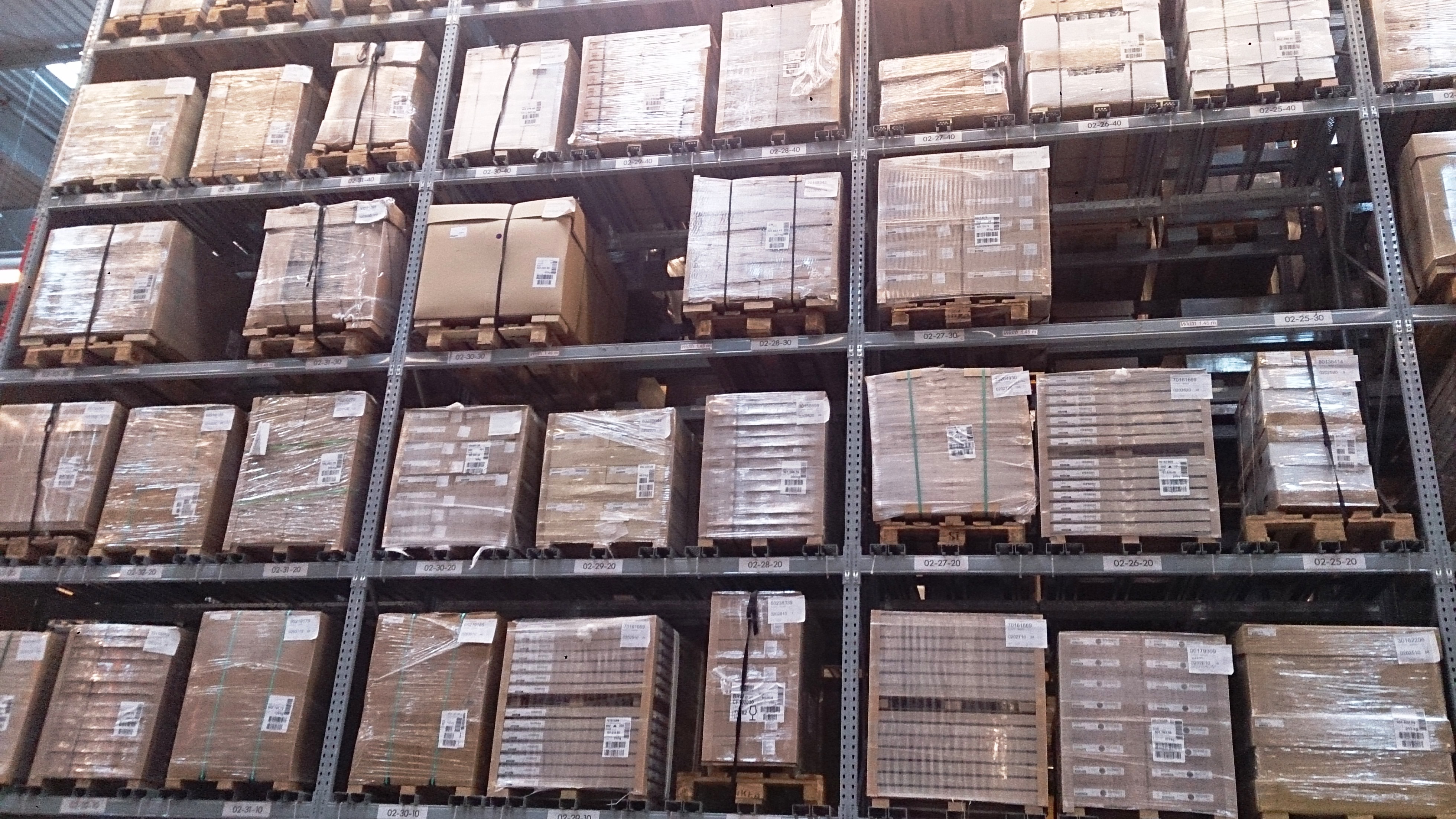
Electrical-cabinet assembly provides manufacturing context; the Rubin Observatory project scene is not an Onesto facility and proves no product quality, rating or certification. Photo: Rubin Observatory/NSF/AURA / Wikimedia Commons, CC BY 4.0. Center-cropped and darkened in CSS.
When a documented configured or preassembled rail removes more verified internal work and risk than it adds in supplier setup, freight, incoming inspection, lead time and change control.
A complete comparison starts with an electrically equivalent terminal system. Preserve the exact function, voltage, current, conductor range, insulation conditions, PE role, fault-duty evidence, accessories, markings and approvals. Then compare the work required to engineer, buy, receive, assemble, wire, inspect, change and service it. The OEM/ODM support path can frame supplier scope, while the project team retains final design authority.
Stable machine families and recurring panels give removed touches enough volume to matter. A one-off retrofit may favor locally stocked parts.
Late circuit, marker, jumper or layout changes can turn preassembly into scrap, rework or expediting. Freeze the controlled baseline first.
End plates, bridges, test parts, fuse modules, PE blocks and markers increase both the opportunity and the consequence of configuration error.
Record labor minutes, pick lines, shortages, deviations, first-pass yield, lead time, freight and service events under the same acceptance criteria.
Do not compare quotations until every supplier is pricing the same deliverable. Private marking, a configured rail, a wired assembly and an integrated enclosure transfer very different amounts of work and create different dependencies.
The buyer receives blocks and accessories as individual line items. It is flexible for prototypes, volatile designs and local service stock.
Internal work remains: selection, purchasing, receiving, kitting, rail preparation, assembly, marking and inspection.
The deliverable normally includes the selected blocks, rail, end hardware, jumpers, separators and markers arranged from an approved drawing.
Value condition: the configuration is stable, complete and repeatable, with visible parts and revision data.
The supplier cuts the rail, mounts the specified parts and applies approved labels. Some programs add wire preparation or guided assembly data.
New controls: incoming completeness, packaging, transport damage, lead time and late-change handling.
The scope can add other DIN-rail devices, glands, wiring, testing or enclosure preparation. It may consolidate more work but increases the impact of an incorrect release.
Boundary: define every supplied function, acceptance test, document and field connection.
| Supply model | Typical deliverable | Best commercial fit | Main risk to control |
|---|---|---|---|
| Standard catalog blocks | Individual terminal bodies and accessories. | One-offs, prototypes, unstable drawings and local repair stock. | Many internal picking and assembly touches; accessory omissions. |
| Configured OEM strip | Defined blocks, rail, end hardware, bridges and markers. | Repeat panels or a controlled family of variants. | Incorrect release or an unmanaged engineering change. |
| Preassembled rail | Configured strip plus supplier assembly and marking. | Labor-constrained production and complex repeated rails. | Incoming inspection, packaging, transport and late changes. |
| Integrated subassembly | Terminals plus adjacent devices, wiring or enclosure work. | High-repeat machinery where interfaces are frozen. | Supplier concentration and a wider revision impact. |

Terminal strips combine bodies, end plates, partitions, end stops, jumpers, markers, test parts, fuse or disconnect functions and the rail itself. Parts that share a pitch or seem to latch together can still differ in current path, voltage conditions, insulation profile or approved use.
Use the control-cabinet wiring component path to keep the terminal strip aligned with adjacent devices, duct, conductors and enclosure interfaces.
The component price is visible because it sits on the purchase order. The less visible work around it can be larger or smaller depending on your process. Count that work explicitly and avoid double counting.
Total installed cost = components + engineering + purchasing/receiving + picking/kitting + rail assembly + wiring/marking + inspection/rework + inventory/obsolescence + freight/expediting + commissioning/service.
Measure hours spent finding compatible terminal bodies and accessories, building the strip drawing, assigning markers, correcting the BOM and answering production questions.
OEM opportunity: reusable product relationships and one controlled configuration can reduce repeated lookup and data entry.
Count purchase lines, confirmations, receiving transactions, invoice lines, shortage follow-up and the work needed to keep small accessory packs aligned with the rail.
OEM opportunity: one documented assembly identifier can consolidate transactions without hiding the service BOM.
Count unique SKUs, bin locations, partial packs, pick touches, stockouts, kit discrepancies and aged inventory. Include safety stock created by uncertain supplier lead time.
OEM opportunity: complete project packs can reduce loose-part handling when demand and releases are dependable.
Time rail cutting, deburring where required, block placement, end restraint, jumper installation, marker printing/insertion and transfer into the cabinet.
OEM opportunity: upstream preassembly can remove repeated manual touches from the panel shop.
Record incoming defects, missing accessories, wrong order, marking errors, bridge corrections, torque or conductor-preparation findings and final inspection minutes.
OEM opportunity: a repeatable physical pattern can make expected conditions easier to verify.
Include engineering-change processing, obsolete stock, urgent freight, field diagnostic time, unclear labels, spare substitutions and the cost of an opaque supplier code.
OEM opportunity: controlled variants and as-built data can simplify service—if the underlying BOM remains accessible.
| Cost driver | Baseline measure | OEM comparison measure | Do not overlook |
|---|---|---|---|
| Engineering | Hours per released rail; BOM corrections; clarification tickets. | Configuration review, drawing release and supplier engineering charge. | Internal approval still required; supplier software does not own the design. |
| Material handling | Pick lines, shortages, receiving events and kit errors per panel. | Assembly receipt, completeness check, package disposal and service-stock handling. | A single purchasing line can still contain many controlled components. |
| Assembly | Minutes from rail preparation through completed marking. | Unpacking, fit-up, installation, wiring and remaining local work. | Do not claim the supplier charge and removed internal labor as two savings. |
| Quality | Inspection time, first-pass yield and documented rework. | Incoming inspection, configuration defects and supplier response. | Apply the same acceptance criteria to both routes. |
| Inventory | SKU count, partial packs, stockouts, aging and carrying assumption. | MOQ, lead-time buffer, finished-rail stock and obsolescence exposure. | Long lead time can exchange many loose SKUs for excessive assembly stock. |
| Service | Diagnostic hours, missing drawings and substitution events. | Spare-rail plan, service BOM access, repair method and revision traceability. | A proprietary assembly number must not hide replaceable components. |
Each lever has a limit. State the removed task, the new supplier task, the measure used and the condition that could reverse the result.
A ready rail can remove local measuring, cutting, terminal placement, end restraint, bridge placement and marker insertion. The gain is strongest when the same released sequence repeats.
Limit: unpacking, fit-up, wiring and inspection remain. A late drawing change can add more work than preassembly removed.
Supplier configuration systems can help pair terminal bodies with matching plates, jumpers, markers and test accessories. This can detect avoidable combinations before purchasing.
Limit: automated completion supports—not replaces—engineering review of ratings, function and application conditions.
CAE or configuration data can feed terminal and conductor marks without repeated manual transcription. Consistent identification helps assembly, inspection and later fault isolation.
Limit: a neatly printed wrong identifier is still wrong. Approve the source data, label rules, material and legibility.
One controlled assembly number can reduce purchasing and receiving lines for a rail that contains many inexpensive accessories. Drawing revision becomes part of what is bought.
Limit: retain the underlying service BOM. An opaque code can make field repair and alternate qualification more difficult.
A stable physical sequence and marking layout make a missing bridge, end plate, terminal or label easier to identify. Training and work instructions can reference one approved pattern.
Limit: repeatability does not prove electrical correctness. Continue the approved inspection and test plan.
A modular architecture can reuse a core terminal strip while adding released option modules for sensors, drives, safety circuits or customer interfaces.
Limit: option codes, drawings, labels, jumper patterns, test records and service spares must stay linked to the exact variant.
A configured assembly can consolidate bins, packs and purchasing lines. But a long lead time, high minimum order or rapidly changing design can force more complete rails into buffer stock and increase obsolescence exposure.
Review the supplier's practical factory and delivery workflow as a set of questions for your own qualification—not as proof of a future result.
Segment the portfolio. Start with stable, repeated and touch-heavy rails; keep highly volatile or service-driven work flexible until its technical and commercial baseline is mature.
The rail repeats across a platform, marker data is controlled, accessory content is significant and internal capacity is constrained. A configured or preassembled supply can remove predictable work.
Release condition: confirm annual demand, revision effectivity, acceptance checks and spare strategy before consolidating.
A common rail supports a family of options with defined module codes, drawings and tests. OEM supply can make the repeated base visible while keeping exceptions deliberate.
Release condition: prevent option-specific bridges, labels or functions from being mixed between variants.
Circuit count, conductor schedule, enclosure geometry or labeling changes every build. Local stock and in-house assembly can absorb learning faster than a frozen configured rail.
Review trigger: reconsider OEM supply after the design has reached a stable, documented release.
A short rail of standard feed-through blocks may not justify supplier setup, transport, incoming inspection or dedicated finished stock. Local assembly may remain the lower total-cost path.
Review trigger: revisit the decision if volume, labor constraint, accessory content or marking complexity increases.

If the baseline begins after kitting but the OEM route includes receiving and inspection, the comparison is distorted. Observe the complete flow for both routes and record waiting, clarifications, shortages and corrections separately from hands-on time.
Conductor preparation remains part of the installed result even when the rail arrives assembled. Put model-specific wire strip-length control in the work instruction, then use measured work—not a catalog claim—to decide whether capacity is genuinely released or merely moved to receiving, change control or service.
A small controlled trial produces better evidence than a general make-versus-buy debate. Keep technical acceptance constant and compare the two workflows with the same start and finish points.
Rank rails by annual volume, design stability, accessory count, marking burden, assembly minutes, shortage history and service criticality. Select one frequent, stable and representative rail—not the easiest special case.
Release terminal type, potential, conductor data, ratings, jumper positions, labels, rail, end restraint, PE function, test points, inspection requirements and target approvals. Resolve open questions before quoting.
Measure engineering, purchasing, receiving, picking, assembly, marking, inspection and rework. Record queue time and shortages separately so labor and availability problems are not mixed.
Ask for loose components, configured strip and preassembled rail prices where available. Show engineering/NRE, MOQ, packaging, freight basis, lead time, documents and revision terms separately.
Verify incoming completeness, fit, marker legibility, jumper placement, panel installation, first-pass acceptance and service usability. Record any internal work that remains or new work that appears.
Assign a drawing revision, effectivity date and approved assembly identifier. Define substitution, shortage, urgent replacement and engineering-change approval. Review actual outcomes after launch.

The supplier can inspect its assembly, but the buyer must define what “complete and acceptable” means. Incoming checks should be proportional to risk and linked to the released drawing, not an informal visual impression.
Escalate a mismatch before installation. Reworking a complete rail inside a nearly finished cabinet can erase the time saved by upstream assembly and can obscure who approved the changed configuration.
Ask each supplier to identify included and excluded work. A single total price cannot be evaluated when assembly contents, engineering charge, lead time, packaging, evidence or change terms are undefined.
State voltage and AC/DC, design current, conductor material/class/range, PE needs, insulation conditions, test/disconnect/fuse functions, short-circuit context and target approvals.
Provide rail profile and length, terminal order, end restraint, end plates, separators, covers, bridge positions, test points, space limits, duct interfaces and cable-entry direction.
Define source data, reference convention, language, durability/legibility need, printer or media limitations, revision mark and whether labels arrive installed or packaged separately.
Supply wiring diagrams, terminal schedule, ECAD export where useful, approved BOM, assembly drawing, 3D/CAD data if required, document formats and as-built expectations.
Show annual forecast, release frequency, lot sizes, MOQ, quantity breaks, engineering/NRE, configuration charge, tooling if any, packaging, freight basis and quotation validity.
Separate normal confirmation from transport time, identify material-availability dependencies, expedite rules, capacity constraints, requested delivery sequence and continuity plan.
Define supplier checks, incoming criteria, inspection/test records, marking verification, traceability, certificate package, response time, containment, returns and corrective-action route.
State approval authority, change-notification window, effectivity, alternate-source policy, obsolescence notice, underlying service BOM, spare parts, urgent field replacement and repair path.

A complete terminal strip is more valuable than loose components only if it arrives identifiable, undamaged and in the sequence production expects. Packaging is therefore part of the quoted process, not a cosmetic afterthought.
Define how shortages, mixed revisions, transport damage and urgent replacements are identified and corrected. A delivery that stops the panel line is not cost-effective even if its piece price was favorable.
The pilot establishes an initial comparison. Production data shows whether the result survives normal variation, engineering changes, shortages and service demand.
Add quoted material and assembly, remaining internal work, inspection, rework, freight and allocated setup using documented assumptions.
Keep engineering, handling, assembly, wiring and inspection separate so a shift of work is not mistaken for elimination.
Define the denominator, defect categories and acceptance criteria before comparing internal and supplier-built rails.
Track order lines, receiving events, kit discrepancies, missing components, expedite events and line-stop impact.
Measure active SKUs, partial packs, buffer rails, aging, write-offs and service stock under the stated carrying-cost method.
Record elapsed time, rework, scrap and communication failures when drawings, options or materials change.
Separate production, transport and shortage delays; track delivery completeness and supplier recovery.
Track tickets, time to identify a position, unavailable parts, undocumented substitutions and successful replacement from current records.
The answers below are decision rules, not a substitute for the current component records, approved panel design or supplier quotation.
Sometimes, but not necessarily by piece price. They can be cheaper in total installed cost when they remove internal engineering, picking, assembly, marking, rework and inventory work across repeat builds. For a simple one-off rail, standard stocked parts can be more economical.
Ask for the exact terminal family, accessories, rail, markers, jumpers, PE parts, drawing revision, assembly scope, packaging, lead time, minimum order quantity, documentation and approval information. A single price without a released configuration is not enough to verify technical or commercial equivalence.
It can reduce the time your shop spends on rail preparation and accessory placement. Measure the full process, including incoming inspection, unpacking, fit-up, wiring, changes and quality checks. The result depends on rail complexity and design stability.
It can, because controlled marking reduces transcription and makes assembly and service easier. The benefit is highest when labels are generated from released engineering data and remain consistent across variants. It does not replace accurate diagrams or electrical verification.
Maintain the released terminal plan, source data, ratings, drawings and service BOM. Qualify alternates where feasible, require lifecycle and change notification, and stock critical service components appropriately. Do not rely only on an opaque supplier assembly code.
They can be used when the selected components and finished panel meet the applicable requirements. Review component category, ratings, conductor suitability and conditions of acceptability against the current project and UL guidance; preassembly alone is not a compliance claim.
Keep it in house when designs change rapidly, quantities are very low, lead time is critical, local customization dominates, or the shop already has efficient kitting, marking and quality controls. Revisit the decision when volume, variation or labor constraints change.
There is no universal quantity threshold. Use the supplier setup and minimum-order terms, internal minutes per rail, loaded labor assumption, design-change rate, lead time, inventory exposure and annual demand to calculate a project-specific crossover.
Build one representative rail through the current and proposed routes using the same released drawing and acceptance criteria. Compare all remaining work, defects, shortages, freight, inventory and change handling—not only hands-on assembly minutes.
Supplier pages establish available workflow capabilities. They do not establish a project-specific saving. Service availability, lead time and ordering conditions vary by region and quotation.
Send the terminal plan, annual volume, conductor schedule, accessory list, approval needs and current process baseline. The review can separate component price from the engineering, assembly, quality, inventory and service work around it.