
What Is a Lightning Protection System and How Does It Work?
A lightning protection system is a coordinated path that intercepts a strike, carries current around the structure, controls dangerous voltage differences and disperses current into the earth. Surge protective devices extend the plan to incoming power and signal services. A single rod, earth electrode or SPD is not the complete system.

A complete LPS gives lightning current a controlled route
A lightning protection system, or LPS, is an engineered group of strike-termination devices, conductors, bonding connections, grounding electrodes and surge protection measures.
When lightning attaches to a protected structure, the external system provides a preferred path from the strike point to earth. Bonding reduces dangerous voltage differences between conductive parts. Internal surge protection measures limit overvoltage that can arrive through power, data, control, antenna or other metallic services.
The purpose is risk reduction—not storm prevention and not a promise of zero damage. The system also does not make outdoor work safe during a thunderstorm. People should still follow local lightning warnings and move to a substantial building or hard-topped vehicle when thunder is heard.
Protection is a system decision, not a product shortcut
How a lightning protection system works, step by step
The steps below describe the function, not a universal construction detail. Exact terminal positions, conductor routes, separation distances, electrode arrangements and test criteria must come from the project design.
Intercept the strike
Air terminals or other permitted strike-termination methods cover exposed zones and likely attachment points.
Carry current downward
A network of roof and down conductors gives lightning current continuous paths around, not through, the structure.
Bond metal systems
Interconnection and separation control reduce potential differences that can create dangerous side flashes.
Disperse into earth
The grounding electrode system spreads current into the surrounding earth and works with the building grounding system.
Limit internal surges
Coordinated SPDs address conducted and induced overvoltage at power, signal and equipment boundaries.
Strike termination
Air terminals, conductors or other accepted arrangements intercept strikes in the protected zone. A visible rod alone says nothing about the rest of the current path.
Conductors
Roof and down conductors provide continuity from interception points toward earth. Routing should avoid unnecessary loops, sharp changes and weak connections.
Bonding
Bonding connects relevant conductive systems, or the design maintains required separation, so lightning does not jump across an unsafe gap.
Grounding electrodes
Electrodes couple the system to earth. Soil, corrosion, foundation design and existing electrodes all affect the project solution.
Surge protection
SPDs protect service entrances, distribution levels and selected equipment. Power, data and control paths should be reviewed together.
External LPS, internal surge protection and people safety
These layers support one risk plan, but they are not interchangeable. Separating them makes specifications and purchasing decisions much clearer.
| Protection layer | Main event addressed | Typical measures | What it does not prove |
|---|---|---|---|
| External LPS Structure protection | Direct attachment, high lightning current, fire or physical damage and side-flash risk. | Strike termination, roof/down conductors, bonding or separation, grounding electrodes, tested connectors and inspection points. | A roof rod does not prove complete conductor, bonding, grounding or maintenance coverage. |
| Internal SPM Electrical/electronic systems | Conducted surges, induced overvoltage and lightning electromagnetic effects. | Equipotential bonding, coordinated SPDs, cable routing, shielding and interface review for power and signal services. | One SPD at one panel does not prove protection for every cable or sensitive load. |
| Operational safety People and work practices | Exposure of people outdoors, on roofs, near open structures or conductive paths during a storm. | Weather monitoring, stop-work rules, safe shelter, evacuation and site emergency procedures. | An installed LPS does not make exposed outdoor activity safe when thunder is present. |
Why a building with air terminals may still need coordinated SPDs
Lightning can affect a facility without sending all current through the roof. Surges may enter on utility lines, arise from nearby electromagnetic coupling or appear between systems at different potentials.
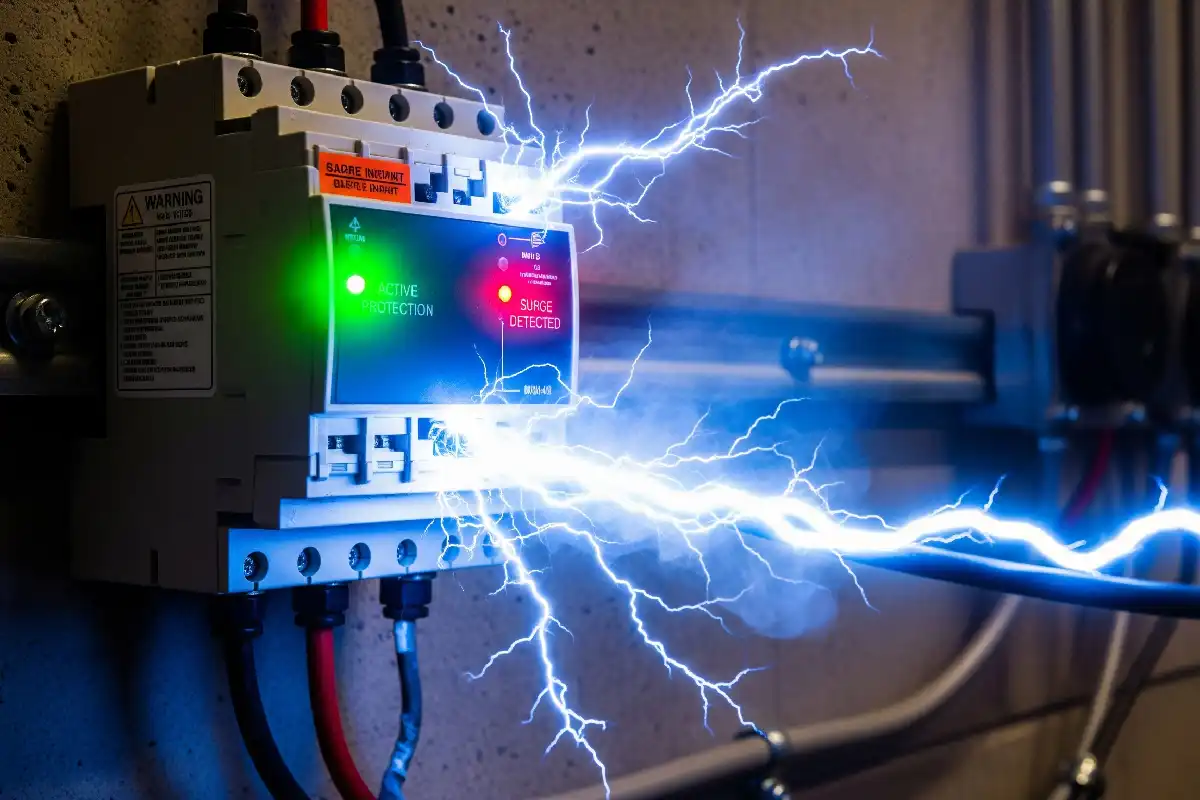
Think in protection levels
A service-entrance SPD, downstream distribution SPD and point-of-use measure have different duties. Selection must consider the system and upstream protection.
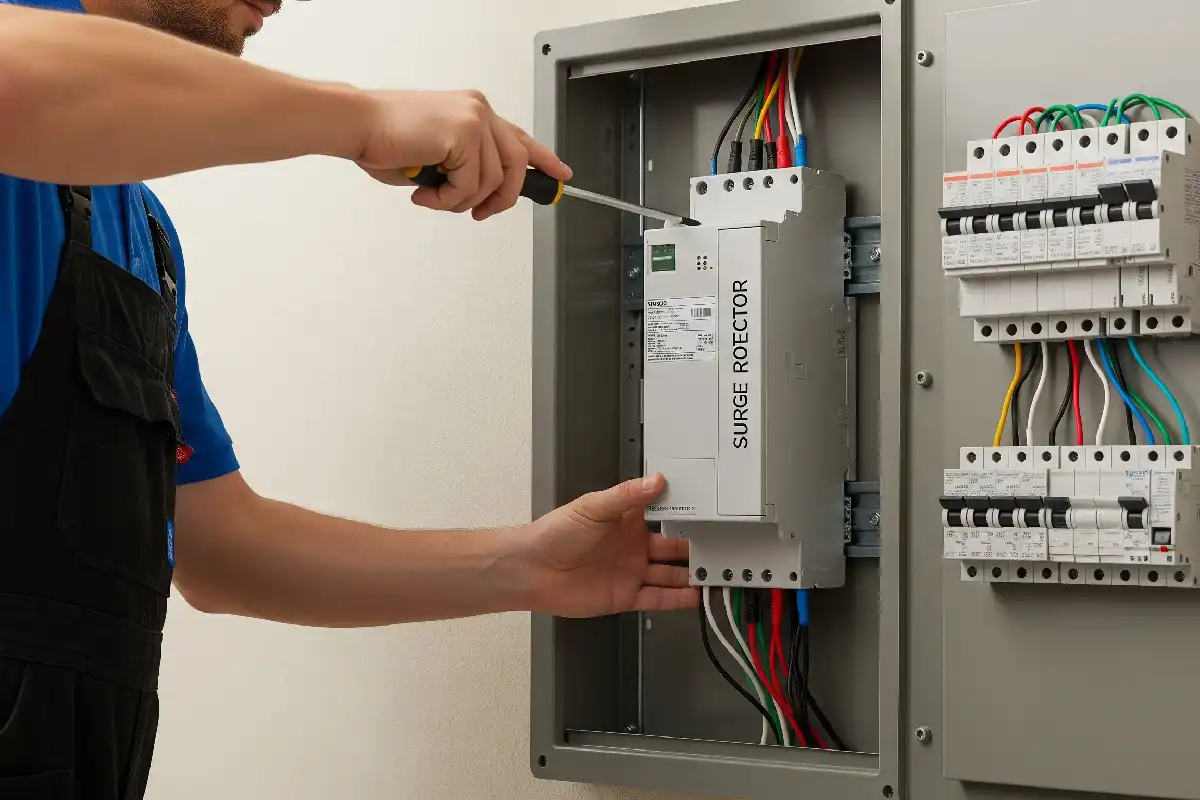
Connection details matter
Long leads, poor routing or unsuitable upstream protection can reduce real-world performance. Follow the device instructions and assembly design.
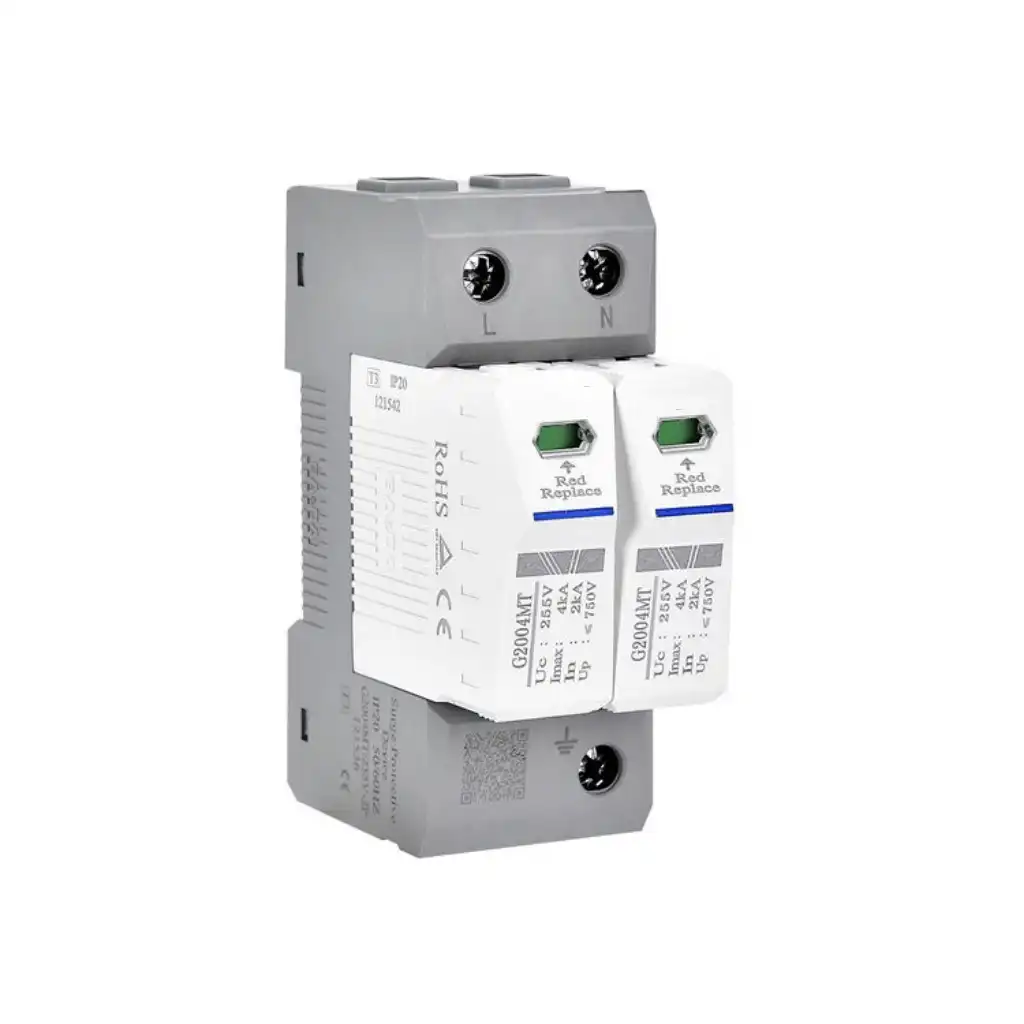
Match the SPD to the application
System voltage, earthing arrangement, discharge ratings, protection level, short-circuit coordination, status indication and replacement method belong in the selection review.
A warehouse example shows why coordination beats a shopping list
Imagine a metal-roof warehouse with rooftop HVAC, a PV array, an office network, dock controls, security cameras and an incoming utility service. Each new system changes the lightning protection conversation.
Attachment and separation
HVAC, PV frames, antennas, skylights and parapets affect strike-termination coverage, bonding and separation decisions.
Current paths
Metalwork may form part of, be bonded to or require separation from the LPS depending on the accepted design method.
Entry points
Utility power, data, fire alarm, gates and cameras can conduct surges across boundaries and between equipment zones.
Consequence of failure
Fire risk, downtime, refrigerated stock, automation loss and life-safety functions influence the acceptable risk and protection level.
What determines the required protection design?
A valid design starts with risk and site information. Copying a neighboring building or buying components before the engineering review can produce gaps, conflicts and avoidable rework.
Building and consequence factors
- Height, footprint, roof geometry, exposed edges and nearby structures
- Construction materials, combustible contents and hazardous areas
- Occupancy, evacuation difficulty and services that must remain available
- Financial, operational, cultural or public-service consequences of loss
- Local lightning environment and the project’s risk assessment method
Electrical and site factors
- Incoming power, telecom, data, antenna, pipeline and control services
- Earthing arrangement, existing electrode system and soil conditions
- Sensitive electronics, automation networks and rooftop equipment
- Corrosion exposure, temperature, vibration and mechanical damage risk
- Applicable standards, authority requirements, insurer rules and owner criteria
From risk review to a maintainable installation
The best time to coordinate the LPS is before roof, steel, electrical and communications details are frozen. Late coordination often creates visual conflicts, long cable routes and missed interfaces.
Set the objective
Record the structure, use, owner priorities, jurisdiction, project stage and consequence of downtime or damage.
Choose the basis
Complete the required risk review and state the standard, edition, protection level and acceptance basis.
Design both layers
Lay out strike termination, conductors, bonding, grounding, service interfaces and coordinated SPDs together.
Control installation
Check approved components, locations, conductor continuity, connections, concealed work and installation records.
Preserve the system
Deliver drawings, inspection results, certificates, SPD data and a change-triggered maintenance plan.
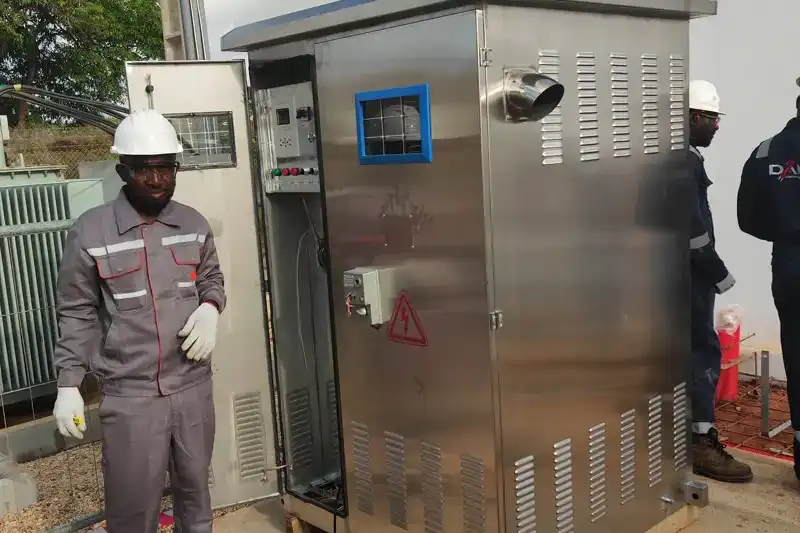
Distribution is part of the surge plan
Panel locations, system voltage, protective devices, cable entries and downstream loads help define SPD duties and coordination.
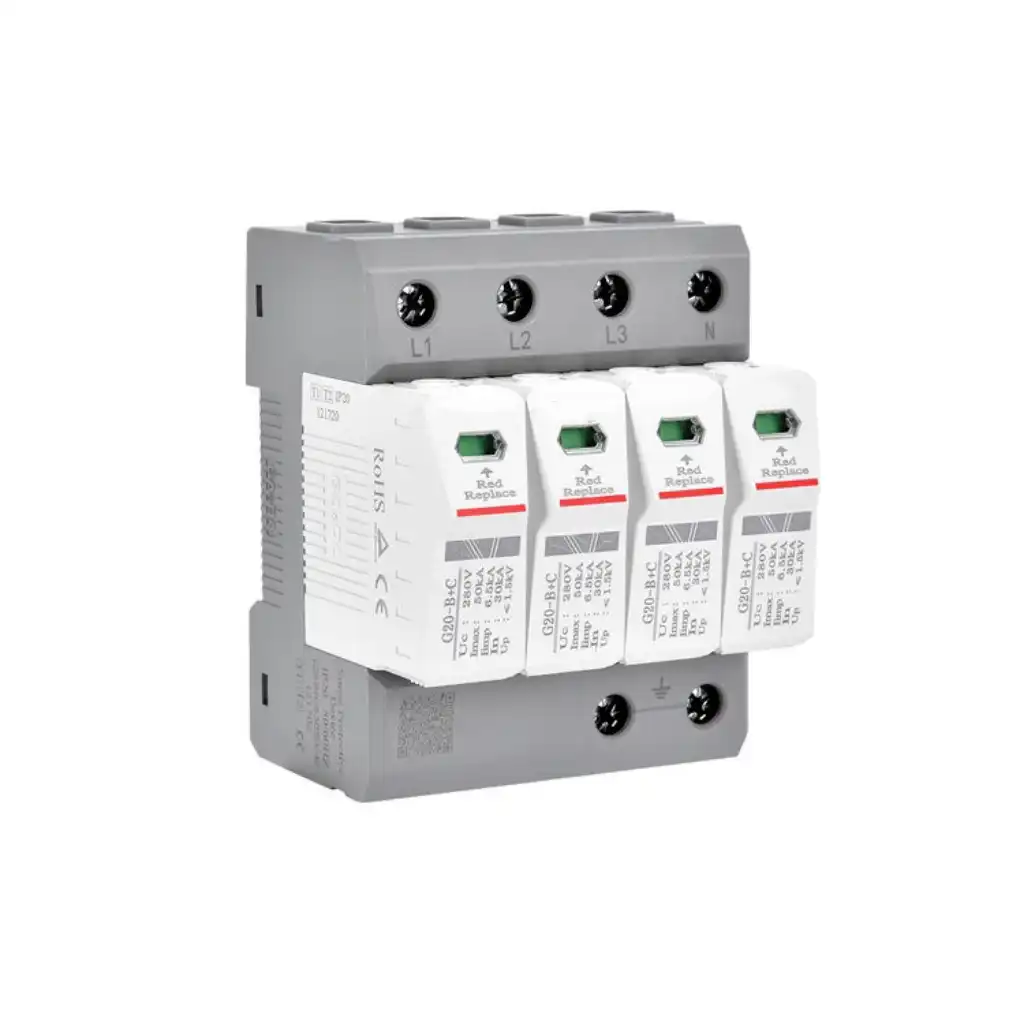
Make maintenance visible
The handover should explain normal status, remote signaling where used, replacement modules and the action required after an end-of-life indication.
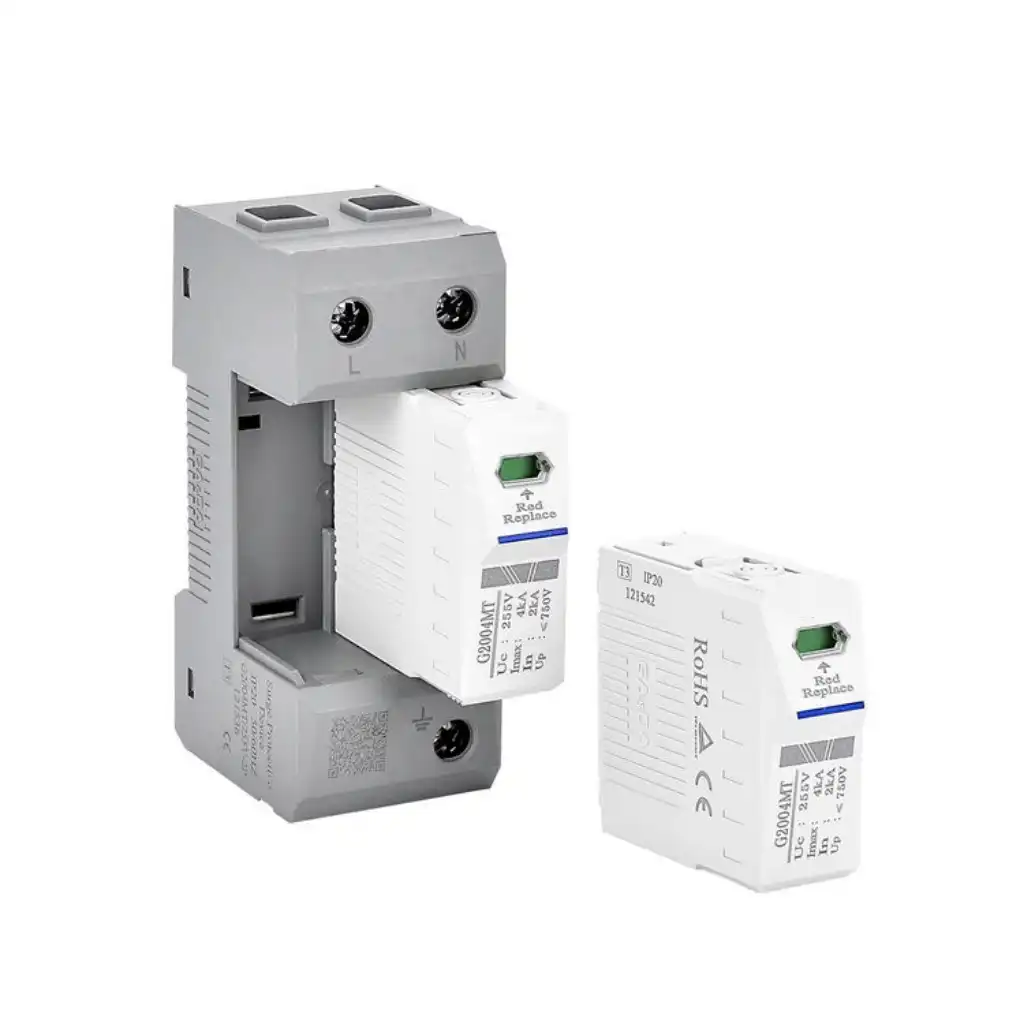
Do not specify by appearance
Devices with similar enclosures can have different voltage, pole, protection and discharge characteristics. Use the exact datasheet and system design.
Six shortcuts that create false confidence
| Shortcut | Why it fails | Better purchasing question |
|---|---|---|
| “Install one lightning rod” | A rod addresses only a possible attachment point. It does not define conductor, bonding, grounding or internal surge protection. | What complete LPS layout and standard basis covers this structure? |
| “We already have a ground rod” | An electrode alone does not show a continuous, bonded and inspected lightning-current path. | How is the electrode system integrated with conductors, building grounding and bonds? |
| “One SPD protects the building” | One device cannot automatically cover every distribution level, cable type or equipment interface. | Which services and protection levels are included, and how are the SPDs coordinated? |
| “Use the same layout as the old roof” | Reroofing, HVAC, PV, antennas and façade changes can alter protected zones and separation conditions. | Has the as-built LPS been reviewed against the changed structure? |
| “Meet one resistance number” | A reading cannot replace conductor, bonding, component, geometry and documentation checks. | What full inspection and acceptance evidence is required by the project standard? |
| “The LPS guarantees no damage” | Protection reduces risk; it cannot remove every physical, electrical or operational consequence. | What residual risk remains, and what operational or insurance controls are still needed? |
What to include in an LPS or SPD request for quotation
A clear RFQ makes technical offers easier to compare. It should describe the problem and acceptance basis, not just list product names.
Project and design inputs
- Site country, city, jurisdiction and applicable building/electrical rules
- Roof plans, elevations, construction details and service-entry drawings
- Occupancy, contents, hazardous zones, critical loads and downtime consequence
- Existing LPS, grounding, bonding and surge protection information
- PV, HVAC, antenna, telecom, data, CCTV and other rooftop or incoming services
Offer and acceptance outputs
- Named standard, edition, risk basis and clearly stated exclusions
- Component schedule, layout drawings and coordination responsibilities
- SPD electrical data, upstream/downstream coordination and replacement plan
- Product certification evidence and installer qualification where required
- Inspection, testing, as-built documents, labels, training and maintenance plan
The system must remain continuous after the building changes
Lightning protection is not a “fit it and forget it” asset. Weather, corrosion, mechanical work, reroofing and new equipment can change the installed path.
The inspection interval should follow the applicable standard, risk, environment, owner program and local requirements. A practical owner visual review can identify obvious damage, but it does not replace the detailed inspection required by the project basis.
- Inspect after a suspected strike, fire or event that may have stressed the system.
- Review after reroofing, façade work, structural modification or new penetrations.
- Recheck when HVAC, PV, antennas, cameras or metalwork are added or moved.
- Confirm SPD status after severe events and replace modules only as the manufacturer directs.
- Keep as-built drawings, inspection findings, repairs and device changes together.
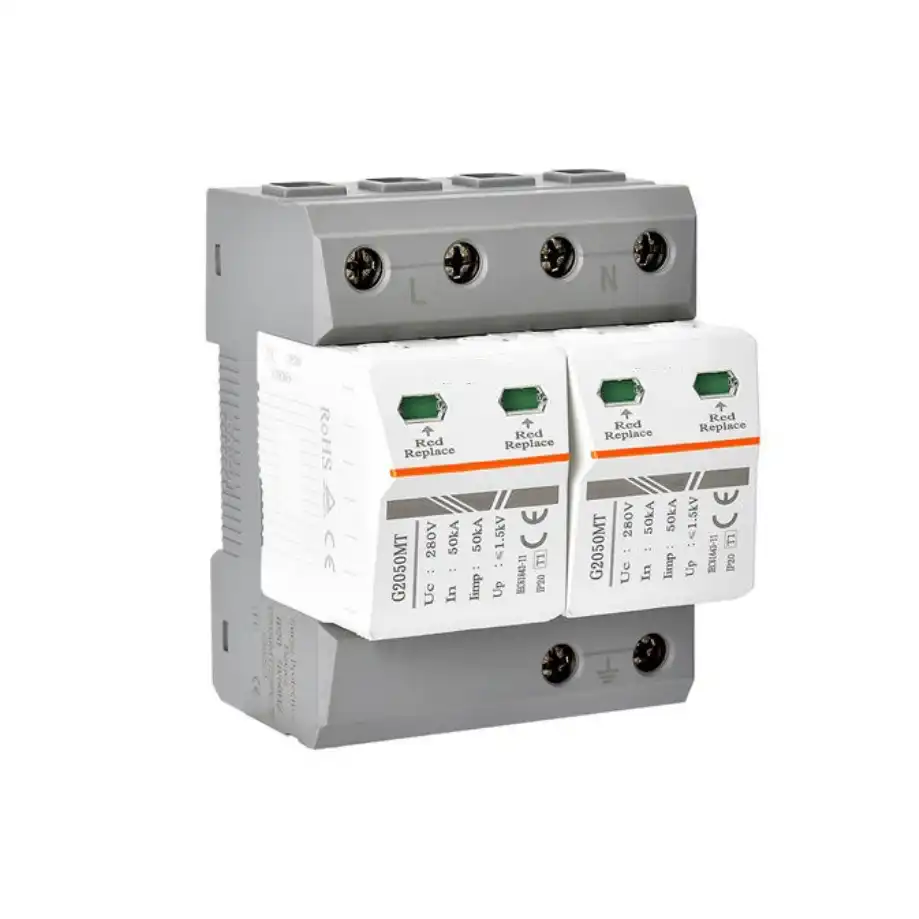
Related SENTOP engineering resources
Lightning protection system FAQ
Does a lightning protection system attract lightning?
No. An LPS does not create storms or pull lightning toward a building. It is intended to intercept a strike that would otherwise attach in the protected area and provide a controlled path for the current.
Is a lightning rod enough to protect a building?
No. A rod is only a strike-termination device. A complete system also needs continuous conductors, bonding or separation measures, grounding electrodes, appropriate connections, inspection and internal surge protection where required.
Does a ground rod protect electronics from lightning?
Not by itself. An earth electrode is one part of the external current path. Sensitive equipment can still be exposed through power, data, control, antenna or other services, so coordinated bonding and SPDs may be needed.
What is the difference between grounding and bonding?
Grounding connects the lightning protection system to earth so current can be dispersed. Bonding connects conductive systems—or the design maintains adequate separation—to control dangerous voltage differences and reduce side-flash risk.
Do I need surge protection if the building already has lightning rods?
Often, yes, especially where sensitive electrical or electronic systems matter. External LPS manages direct strike current and physical risk; coordinated SPDs address conducted and induced surges. The exact scope depends on the risk assessment, services and applicable standard.
How often should a lightning protection system be inspected?
Use the interval required by the applicable standard, local rules, risk level, environment and owner plan. Also inspect after a suspected strike and after roof, façade, PV, HVAC, antenna, electrical or communications changes that may affect the system.
Can I install or repair a lightning protection system myself?
This is specialized safety work involving roof access, high-current paths, building metalwork, grounding and live electrical interfaces. Use qualified designers and installers, and never access the roof or electrical system during a thunderstorm.
Does an LPS guarantee that lightning will cause no damage?
No. A correctly designed, installed and maintained system reduces risk, but it cannot guarantee zero damage, zero downtime or complete safety in every event. Residual risk should be managed through surge protection, operations, maintenance and insurance planning.
Standards and authoritative guidance
Always confirm the edition adopted by the project jurisdiction. The references below explain system principles; they do not replace the project design.
- IEC 62305-1:2024 — general principles for protecting structures, contents and people.
- IEC 62305-2:2024 — risk management for lightning protection decisions.
- IEC 62305-3:2024 — physical damage, life hazard, LPS design, inspection and maintenance.
- IEC 62305-4:2024 — surge protection measures for electrical and electronic systems.
- UL Lightning Protection Application Guide — complete-system functions, bonding, grounding and maintenance concepts.
- NFPA 780 standard development — confirm the locally adopted edition and project applicability.
- U.S. National Weather Service: lightning rods — explains that rods do not prevent or attract lightning.
- Lightning Protection Institute maintenance bulletin — inspection and system change considerations.
Hero photo: The Modern Polymath, Wikimedia Commons, CC BY 4.0.
Need coordinated surge protection for a building or distribution project?
Send SENTOP the electrical system details, installation location, project standard, protection stage and monitoring needs. Our team can help narrow the product and supply requirements while your qualified project professional completes the site-specific LPS design.