
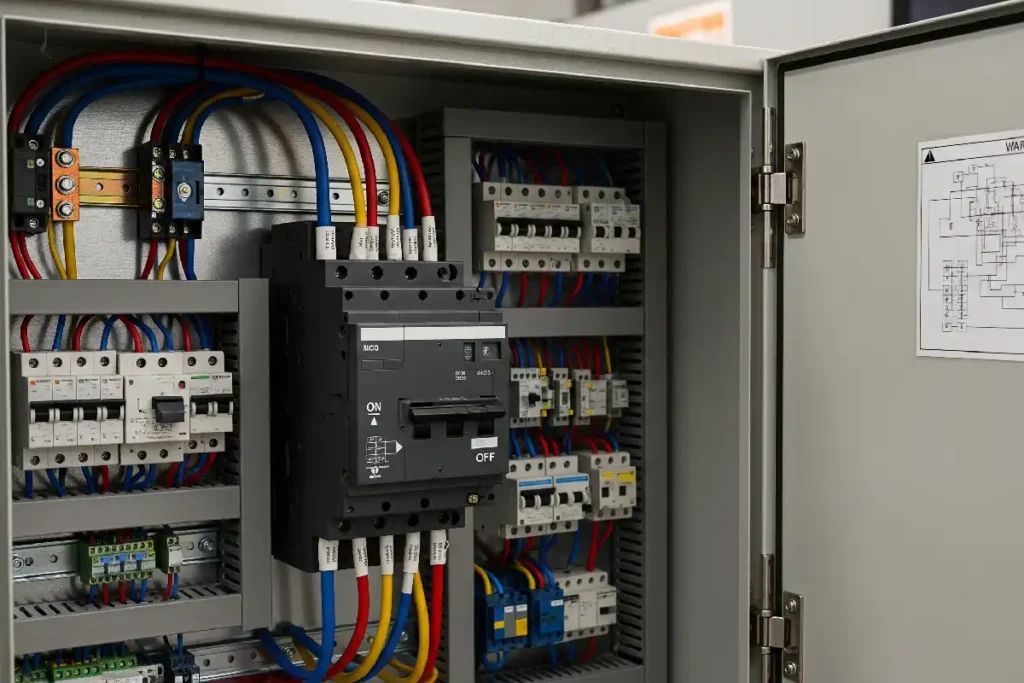
Circuit breaker interrupting capacity guide
What Does the kA Rating Mean on Circuit Breakers?
The kA value tells you how much short-circuit current a breaker is designed to interrupt under stated test conditions. It does not tell you the normal load current the breaker can carry.
Fast answer: a 10 kA marking means 10,000 amperes of stated short-circuit breaking or interrupting capacity. The selected rating must be checked against the available fault current at the installation point, the system voltage, AC or DC duty, the applicable standard and the complete assembly rating.
The direct answer
Amperes carry the load. kA describes a short-circuit duty.
A circuit breaker has to perform two different jobs. During normal operation it carries the circuit current. During a fault it must open the circuit and interrupt a current that may be hundreds of times larger.
These values answer different questions. A 20 A breaker marked 10 kA is not a 10,000 A load breaker. It is a 20 A breaker with a stated 10,000 A short-circuit interrupting or breaking capability.
Three checks before comparing numbers
A kA label only becomes useful in the context of the installation
Do not choose a breaker from a familiar kA number alone. The label, the fault study and the assembly information have to describe the same electrical duty.
Find the available fault current
Use the project short-circuit study or a qualified calculation for the exact installation point. Utility strength, transformer size and impedance, conductor length and upstream equipment all affect the result.
Match voltage, system and standard
A stated rating at one voltage cannot automatically be used at another. Confirm AC or DC duty, frequency where relevant, poles, marked voltage and whether the rating is Icn, Icu, Ics or AIR.
Check the whole assembly
The breaker rating does not by itself establish the short-circuit current rating of a panel, machine or distribution assembly. Review the assembly SCCR, approved combinations and every limiting component.
Read the complete nameplate
The kA number is one part of the breaker identity
Before comparing two breakers, confirm that the markings refer to the same type of rating and operating conditions.
- Rated currentThe load-current rating, such as 16 A, 20 A, 63 A or 250 A.
- Rated voltageThe voltage and AC/DC system for which the stated performance applies.
- Breaking valueThe number may be shown in amperes or kiloamperes and must be interpreted using the named standard.
- Trip behaviorMCB curve, MCCB trip unit, settings and time-current data affect protection and coordination.
- StandardIEC 60898-1, IEC 60947-2, UL 489 or another standard can use different terms and test frameworks.
Common rating language
Icn, Icu, Ics, AIR and SCCR do not all mean the same thing
The product standard and data sheet tell you which term applies. Never replace a named rating with a generic “kA” assumption.
| Term | Plain-language meaning | What the buyer should verify |
|---|---|---|
| Icn | Rated short-circuit capacity used for breakers within the applicable IEC 60898-1 framework. | Exact model, marked voltage, standard, certificate scope and installation application. |
| Icu | Ultimate short-circuit breaking capacity under IEC 60947-2 conditions. The breaker may not be suitable for continued service after this test duty. | The stated value at the project voltage and the condition of service expected after fault interruption. |
| Ics | Service short-circuit breaking capacity under IEC 60947-2 conditions, associated with continued service after the specified test sequence. | Ics as a value or percentage of Icu, plus the exact product data and maintenance plan. |
| AIR / AIC | North American language commonly used for a breaker's interrupting rating or capacity. | Marked voltage, UL listing information, system type and the permitted equipment combination. |
| SCCR | Short-circuit current rating of equipment or an assembly, not simply the interrupting rating of one breaker. | The marked assembly SCCR and any documented series-rated or tested combination requirements. |
Preliminary comparison tool
Screen a breaker kA value against a known fault-current result
Use this only when a qualified study or utility document already gives the prospective short-circuit current at the installation point.
This screen does not calculate fault current, establish SCCR, approve a series rating, or replace coordination and product documentation.
Place the rating in the product context
MCB, MCCB and ACB selection starts from circuit position and duty
The product family is not selected by kA alone. Current range, trip function, adjustability, mounting, accessories, maintenance and the distribution architecture also matter.
Modular final circuits
Miniature Circuit Breakers
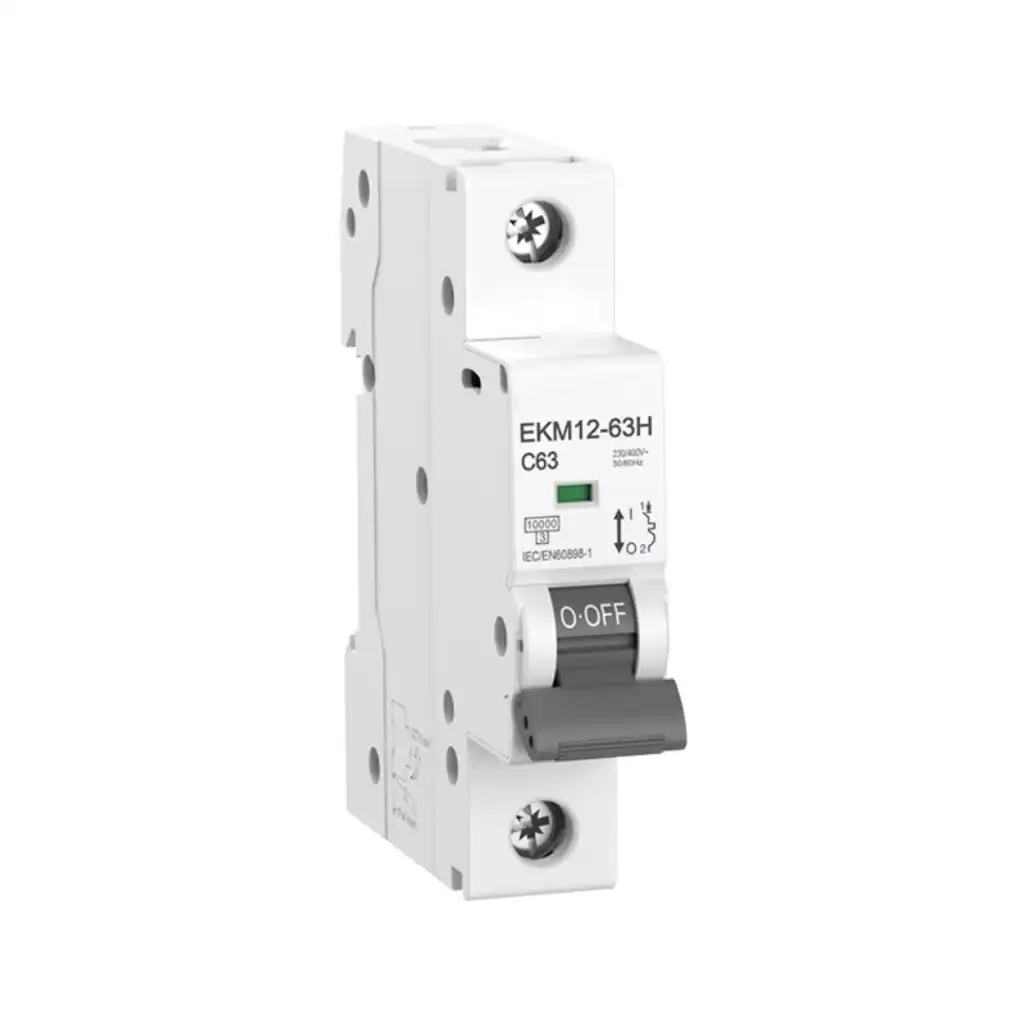
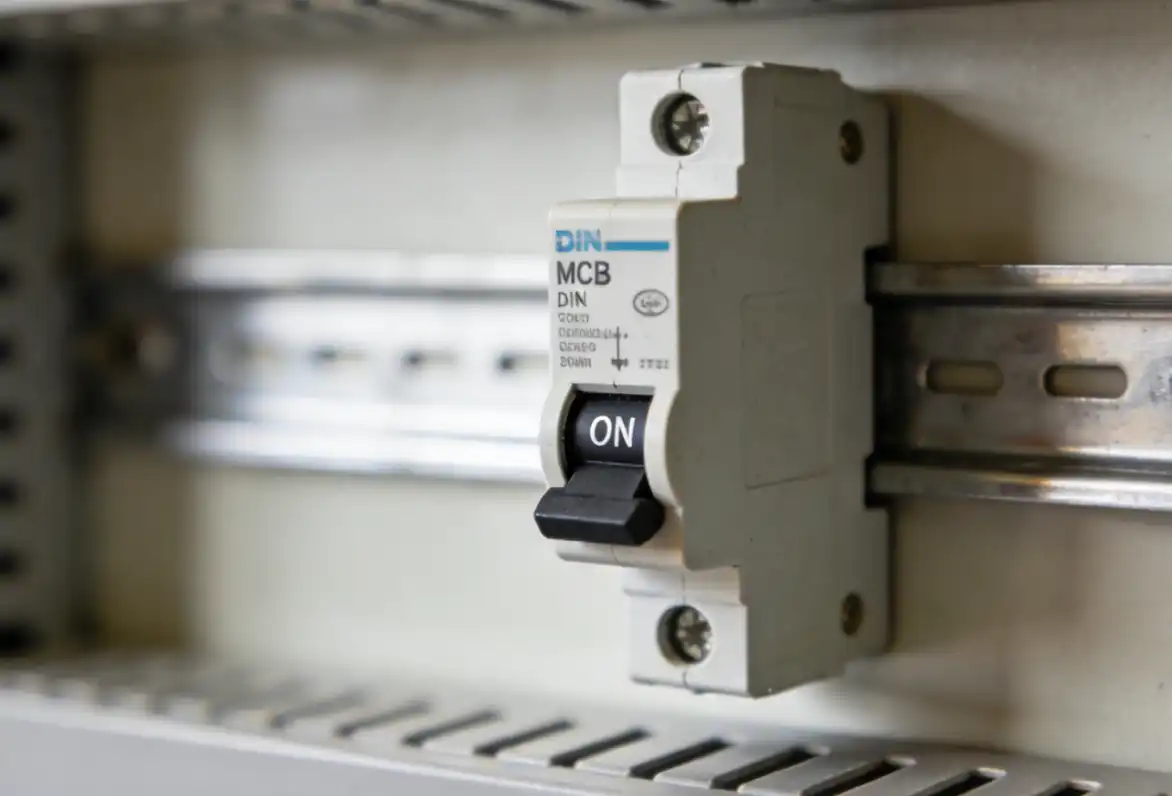
Common in modular distribution for final circuits. Confirm current, poles, trip curve, voltage, Icn or applicable interrupting rating and the exact standard.
Explore the MCB range →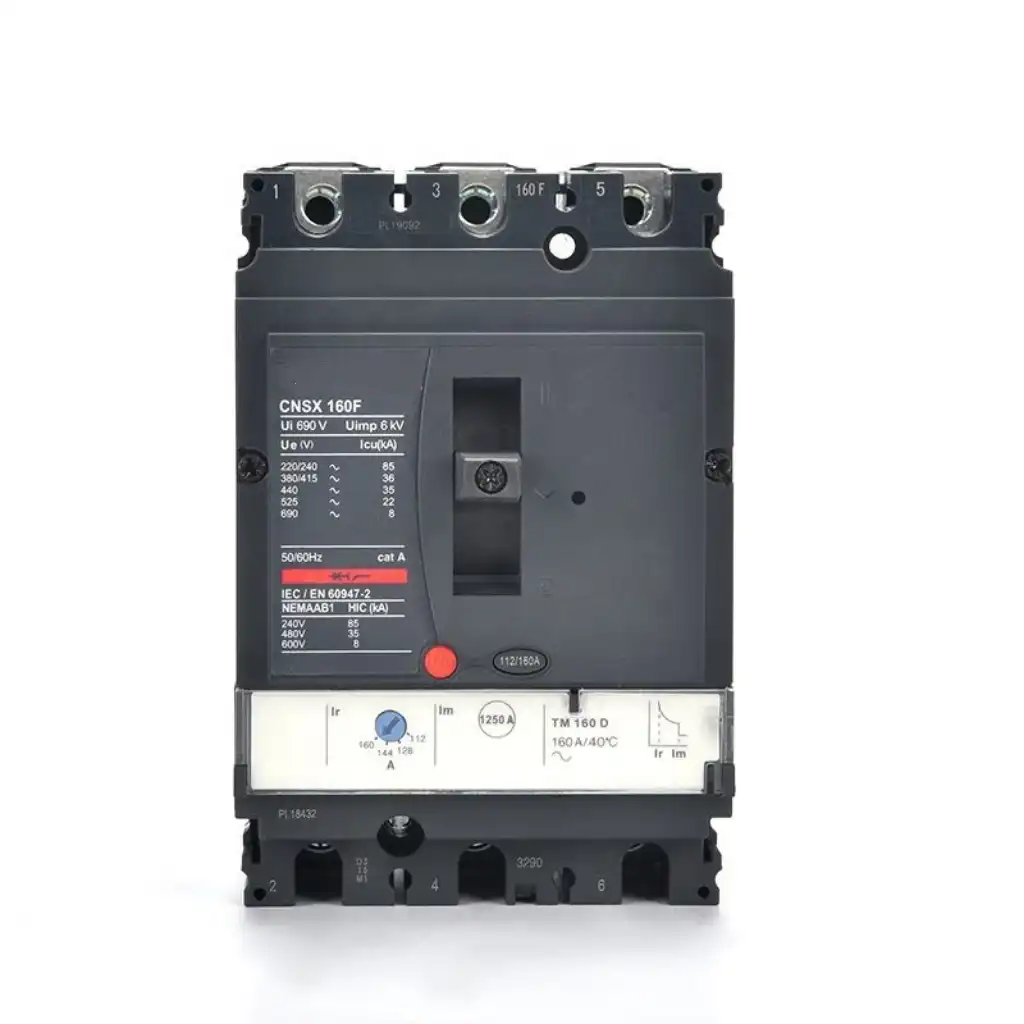
Feeders and equipment
Molded Case Circuit Breakers
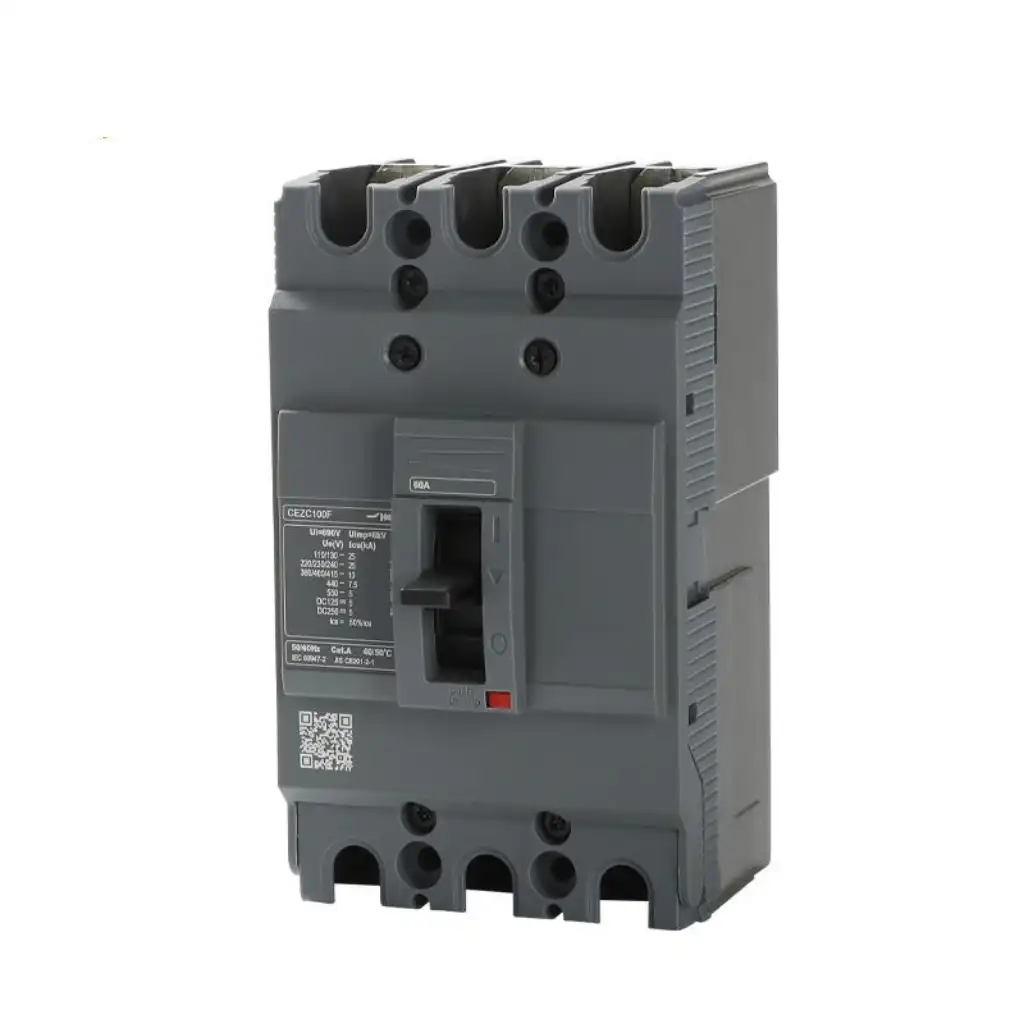
Used for many feeder and equipment duties where higher current, breaking capacity, trip-unit options and accessories may be required.
Explore the MCCB range →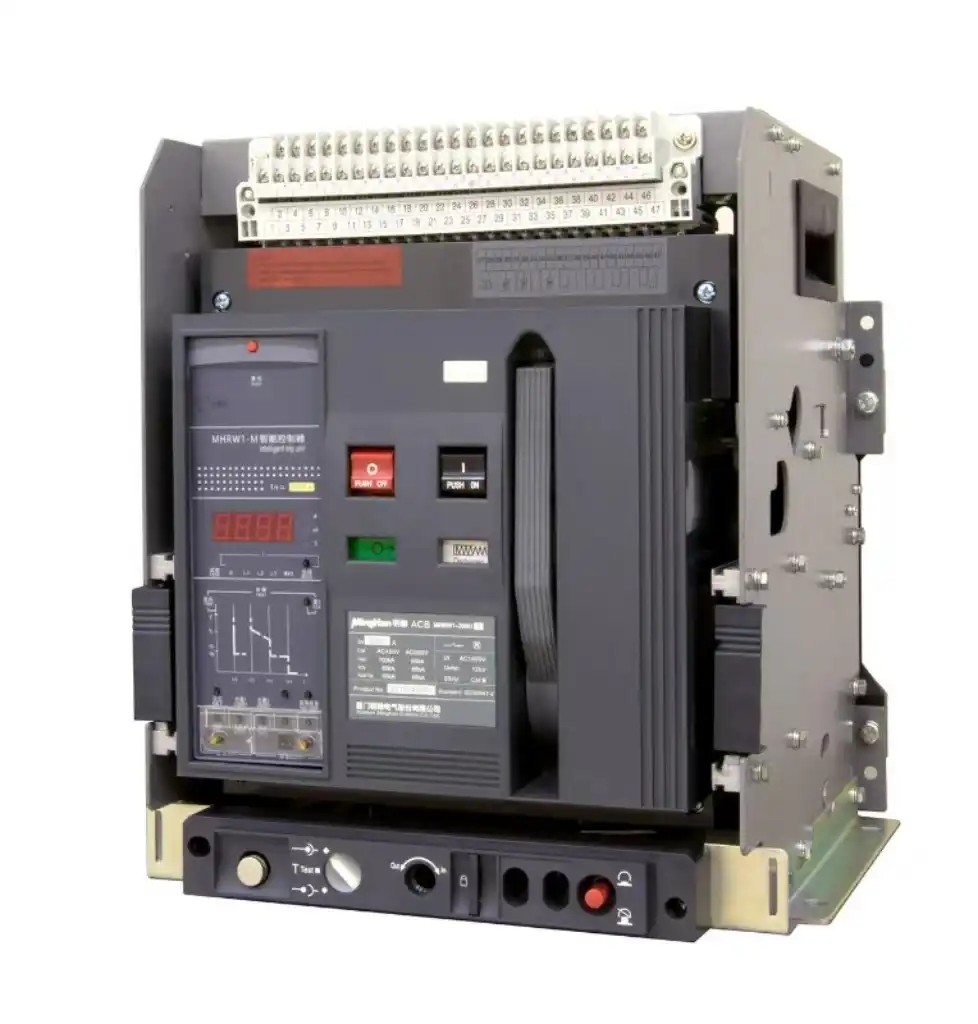
Main distribution
Air Circuit Breakers
Considered for selected main switchboard duties that need substantial current capability, protection functions, maintainability and system coordination.
Explore the ACB range →Worked screening example
A transformer can make a familiar 10 kA breaker insufficient
Assume a 500 kVA, 400 V, three-phase transformer with 5% impedance. A simplified transformer-terminal estimate illustrates the scale of the possible fault current.
This is not a final design calculation. Utility contribution, transformer tolerances, conductor impedance, motors and the exact fault location can change the result.
Step 1: estimate transformer full-load current
Step 2: divide by per-unit impedance
A 10 kA breaker would not pass this simplified comparison at the transformer terminals. A higher applicable rating may be required, or the actual downstream fault current must be established through a proper study.
System-level decisions
Fully rated, series-rated and current-limiting designs need different evidence
Do not assume an upstream breaker automatically raises the downstream device rating. The permitted combination must be engineered and documented.
Each applicable device meets the available fault current
Every breaker is selected with an interrupting rating that is not less than the available fault current at its line terminals, subject to the governing design rules.
A documented upstream and downstream combination is used
The downstream device may have a lower standalone rating only where a specific listed or permitted combination and all installation conditions are satisfied.
Peak and let-through energy may be reduced
A current-limiting device can reduce downstream stress, but its effect must be applied through validated data and the applicable equipment rules, not by guesswork.
The panel rating is a separate system check
Busbars, contactors, drives, terminals, disconnects and protective devices can affect the assembly rating. The main breaker label alone does not define the complete SCCR.
A practical selection sequence
Move from the electrical system to the exact breaker model
A consistent process prevents the most common error: selecting a breaker from current and pole count while leaving fault duty and documentation until the end.
Define the source
AC or DC, voltage, phases, frequency, earthing arrangement and transformer or utility data.
Obtain fault current
Use the project study at the exact breaker location, not a generic building value.
Define current and duty
Review conductor capacity, inrush, trip behavior, poles and protection coordination.
Match the standard
Compare Icn, Icu, Ics or AIR at the actual voltage and required operating conditions.
Lock the approved model
Keep the model code, data sheet, certificate scope, settings, accessories and assembly reference together.
Avoid these buying errors
Five mistakes that make a kA comparison unreliable
Most errors come from comparing two label numbers without confirming that they refer to the same system, standard and installation point.
Confusing current with interrupting capacity
Rated amperes and kA fault capacity are different values. Both must be correct.
Ignoring the marked voltage
A breaking value stated at one voltage cannot automatically be transferred to another voltage or to DC duty.
Using transformer data as the final study
A transformer-terminal estimate can screen risk, but it does not replace a calculation at the actual installation point.
Treating Icu and Ics as interchangeable
These ratings answer different post-fault service questions under IEC 60947-2.
Assuming breaker AIC equals panel SCCR
The full equipment assembly requires its own marked or established short-circuit current rating.
Do not increase breaker size to stop tripping
Unexpected tripping can indicate overload, inrush, heat, loose connections or a fault. A qualified person should find the cause before changing protection.
Prepare a useful breaker enquiry
Send the system and fault data, not only “20 A, 3 pole”
A clearer enquiry lets SENTOP compare the correct breaker family, interrupting rating, voltage, trip behavior and documentation before model selection.
- Electrical system: AC or DC, voltage, phases, frequency and earthing arrangement.
- Available fault current: study result at the breaker location and study reference.
- Load and conductor: design current, inrush, cable data and trip objective.
- Breaker arrangement: poles, neutral treatment, mounting, accessories and required interlocks.
- Evidence: target market, standard, approvals, drawings, labels and exact model scope.
- Supply plan: sample requirement, quantity, packaging, destination and delivery schedule.
Continue the decision
Use the next SENTOP page for the next selection question
These pages cover breaker families and the product-level differences that follow the kA screening step.
Frequently asked questions
Quick answers about circuit breaker kA ratings
Use these answers as a starting point. Final selection belongs to the exact system, breaker model and approved equipment design.
What does 10 kA mean on a circuit breaker?
Is a higher kA rating always better?
Can I replace a 6 kA breaker with a 10 kA breaker?
How do I know the available fault current?
Is breaker interrupting rating the same as panel SCCR?
What is the difference between Icu and Ics?
Primary references
Standards and technical guidance used for this article
Standards evolve and product data is model-specific. Check the edition and requirements that apply to your market and project.
- IEC 60898-1:2015 — circuit-breakers for overcurrent protection for household and similar installations.
- IEC 60947-2:2024 — low-voltage switchgear and controlgear, circuit-breakers.
- Schneider Electric: difference between Icu and Ics.
- UL Solutions Molded Case Circuit Breaker Marking and Application Guide.
- UL Solutions: determining SCCR of machinery.
- UL Solutions Panelboards Marking and Application Guide.
- Schneider Electric: transformer secondary fault-current estimation.
Breaker selection support
Have a fault-current result, breaker label or replacement model to review?
Send the available study data, system voltage, load, conductor, model photo, target market and quantity. SENTOP can help organize the next model-selection step.