Homes and lighter premises
Lighting, receptacles, ordinary appliances, small offices and modest equipment where the service has enough verified capacity.
Single phase is usually the practical choice for homes and lighter commercial loads. Three phase is usually stronger for motor-heavy, higher-demand or growing facilities. Decide from utility availability, equipment nameplates, calculated demand, motor starting and total installed cost—not phase count alone.
Start with the loads you must operate and the supply actually available at the site. Record both. Do not guess. A large single-phase service can have more usable capacity than a small three-phase service. A machine may still require three phase even when its running power looks modest.
The practical question is not “Is three phase better?” It is “What operating result does three phase enable that a correctly sized single-phase design cannot deliver at acceptable cost and risk?”
Keep or choose single phase when it safely covers the present and planned load. Evaluate three phase early when the site depends on larger motors, high simultaneous demand, balanced distribution or planned expansion.
Lighting, receptacles, ordinary appliances, small offices and modest equipment where the service has enough verified capacity.
Pumps, compressors, large HVAC, production lines, cold storage and facilities with meaningful coincident demand.
Single-phase voltage rises, falls and reverses in one repeating waveform. Three-phase supply uses three equal-frequency waveforms separated by 120 degrees. In a balanced system, their combined power delivery is more even.
The label alone is incomplete. Usable capacity still depends on the actual voltage, current rating, wiring arrangement and load conditions.
The load sets the real need. A properly designed three-phase motor develops a rotating magnetic field without the auxiliary starting arrangement used by many single-phase motors.
Measure each phase. A facility can have three-phase service and still develop uneven loading when single-phase circuits collect on one phase.

Use RMS voltage and current from the same operating point. Apparent power is expressed in VA or kVA. Real power in W or kW also depends on power factor.
Use values from the same test point. S is apparent power in VA, V is RMS voltage and I is current. Approximate real power with P = V × I × PF.
Check the balance first. Use this equation when the load is balanced and the measurement basis is correct. Approximate real power with P = √3 × VLL × IL × PF.

A compressor, pump, saw, hoist or fan can have an acceleration demand that causes voltage dip or trips even when its normal operating kW looks modest. The motor and driven load must be treated as one system.
A 230 V motor is not automatically compatible with every 230 V supply. Read the phase and 50/60 Hz requirements too.
Start method, load inertia, transformer strength, feeder length and protection settings affect whether the motor can accelerate normally.
Check each limit. Input supply, motor insulation, output waveform, derating, harmonics, EMC, protection and machine safety all matter.
Reversing two phase conductors can reverse a compatible three-phase motor. Guards, interlocks and process direction must be checked safely.
These are practical starting points. Utility availability, exact equipment data and local design rules can change the answer.
Everyday lighting, receptacles and appliances are commonly designed for it. Large heat pumps, EV charging or workshop machines can change the load study.
One modest machine may not justify a full service upgrade. Multiple motors, hard starting or planned production can change the comparison.
The peak matters. Some sites stay practical on single phase. HVAC, cooking, elevators, pumps and tenant changes may make three phase useful.
Motor-heavy work and higher simultaneous demand often make three-phase distribution and industrial motor selection more practical.
Three phase may be useful upstream while many devices remain single-phase loads. Review UPS, PDU, redundancy and per-rack kW/kVA.
Confirm target-country voltage, frequency, phase availability, earthing, protection and machine safety requirements before finalizing the panel.
Exact nominal voltages and service capacities vary by country and utility. Use the table as a decision map, not as a universal service rule.
| Decision factor | Single phase | Three phase | Evidence that decides |
|---|---|---|---|
| Typical availability | Common in homes and smaller premises. | Common in commercial and industrial areas, but an upgrade may be required. | Utility service letter, nominal voltages, frequency and upgrade quote. |
| Motor applications | Suitable for many smaller motors that use an auxiliary starting method. | Natural fit for many industrial motors because the supply creates a rotating field. | Motor nameplate, driven-load torque, start method and duty. |
| Large demand | Can be fully adequate, but current can become a constraint as demand rises. | Balanced loading can distribute higher facility demand more effectively. | Measured demand, per-phase current, transformer and feeder capacity. |
| Complexity | Often simpler at the point of use. | Adds phase sequence, balance and more coordination choices. | One-line diagram, protection plan, panel schedule and commissioning scope. |
| Upgrade economics | Often lower cost when the existing service meets the load. | May provide a better long-term platform but can require substantial utility and installation work. | Total cost including downtime, permits, engineering and future expansion. |
For the same useful work, phase count alone does not guarantee lower energy use. Cost changes come from the equipment, losses, load profile and tariff.
This skips motor efficiency at the actual load, transformer and conductor losses, power factor, demand charges, operating hours and the cost of the new service.
The tariff matters too. Compare required machines, reliable starting, available capacity, production growth, equipment choice, downtime risk and total installed cost. Then compare the tariff.
Important: a correctly sized single-phase system is not inherently underpowered, and a lightly loaded or poorly balanced three-phase site does not gain value merely from having more phases.
Often, but only through a correctly designed system. “Three phase” is not a voltage, and “single phase” is not a plug type.
Often, if a compatible line-to-neutral or line-to-line voltage exists. Verify the service diagram, neutral, breaker arrangement, balance and nameplate.
Not as a normal direct connection. A selected VFD or converter must match input supply, motor, starting torque, controls and protection.
No. Check the wiring diagram. Wye/star, delta, neutral arrangement, nominal voltage, frequency and grounding affect which loads can connect.
No. A 50 Hz motor, transformer or contactor is not automatically suitable for 60 Hz, or vice versa. Read the full instructions.
A qualified assessment can capture demand, per-phase current, voltage, imbalance, power factor and starting events under representative conditions. This is more useful than choosing from a monthly bill or main-breaker label alone.
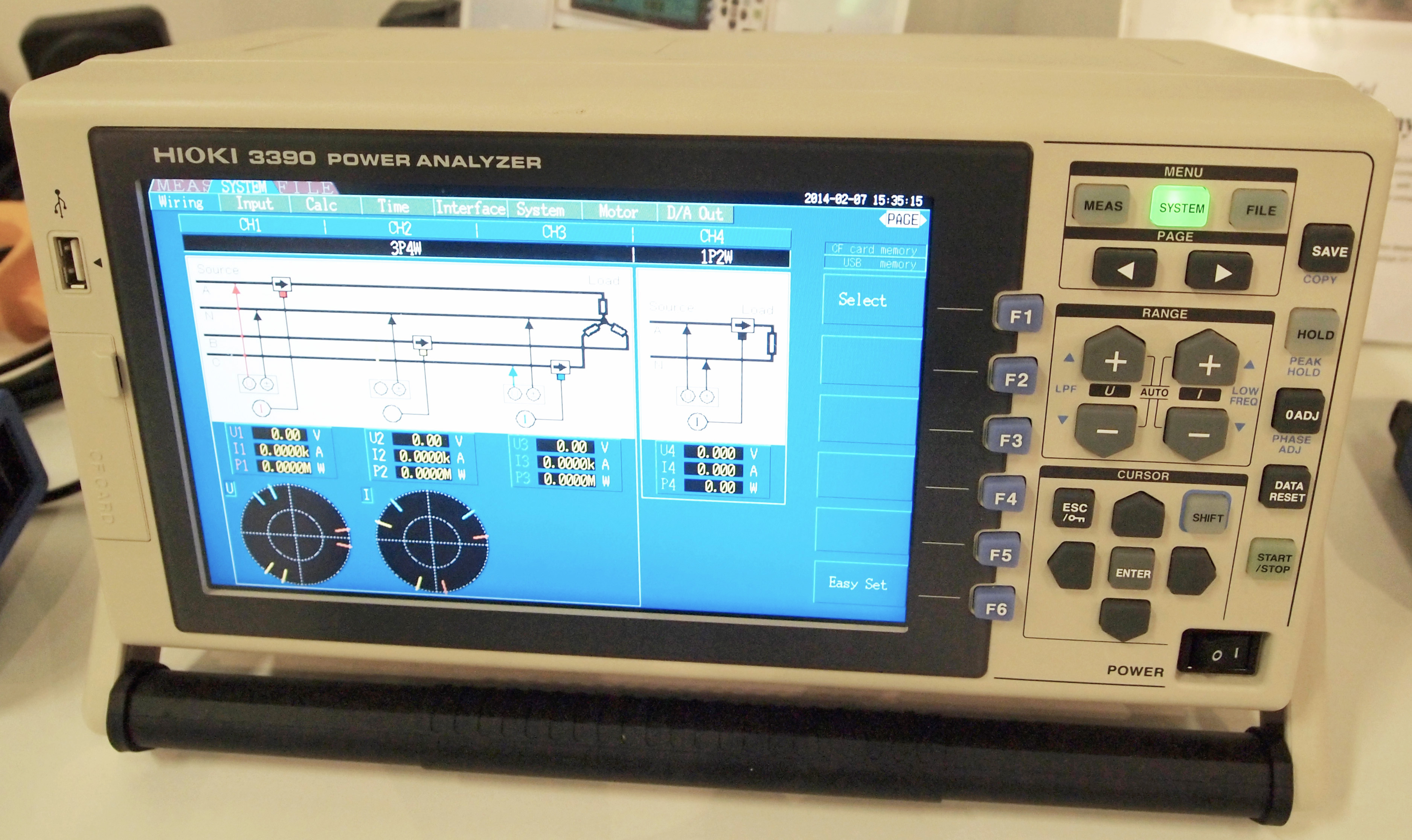
Capture representative peaks, seasonality and duty cycles instead of adding every nameplate watt as if all loads run fully together.
Per-phase values can reveal concentrated single-phase loads, phase loss or other conditions hidden by one total number.
Record the start. Voltage and current trends during acceleration can help separate supply weakness, protection behavior and mechanical load problems.
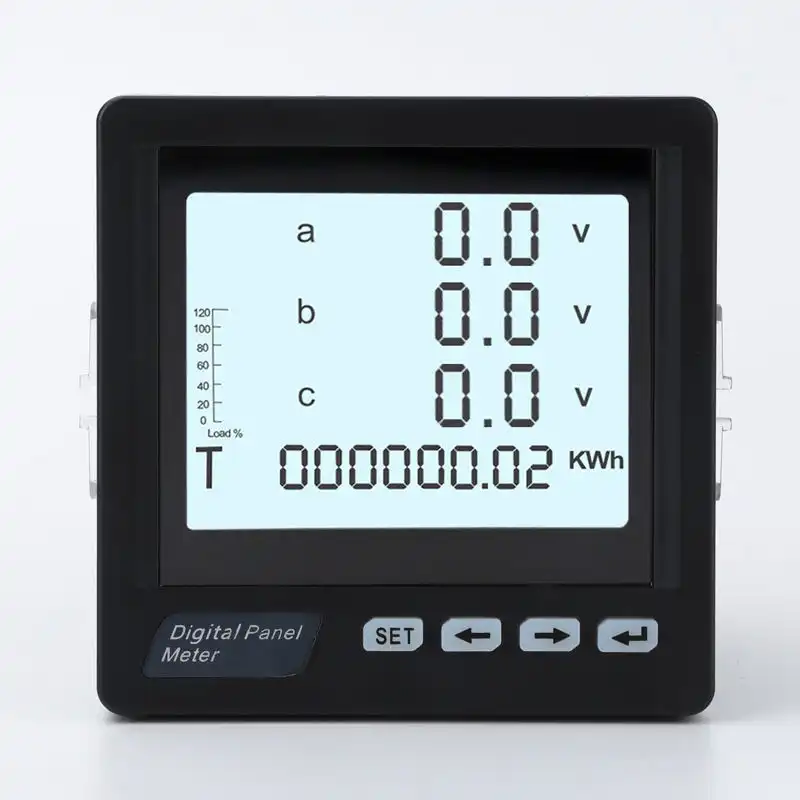
For a fixed installation, compare the required measurement functions before choosing a digital panel meter or planning an electrical panel monitoring solution.
Do not open live panels, move conductors, change protective devices or test phase rotation unless you have the required training, procedures, instruments and authority. Deenergize exposed live parts where required, control stored energy and verify the condition according to the applicable work rules. This guide supports planning; it is not a site-specific electrical design.
SENTOP supports product matching around panels, machines and electrical projects. Send the site supply, load schedule, nameplates, one-line diagram and target-market requirements so the component and system discussion begins from verified inputs.
Move from the supply decision to measurement, protection, product coordination and purchasing data.
Use these answers as a planning start. The actual service, equipment data and local design rules still decide the project.
No. Three phase is usually more useful for larger distribution and motor-heavy applications, but it is not automatically better for a home, office, retail unit or small machine. Choose from the available service, actual kW/kVA demand, equipment requirements, growth plan and total installed cost.
No. Common North American split-phase service is derived from a center-tapped single-phase transformer. It often provides two 120 V legs that are 180° apart and 240 V line to line. It is not a three-phase system or modern two-phase power.
Often, but only if a compatible voltage and conductor arrangement are available and the branch circuit is correctly designed. Verify line-to-line and line-to-neutral voltage, neutral availability, frequency, nameplate, protection, grounding/earthing and local requirements.
Not as a normal direct connection. Some applications use a correctly selected VFD, rotary converter or another engineered method. The solution must match the motor, driven load, input supply, starting torque, duty, controls, derating, protection and machine safety requirements.
No. Capacity depends on voltage, current, load balance and power factor. For a balanced three-phase load, apparent power is √3 × line-to-line voltage × line current. Compare complete kVA and kW calculations at the actual service voltage.
There is no single three-phase voltage. Nominal voltage, frequency, wye/star or delta arrangement and neutral availability vary by country, utility and application. Confirm the actual service and the complete equipment nameplate.
Upgrade when your documented equipment plan requires three-phase motors or when demand, operating limits and future growth justify the utility and installation cost. If one machine is the only reason, compare a suitable conversion or control solution with a full service upgrade.
Send the voltage, frequency, phase arrangement, equipment ratings, operating duty, quantity, target market and destination. SENTOP can help organize the next component-matching step.