Home Electrical Safety Guide
Indoor vs. Outdoor Circuit Breakers: What Homeowners Should Know
The important difference is usually not the breaker handle. It is the complete, listed panel or load-center assembly—its enclosure, cover, compatible breakers, fittings, mounting, and the conditions around it.
A clear homeowner safety boundary
Look only from a safe, dry position with the panel closed. Do not remove the deadfront, open a wet panel, reach inside, tighten connections, add sealant, or replace a breaker because it appears to fit. Parts of service equipment may remain energized even when the main breaker is off. Water, heat, smoke, sparking, burning odor, severe corrosion, or flood exposure requires professional help.
Start here
The practical answer to “indoor or outdoor?”
In ordinary residential use, a circuit breaker is selected as part of a specific panelboard or load center. The outdoor decision is made for the complete assembly: enclosure, panel interior, cover, compatible breakers, hubs, filler plates, conduit entries, mounting method, and environmental exposure.
An indoor panel cannot be made outdoor-rated by placing it under an eave or adding a homemade cover. In the same way, an outdoor-looking metal door does not prove that the enclosure is suitable for rain. Read the equipment label and manufacturer instructions, and have the proposed installation checked against local requirements.
Typical indoor starting point
Type 1 enclosure
General indoor use with a degree of protection against limited falling dirt. It is not a rainproof enclosure.
Common outdoor starting point
Type 3R enclosure
Outdoor use with a degree of protection against rain, sleet, and damage from external ice formation when properly installed and closed.
Use the right words
Breaker, panel, and enclosure are not the same thing
Homeowners often call the whole assembly a “breaker box.” That is understandable, but separating the parts makes shopping and repair conversations safer.
Circuit breaker
The protective switching device that opens a circuit under specified overload or fault conditions. Its ampere number does not prove panel compatibility.
Panelboard or load center
The distribution assembly with buses, terminals, a main device or main lugs, and branch-breaker spaces. It has voltage, current, fault-rating, and breaker markings.
Enclosure
The cabinet, door, trim, deadfront, hubs, and openings that separate people and equipment from the surrounding environment.
Read the label, not the appearance
What common enclosure ratings actually tell you
NEMA enclosure types describe protection against stated external conditions. They are not broad promises of quality, life span, or “waterproof” performance. The complete product and its instructions still control.
| Type | Plain-language purpose | Do not assume it means |
|---|---|---|
| Type 1 | Indoor use; a degree of protection against limited falling dirt and access to enclosed equipment. | Outdoor, damp-location, rainproof, or sealed. |
| Type 3R | Outdoor use; a degree of protection against rain, sleet, and damage from external ice formation. | Dust-tight, hose-down safe, corrosion-resistant, or submersible. |
| Type 4 | Indoor or outdoor use with stated protection that includes splashing and hose-directed water, windblown dust and rain, and external ice formation. | Automatic corrosion resistance or immersion protection. |
| Type 4X | Type 4-style protection plus a stated degree of corrosion protection. | Unlimited life in salt, chemicals, UV, heat, or every coastal setting. |
A useful buying lesson
A sturdy cover is not a location rating
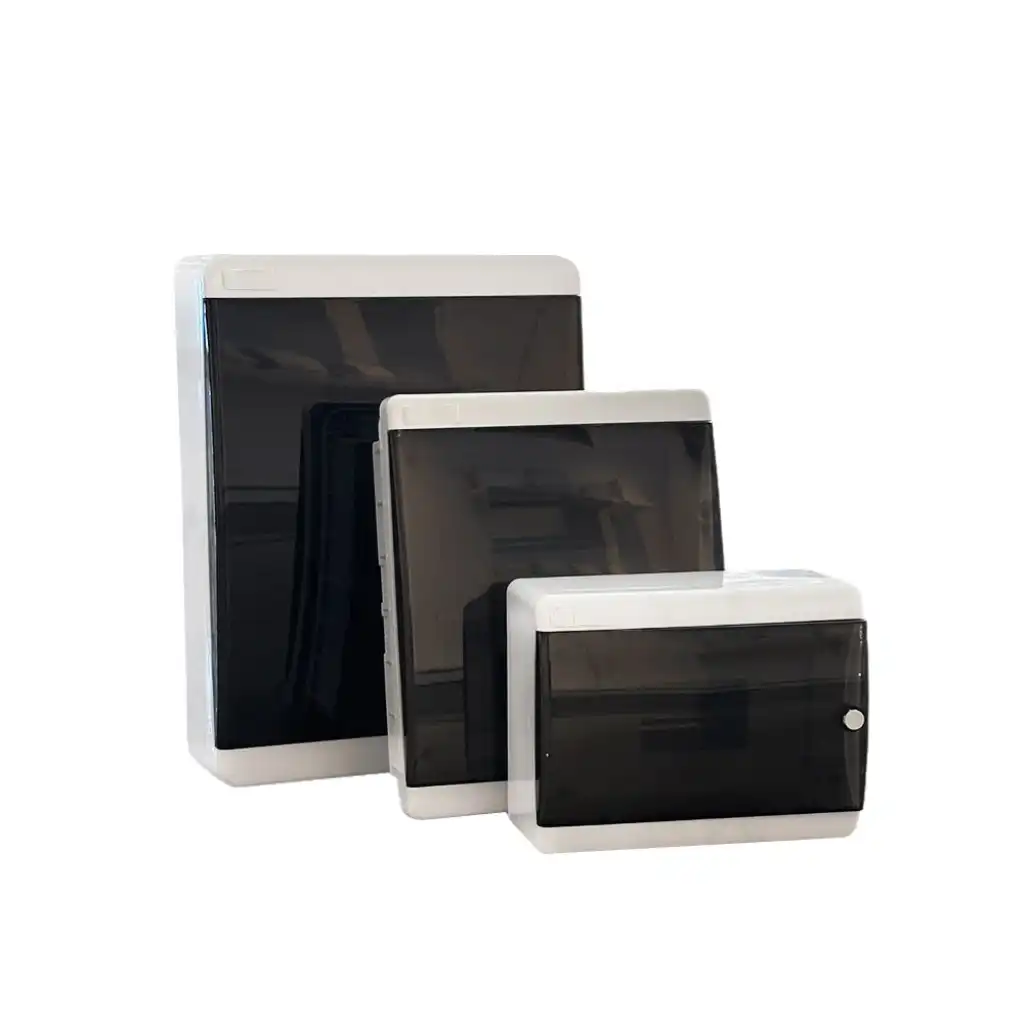
Enclosures can look similar in a product photo while having very different materials, sealing methods, certifications, and intended locations. Ask for the exact model-level enclosure type or IP rating, compatible components, and installation instructions.
Product image: SENTOP distribution box range. Shown as an enclosure-selection example; no location rating should be inferred from the image alone.
Explore SENTOP distribution boxesWhat about IP ratings?
NEMA Type and IEC IP codes are different systems. Do not convert an IP code into a NEMA type by guesswork. NEMA notes that its enclosure types cover environmental conditions beyond the two IP digits, so the relationship is not a simple two-way match.
Think beyond falling rain
How water and outdoor exposure reach a panel
A correctly selected outdoor enclosure still depends on a correct installation. Water may come from wind-driven rain, roof runoff, sprinklers, damaged fittings, open knockouts, missing filler plates, a door left open, or moisture traveling through a raceway. Temperature swings can also create condensation even when no storm water enters through the front.
Runoff and rain
Roof valleys, gutters, wall flashing, sprinklers, and an open door can send water toward the enclosure.
Condensation
Warm humid air and cold metal can create moisture inside. Open or unsealed raceways may add another path.
Corrosion
Salt air, pool chemicals, agriculture, and industrial contaminants may require more than ordinary rain protection.
Impact and access
Vehicles, tools, landscaping, debris, and public access can damage the cover or block safe service space.
Floodwater is different from rain
If a breaker, GFCI, or fuse has been submerged, do not dry it and put it back into service. The U.S. Consumer Product Safety Commission warns that water and silt can prevent these devices from operating correctly and can cause shorting or mechanical failure. Submerged devices must be replaced, and the rest of the affected equipment needs qualified evaluation before power is restored.
Location is only one input
Does an outdoor panel change which breakers you need?
Not by itself. The panel location tells you about the enclosure and installation environment. The required protective function still comes from the individual circuit, connected load, wiring method, system voltage, available fault current, equipment instructions, and locally adopted rules.
For example, an outdoor receptacle circuit often has ground-fault protection requirements. That does not mean every breaker in an outdoor panel should be changed to a GFCI breaker. A bedroom, EV charger, pool pump, solar connection, air conditioner, and detached-building feeder can each have different protection and disconnect needs. The solution also has to be available as a device that is identified for the exact panel.
Overcurrent protection
Protects the circuit against specified overload and short-circuit conditions. The panel label and electrical design still control the model and rating.
Ground-fault shock protection
Often required for certain wet, damp, outdoor, garage, kitchen, bathroom, and equipment applications. Requirements vary by circuit and jurisdiction.
Arc-fault protection
Used for specified dwelling circuits under applicable rules. The enclosure being outdoors does not remove or automatically create this need.
EV, solar, pool, or generator
These projects may add load calculations, disconnects, interconnection rules, backfeed limits, or equipment-specific protection. They need project-level review.
Look, photograph, report
A safe closed-panel exterior check
This is not an electrical inspection. It is a short observation that helps you decide how quickly to call a licensed electrician. Keep the panel closed and stay away if the ground, wall, or equipment is wet.
Plan the repair or upgrade
What should drive the final equipment choice?
The best location is not simply “inside is safer” or “outside is more convenient.” It is the location where a suitable listed assembly can be installed as instructed, kept accessible, protected from realistic water and impact hazards, and accepted under local requirements.
Give the electrician these details
- Photos of the closed exterior, visible labels, surrounding wall, conduit entries, and any water path.
- The exact manufacturer and catalog number you can read without removing a cover.
- Whether it is the service equipment, a feeder panel, or a small distribution enclosure.
- The real environment: rain direction, runoff, sprinklers, coastal air, pool chemicals, snow, sun, or impact risk.
- Symptoms and timing, including wet-weather trips, odor, heat, staining, corrosion, or flood history.
- Planned loads such as EV charging, a heat pump, solar, battery storage, a generator, or a detached building.
Questions worth asking before approval
What exact enclosure type is marked on the proposed assembly, and does it match this exposure?
Which breaker types, hubs, covers, fillers, and accessories are identified for this exact panel?
Do the voltage, current, conductor, fault-rating, and protective-function choices match the design?
How will mounting, entries, drainage, runoff, access, permits, and inspection be handled?
Avoid expensive shortcuts
Common mistakes that create risk
Putting a Type 1 indoor panel outside because it is under a roof or decorative cover.
Reading “Type 3R” as sealed, pressure-washer safe, corrosion-proof, or flood-proof.
Buying a breaker by ampere number, handle shape, color, or physical fit alone.
Covering unused openings with tape, foam, plastic, or another unlisted piece.
Repeatedly resetting a breaker that trips in rain or high humidity.
Cleaning, drying, or reusing a breaker that was submerged in floodwater.
For contractors, distributors, and project teams
Send the application details—not just a box size
SENTOP supports project-based selection for circuit protection and distribution products. For a useful review, share the target market, system voltage, current, poles, circuit count, enclosure or IP requirement, installation environment, certification need, planned accessories, quantity, and labeling or OEM needs.
Frequently asked questions
Indoor and outdoor breaker panel FAQs
Are outdoor circuit breakers different from indoor circuit breakers?
In ordinary residential use, the main indoor-or-outdoor choice is usually made for the listed panel or load-center assembly and its enclosure, not from a generic label on the breaker handle. The exact breaker must still be identified as compatible with that panel.
Can I use an indoor breaker panel outside if it is under a roof?
Do not assume so. An eave or roof does not turn a Type 1 indoor enclosure into an outdoor-rated assembly. Wind-driven rain, runoff, humidity, and openings can still expose it to moisture. Use equipment marked for the actual location.
Is a Type 3R breaker panel waterproof?
No. Type 3R is a common outdoor rainproof rating with a degree of protection against rain, sleet, and damage from external ice formation. It is not the same as Type 4 or 4X, and it does not make a damaged, open, corroded, or submerged panel safe.
Can rain get into an outdoor electrical panel?
Yes, if the enclosure is damaged, open, incorrectly installed, missing listed parts, exposed to runoff, or compromised at a conduit entry or opening. Rust stains, water marks, and repeated wet-weather trips deserve a licensed inspection.
Can I replace a breaker with any model that fits?
No. Physical fit does not prove electrical compatibility. Use only breaker types identified on the panel labeling or a replacement specifically evaluated for the exact panel and conditions.
Does an outdoor panel need GFCI breakers for every circuit?
Not simply because the panel is outdoors. Ground-fault protection depends on each circuit, load, location, equipment, local rules, and the compatible devices available for the panel. An electrician should review the circuits individually.
What should I do if an outdoor panel gets wet?
Do not open it or keep resetting breakers. Stay clear if there is active water, heat, odor, arcing, or smoke, and contact the appropriate emergency, utility, or licensed electrical service. If equipment was submerged, affected breakers, GFCIs, and fuses must be replaced rather than dried and reused.
Technical references
Sources used for this guide
This article explains U.S.-oriented residential terminology in plain language. Local codes and adopted editions vary, so the authority having jurisdiction and the equipment instructions remain decisive.
- UL Solutions — Panelboard Application GuideEnclosure types, panel markings, compatible field-installed units, filler plates, and assembly suitability.
- NEMA — Enclosure TypesOfficial overview of NEMA enclosure designations and the limits of NEMA-to-IP comparison.
- Schneider Electric — QO Load CentersManufacturer example of indoor Type 1 and outdoor/rainproof Type 3R load-center options.
- U.S. CPSC — Flood-damaged breakers, GFCIs, and fusesConsumer safety guidance requiring replacement of devices that have been under water.
- U.S. CPSC — Home Electrical Safety ChecklistConsumer guidance on moisture, outdoor electrical equipment, and GFCI protection.
