Industrial vs Residential Circuit Breakers: How to Tell the Difference
The reliable test is not size, pole count, or amperage. Check the product standard or listing, intended circuit role, voltage, interrupting rating at that voltage, trip functions, panel compatibility, and service environment. A compact MCB can be correct in a factory panel, while a UL 489 breaker can be used in a home load center.
Classify the application, then verify the device
Do not ask only, “Is this breaker industrial or residential?” Ask whether this exact ordering code is approved and rated for this circuit, assembly, fault level, operator environment, and market.
When comparing industrial vs residential circuit breakers, start with how each device will be used. Residential and similar-use installations often use matched MCB or branch-breaker families for lighting, receptacles, HVAC, cooking, and other final circuits. Industrial systems may add three-phase feeders, motors, drives, transformers, DC sources, higher available fault current, selective coordination, adjustable trip units, remote control, monitoring, or harsher service conditions.
Those are patterns, not universal definitions. A commercial building can use household/similar-use MCBs in one board and an industrial MCCB upstream. A machine panel can contain small DIN-rail breakers. A residence can use a large multi-pole main breaker. The building label does not settle the protection decision.
- Size is not a standard. Small does not mean residential; large does not prove industrial suitability.
- Amperage is only one rating. The same 20 A value can serve very different circuits and fault duties.
- DIN rail is a mounting method. It does not define branch protection, supplementary protection, or skill level.
- Physical fit is not approval. Bus engagement, heat performance, enclosure marking, and tested combinations matter.
Four questions replace the visual shortcut
If any answer is missing, the breaker is not ready to approve. A supplier can quote a product family, but a qualified designer and the applicable installation rules determine whether it is suitable for the actual circuit.
What standard or listing is marked?
Read the product and data sheet. Confirm the exact edition, certification scope, destination market, and whether the device is a branch breaker, supplementary protector, or switchgear circuit breaker.
What is the circuit role?
Service, feeder, branch, motor branch component, machine supply, control circuit, or equipment-internal protection are not interchangeable roles.
Can it clear the available fault?
Compare the relevant interrupting or short-circuit rating at the actual voltage and pole arrangement with the available fault current at the installation point.
Does the assembly accept it?
Check the exact load center, panelboard, switchboard, machine, or enclosure instructions. A similar shape or bus clip is not enough.
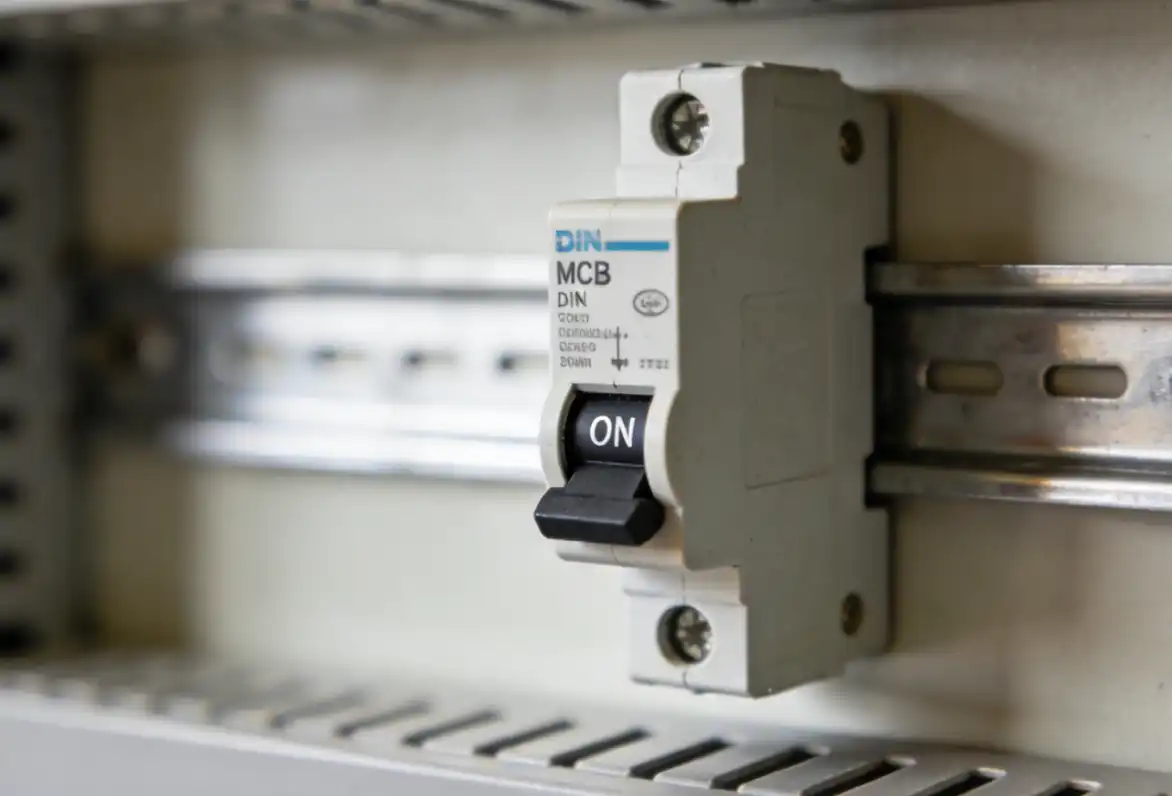
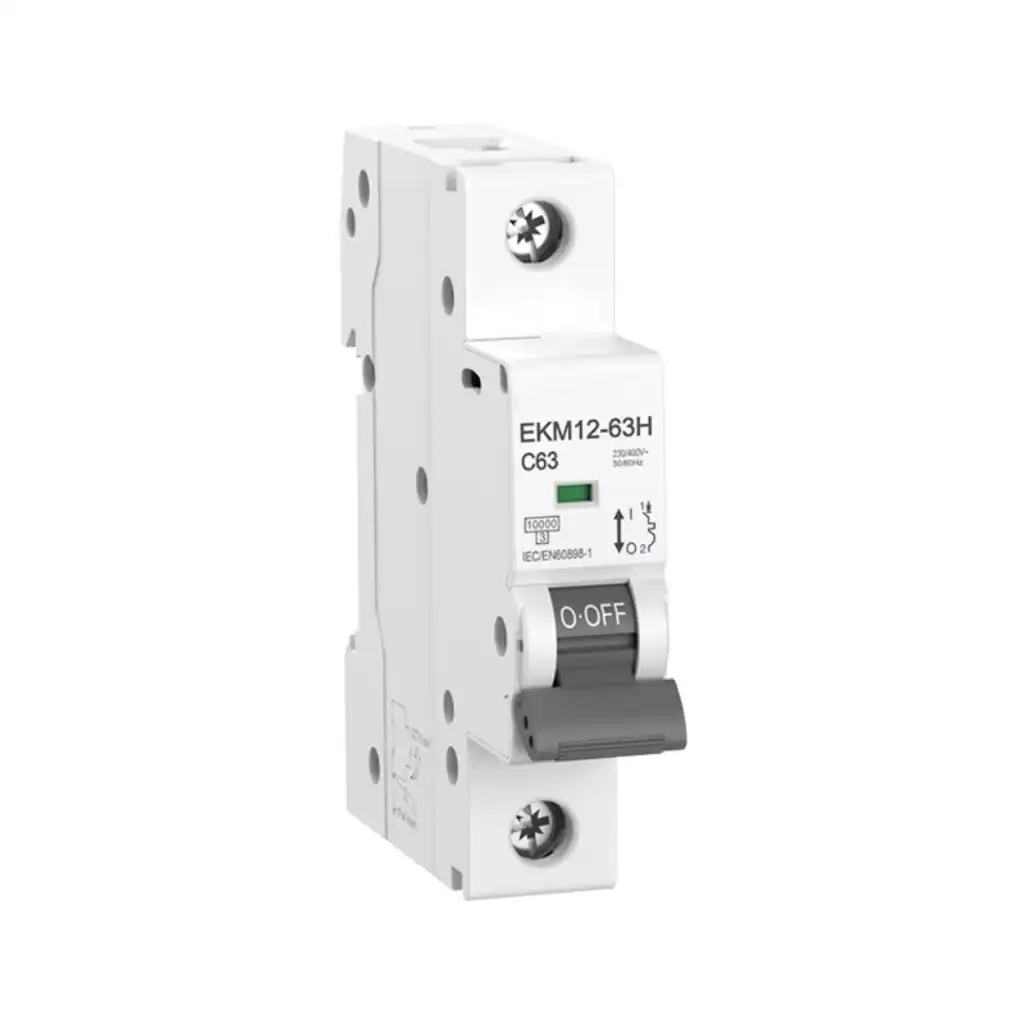
MCB and MCCB are form factors, not building labels
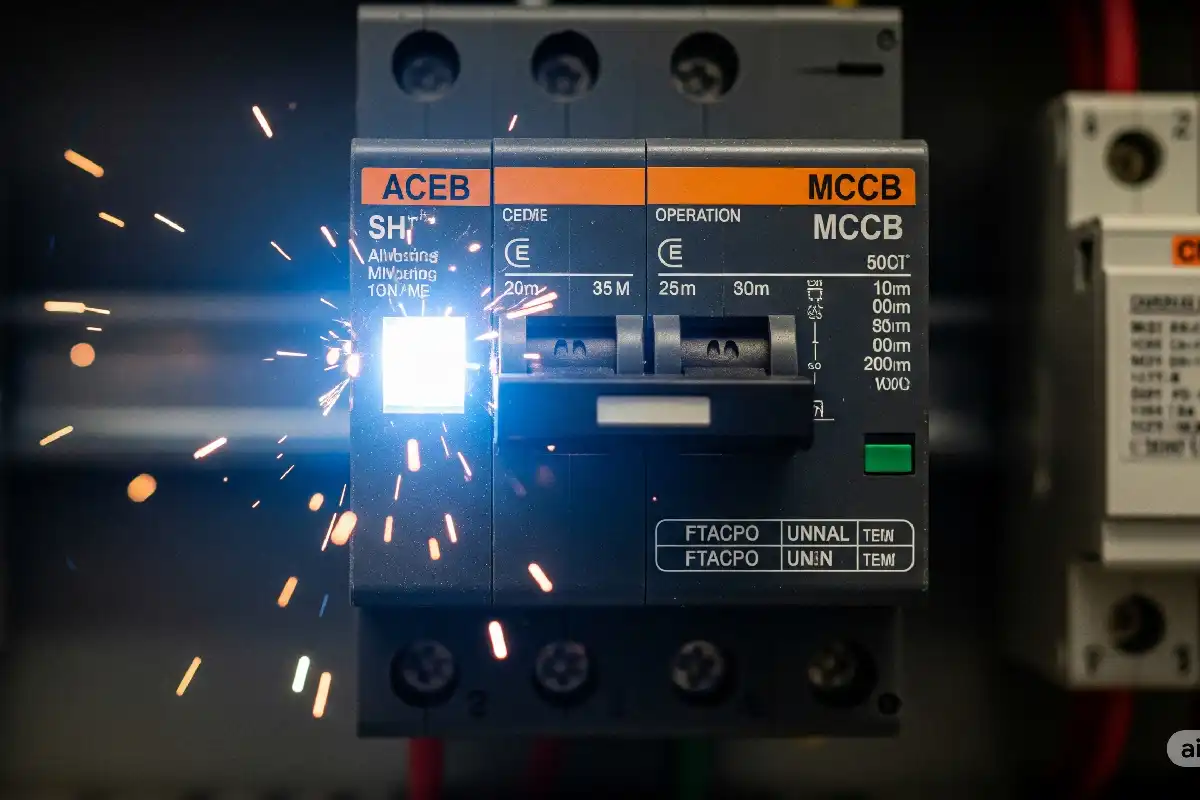
These images show common product directions. Neither image alone proves the governing standard, voltage, fault capacity, or permitted panel.
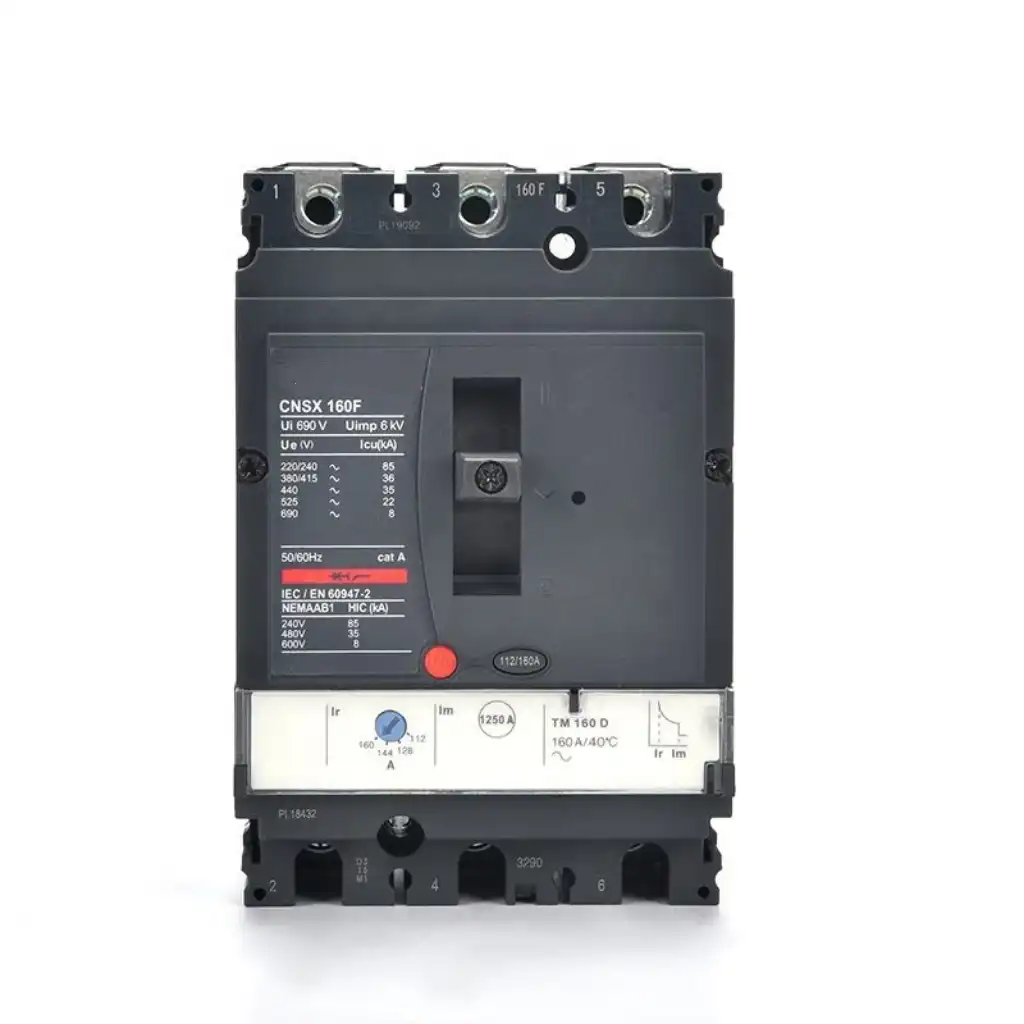
What usually changes from similar-use to industrial duty
Use this comparison to form questions. Do not use it to approve a substitution without the manufacturer data and the applicable code.
| Decision factor | Residential / similar-use pattern | Industrial pattern | Important limit |
|---|---|---|---|
| Typical circuit role | Final circuits and a matched consumer unit or load center; may also include a main breaker. | Feeders, machine supplies, motors, control panels, switchboards, distribution sections, or main protection. | An industrial panel can still contain final-circuit MCBs. Building type does not define every outgoing device. |
| Standard and operator context | Often a household/similar-use product standard and an assembly intended for normal operation by ordinary users. | Often switchgear/controlgear standards, controlled access, and installation or operation by instructed or skilled persons. | Read the marking. Regional certification and the approved assembly remain controlling. |
| Fault-duty work | Prospective fault current and breaker capacity still must be checked, even when common board families simplify selection. | Fault studies, selectivity, backup/cascading, SCCR, and voltage-dependent ratings are more likely to drive the design. | Residential does not mean “low fault current,” and industrial does not guarantee a higher rating. |
| Trip functions | Often fixed thermal-magnetic; some families add AFCI, GFCI, RCBO, or other required protection. | May use fixed or adjustable thermal-magnetic releases, or electronic long-time, short-time, instantaneous, and ground-fault functions. | Advanced functions are optional and model-specific. Settings require an approved design and commissioning record. |
| Integration | Usually limited to the breaker families and accessories named for the load center or consumer unit. | May add auxiliaries, alarm contacts, shunt trip, undervoltage release, door operators, metering, communication, or interlocking. | An accessory list does not prove suitability for a circuit. Verify the frame, coil voltage, wiring, and system function. |
| Environment and service | Often protected indoor conditions unless the complete assembly is rated for another location. | May require temperature derating, vibration, dust, moisture, corrosion, altitude, lockout, and maintenance review. | The enclosure and installation determine environmental protection; the breaker case alone does not. |
IEC and North American routes need separate reading
The strongest first clue is usually the standard or listing on the device. The important mistake to avoid is translating one market's categories directly into another market's rules.
| Reference | What its scope or role tells you | How to use that information |
|---|---|---|
| IEC 60898-1 | Applies to AC air-break circuit breakers for overcurrent protection in household and similar installations, within its stated voltage, current, and short-circuit-capacity limits. | A useful starting point for similar-use final circuits. Still verify voltage, current, curve, Icn, poles, conductor protection, and local installation rules. |
| IEC 60947-2:2024 | Applies to circuit breakers intended to be installed and operated by instructed or skilled persons, with the main contacts within its stated AC/DC voltage scope. | Common industrial switchgear/controlgear basis. It does not choose the frame, Icu/Ics, trip unit, enclosure, settings, or coordination for you. |
| UL 489 | Covers molded-case circuit breakers, switches, and enclosures used for service-entrance, feeder, or branch-circuit protection within their ratings. | A UL 489 breaker can appear in residential or industrial distribution. Confirm the named equipment, voltage, interrupting rating, and panel marking. |
| UL 1077 | Covers supplementary protectors used within appliances or other electrical equipment. They are not intended to provide the branch-circuit overcurrent protection required by the NEC. | Do not replace a required branch breaker with a compact supplementary protector just because it mounts on DIN rail or carries the same current number. |
A familiar handle hides several protection functions
A common thermal-magnetic breaker uses a thermal element for sustained overloads and a magnetic element for high-current faults. Its contacts and arc-control structure must open the circuit under defined test conditions. The front handle shows status and permits manual operation, but it does not show the full time-current behavior or fault-interruption performance.
For that reason, the same rated current can be paired with different curves, breaking capacities, utilization categories, and trip technologies. Industrial platforms may add electronic sensing and adjustable functions. Residential product families may add residual-current, ground-fault, or arc-fault functions required by the local market. These functions are not interchangeable.
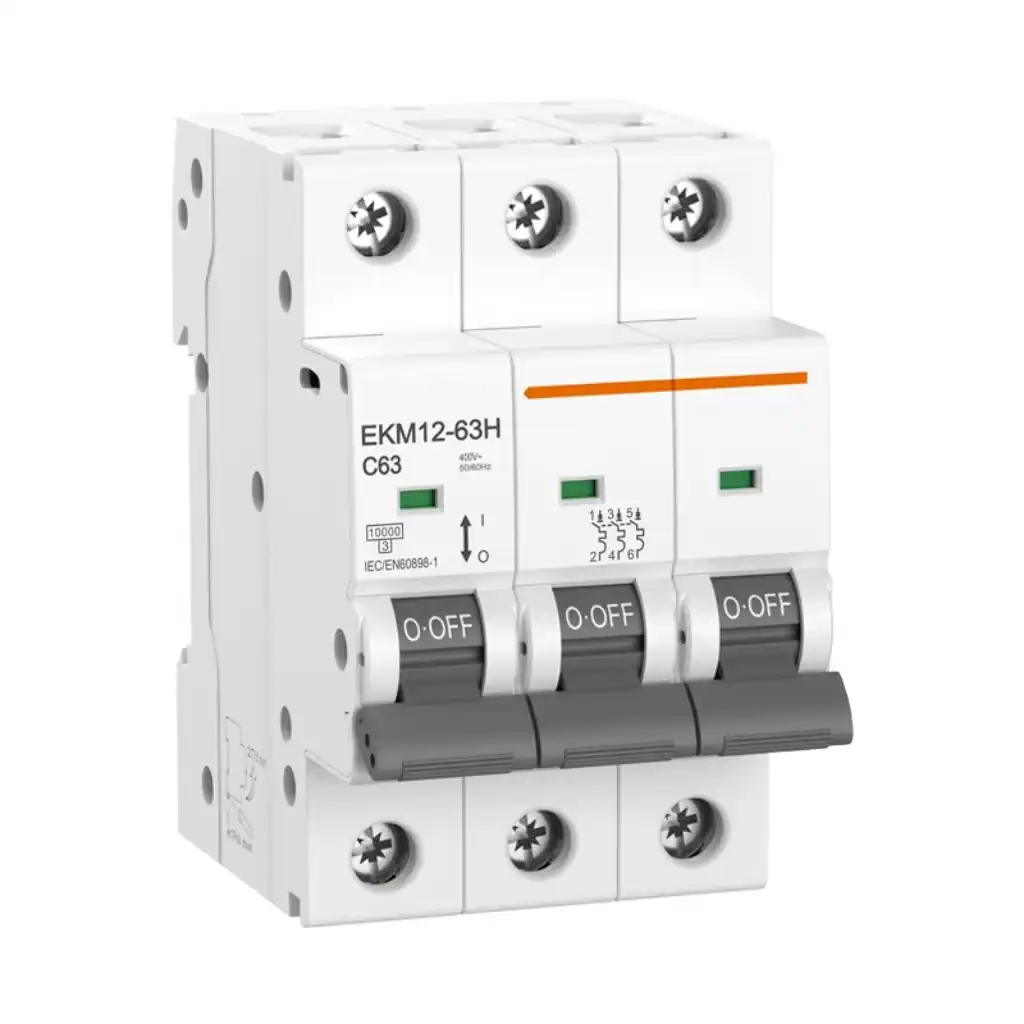
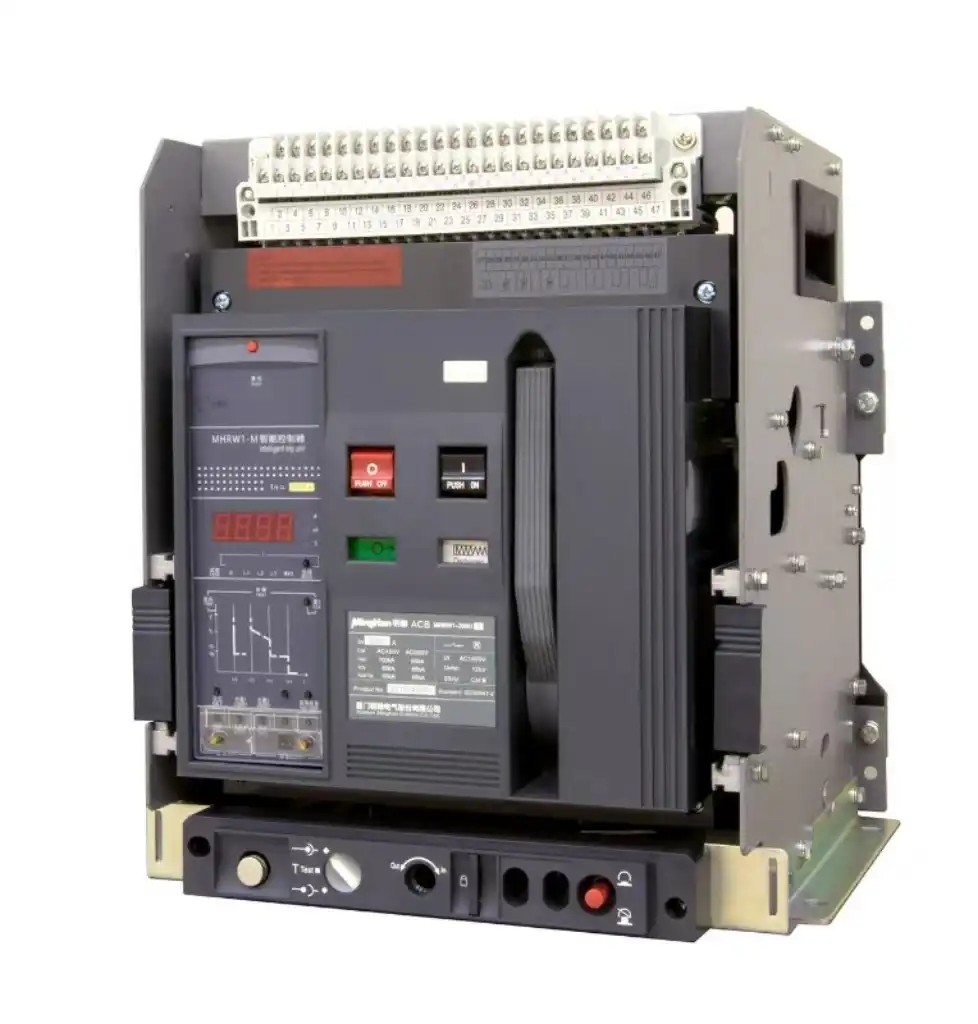
Compare fault capacity at the actual system voltage
The interrupting or short-circuit breaking rating states what the breaker has been evaluated to interrupt under defined conditions. It is not a free-standing quality score. The value can change with voltage, AC or DC use, number of poles, wiring arrangement, and governing standard.
Under IEC product data, you may see Icn for an IEC 60898-1 rating and Icu or Ics for IEC 60947-2 performance. Some dual-marked MCBs publish all of them. In North America, the interrupting rating is often expressed in amperes or kA and may be called AIC in industry discussion. Whatever the symbol, compare the exact value at the project voltage with the available fault current at the point of installation.
A documented series-rated or cascading combination can change the permitted design, but it must use the exact upstream and downstream devices, voltage, and conditions published by the manufacturer. Changing a product family or brand can invalidate that basis.
Match the breaker to load behavior, not the word “industrial”
IEC B, C, and D curves differ mainly in their instantaneous magnetic operating ranges. A higher-inrush curve can tolerate a larger starting current, but it also needs enough fault current to open within the required disconnection time. Moving from B to C or D simply to stop nuisance trips can create a protection problem.
Industrial MCCBs and power breakers may provide adjustable magnetic pickup or electronic long-time, short-time, instantaneous, and ground-fault functions. These features can support coordination between feeders, motors, transformers, and downstream breakers. They also create a responsibility: every setting must have a calculation, approval, commissioning result, and controlled record.
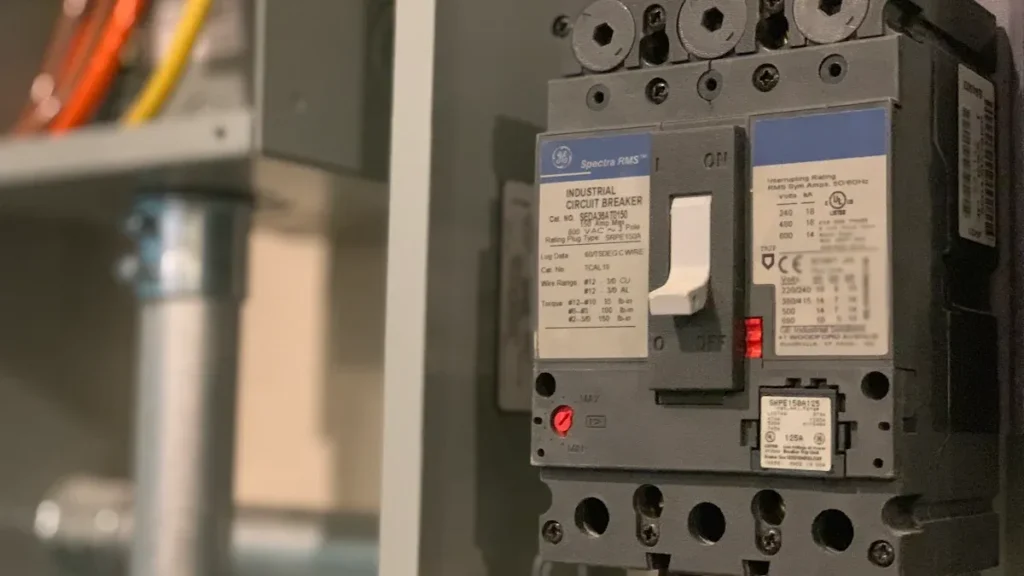
Eight fields that identify real suitability
A clear photo of the complete marking and catalog number is often more useful than a description such as “industrial 63 amp breaker.”
Manufacturer and model
Record the complete ordering code, suffixes, frame, trip unit, and certification marks. Similar faces can hide different internal ratings.
Standard or listing
Confirm IEC, UL, CSA, or other required route for the exact model and target market. A logo alone may not show the full certification scope.
Voltage and current type
Check AC or DC, frequency where relevant, voltage per pole, polarity, and any required series pole connection.
Rated current
Coordinate In with design load, conductor capacity, ambient temperature, grouping, enclosure heating, and continuous-duty rules.
Poles and neutral
Identify which conductors are protected, which are switched, simultaneous operation, and whether neutral treatment matches the system.
Breaking capacity
Read Icn, Icu, Ics, or the listed interrupting rating at the actual voltage and configuration. Do not reuse a value from another row.
Curve or settings
Capture the fixed trip curve, adjustable ranges, rating plug, sensors, and approved final settings. Keep the settings schedule with the panel records.
Assembly and terminals
Verify the accepted panel family, bus/mounting method, lugs, conductor data, torque, accessories, enclosure, and operating mechanism.
“It fits” is not a replacement method
A breaker can appear to clip onto the bus or fit the opening and still be wrong. Panelboards and load centers are evaluated with specified breaker families, bus interfaces, conductor limits, and enclosure markings. Industrial assemblies can add special lugs, phase barriers, door-coupled operators, drawout hardware, interlocks, and short-circuit-current-rating conditions.
Before replacement, identify the complete assembly manufacturer, model, voltage, service type, and permitted device family. Then match the breaker catalog number, mounting, bus connection, frame, poles, terminal kit, accessory wiring, and torque instructions. If the original device is obsolete, use the documented manufacturer replacement path or a code-compliant engineered modification process.
Never approve a different brand solely because it fits the rail or bus. Mechanical engagement does not prove correct heat rise, contact pressure, fault performance, listing, or long-term reliability.
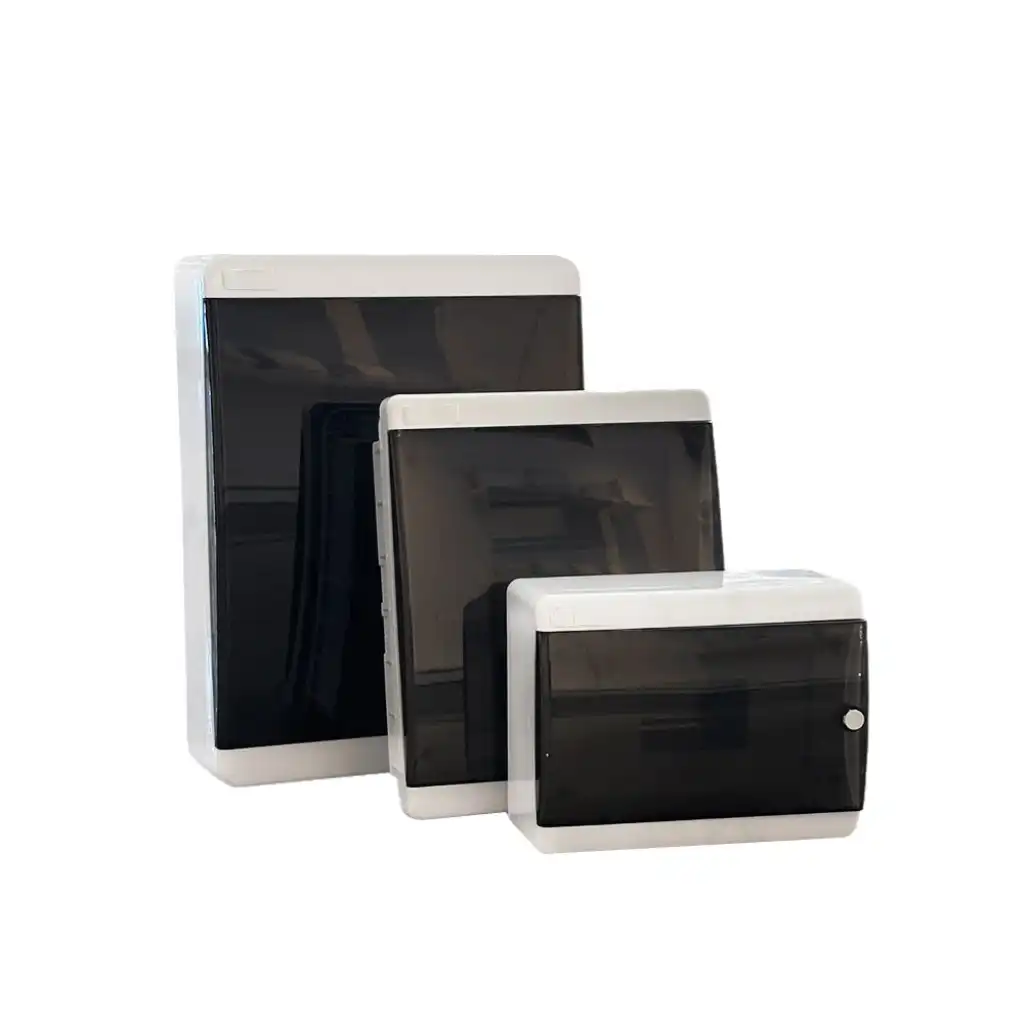
Review distribution box optionsWhich direction should the buyer investigate?
These examples narrow the next question; they do not replace a protection study or local code review.
| Scenario | Likely product direction | Critical checks before approval |
|---|---|---|
| Home final circuit in a consumer unit | Approved breaker family for that board; IEC 60898-1 or the applicable national branch-breaker route may be relevant. | Panel acceptance, voltage, poles, current, conductor, trip curve, fault capacity, and any required residual-current, arc-fault, or ground-fault function. |
| Commercial distribution board | Household/similar-use MCBs, industrial MCBs, or MCCBs can appear at different levels. | Board standard, operator access, available fault current, selectivity, cable protection, temperature, and local installation rules. |
| Machine control panel | Industrial MCB/MCCB or another approved branch/control protection method, depending on market and role. | Branch versus supplementary protection, panel SCCR, load inrush, transformer/motor requirements, DIN-rail device listing, and enclosure approval. |
| Motor or transformer feeder | MCCB or an industrial breaker with suitable magnetic/electronic behavior; other motor protective components may be required. | Starting current and time, cable protection, overload method, short-circuit protection, coordination, contactor/starter data, and duty cycle. |
| Industrial main or large feeder | MCCB, air circuit breaker, or another engineered switchgear device with suitable frame and trip platform. | Icu/Ics or listed interrupting rating, settings study, selectivity, ground-fault function, bus and enclosure rating, accessories, isolation, and maintenance plan. |
| PV, battery, or other DC circuit | Breaker specifically documented for the DC voltage, current direction, and pole arrangement. | Maximum DC voltage, polarity, poles in series, current direction, source characteristics, isolation, fault current, and the correct DC certification route. |
A seven-step workflow for safer selection
This is a documentation workflow. It is not permission to remove covers, touch conductors, or work on energized equipment. De-energization, lockout/tagout, testing, and qualified-person rules follow the applicable workplace and electrical requirements.
Identify the complete assembly
Record the load center, panelboard, switchboard, machine, or control-panel manufacturer, model, nameplate, nominal voltage, service, and available instructions.
Capture the full breaker marking
Use clear photos and record the full catalog number, standard/listing, voltage, current, poles, fault rating, curve or trip unit, terminal data, and suffixes.
Define the circuit role
State whether the device is service, feeder, branch, motor branch component, control circuit, equipment-internal supplementary protection, or another defined function.
Confirm system conditions
Document AC or DC, phase and neutral arrangement, load type, inrush, conductor, ambient conditions, available fault current, and required shock or fire protective functions.
Verify assembly compatibility
Use the equipment manufacturer's compatibility list and instructions. Match the bus, mounting, lugs, enclosure, handle mechanism, accessories, and conductor limits.
Compare protection behavior
For fixed breakers, compare published curves and ratings. For adjustable breakers, compare the approved settings schedule, coordination study, and commissioning record.
Escalate every unknown
If markings are missing, the model is obsolete, fault current is unknown, DC or high energy is involved, or a non-original device is proposed, involve the manufacturer, qualified designer, and authority having jurisdiction as needed.
Keep the approved record
Link the final ordering code, data sheet, certificate, settings, panel schedule, photos, supplier batch, and change approval so the next replacement does not restart from guesswork.
Keep ratings, markings, and documents tied to one model
For panel builders, equipment manufacturers, and distributors, the technical decision can be lost during sourcing. A supplier may offer a similar housing with a different mechanism, breaking capacity, approval, terminal, or label. That is why the approved ordering code and technical file must follow the product through sample review, production, inspection, packaging, and repeat orders.
Request change notification for any material, internal construction, rating, marking, certification, accessory, or manufacturing-site change that can affect the approved design. Reconfirm the exact certificate scope instead of relying on a family-level claim.
Plan OEM and repeat supply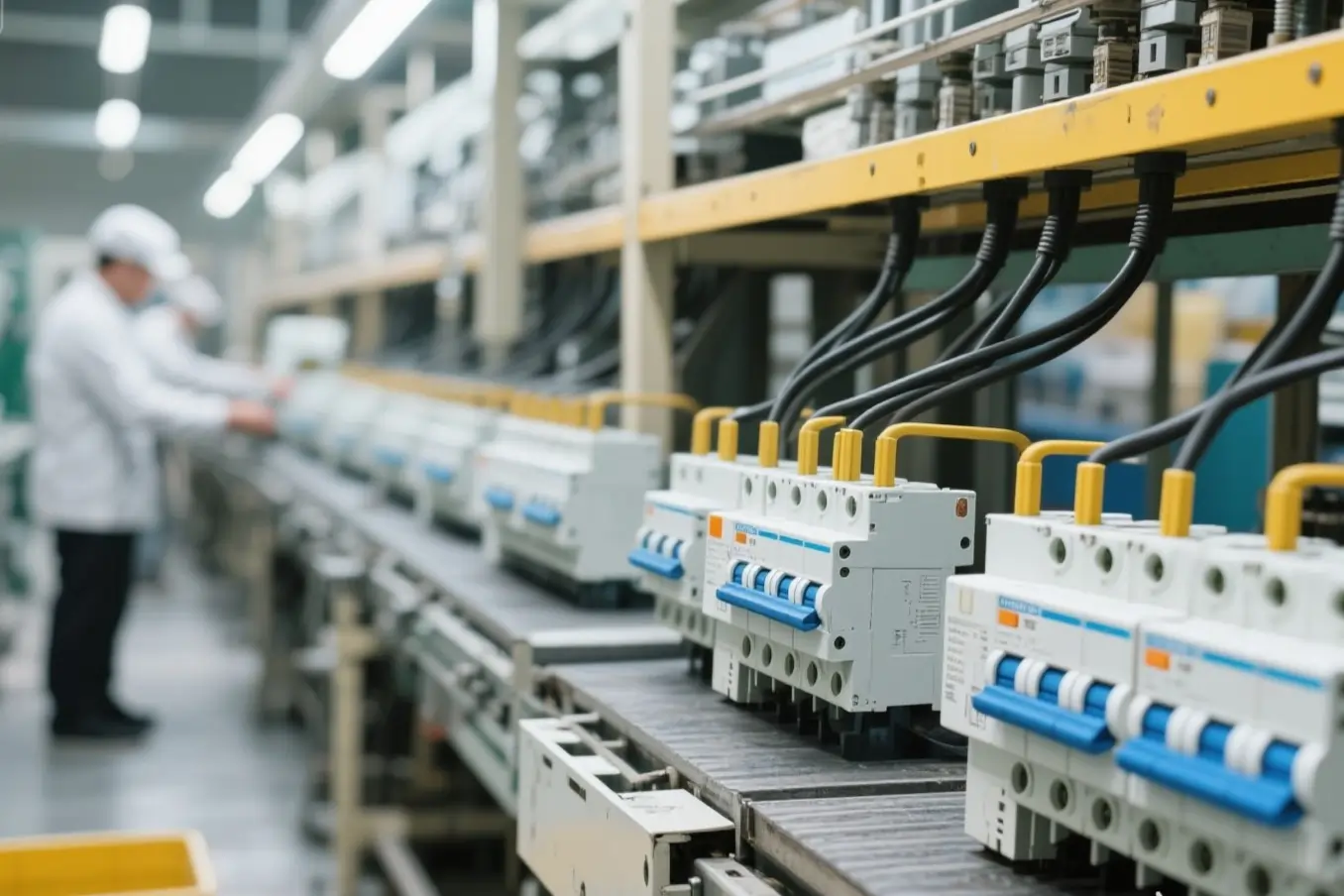
Six shortcuts that create unsafe substitutions
Most identification errors begin with one correct fact—such as amperage, rail fit, or a trip curve—used as if it were the whole specification.
| Mistake | Why it fails | Better decision |
|---|---|---|
| Choosing by amperage only | Current rating does not establish voltage suitability, fault capacity, curve, panel fit, or permitted application. | Compare the complete nameplate and data sheet with the circuit and assembly requirements. |
| Calling every DIN-rail device residential | DIN rail is only a mounting method. Branch breakers, industrial MCBs, and supplementary protectors can look similar. | Read the standard/listing, intended role, voltage, breaking rating, and manufacturer instructions. |
| Using UL 1077 as branch protection | A supplementary protector is not intended to replace the required NEC branch-circuit overcurrent protective device. | Provide the correct upstream branch protection, then use supplementary protection only in its evaluated equipment context. |
| Changing brand because it fits | Mechanical fit does not prove tested bus contact, heat rise, listing, fault performance, or long-term compatibility. | Use the assembly manufacturer's approved breaker family and documented replacement route. |
| Increasing the curve to stop trips | A higher magnetic pickup can delay fault clearing and can hide a load, inrush, wiring, or coordination problem. | Measure the load and starting current, diagnose the trip, and verify the protective design before changing the curve or setting. |
| Using an AC breaker on DC | DC interruption, polarity, voltage per pole, current direction, and required poles in series can differ greatly from AC use. | Use a breaker specifically documented for the exact DC system and wiring arrangement. |
Quote the protection duty, not a vague label
“Industrial breaker, 100 A” is not enough for an accurate offer. Send the system, protection, assembly, market, and documentation requirements together.
- Destination country, governing code, required standard, listing, and certification
- AC or DC, nominal voltage, frequency, phase/neutral arrangement, and required poles
- Design current, load type, continuous duty, starting current, and duty cycle
- Conductor size, material, insulation, termination, installation method, and ambient conditions
- Available fault current and required breaking or interrupting rating at the actual voltage
- Circuit role: service, feeder, branch, motor branch, control, or supplementary protection
- Fixed curve or adjustable/electronic functions and the approved setting range or schedule
- Panel/enclosure make and model, bus or mounting method, lugs, handle, and accessories
- IP/NEMA environment, temperature, altitude, vibration, contamination, and lockout needs
- Data sheet, drawing, manual, certificate, test evidence, traceability, warranty, and change control
- Existing breaker and assembly photos, complete catalog numbers, and replacement reason
- Quantity, sample plan, OEM label, packaging, destination, and delivery schedule
Related SENTOP protection resources
Use the exact product and system pages below to compare form factors, prepare a bill of materials, or request documentation.
Industrial vs residential circuit breaker questions
How can I tell whether a circuit breaker is industrial or residential?
Start with the marking and data sheet: applicable standard or listing, intended circuit role, voltage, interrupting rating, trip unit, and approved assembly. Physical size, pole count, and amperage alone are not enough. A compact MCB may be used in industrial distribution, while a UL 489 breaker may be used in a residential load center.
Is IEC 60947-2 always industrial and IEC 60898-1 always residential?
IEC 60898-1 covers AC breakers for household and similar installations within its scope. IEC 60947-2 covers breakers intended to be installed and operated by instructed or skilled persons within its scope. This is a useful distinction, but the exact installation, voltage, fault duty, assembly, and local code still control. Some commercial or industrial final circuits may use IEC 60898-1 products when all requirements are met.
Can I use a residential breaker in an industrial panel?
Only if the exact breaker is accepted by the panel or equipment manufacturer and meets the required standard or listing, voltage, interrupting rating, trip behavior, circuit role, and environmental conditions. Do not approve it because it has the same current rating or fits the rail or bus.
Are industrial breakers always larger than residential breakers?
No. Industrial control panels often use compact DIN-rail circuit breakers, while residential installations can use substantial multi-pole main breakers. Size may suggest a frame or mounting style, but it does not establish the approved application or short-circuit capability.
What does UL 489 mean on a circuit breaker?
UL 489 is the North American standard family for molded-case circuit breakers, switches, and enclosures. UL Solutions describes these breakers as serving service-entrance, feeder, or branch-circuit protection within their ratings. The mark does not mean the breaker fits every panel or that it is industrial only.
Can a UL 1077 supplementary protector replace a branch circuit breaker?
No. UL Solutions states that supplementary protectors are not intended to provide the branch-circuit overcurrent protection required by the NEC. They can protect internal circuits of equipment in their evaluated application, but they do not replace the required upstream branch protective device.
Does a higher interrupting rating make a breaker automatically better?
No. The rating must be adequate for the available fault current at the actual voltage and configuration. You must also verify panel compatibility, trip behavior, conductor protection, circuit role, environment, and any documented series or coordination arrangement.
Why can’t I install a different brand of breaker if it fits the panel?
A physical fit does not prove correct bus contact, thermal performance, fault performance, listing, or long-term compatibility. Use the panel or equipment manufacturer's approved breaker family and follow the documented replacement path and local code.
Standards and application sources
Product standards, local electrical rules, manufacturer instructions, and the authority having jurisdiction remain controlling for a real installation.
- IEC 60898-1:2015 — official scope for AC circuit breakers used for overcurrent protection in household and similar installations.
- IEC 60947-2:2024 — official scope for low-voltage circuit breakers intended to be installed and operated by instructed or skilled persons.
- UL Solutions: Circuit Breaker and Supplementary Protector Services — application boundary for UL 489 circuit breakers and UL 1077 supplementary protectors.
- UL Solutions: Molded Case Circuit Breaker Marking and Application Guide — product markings, interrupting ratings, terminals, and application information.
- UL Solutions: Panelboard Application Guide — panelboard markings, overcurrent devices, field-installed units, and system limits.
- ABB: MCB technical catalogue — manufacturer example showing Icn under IEC 60898 and Icu/Ics under IEC 60947-2 for dual-marked product families.
- Schneider Electric: Acti9 catalogue — manufacturer data illustrating standard-specific breaking-capacity values and product selection fields.
- OSHA 29 CFR 1910.333 — de-energization, lockout/tagout, verification, and qualified-person requirements for electrical work practices in covered workplaces.
Need the right breaker family for a panel, machine, or distribution project?
Send the system voltage, AC/DC type, available fault current, load and conductor data, panel or enclosure model, breaker role, target market, quantity, and existing nameplate photos. SENTOP can help organize the model-matching and quotation requirements.