
How to Check the Ampere Number on Your Circuit Breaker
The ampere number tells you the breaker's rated current. On many small breakers it is printed on the handle or front label, but a voltage, model number, pole count or short-circuit rating can look similar.
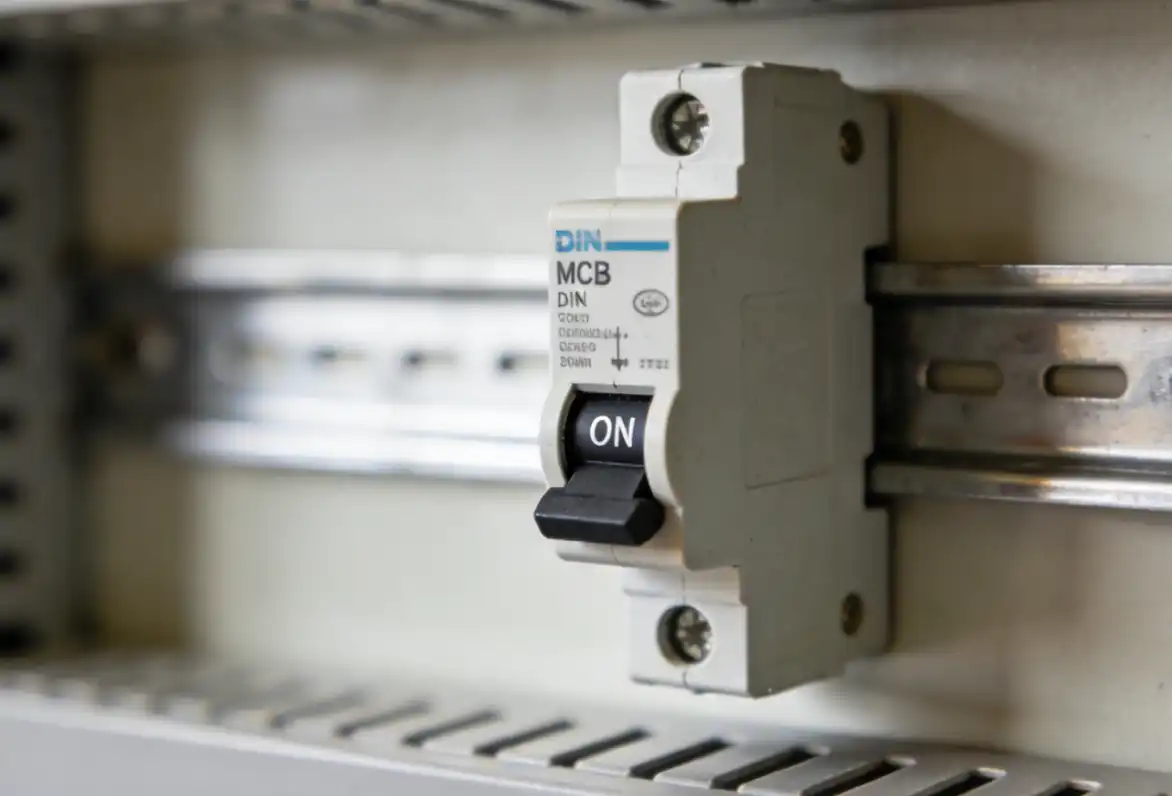
Find the rated current, then exclude the look-alike numbers
For a common residential or light-commercial breaker, the largest number on the handle is often the ampere rating. For an IEC miniature circuit breaker, the rated current may follow a curve letter, such as 16 in C16. Larger molded-case breakers may show a frame size and a separate trip rating or adjustment.
Do not stop after finding one number. Confirm the unit, breaker family, pole arrangement and label context. The same face can also show rated voltage, breaking capacity, model code, standard number and manufacturing information.

Identify the ampere number in five controlled steps
This is a label-reading process. It does not require removing the dead front or touching internal conductors.
Record the breaker family
Write down the manufacturer, series and model. A miniature breaker, molded-case breaker and adjustable electronic breaker use different marking systems.
Read the handle and front label
Look for a plain number such as 15, 20 or 30, or an IEC code such as B10, C16 or D32.
Confirm the unit or code
Look for A, ampere, In, a curve letter or a documented trip-unit marking. Do not infer the meaning from size alone.
Remove the false matches
Exclude voltage, kA or AIC, pole count, standard number, frame designation and catalog number.
Verify the exact model
Use the manufacturer's data sheet or marking guide before purchasing a replacement or changing a protection setting.
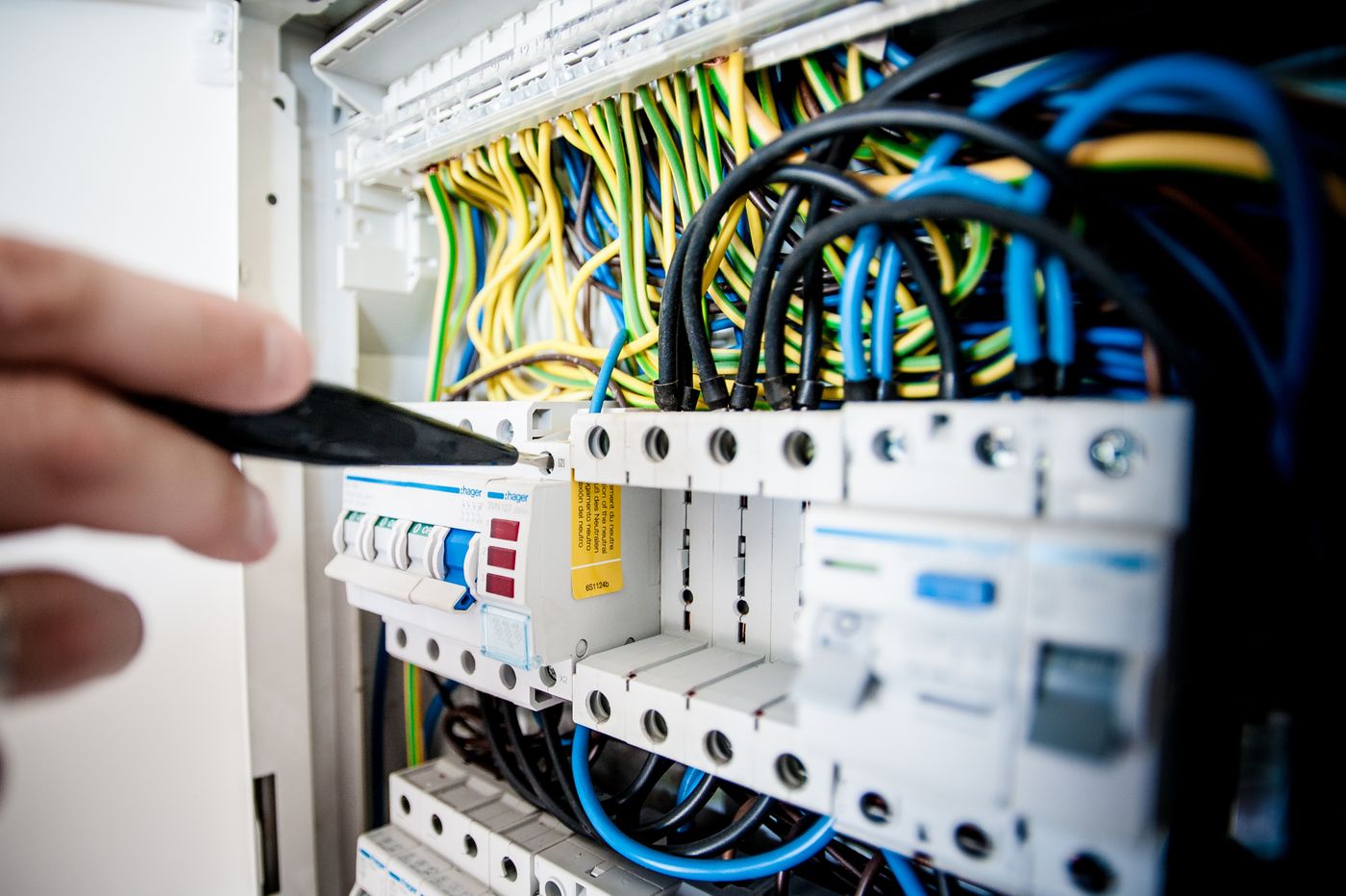
Read what is visible without exposing live parts
A breaker handle and front label can often be viewed through an intact panel door or dead front. Removing covers can expose energized conductors and should not be part of a homeowner or unqualified person's rating check.
Reasonable visual check
- Stand on a dry surface with dry hands.
- Use normal room lighting or a flashlight.
- Read only visible handle and face markings.
- Photograph the label without touching equipment.
- Close the panel door after the check.
Stop and call a qualified person
- The panel is wet, hot, buzzing or smoking.
- There is a burnt smell, scorching or melted material.
- A cover is missing, loose or damaged.
- The rating is hidden behind a dead front.
- The breaker or bus must be tested while energized.
Three common marking systems, three different reading methods
The examples below show where the current rating usually appears. The exact product label and manufacturer documentation remain the authority.
North American branch breaker
20 A is the current rating. The voltage states the electrical system rating. The 10 kAIC marking describes interrupting capability.
For an exact replacement, also match the approved breaker family, poles, voltage, interrupting rating and panel compatibility.
IEC miniature circuit breaker
16 A is the rated current. C identifies the trip characteristic. The 6000 marking indicates a short-circuit capacity in amperes.
Do not read 6000 as a 6000 A load rating. It describes fault interruption under defined test conditions.
Adjustable molded-case breaker
250 AF may be the frame size, not the active trip rating. The trip unit, sensor or rating plug can establish a lower base current.
Read In, AT, Ir and other settings only according to the exact trip-unit manual.
| Marking example | What it usually means | Is it the ampere number? |
|---|---|---|
| 20 | Rated current on a common fixed-trip branch breaker | Usually yes, verify the model |
| C16 | C trip curve and 16 A rated current | 16 A is the rating |
| 6000 or 6 kA | Short-circuit breaking or interrupting capability | No |
| 120/240 V or 230/400 V | Rated voltage or system voltage information | No |
| 1P, 2P, 3P or 4P | Number of poles | No |
| 250 AF | Ampere frame designation on some MCCBs | Not necessarily |
| 200 AT or In 200 A | Trip rating or rated current, depending on the product | Often yes, check the manual |
| A9K24216 or similar | Catalog or model number | No |
Do not add the handle numbers across poles
Pole count describes how many conductors are switched together. It does not multiply the breaker's current rating.
Two-pole breaker
A two-pole 30 A breaker is rated 30 A per pole as one linked device. It is not a 60 A breaker.
2P × 30 A ≠ 60 ATandem or duplex breaker
Two small handles may serve two separate circuits in one panel position. Read each handle and confirm that the panel accepts the exact tandem breaker type.
Read each circuit separatelyMain breaker
The main breaker rating sets an overcurrent limit for the service or feeder under its design conditions. It does not show the building's present electrical demand.
Rating ≠ live load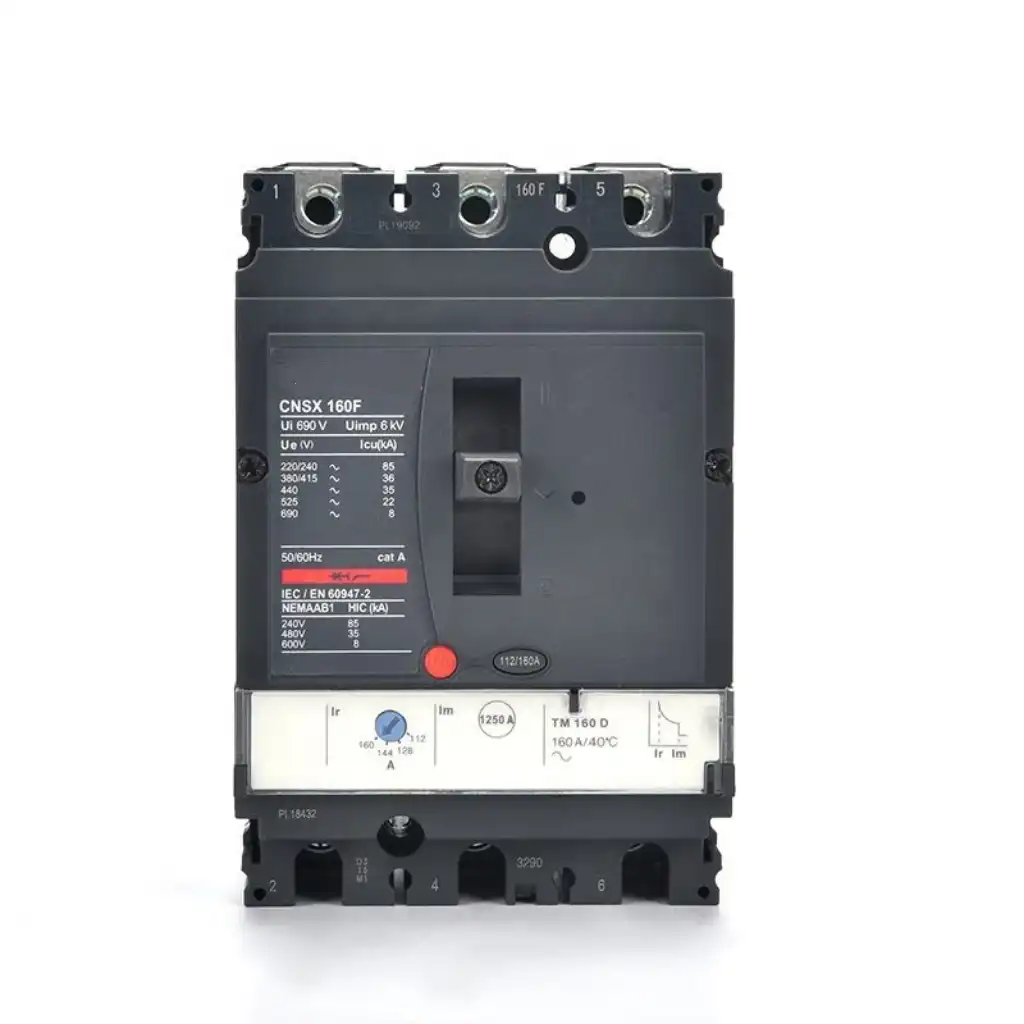
The largest printed ampere value may not be the active trip level
A molded-case breaker can use a frame that supports several trip ratings. An interchangeable trip unit, rating plug, current sensor or electronic setting may define the operating value.
Never assume that AF, AT, In and Ir have identical meanings across every manufacturer. Read the exact label and trip-unit manual. Settings should be changed only by qualified personnel after the circuit and protection coordination have been reviewed.
The breaker label does not tell you what the circuit is drawing now
A 20 A breaker may be carrying very little current at one moment and more current at another. A breaker also responds according to its time-current behavior, so some overcurrent conditions trip quickly while smaller overloads may take longer.

Do not confuse the operating state with the ampere rating
ON, OFF and TRIP show the breaker state. They do not replace the current rating or the model label.
Contacts commanded closed
The circuit may be energized. ON does not prove the circuit is healthy or show its actual current.
Contacts commanded open
OFF is an operating position. Follow the applicable isolation and verification procedure before work.
Protective operation occurred
A midpoint or trip indicator can show that the breaker opened automatically. Find the cause before resetting repeatedly.
Label cannot be read
Do not guess from physical size or wire diameter. Record the panel and breaker model, then obtain qualified identification.
Ampere rating is only one line of the specification
Two breakers with the same current can have different voltage, fault rating, trip curve, poles, terminals, mounting, dimensions and approvals. Panel compatibility is especially important for plug-in branch breakers.
Send clear photos of the breaker front, side label and panel identification together with the circuit information. Do not substitute a breaker only because the handle number matches.
Six shortcuts that produce the wrong ampere number
Reading 6000 as 6000 A
On an IEC MCB, 6000 commonly refers to short-circuit capacity. The rated current may be the 16 in C16.
Adding poles together
A two-pole 30 A breaker remains a 30 A device per pole. The linked poles do not create a 60 A rating.
Using wire size as the answer
Wire size can help with a system review, but it does not identify the breaker's exact rating or approval.
Using the frame as the trip
An MCCB frame can support a trip unit or setting below the frame class. Read all active rating information.
Buying by current only
Equal current ratings do not guarantee equal panel fit, voltage, kA rating, curve, terminals or certification.
Removing the cover to find a label
If the information is not safely visible, stop. Do not expose live parts for a visual identification task.
Send the model label, panel information and electrical requirements
For a useful review, include the manufacturer, model, current, voltage, poles, short-circuit rating, installation, quantity, destination market and clear product photos.
Circuit breaker ampere number FAQ
Where is the ampere number on a circuit breaker?
On many fixed-trip branch breakers, it is printed on the handle or directly beside it. On IEC MCBs, it may follow a trip-curve letter, such as 16 in C16. On adjustable MCCBs, check the frame, trip unit, rating plug and active settings.
Does C16 mean a 16 amp breaker?
Yes, in the common IEC MCB marking format, C identifies the trip characteristic and 16 is the rated current in amperes. Other label data, including voltage and short-circuit capacity, must still match the application.
Is the 6000 marking the ampere rating?
No. On many IEC miniature breakers, 6000 indicates a 6000 A short-circuit capacity under the applicable standard. It is not the continuous current rating.
Is a two-pole 30 amp breaker equal to 60 amps?
No. A two-pole 30 A breaker is rated 30 A per pole as a mechanically linked device. Pole ratings are not added together.
Can I identify breaker size from the wire alone?
No. Conductor size is part of a circuit review, but it does not prove the breaker model, rating, trip curve, voltage, interrupting capacity or panel compatibility.
What if the breaker label is unreadable?
Do not guess or remove protective covers to search for hidden markings. Record the panel manufacturer and model, photograph the visible breaker and ask a qualified person to identify the approved replacement.
Does a 20 amp breaker mean the circuit is using 20 amps?
No. It describes the breaker's rated current, not the circuit's present load. Actual current must be measured with suitable equipment and safe procedures by a qualified person.
Technical references
- UL Solutions: Circuit Breaker Marking and Application Guide
- OSHA 1910.333: Selection and Use of Work Practices
- Schneider Electric: Current Rating of Multi-Pole Breakers
- IEC 60898-1: Circuit Breakers for Household and Similar Installations
- IEC 60947-2: Low-Voltage Circuit Breakers
- Fluke: How to Measure Current with a Clamp Meter