
Lighting circuit capacity guide
How Many Lights Can a Circuit Breaker Control?
There is no single safe number. Start with the running current, then check LED inrush, the switch or control rating, and the complete wiring system.
Direct answer
Final light count = the lowest verified limit. A 15 A, 120 V circuit planned at 80% has 1,440 VA available, so power-only math suggests 144 ten-watt lights at power factor 1. That is a screening result, not an approved LED quantity.

Screening calculator
Estimate the running-current limit first
Use the luminaire's maximum input current when it is available. If you only have input watts, voltage and power factor, this tool estimates current and rounds the fixture count down.
Calculator boundary: This tool does not select a breaker, cable, trip curve, RCD/RCBO/AFCI function or control device. It cannot approve an installation. Use exact product data and qualified design review.
Use the right question
A breaker usually protects the circuit; another device controls the lights
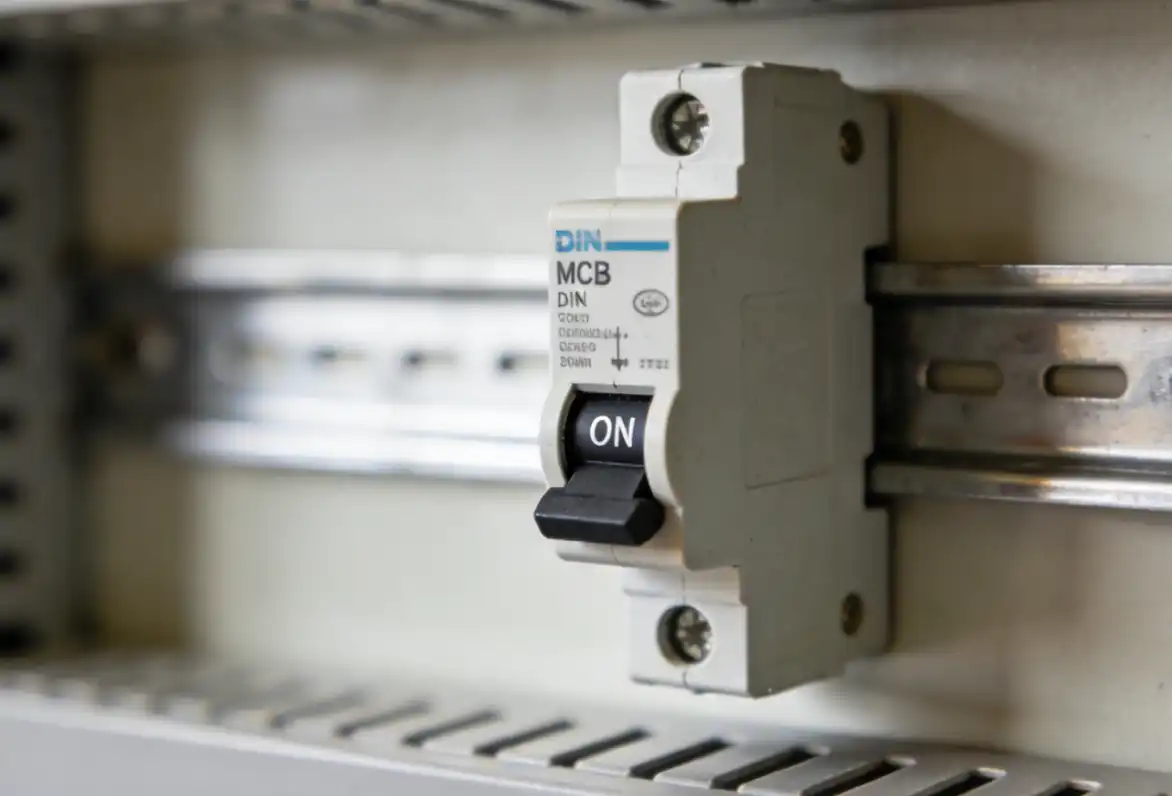
A circuit breaker opens when current follows its overload or short-circuit trip behavior. Routine switching is normally done by a wall switch, dimmer, relay, contactor, sensor, timer or lighting-control panel. The circuit limit and the control limit can therefore be different.
Some North American breakers have switching markings. UL explains that an SWD-marked 15 A or 20 A breaker is suitable for regular switching of fluorescent lighting. HID markings apply to the stated high-intensity-discharge use. Neither marking is a blanket approval for every LED driver.[1]
| Part of the circuit | Main job | Data that may limit light count |
|---|---|---|
| Circuit breaker or MCB | Protect conductors and the circuit from overcurrent. | Current, curve, voltage, poles, breaking capacity, temperature and assembly conditions. |
| Switch, dimmer, relay or contactor | Perform routine on/off or level control. | LED/electronic-load rating, lamp count, inrush making duty, minimum load and derating. |
| Luminaire and driver | Convert electrical input into light. | Input current, watts, PF, inrush peak and duration, leakage and compatibility tables. |
| Conductors and panel | Carry and distribute current safely. | Ampacity, terminals, grouping, ambient temperature, voltage drop, fault level and panel ratings. |
Count electrical input units, not visible light points.
One luminaire may have several LED boards powered by one driver. Several fittings may share a remote driver. A track may accept more heads later. Record the complete load unit and the maximum intended configuration.
Running current
Idesign
Iother
Ilight
PF
How to calculate lights per circuit
Best method: use the maximum input current printed on the exact luminaire or driver data sheet at the actual supply voltage.
Nrun = floor[(Idesign − Iother) ÷ Ilight]
If input current is missing, estimate Ilight ≈ P ÷ (V × PF). Always round the count down.
Power factor is not efficiency. At the same watts and voltage, a lower-PF fixture draws more RMS current. Lumens and “equivalent watts” are not valid electrical input data.
Current available under the adopted design method.
Other permitted loads that can operate at the same time.
Maximum input current of one complete lighting unit.
Power factor for the exact product and operating point.
Regional design methods
North American example
IEC-style coordination
Does the 80% rule apply to every lighting circuit?
No. The familiar 80% value belongs to a specific continuous-load relationship. It should not be copied into every country, every breaker or every lighting schedule.
Continuous operation on ordinary equipment
UL's breaker guide states that a breaker not marked for 100% continuous operation is intended for no more than 80% of its rating when the load continues for three hours or more.[1] Confirm whether the load is continuous and which code edition is locally adopted.
Load, breaker and conductor must coordinate
A common IEC relationship is IB ≤ In ≤ Iz: design current must not exceed the protective-device rating, and the rating must not exceed permitted conductor capacity.[4] Installation and national rules add further checks.
IEC 60364-4-43:2023 addresses protection against overcurrent and coordination measures.[5] Product scope also matters: IEC 60898-1 covers household and similar AC breakers within its stated limits, while IEC 60947-2:2024 covers industrial circuit breakers intended for instructed or skilled persons.[6][7]
Do not change breaker size or trip curve from a calculator result.
The protective device must still clear faults, protect the conductors, fit the panel, meet the required breaking capacity and comply with the exact equipment and local rules.
Final decision rule
Four limits decide the final number of lights
The running-load answer is only the first screen. Keep each limit in the calculation record so a reviewer can see what governs.
Running current
Maximum input current, duty, voltage, PF and other loads.
LED inrush
Driver peak and pulse duration versus the exact breaker response.
Control device
Switch, dimmer, relay, sensor or contactor load rating.
System and code
Cable, panel, fault, leakage, voltage drop and local requirements.
Nfinal = min(Nrun, Ninrush, Ncontrol, Nsystem)
If any one limit is unknown, the final quantity is not yet established.
The LED difference
Why LED lights can trip a breaker when the watts are low
Many LED drivers charge input capacitors when power turns on. For a short time, the current can be far above the normal running value. When many drivers start together, their pulses add. The breaker may enter its instantaneous trip region even though the later current is small.
Peak current alone is not enough to decide the result. Pulse duration, switching angle, source impedance, breaker temperature, driver tolerance and the exact time-current curve all matter. That is why a driver manufacturer's maximum-luminaire table is more useful than watts alone.[2][3]
A C- or D-curve breaker is not an automatic LED upgrade.
A different curve changes fault response as well as inrush tolerance. Cable protection, prospective fault current, required disconnection time, selectivity, breaking capacity and product approval must remain correct.
Beyond the breaker
The control and installation may be the smaller limit
A dimmer marked 600 W for incandescent lamps may allow far less LED load. One current Lutron example is rated for up to 150 W of dimmable LED/CFL load or 600 W of incandescent/halogen load. Model, compatible lamp list, ganging and temperature still matter.[9]
For larger lighting groups, a selected AC contactor or relay may carry the load while a wall control provides only the command. This does not remove the breaker, conductor, inrush, leakage or fault checks. The contactor must have suitable making duty for the driver load.
Conductor and terminals
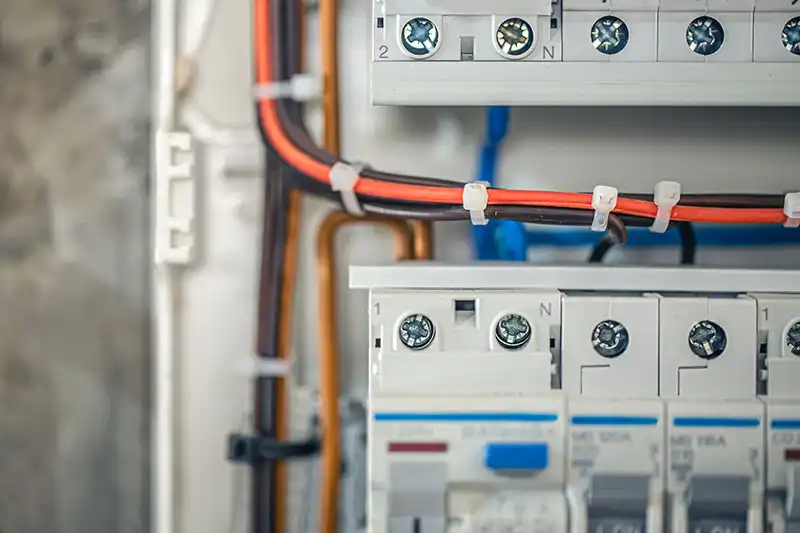
Size, material, insulation, installation method, grouping, ambient temperature and terminal ratings.
Panel heat
Continuous neighboring loads can warm thermal-magnetic breakers. Use the assembly maker's rated diversity or derating data.[8]
Voltage drop
Long runs can reduce voltage at remote drivers and may change current, starting or light quality.
Fault level
Breaking capacity must suit the prospective short-circuit current at the installed point.
Leakage and residual protection
Leakage from many drivers can add. Confirm the required RCD, GFCI or RCBO type and grouping.
Emergency operation
Transfer, restart and life-safety rules may require circuit separation or a system-level inrush study.
Worked examples
Two calculations—and why neither is the final approval
Each example states its assumptions. Real circuits need exact data, the adopted rules and qualified review.
Twelve 9 W LEDs, 120 V, PF 0.90
Assume a dedicated 15 A circuit and continuous operation under the common North American planning relationship.
Current = 12 × 9 W ÷ (120 V × 0.90) = 1.0 A
Running current is comfortably below a 12 A planning value. The result is still incomplete. Confirm the exact dimmer lamp list and rating, driver inrush, conductor and panel conditions.
Fifty 20 W LEDs, 230 V, PF 0.90
Assume a 10 A MCB, no other loads and an IEC-style project whose full circuit must satisfy the local design method.
Current = 50 × 20 W ÷ (230 V × 0.90) = 4.83 A
The current is below 10 A, but fifty drivers may still create high inrush. Obtain the exact MCB quantity table. If one relay switches all fifty, verify its making-current or lamp-count rating too.
Better architecture can beat a larger quantity.
Several smaller zones can reduce simultaneous inrush, improve daylight control and keep a smaller area lit after one trip. They use more breakers, conductors, panel space and commissioning work, so the choice is an operating decision as well as an electrical calculation.
Design workflow
How to determine lights per circuit step by step
Record the electrical system
Voltage, frequency, phase arrangement, grounding system, panel and exact protective-device model—not only handle current.
Define the operating schedule
Note continuous duty, automatic starts, zones, emergency transfer and the largest group that can energize at once.
Build the maximum load schedule
Count complete luminaires and drivers. Include permitted shared loads and planned future track heads or fittings.
Collect manufacturer inputs
Use maximum input current where available. Also request watts, PF, THD, inrush peak and duration, leakage and quantity tables.
Calculate and compare all four limits
Find the running ceiling, then compare it with the breaker/driver, control-device and complete system limits.
Choose the lowest count and verify
Keep the data sheets and calculations. Test the worst credible start, restart, transfer and temperature condition before handover.
For breaker selection, compare the required application data with SENTOP's miniature circuit breaker range and the MCB vs MCCB guide. Product selection still depends on the exact load, conductor, fault level, panel and destination market.
Troubleshooting boundary
Why does the lighting breaker keep tripping?
Repeated trips, heat, discoloration, buzzing, burning odor, shock or persistent flicker are not normal calculator problems. ESFI lists frequent trips, flicker, warm or discolored plates, buzzing, odor and mild shock as overload warning signs.[10]
| What happens | Possible categories—not a diagnosis | Safe next step |
|---|---|---|
| Trips as a large group turns on | Combined LED inrush, short circuit, failed driver, wiring fault or unsuitable device. | Stop repeated resets. Have a qualified person compare the exact driver, breaker and control data. |
| Trips after minutes or hours | Sustained overload, panel heat, loose connection, terminal problem or equipment fault. | Measure load and temperature and inspect the full circuit. Do not install a larger breaker. |
| RCD/GFCI/RCBO operates | Accumulated leakage, moisture, neutral/ground error, damaged wiring or failed driver. | Identify which protective function operated and use appropriate qualified testing. |
| Lights flicker without a trip | Voltage drop, loose connection, dimmer incompatibility, control leakage or driver failure. | Treat heat, odor or buzzing as urgent. Otherwise verify voltage and compatibility. |
Reset only after the cause is resolved.
ESFI describes breakers as safety devices that stop current when it exceeds a safe level. A trip that keeps returning needs diagnosis, not a larger rating.[11]
Buyer and RFQ checklist
Send evidence for the exact lighting circuit
A useful request is not “Which 16 A breaker handles the most LEDs?” Ask for a documented quantity for the exact driver, breaker and control at the project voltage and switching condition.
- Destination country, adopted rules, project standard and required approvals
- Voltage, frequency, phase/neutral arrangement and grounding system
- Breaker family, poles, current, curve, breaking capacity and panel reference
- Cable, route, grouping, ambient temperature, length and fault level
- Luminaire and driver model, maximum input current, watts, PF and leakage
- Inrush peak and duration plus the documented maximum on the exact breaker
- Switch, dimmer, relay, sensor or contactor model and load-type rating
- Quantity, zones, simultaneous start, emergency transfer and delivery needs

FAQ
Questions about how many lights a breaker can supply
How many LED lights can be on a 15 amp breaker?
There is no fixed number. For a continuous 120 V load under common North American practice, 12 A or 1,440 VA is a useful running-load starting point. Divide that current by the maximum input current per LED fixture, then use the lower of the inrush, control-device and complete system limits.
How many lights can be on a 20 amp circuit?
At 120 V, a 20 A circuit has 2,400 VA nominal. A common continuous-load planning value is 16 A or 1,920 VA. LED inrush, the switch or dimmer, the conductors and local rules may set a much lower final count.
Does the 80% rule always apply to lighting circuits?
No. The 80% figure is commonly used for certain North American continuous-load cases on ordinary equipment. Not every lighting load is continuous, and IEC-based or national systems use their own coordination methods. Check the adopted rules and exact equipment.
Does a circuit breaker control the lights?
A breaker mainly protects the circuit and may provide isolation. A switch, dimmer, relay, contactor, sensor, timer or lighting-control panel normally performs routine control. Use a breaker for regular switching only when the exact marking and application permit it.
Why do LED lights trip a breaker when their total wattage is low?
LED drivers can draw high, short charging pulses when they turn on. Many drivers starting together can enter the breaker's instantaneous trip region even though normal current is small. Use the exact driver's breaker quantity table.
Can I change a B-curve breaker to a C-curve breaker for LED lights?
Not without qualified design review. A different curve may tolerate more inrush, but it also changes fault response. Cable protection, fault current, disconnection time, breaking capacity, selectivity, panel compatibility and local rules must remain correct.
Does a dimmer reduce how many lights I can install?
It can. Dimmers often have LED-specific watt and lamp-count ratings below their incandescent rating. Compatibility, minimum load, ganging, ambient temperature, driver type and inrush may all reduce the permitted quantity.
What should I do if the lighting breaker keeps tripping?
Do not repeatedly reset it or install a larger breaker. Turn off the affected load and have a qualified person identify the operated protection, measure the load, inspect wiring and terminals, and check inrush, leakage, temperature and equipment faults.
Technical basis
Primary sources and design boundary
- UL Solutions — Molded Case Circuit Breaker Marking and Application Guide. Covers continuous-current and SWD/HID markings.
- Schneider Electric — LED Lighting Technical Guide. Explains LED driver inrush and model-specific breaker quantity coordination.
- Schneider Electric UK — How Many LED Lamps Can Be Powered from an MCB?. Points users to lamp type, load and product data.
- Electrical Installation Guide — Practical Values for a Protective Scheme. Gives the IB ≤ In ≤ Iz relationship and breaking-capacity check.
- IEC 60364-4-43:2023. Official publication page for protection against overcurrent in low-voltage installations.
- IEC 60898-1:2015. Official scope for household and similar AC circuit breakers.
- IEC 60947-2:2024. Official scope for industrial circuit breakers operated by instructed or skilled persons.
- IET Wiring Matters — Derating Grouped Circuit Breakers. Discusses mutual thermal influence and manufacturer rated diversity factors.
- Lutron — Selecting a Maestro Dimmer. Current product example showing different LED and incandescent/halogen ratings.
- Electrical Safety Foundation International — Don't Overload Your Home. Lists common warning signs of electrical overload.
- Electrical Safety Foundation International — Understanding Your Home Electrical System. Explains the basic protective role of fuses and breakers.
- Schneider Electric — Coordination of Switchgear with Loads (CA908026E). Archived manufacturer table behind the model-specific 10 W LED example above.
Safety notice: This page is an educational screening and procurement guide. It is not a circuit design, installation instruction, breaker-selection approval or permission to work on energized equipment.
Codes, standards and product tables change. The locally adopted rules, authority having jurisdiction, exact manufacturer documents and qualified electrical design control the final circuit. Do not upsize a breaker or change its curve to stop trips without a complete review.
Need breaker and control models reviewed against a lighting schedule?
Send SENTOP the circuit voltage, panel, breaker reference, driver data, switching method, quantity, destination market and available one-line drawing. We can support model matching, samples, documents, OEM requirements and coordinated bulk supply.