
You can put two circuits on one circuit breaker, but only if done safely. This is called “double tapping” and can be risky if not done right. Overloading the circuit breaker can make wires too hot. Hot wires might melt their covering or cause a fire. Appliances might not get enough power and could break. Overloaded circuits also increase the chance of electric shocks. If this happens often, the circuit breaker wears out faster and becomes less reliable. To stay safe, know the limits and follow the rules carefully.
Key Takeaways
- Connecting two circuits to one breaker can be dangerous. It might cause overheating, fires, or damage to devices.
- Check if your breaker is made for two circuits. Tandem breakers are safer for this purpose.
- Follow NEC rules to stay safe when combining circuits. This avoids accidents and legal problems.
- Add up the total load on your breaker. Keep it below 80% of its limit to stop overloads.
- Ask a licensed electrician for help with electrical work. They make sure everything is safe and follows the rules.
Understanding Circuit Breakers
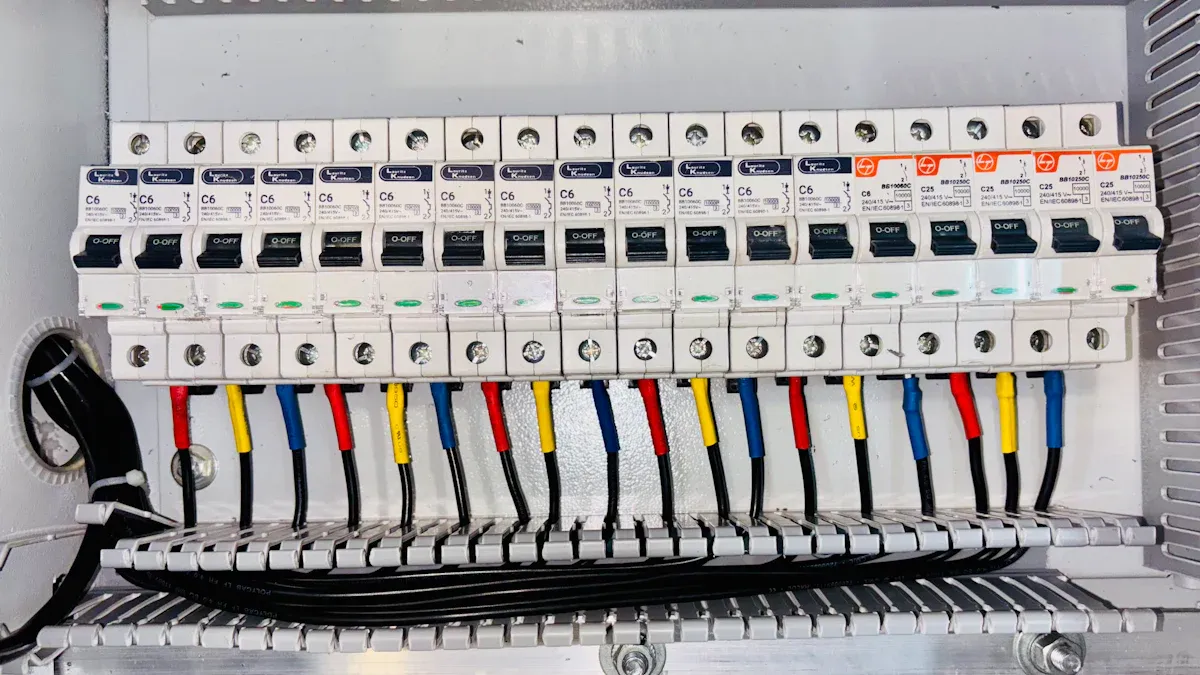
What circuit breakers do
Circuit breakers are important for keeping your home’s electricity safe. They work like automatic switches, stopping electricity when there’s a problem. This helps protect your devices and lowers the risk of fires or shocks.
Here’s how circuit breakers help:
- Overcurrent Protection: They shut off power if too much electricity flows. This stops wires from overheating.
- Short Circuit Protection: They stop power when wires touch by mistake, preventing sparks or fires.
- Ground Fault Protection: They cut power if electricity escapes to the ground, keeping you safe from shocks.
- Fire Prevention: By stopping power during problems, they help prevent electrical fires.
- Switching and Isolation: They let you turn off circuits safely for repairs or maintenance.
Without circuit breakers, your home’s electrical system would be unsafe.
Types of circuit breakers
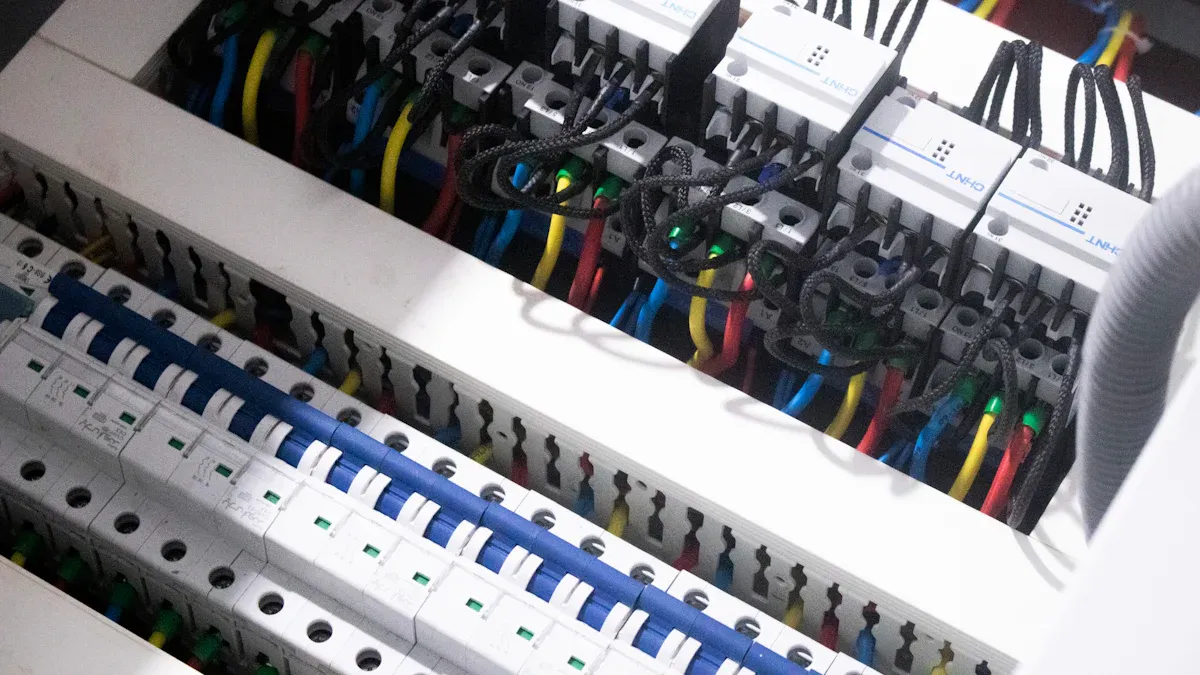
There are different kinds of circuit breakers, each made for specific jobs. Here’s a simple guide:
| Type of Circuit Breaker | What It Does |
|---|---|
| Spring-operated Circuit Breaker | Opens and closes using a spring. |
| Pneumatic-operated Circuit Breaker | Uses compressed air to work. |
| Hydraulic-operated Circuit Breaker | Moves with the help of hydraulic fluid. |
| Magnetic-operated Circuit Breaker | Works by creating a magnetic field with electricity. |
| Magnetic-hydraulic Circuit Breaker | Combines magnetic and hydraulic features for better results. |
| Motor Protection Circuit Breaker (MPCB) | Protects motors from getting too much power or other issues. |
| Automotive Circuit Breakers | Made for cars, with options to reset automatically or manually. |
Each type is made for a specific use, so pick the one that fits your needs.
How circuit breakers prevent overloads
Circuit breakers stop overloads by watching how much electricity flows. If it gets too high, they trip and stop the power. This keeps your wires and devices safe from harm.
Manufacturers test circuit breakers to make sure they work well. For example:
- High Current Injection Test: Checks if the breaker trips when electricity is too strong.
- Contact Resistance Test: Makes sure the breaker’s parts connect properly and evenly.
- Megger Insulation Testing: Tests the insulation to ensure it handles high voltage safely.
These tests make sure circuit breakers do their job right, keeping your home safe from electrical dangers.
Safety of Combining Circuits on One Circuit Breaker
What is ‘double tapping’?
Double tapping means connecting two wires to one breaker terminal. This is often seen in older homes or when adding circuits without upgrading the panel. It might seem easy, but it can be unsafe if done wrong.
Some breakers can handle two wires, but most cannot. If a breaker isn’t made for this, the wires might not stay tight. Loose wires can cause sparks, which create heat and may start fires. Always check the breaker’s manual to see if it allows double tapping.
Risks of overloading a breaker
Overloading a breaker is very dangerous when combining circuits. Adding more devices increases the total electricity used. If this goes over the breaker’s limit, it might trip too often or fail to trip. This can cause hot wires, melted coverings, or even fires.
Here are common dangers of overloading:
- Overheating: Too much electricity makes wires hot, damaging their covering and risking fires.
- Fire Hazards: Bad wiring or loose wires can spark and ignite nearby items.
- Code Violations: Electrical rules exist for safety. Breaking them can lead to unsafe setups and legal trouble.
During holidays, circuits often carry extra electricity. Decorations like lights and inflatables can overload circuits, causing overheating and danger.
When combining circuits is allowed
You can combine circuits on one breaker if it follows safety rules. The National Electrical Code (NEC) gives guidelines for safe setups. Some breakers, like tandem breakers, are made for two circuits. These have separate spots for each wire to keep connections secure.
Here are some rules for combining circuits safely:
| Code Reference | Description |
|---|---|
| 240.15(B) | Breakers must disconnect all ungrounded wires unless stated otherwise. |
| 210.4(B) | Allows single-pole breakers for multiwire circuits serving single-phase loads. |
Breakers must also meet certain requirements:
| Specification | Details |
|---|---|
| Series Combination Rating | Must pass testing and be labeled correctly. |
| Interrupting Rating | Breaker must handle the system’s short-circuit current safely. |
| Load-side Circuit Breaker | Must be in a panelboard with proper markings. |
| Line-side Protection | Class J fuses can be in the same or upstream panelboard. |
Before combining circuits, calculate the total electricity used to stay within the breaker’s limit. Use a breaker made for two circuits or ask an electrician to avoid risks.
Electrical Code and Compliance
National Electrical Code (NEC) guidelines
The National Electrical Code (NEC) sets rules for safe electricity use. It helps ensure electrical systems work safely and efficiently. Always follow these rules when using circuit breakers or combining circuits.
For example, NEC Article 430 has rules for motor circuits. It limits how many motors can share one breaker to avoid overloads. The breaker must handle the total amps of all motors. It also needs to handle 25% more amps from the biggest motor. This keeps the breaker from tripping too easily. Section 240.15(B) allows single-pole breakers with handle ties for multiwire circuits. This makes sure all wires disconnect at the same time, lowering risks.
The NEC updates often to fix new safety problems. For example, newer rules require machines to show short-circuit current ratings (SCCR). If changes are made, recalculations are needed. These updates improve safety during inspections. Always check the latest NEC version to stay updated.
Breakers designed for two circuits
Some breakers are made to safely handle two circuits. These are called tandem breakers or double-pole breakers. They let you connect two circuits while keeping them separate. Use these breakers if you need to combine circuits.
Tandem breakers have separate spots for each wire. This keeps wires tight and lowers the chance of sparks or overheating. These breakers also follow NEC rules, making them safer than regular breakers. Always check the breaker’s details to make sure it fits your system.
Consequences of non-compliance
Not following electrical codes can cause big problems. It raises the risk of fires, broken equipment, and injuries. You might also face legal trouble or fines.
For example, insurance claims for electrical problems rise during geomagnetic storms. Claims go from 5-10% on normal days to 20% during storms. This shows how unsafe systems can become worse with outside factors. OSHA also reports over 1,900 yearly violations for electrical issues. These include using extension cords wrong or leaving electrical boxes open.
Ignoring NEC rules can also hurt your home’s value. Inspectors may find unsafe setups, forcing expensive fixes before selling. To avoid these problems, always follow NEC rules and hire an electrician for tricky jobs.
Practical Tips for Planning and Load Calculation
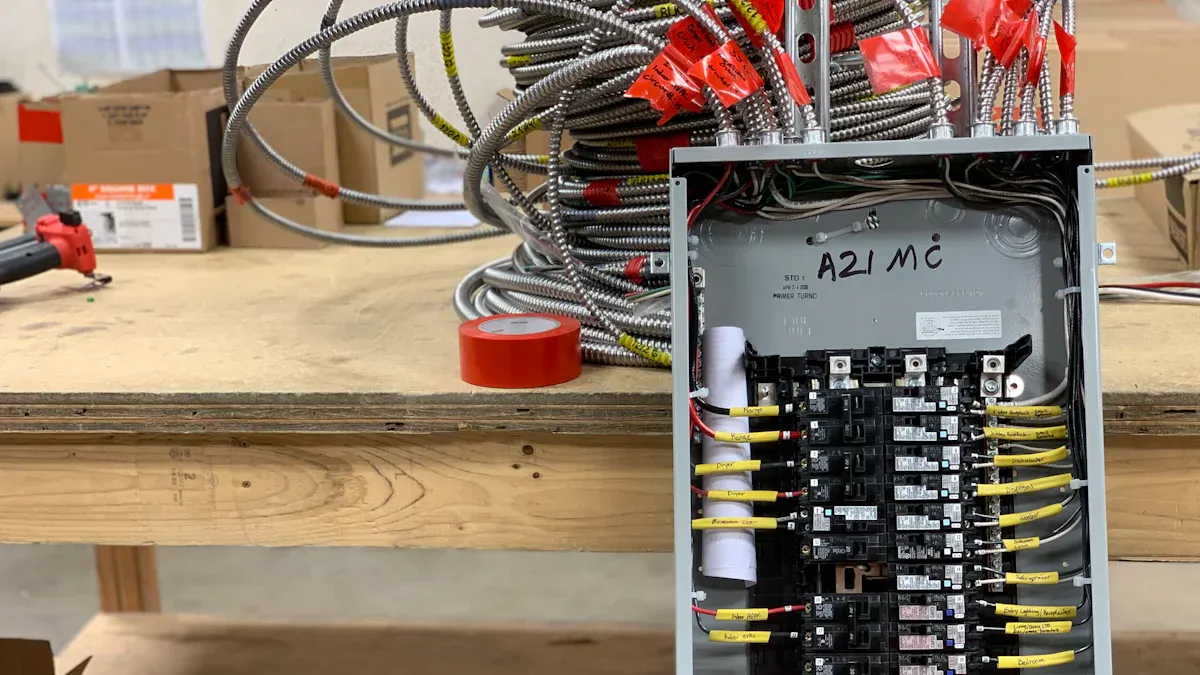
Figuring out the load on a circuit breaker
To keep your circuit breaker safe, calculate its electrical load. This helps avoid overloads and keeps your system within safety rules. Follow these steps to figure out the load:
- Measure your home’s square footage, skipping unfinished areas like basements.
- Add up the power used by lights and outlets in your home.
- Include 1,500 volt-amperes for each 120-volt, 20-amp kitchen or laundry circuit.
- Check the wattage of fixed appliances using their labels or manuals.
- Add the power ratings of your furnace and air conditioner. Use the higher number.
After finding the total load, compare it to the breaker’s limit. For constant loads, multiply the current by 125% for extra safety. This ensures the breaker won’t trip under normal use.
Checking if your breaker can handle two circuits
Before combining circuits, make sure your breaker can handle the load. Start by calculating the current for each circuit with this formula:
Load Current (IL) = Power (P) / (Voltage (V) × Power Factor (PF))
Add the currents from both circuits to get the total. If the total is over 80% of the breaker’s rating, don’t combine them. Also, check if the breaker is made for two circuits, like tandem breakers. These have separate spots for wires, keeping connections secure.
Knowing when to upgrade your electrical system
Upgrade your system if it can’t meet your needs. Signs include frequent breaker trips, flickering lights, or trouble running big appliances together. Use actual load numbers, not just breaker ratings, to check your system. If the total load is more than your service size, it’s time to upgrade. A licensed electrician can help you plan for future needs and keep your system safe.
Alternatives to Combining Circuits
Using a tandem breaker
Tandem breakers, also called “cheater breakers,” are a smart option when your panel is full. These breakers let you connect two circuits while using just one slot in the panel. They are helpful if you need more circuits but can’t upgrade the whole panel.
Here’s how to install a tandem breaker:
- Open the panel cover carefully.
- Turn off the old breaker before removing it.
- Take out the old breaker gently.
- Learn how the tandem breaker fits into the panel.
- Slide the tandem breaker into its slot.
- Attach the wires from both circuits to the terminals.
- Turn on the breakers and close the panel cover.
Tandem breakers have limits. They don’t handle heat as well as regular breakers. They also don’t offer AFCI or GFCI protection, which are important for safety. Always check local rules to see if tandem breakers are allowed where you live.
Adding a subpanel
A subpanel is another good choice. It gives extra space for circuits, making it easier to expand your system without overloading the main panel. This is useful if you’re adding many circuits or high-power devices.
Subpanels have several benefits:
- They improve safety by separating circuits, lowering the chance of overloads or fires.
- They make it easier to control breakers in specific areas of your home.
- They help distribute power better, which can save energy and money.
Installing a subpanel takes planning. You need to calculate the load and check if the main panel can handle it. It’s best to hire an electrician for this job.
Consulting a licensed electrician
When working with breakers, hiring a licensed electrician is the safest choice. Electricians know how to fix tricky electrical problems and follow safety rules. This lowers the risk of fires or shocks.
An electrician can save you time and prevent mistakes. They can quickly find problems and suggest the best solutions for your needs. Whether you’re using a tandem breaker, adding a subpanel, or trying something else, they’ll make sure everything meets code.
💡 Tip: Always put safety first. Call an electrician for any work you’re unsure about.
You can sometimes put two circuits on one breaker, but it’s risky. It might break safety rules and lead to serious problems. Overloading a breaker can cause fires, injuries, or damage to homes. For instance, electrical fires cause $40 million in damages yearly. They also result in 13 deaths and 116 injuries each year. Homes with the wrong breakers are 20% more likely to have fires.
💡 Tip: Always check the load and follow NEC rules. NEC 220.87 explains how to calculate loads safely when changing electrical systems.
Using breakers made for two circuits or hiring an electrician helps avoid dangers. Experts follow UL standards and stop issues like system failures or fires. Stay safe by making smart choices and asking professionals for help when unsure.
FAQ
Can all circuit breakers handle double tapping?
No, not every breaker can handle double tapping. Some breakers, like tandem ones, are made for two circuits. Always check the breaker’s manual or markings to be sure. Using the wrong breaker can cause loose wires and safety problems.
What happens if a circuit breaker is overloaded?
Overloading makes the breaker trip often or stop working. Wires can get too hot, melt, or even start fires. Appliances might not work right. Always check the load and keep it under 80% of the breaker’s limit.
Is double tapping against electrical rules?
Double tapping is okay only if the breaker allows it. The National Electrical Code (NEC) has rules for safe setups. If the breaker isn’t made for two circuits, double tapping breaks NEC rules and can cause fines or safety risks.
How do you know if your breaker is overloaded?
Look for frequent trips, flickering lights, or appliances turning off suddenly. Use a formula to check if the current goes over 80% of the breaker’s limit. If it does, lower the load or upgrade your system.
Should you call an electrician for combining circuits?
Yes, calling an electrician keeps things safe and follows the rules. They can measure loads, install tandem breakers, or add subpanels. Experts help avoid mistakes that could cause fires, shocks, or broken devices.
The following information may be of interest to you
Single Pole vs Double Pole Circuit Breakers
Adjustable double throw automatic transfer switch
How to choose the appropriate size of circuit breaker
The difference between an AC combiner box and a DC combiner box

Discover more from SENTOP Electrical Co., Ltd
Subscribe to get the latest posts sent to your email.
