
Confirm the circuit voltage
Use the actual voltage across the load. Do not assume 120V, 230V or 240V from the breaker appearance.

A 15A breaker does not have one wattage value for every circuit. Voltage, phase, power factor, load duration, conductor conditions and local rules all affect the usable load.
The simple calculation is voltage multiplied by current. That result is volt-amperes, or VA. For a heater or another load with a power factor near 1, VA and watts are close. Motors, power supplies and other electronic loads can draw more current than a watt-only estimate suggests.
Use the actual voltage across the load. Do not assume 120V, 230V or 240V from the breaker appearance.
A load expected to run for three hours or more may require a lower planning current or a larger circuit under the applicable rules.
Check nameplate current, power factor, efficiency and starting current. Output watts are not always the same as electrical input.
The conductor, terminals, receptacles, enclosure, ambient temperature and breaker must work as one coordinated path.
Calculate nominal apparent power and an estimated real-power value. Change the current if you need to review another breaker rating.
At 120V single-phase, a 15A circuit has 1,800VA of nominal capacity. With the selected 80% planning basis and PF 1.00, the planning value is about 1,440W.
The table separates simple single-phase arithmetic from balanced three-phase examples. Values assume power factor 1.00 so the real-power number is easy to compare.
| System example | Nominal formula | Nominal capacity | Common 80% planning current | Planning capacity at PF 1.00 |
|---|---|---|---|---|
| 120V single-phase | 120 x 15 | 1,800VA / about 1,800W | 12A | 1,440VA / about 1,440W |
| 208V single-phase | 208 x 15 | 3,120VA / about 3,120W | 12A | 2,496VA / about 2,496W |
| 230V single-phase | 230 x 15 | 3,450VA / about 3,450W | 12A | 2,760VA / about 2,760W |
| 240V single-phase | 240 x 15 | 3,600VA / about 3,600W | 12A | 2,880VA / about 2,880W |
| 208V balanced three-phase | 1.732 x 208 x 15 | About 5,404VA / 5,404W | 12A per phase | About 4,323VA / 4,323W |
| 400V balanced three-phase | 1.732 x 400 x 15 | About 10,392VA / 10,392W | 12A per phase | About 8,314VA / 8,314W |
These are comparison values, not permission to load a circuit to the number shown. Three-phase calculations assume a balanced load and line-to-line voltage. Apply the correct local code, equipment instructions, conductor limits and protection study.
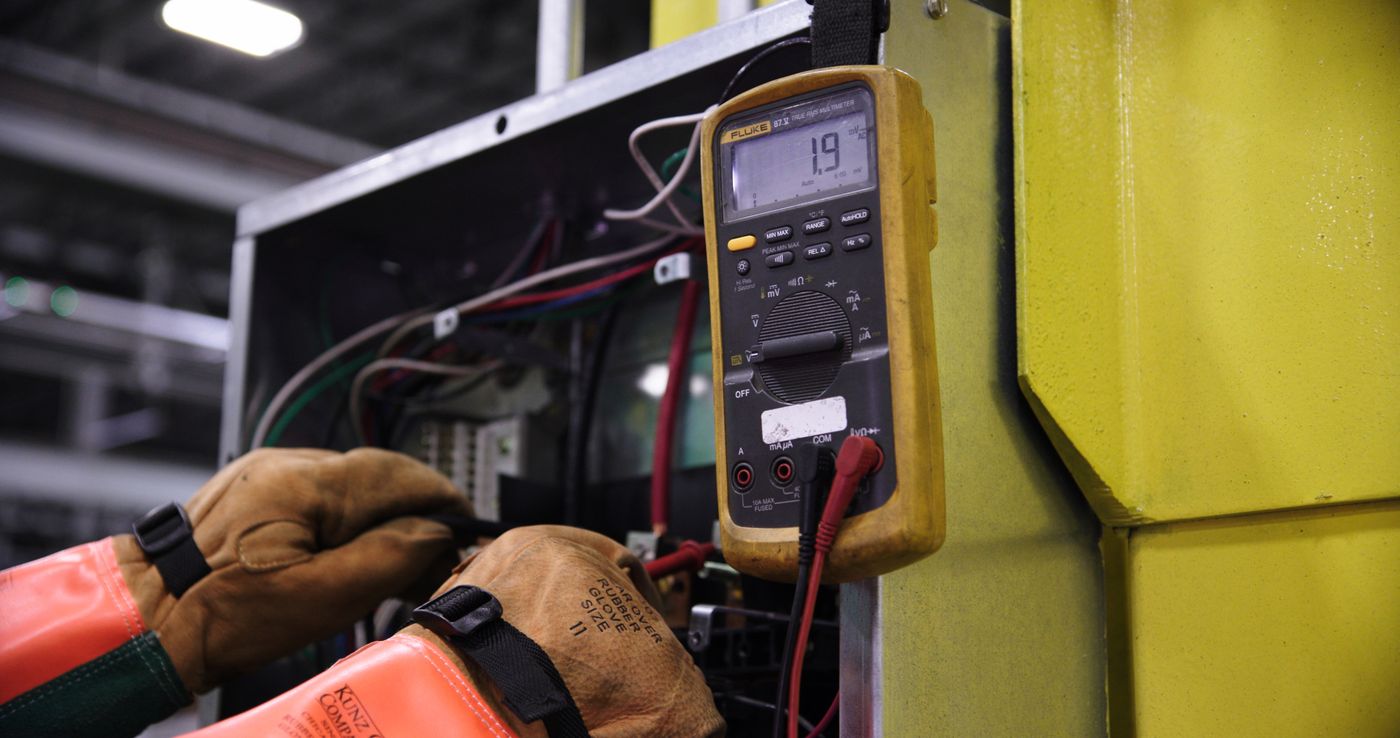
A circuit that looks acceptable from watts alone may still have high starting current, poor power factor, harmonic current or a long operating time. Use the load's electrical input data.
Watts and VA are often close, but a heater may be a continuous load. A 1,500W heater on 120V draws about 12.5A before other loads are added.
Starting current can be several times the running current. Review nameplate current, starting method, trip curve and the applicable motor-circuit rules.
Input power factor, efficiency, inrush and harmonics can matter. Do not size the circuit from output watts alone.
EV supply equipment is commonly treated as a continuous load in U.S. practice. A 120V, 12A Level 1 load is about 1.44kW and uses a 15A branch-circuit basis only where the complete installation allows it.
VA describes voltage multiplied by current. Watts describe real power. Power factor links them in AC systems. This is why a 15A breaker cannot be converted to one universal wattage without knowing more.
Use voltage and current at the DC load. Confirm polarity and equipment ratings.
Use the actual power factor where it is known.
Use line-to-line voltage and per-phase current for a balanced load.
Add the 1.732 factor in the denominator for balanced three-phase AC.
That figure assumes 120V, 15A and PF 1.00. It does not include continuous-load treatment, derating or other connected loads.
A two-pole 15A breaker is still rated 15A through each linked pole. The higher 240V power comes from voltage, not 30A of current.
For motors, chargers, UPS systems and power supplies, use the electrical input current or complete input data.
The calculation applies to the whole branch circuit. Lighting, receptacles, controls and auxiliary loads all use capacity.
A larger breaker can leave the conductor and devices underprotected. Find the trip cause before changing protection.
Continuous-load treatment, conductor methods, permitted devices and approvals vary. Verify the authority and standard for the project.
A calculation cannot diagnose a damaged breaker, loose connection, wet enclosure, overheated conductor or failing receptacle.
A useful RFQ is more than “15A breaker.” Include the system and installation details that control the exact model.
These SENTOP pages continue from basic power arithmetic to protection selection and product review.
The simple nominal result is 1,800VA because 120V x 15A = 1,800VA. That is about 1,800W only when power factor is near 1. For a common U.S. continuous-load planning basis, 12A gives 1,440VA or about 1,440W at PF 1.00.
The nominal single-phase result is 3,600VA. A common 80% continuous planning value is 2,880VA. Verify the two-pole arrangement, conductor, load type, local rules and equipment instructions.
No. The linked poles open together, but the breaker remains 15A through each pole. In a 240V single-phase circuit, the power is higher because the load voltage is 240V.
Voltage multiplied by current gives VA. Watts also depend on power factor in AC systems. Starting with VA prevents a poor-power-factor load from looking smaller than its actual current demand.
A 1,500W resistive heater draws about 12.5A at 120V. That exceeds a 12A continuous planning value, and other loads make the situation worse. The final answer depends on operating time, the product instructions and the applicable circuit rules.
Possible reasons include motor or power-supply inrush, poor power factor, other loads on the circuit, heat, loose connections, a damaged device, a short or earth fault, or a trip characteristic that does not match the load. Repeated trips need investigation.
Not as a shortcut. The breaker must protect the conductor and circuit components. Increasing the breaker rating without verifying and redesigning the complete circuit can create a fire or shock hazard.
The arithmetic is universal. Installation permission is not. Use the adopted electrical code, equipment documentation and qualified design review.
Send voltage, poles, load type, running and starting current, breaking-capacity requirement, quantity, destination market and available drawings.