
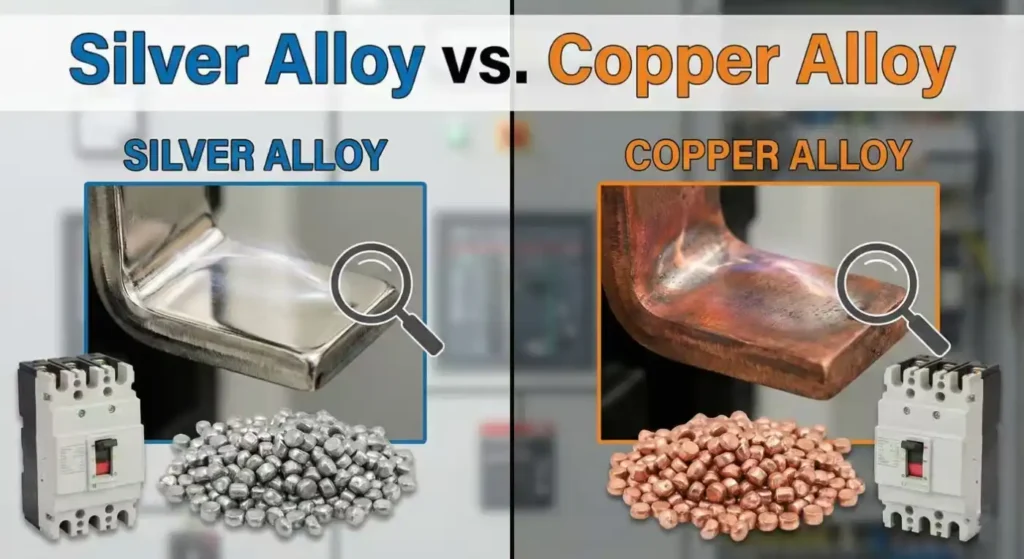
Silver alloy usually works better than copper alloy in circuit breaker contact material. It lets electricity flow more easily and helps stop arcs better. Copper alloy is cheaper and still does a good job in many cases. Engineers think about how well the circuit breaker contact material works, how long it lasts, the price, and what it will be used for before picking. The best contact material keeps electrical systems safe and working well.
Key Takeaways
- Silver alloy contacts let electricity flow better and stop arc damage. This makes them good for high-performance uses.
- Copper alloy contacts cost less and work well in normal electrical systems. They are fine when you do not need very high reliability.
- Picking the right contact material keeps things safe and helps them last longer. You should think about how well it conducts, how much it costs, and the environment.
- Checking circuit breaker contacts often can stop them from wearing out or rusting. This helps them work well for a long time.
- Engineers need to look at what each job needs. Then they can pick the best contact material.
Why Circuit Breaker Contact Material Matters

Contact Function in Circuit Breakers
Circuit breakers stop electricity when there is a problem. The contacts inside must let electricity pass and handle force. The material chosen changes how well contacts work. Manufacturers pick materials for good conductivity, less wear, and high heat strength.
| Material Type | Effect on Functionality | Concerns |
|---|---|---|
| Conductive Metals | Lower resistance and better conductivity, but can erode or stick together. | Erosion and welding problems |
| Refractory Metals | Less wear and less sticking or welding. | Not much worry about wear |
Good contact material comes from quality raw materials and careful making. Bad choices can raise resistance and cause problems. Silver-metal oxide contacts are best when possible. Silver-refractory contacts help in medium voltage systems with erosion issues.
Impact on Performance and Safety
Material properties change how long circuit breakers last and how safe they are. Silver alloys let electricity flow well and do not rust easily. This keeps them working for a long time. Copper alloys cost less and work fine for small to medium currents. Picking the right material keeps circuit breakers safe and lowers the chance of failure.
| Material Type | Key Properties |
|---|---|
| Silver Alloys | Great conductivity and do not rust easily |
| Tungsten Composites | Handle high heat and arcing, good for tough jobs |
| Silver-Tungsten Blends | Good conductivity and strong against wear, best for big power systems |
- Silver alloys let electricity flow well and last long, so they are good for high currents.
- Copper alloys are cheaper and work for easier jobs.
- The material picked changes how long and how well circuit breakers work, which is important for safety.
The contact material also changes how long the breaker lasts. Arcs can wear out contacts and make holes or stick them together. Rust and arc damage make contacts worse over time. Using circuit breakers too much can cause fires or explosions. Engineers must pick the right contact material to keep things safe and working well.
Performance Comparison
Electrical Conductivity
Engineers want circuit breaker contact material to carry electricity well. Good conductivity means less energy is wasted and less heat is made. Silver is the best metal for letting electricity flow. Copper is also very good at this. The table below shows how silver and copper compare:
| Material | Conductivity (% IACS) |
|---|---|
| Silver | 105 |
| Copper | 100 |
Silver alloys, like silver-nickel, still let a lot of electricity pass. Copper alloys, such as Cu–Ag10%, do not conduct as well as pure copper or silver. For example, Cu–Ag10% only has about 58% of copper’s conductivity. This means silver alloy contacts let more current through with less resistance. In high-performance circuit breakers, engineers often use silver plating or silver-nickel alloys to help conductivity.
Arc Mitigation and Wear Resistance
When a circuit breaker opens or closes, an electric arc jumps between the contacts. This arc can hurt the contact surface. The right contact material helps stop this damage. Silver-based materials handle arc damage better than copper alloys. They do not rust as much as copper when arcing happens. Less rust means less wear and longer life. Silver also moves heat away fast, so it does not get too hot. Copper contacts can get hot spots and wear out sooner.
- Silver alloys get less arc damage.
- Copper contacts rust more and wear out faster from arcs.
- Silver moves heat better, so it does not overheat.
Manufacturers sometimes use silver-refractory alloys, silver plating, or silver pads to help stop arc damage. These ways help contacts last longer, especially in tough circuit breakers.
Mechanical Strength
Mechanical strength is important because contacts must handle force. Pure silver is soft and bends easily. Adding copper to silver makes it stronger. For example, AgCu3 alloys are stronger than pure silver. More copper in the mix makes contacts stronger and helps stop arc damage, but it can also make more rust. Some engineers add palladium to silver. Silver-palladium alloys are harder and resist arc damage and sulfur.
- Copper in silver alloys makes contacts stronger.
- More copper means stronger contacts, but also more rust.
- Silver-palladium alloys are hard and last longer.
Industry uses silver-nickel alloys, silver plating, and silver pads to balance conductivity, wear, and strength. These methods help circuit breaker contact material work well in many places.
Cost and Availability
Material and Manufacturing Costs
Manufacturers think about how much materials and making contacts cost. Silver is more expensive than copper. This makes silver alloy contacts cost more to make. Copper alloy contacts are cheaper, so they are good for small budgets. The table below shows a simple comparison:
| Material | Raw Material Cost | Manufacturing Complexity | Typical Use Cases |
|---|---|---|---|
| Silver Alloy | High | Moderate to High | Premium, high-performance |
| Copper Alloy | Low | Low to Moderate | Standard, budget-friendly |
Silver alloy contacts need special steps to make them. Workers add other metals to make them stronger and last longer. Copper alloy contacts are made with easier steps. These contacts work well in many normal electrical systems. Some companies put silver on copper contacts to save money and still get good results.
Tip: Engineers pick copper alloy contacts for simple jobs to save money. They use silver alloy contacts when safety and long life are very important.
Maintenance and Longevity
How long circuit breaker contacts last depends on the material. Silver alloy contacts last longer than copper alloy contacts. Silver does not rust or wear out fast. It keeps its surface smooth, so electricity flows better and arcs do less harm. Copper contacts wear out faster and can rust more easily. This means they need to be replaced more often.
- Silver alloy contacts do not rust or wear out fast.
- Silver contacts help stop arc damage.
- Switches with silver on the contacts last longer than copper ones.
The contact material changes how much fixing is needed. Silver alloy contacts help lower repair costs over time. Copper alloy contacts may need more fixing and replacing, especially in hard places. Picking the right material helps keep electrical systems safe and working well.
Application Suitability
Silver Alloy Use Cases
Silver alloy contacts are used where safety and reliability are very important. Engineers pick these materials for systems with high currents or lots of switching. Silver alloys like silver cadmium oxide, silver tin oxide, silver nickel, and silver graphite each have their own strengths.
- Silver cadmium oxide stops arcs and is used in relays and contactors.
- Silver tin oxide is better for the environment and works in low-voltage switches.
- Silver nickel is strong against arcs and is tough, so it is used in power switches.
- Silver graphite lets electricity flow well and does not weld, which is good for DC systems.
These silver alloys help circuit breakers last longer and stay safe. The table below shows how silver alloy contacts do in hard places:
| Performance Metric | Description |
|---|---|
| Conductivity and Heat Management | Silver lets electricity move fast, and copper helps with heat. |
| Wear Resistance | Silver alloy contacts last 30% longer than regular silver-plated contacts. |
| Arc Resistance | They are made to fight arc damage, so they last longer when used a lot. |
Note: Silver alloy contacts are often used in top circuit breakers for hospitals, data centers, and power plants. These places need to be very safe and reliable.
Copper Alloy Use Cases
Copper alloy contacts are good for many everyday electrical systems. They cost less and still work well. Engineers use copper alloys in low-voltage power, medium- and high-voltage systems, cars, trains, and factories.
| Application Type | Reason for Preference |
|---|---|
| Low-voltage power distribution | They let electricity flow well and are strong, so connections are safe. |
| Medium- and high-voltage systems | They move heat away fast, so they do not lose performance. |
| Automotive | They do not rust and last long in tough places. |
| Rail transit | They protect against wet and hot air because of a thick copper oxide layer. |
| Industrial automation and robotics | They are hard and do not wear out fast, so contacts last longer. |
Copper alloys let electricity flow well, handle heat, and are strong. They do not rust easily, which helps in hard places. But copper alloys need careful making. They get hard fast and need quick filling. Silver alloys let electricity flow better and do not rust as much, but copper alloys are best when money matters and the job is tough.
Tip: Engineers pick copper alloy contacts when saving money is important and the system does not need the best reliability.
Environmental and Operational Factors
High Temperature and Current Loads
Circuit breaker contacts work in hard places. They face high heat and strong currents. These things can change how well contacts do their job. Engineers pick materials that can handle heat and current without breaking. Silver alloys and copper alloys both move heat away from the contacts. Silver alloys are a little better at letting heat out fast. This helps keep contacts cool and makes them last longer.
- Silver alloys do not rust much when it gets hot. They fight oxidation better than most metals.
- Both silver and copper alloys move heat away fast. This keeps contacts safe from getting too hot.
- Copper contacts do not rust or break down at high heat. This makes them good for many electronic systems.
When contacts have to handle a lot of power, silver alloys often do better. They stay smooth and do not get hurt by heat or current. Copper alloys also work well, especially when people want strong and cheap contacts.
Corrosion and Oxidation Resistance
Corrosion and oxidation can hurt contacts and make them work worse. Silver alloys do not rust or oxidize, even in tough places. This helps them last a long time. Copper alloy contacts with tin plating also fight rust. Tin plating is like a shield and helps contacts last longer. But tin plating can get fretting corrosion. Small moves can make tiny bits and rust build up. This layer can block electricity and make contacts not work as well.
Engineers need to pick the right material for each job. Silver alloys are best in wet or chemical places. Copper alloys with special metal plating are good if you want to save money and still have strong contacts. The choice depends on where the contacts are used and how much protection is needed.
| Material Type | Corrosion Resistance | Oxidation Resistance | Best Use Case |
|---|---|---|---|
| Silver Alloy | Excellent | Excellent | Harsh, high-moisture areas |
| Copper Alloy (Tin) | Good | Moderate | Standard, dry environments |
Tip: Checking and cleaning contacts often helps them last longer, especially in wet or dirty places.
Selecting the Right Circuit Breaker Contact Material

Key Selection Criteria
Engineers think about many things when picking contact material. They look at how well electricity moves through the material. They check if the material is strong and how much it costs. They also see how the material handles heat and if it fights rust. How long the material lasts is important too. The job the circuit breaker will do matters a lot. This means engineers look at voltage, current, how often it switches, and where it will be used.
Industry rules and certifications help engineers choose the right material. These rules make sure the contacts are safe and work well. The table below lists some common certifications and what they mean:
| Certification | Description |
|---|---|
| UL Listing | Shows the device is safe for use in North America. |
| CE Marking | Means the device meets important European safety and health rules. |
| IEC Standards | Sets important rules for how contacts should work and last. |
Engineers also worry about contacts sticking or welding together. This is a problem when contacts stay closed for a long time. Silver or silver-alloy pads can help stop this from happening. Clad metal technology mixes silver and copper. This makes contacts last longer and work better in many jobs.
Tip: Always pick the contact material that fits the job. Think about how much power is used, how often it switches, and where it will be used.
Silver alloy is best for circuit breaker contacts in tough jobs. It lets electricity flow easily and fights arc damage well. Copper alloy is cheaper and works for normal jobs. Studies show silver-based materials let more electricity pass. They also do not rust as much as copper alloys. The table below shows what researchers found:
| Material Type | Conductivity | Corrosion Resistance | Cost |
|---|---|---|---|
| Silver-based | High | High | Higher |
| Copper-based | Good | Improved with Ni | Lower |
Engineers need to pick the right material for each job. They should think about how well it works, how much it costs, and how long it will last.
FAQ
What makes silver alloy better for circuit breaker contacts?
Silver alloy lets electricity move easily. It also stands up well to arc damage. Engineers pick it when they want contacts to last a long time and work well.
Why do some circuit breakers use copper alloy contacts?
Copper alloy costs less money than silver alloy. It works fine in most normal electrical systems. Companies use it when they do not need the highest reliability.
Can silver alloy contacts rust or corrode?
Silver alloy does not rust or corrode easily. This helps the contacts last longer, even in wet or chemical places.
How often should circuit breaker contacts be checked?
Engineers say to check contacts during regular maintenance. Checking often helps find wear, rust, or arc damage early.
See also
Discovering Silver and Other Valuable Metals in Circuit Breakers
What should you know about copper and aluminum terminal blocks
How material selection influences terminal block durability and efficiency
What Are Main and Arcing Contacts in Circuit Breakers
How to choose wires for your 220V 15 ampere circuit breaker
