
You can use a three-phase change-over switch in a single phase setup. Many people pick this switch for single phase systems for more options. Some use it because they only have a three-phase switch. Others want to get ready for future upgrades. You might need a changeover for backup power. You may also want to switch between two single phase sources. Changeover switches help your single phase system keep working during power changes or outages.
Key Takeaways
- You can use a three-phase change-over switch in a single-phase system if you connect it the right way and read the manual.
- Three-phase switches give you more choices and let you upgrade later, but they are bigger, cost more, and are harder to use than single-phase switches.
- Always stay safe: turn off the power before you start, use the right wire colors and sizes, and ask a licensed electrician if you do not know what to do.
- Changeover switches help keep power on by letting you switch between the main grid and a generator when the power goes out.
- Setting up and testing the switch the right way stops equipment from breaking, keeps loads balanced, and avoids power problems, so your system works well and stays safe.
Three-Phase Change-Over Switch in Single-Phase Use
Direct Answer
You can use a three-phase change-over switch in a single phase system. This switch helps you pick which power source to use. You can choose between the main grid or a generator. Many people use this switch for more choices. Some only have a three-phase change-over switch. Others want to upgrade to three-phase power later.
When you use a three-phase change-over switch in a single phase setup, you must connect the wires the right way. Some switches, like ones from Schneider Electric, let you change settings for single phase. You do this by moving dip switches and connecting power cables to certain phases, like A and C. This setup needs careful wiring and the right settings. If you do not set it up right, you could have problems. You might get unbalanced loads or damage your equipment.
Tip: Always read the manual for your changeover switch before wiring. If you are not sure, ask a licensed electrician for help.
Here is a table to show how single-phase and three-phase changeover switches are different:
| Feature | Single-Phase Changeover Switch | Three-Phase Changeover Switch |
|---|---|---|
| Number of lines switched | One live line plus neutral | Three live lines (plus optional neutral) switched simultaneously |
| System voltage | Up to 230 V (typical residential) | 380–480 V (industrial) |
| Load type | Small residential or office devices | Motors, compressors, large equipment |
| Switching complexity | Simple switching of one phase | Complex, requires simultaneous switching of all three phases to maintain balance |
| Size and cost | Smaller, less expensive | Larger, more costly |
| Intended use | Small generators, inverters, basic backup | Large generators, three-phase industrial systems |
A three-phase change-over switch is bigger and harder to use than a single-phase one. It costs more and takes up more space. You should only use it in a single phase system if you have a good reason. Some reasons are planning for upgrades or if you cannot get a single-phase switch.
Common Applications
You can find three-phase change-over switches in many single phase setups. Here are some ways people use them:
- You can use a changeover to switch between utility power and a generator during an outage. This keeps your lights and appliances on when the main power goes out.
- In commercial buildings, a changeover can pick the best phase for important equipment. If one phase stops working, the switch moves the load to another phase. This keeps your devices running.
- Some systems use a changeover to get 220V-240V single-phase power from a three-phase source. This saves time and money instead of starting a generator every time the power fails.
- Places that need power all the time, like hospitals or data centers, use a transfer switch. This switch controls the move between normal power and backup power. The switch can be manual or automatic, depending on what you need.
You might also see a manual changeover switch in homes or small offices. This switch lets you change the power source by hand. In bigger setups, an automatic changeover switch does this job for you.
Note: Using a three-phase change-over switch in a single phase system can help balance the load if you have many devices. This balance makes your system work better and more smoothly.
Some brands, like CNC and Mulang Electric, make changeover switches for both single-phase and three-phase power. For example, the CNC YCBZ-40 and Mulang MLQ2 series come in different sizes. They can handle many types of loads. These switches give you more choices for your setup.
Three-phase power can give more energy than single-phase power without extra wires. This means you can run bigger machines or more devices with less wiring. If you want to upgrade your system later, starting with a three-phase change-over switch can save you time and money.
What Is a Three-Phase Change-Over Switch?
Latest-automatic-transfer-switch.webp)
Basic Operation
A three-phase change-over switch lets you move power from one source to another. You use it to pick between the main grid and a backup generator. This switch is important when you need steady three-phase power. You often see it in big places like factories or hospitals.
Inside the switch, there are some key parts.
- Phase sensors check each phase’s voltage.
- These sensors send information to a microcontroller. The microcontroller looks at the voltage levels.
- It controls three contactors with relays.
- If there is a problem, like low voltage or a blackout, the system disconnects the load from the bad source.
- The switch then moves the load to a backup source, like a generator.
- The system can even start or stop the generator for you.
- The changeover happens automatically and keeps your power steady.
- You can also use this switch to move single-phase loads between different phases or between the grid and a generator.
The main job of a three-phase change-over switch is to keep your equipment running. It does this by quickly and safely switching power sources.
Key Features
There are several things that make a three-phase change-over switch different from a single-phase switch.
- The switch has a multiple pole design. It switches all three phases and the neutral at once. This keeps your system balanced and safe.
- It can handle high current and heavy loads. This is needed for three-phase power in big buildings.
- You can pick manual or automatic operation. This gives you more control over how you switch power.
- Safety interlocks stop you from connecting two power sources at the same time. This keeps your equipment and people safe.
- The switch has clear, color-coded indicators. These show which power source is on.
- Many switches come in weatherproof boxes. You can use them outside or in tough places.
- The modular design makes it easy to fix or upgrade your switch.
Here is a table that shows how single-phase and three-phase change-over switches compare:
| Specification | Single-Phase Changeover | Three-Phase Change-Over Switch |
|---|---|---|
| Number of Poles | 2 | 3 or 4 |
| Voltage Compatibility | 230V | 380–480V |
| Typical Use | Homes, small offices | Factories, large buildings |
| Switching Mechanism | Simple | Complex, multi-phase |
| Safety Features | Basic | Advanced interlocks |
A three-phase change-over switch gives you more options and safety when using three-phase power. You can also use it in single-phase setups if you want to upgrade later. This makes it a smart choice for many power needs.
Changeover vs. Single-Phase Switches
Operation Differences
When you compare a changeover and a single-phase switch, you will see they work in different ways. A single-phase switch controls one line and the neutral wire. It lets you pick between the main power and a backup, like a generator. This switch uses simple logic to work. If the voltage drops or stops, it moves your single-phase power to the backup. You often find this switch in homes or small offices. The load is usually small, and the switch helps protect your devices from voltage issues.
A changeover for three-phase power works in another way. It checks all three phases at the same time. If one phase has a problem, the changeover can move the load to a good phase. This keeps your equipment running without stopping. The switch can handle bigger loads and helps balance power across devices. Sometimes, you can use a manual changeover switch to pick the phase you want. An automatic changeover switch does this job for you. The switching logic is harder because it must watch three lines, not just one.
| Feature | Single-Phase Switch | Changeover (Three-Phase) |
|---|---|---|
| Number of lines switched | 1 live + neutral | 3 live (phases) + neutral |
| Switching logic | Simple, one phase | Complex, monitors all phases |
| Load handling | Small, single-phase loads | Large, multi-phase loads |
| Use case | Homes, small offices | Factories, big buildings |
Compatibility
If you want to use a changeover made for three-phase power in a single phase setup, you need to follow some important steps. First, make sure the neutral wire is switched the right way. Most rules say you must switch the neutral with the hot lines. You should use all three poles of the changeover: two for the hot wires and one for the neutral. This setup matches the hot-hot-neutral layout in many single-phase systems.
You also need to check that your changeover is service-rated and has a center-off spot. This lets you turn off all power before working on your system. Always use a service-rated disconnect before the changeover to keep things safe.
Tip: Always label your circuits and test your wiring before turning on the power. If you are not sure, ask a licensed electrician for help.
When you wire a changeover for single-phase power, use the right color wires: brown for phase, blue for neutral, and green/yellow for earth. Make sure you use the right wire size and circuit breakers for your load. Test your setup with a voltmeter and indicator lamps to see which phase is on. If you use a manual changeover switch, turn off non-essential loads before switching to avoid overloading your wires.
A transfer switch for single-phase power often uses two poles, but a changeover for three-phase power gives you more options. You can balance loads across phases or get ready for upgrades later. Always follow local rules and safety steps to avoid mistakes.
Transfer Switch Setup and Safety
Configuration Steps
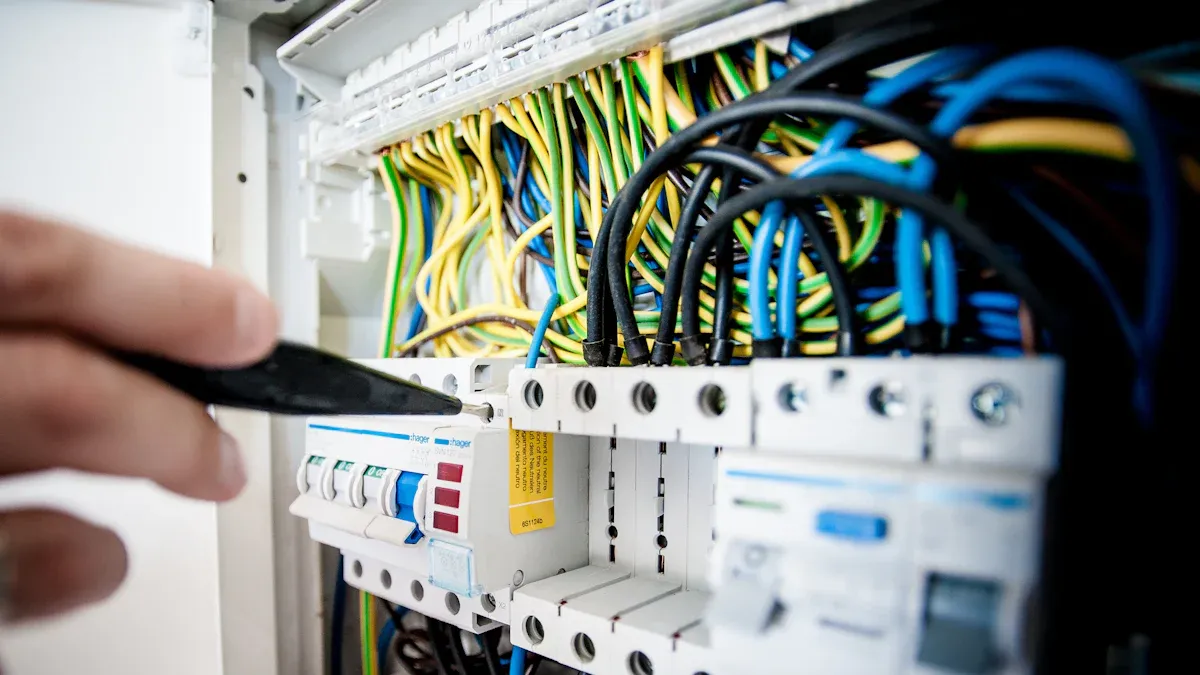
You need to plan carefully before setting up a three-phase transfer switch for single phase use. Each step is important for safety and for your changeover to work well. Here is an easy guide:
- Set the dip switches to single phase mode. This tells the changeover to use single-phase power.
- Connect your power cables to phases A and C. These will bring single phase power from your inverter or main supply.
- Make sure the transfer switch disconnects all three phases and the neutral when you switch to inverter power. This stops power from going back and keeps your system safe.
- Bridge the inputs on the inverter side of the transfer switch. This helps send single-phase power to your home.
- Check that your wiring matches local voltage and frequency rules, like 220V/50Hz.
- Use the right wire colors. For example, brown is for hot and blue is for neutral.
- The neutral wire in a three-phase system carries extra current. If you connect it wrong, it can be dangerous.
- Always ask a licensed electrician for help. Follow local codes and get permission from your utility company before you connect to the grid.
Tip: If you use a manual changeover switch, label all wires and test the system before you use it. For an automatic changeover switch, follow the instructions from the maker for programming and wiring.
Safety Tips
You must follow safety rules when you install a changeover or transfer switch in a single phase setup. Here are some good tips:
- Turn off all power before you start any work.
- Never work on wet surfaces or touch metal parts during installation.
- Use the right size cables, outlets, switches, and circuit breakers.
- Only let trained professionals do electrical work.
- Put distribution boards and disconnect switches at the right height. Keep them safe from water and rust.
- Cover and secure all wiring inside panel boards.
- Put warning signs near your electrical panels.
- Use proper grounding to stop shocks and equipment damage.
- Add fuses, circuit breakers, and surge protectors for safety.
- Check your system often for problems, like tripped breakers or voltage spikes.
If you have unbalanced loads or make connection mistakes, your equipment can overheat or get damaged. You might see tripped breakers or power surges if your changeover is not set up right. Always test your transfer switch after you install it to make sure it works.
Note: Following these steps helps you avoid problems and keeps your single-phase power system safe and working well.
You can use a three-phase changeover in a single phase setup. But you need to know how they are different. Three-phase switches control more wires and higher voltages. This makes them bigger and harder to use. Single-phase switches are better for homes and small offices. Always pick the right switch for your system to stay safe.
| Feature | Single-Phase Switch | Three-Phase Switch |
|---|---|---|
| Lines Switched | 1 live + neutral | 3 live (plus neutral) |
| Voltage | Up to 230 V | 380–480 V |
| Use | Homes, offices | Factories, large equipment |
Tip: Always check the ratings, follow safety steps, and ask an expert if you are not sure.
FAQ
What is the main reason to use a three-phase change-over switch in a single-phase setup?
You might use this switch if you want to upgrade later. Some people use it because they only have a three-phase switch.
What should you check before wiring a three-phase change-over switch for single-phase use?
Look at the manual for wiring steps. Set the dip switches the right way. Connect the wires to the right spots so nothing gets damaged.
What safety steps do you need to follow during installation?
Turn off all power before you start working. Use the right size and color wires. If you are not sure, ask an electrician for help.
What problems can happen if you wire the switch incorrectly?
If you wire it wrong, loads can be unbalanced. Your equipment could break or even catch fire. You might trip breakers or lose power to things you need.
What brands make three-phase change-over switches that work for single-phase setups?
Brands like Schneider Electric, CNC, and Mulang Electric make these switches. They work for both single-phase and three-phase systems.
The following information may be of interest to you
Single vs Three Phase MCCB: Key Differences
What You Need to Know About Three-Phase Solar Inverters
Single Phase vs Three Phase Electricity: Which is Best for You?
Choosing Between Single-Phase and Three-Phase Solar Inverters
Comparing Single Phase Voltage and Three Phase Voltage