
How Digital Meters Track Solar Power Output (Complete Guide)
A digital meter measures voltage and current at a defined electrical boundary, calculates signed real power, and accumulates that power over time into energy registers. The number is only meaningful when you also know the meter location, positive direction, AC or DC basis, sensor chain, topology and timestamp.
Define the question before choosing the meter
“Solar output” can mean gross PV production, present kW, monthly kWh, grid export, site load or self-consumption. These six gates keep the answer defensible.
Name the quantity
State real power, energy, import, export, production, load, charge, discharge, demand or another exact output.
Mark the boundary
Identify the conductors and equipment on each side of the meter on the approved one-line.
Define positive direction
Record whether positive means grid import, PV delivery, load consumption or battery discharge.
Match the topology
Single, split or three phase; direct-connected or exact approved sensor input; AC or supported DC measurement.
Align the time basis
Use the same time zone, complete interval, start/end convention, units and missing-data treatment.
Match the decision
Owner awareness, export control, commissioning, billing and contractual verification need different evidence.
An AC production meter reports net real power and energy crossing the inverter output conductors. That is PV-only AC production only when the path carries no battery discharge, AC-coupled generation or other source. Hybrid and multi-source systems may need source-specific channels or additional meters.
From electrical signals to trusted kW and kWh
A digital power meter is a measurement chain, not merely a display. Exact sampling, filtering, update and logging methods remain model-specific.
Capture the electrical reference
The meter measures supported line voltage directly or through an approved VT. Topology, ratio and phase identity must be correct.
Capture current magnitude and direction
Direct current terminals, CTs, low-power sensors or Rogowski systems are not interchangeable unless the exact meter data permits them.
Keep voltage and current synchronized
Real power depends on the relationship between voltage and current. A phase mismatch can create a plausible but wrong result.
Calculate signed real power
The meter totals supported phase values and applies its configured direction, ratios, scaling and wiring-system model.
Accumulate, timestamp and report
Power becomes energy registers and interval data. Clocks, rounding, resets, protocols and dashboards affect the reported record.
These formulas explain the measurement concept. They do not claim a universal internal algorithm, sampling rate, filter, display update or billing method.
This guide's RMS, power-factor, CT and VT examples describe AC metering. DC-side PV measurement requires DC-rated voltage and current sensors, suitable isolation and the manufacturer's DC method. Do not reuse AC meter or CT instructions on PV string circuits.
A meter reports what crosses its own gate
Location determines meaning. Gross production, site consumption, grid exchange and storage flow are related, but they are not the same measurement.
Conceptual architecture only - not a wiring diagram. Battery and load channels may connect at different points. Exact isolation, protection, CT/VT placement, grounding, utility metering and control follow the approved one-line and equipment instructions.
Do not ask one meter to reconstruct every energy flow
A PV-output meter can report the energy crossing that output. A service meter can report grid import and export. A load meter can report the selected feeder. A battery channel can report charge and discharge at its interface. One location cannot automatically separate sources or loads that meet outside its boundary.
A utility smart meter is authoritative for the tariff-defined registers at the approved service point. It does not automatically reveal gross behind-the-meter PV production. Similarly, inverter telemetry may show internal or output data without measuring whole-site consumption.
- Gross PV production: use a PV-only source channel or a production boundary known to carry PV only.
- Grid exchange: use a properly configured bidirectional meter at the service or point of common coupling.
- Site consumption: measure the load boundary or calculate from synchronized and complete boundary data.
- Self-consumption: define battery treatment, losses and time alignment before applying a formula.

Use the right value for the right solar question
The same dashboard can show power, energy, import, export and derived values. Keep the source register and calculation method visible.
| Reported quantity | What it means | Minimum measurement | Common interpretation error |
|---|---|---|---|
| Instantaneous real power W or kW | The signed rate of real-energy flow at that boundary at that moment. | Supported voltage and current channels with correct phase association and direction. | Treating a peak snapshot as the day's energy result. |
| Accumulated real energy Wh or kWh | Power accumulated over a defined period into directional or net registers. | Real-power calculation, reliable time base and known register behavior. | Comparing incomplete time windows or a live kW value with monthly kWh. |
| Grid import / export | Directional exchange between the site and utility at the service boundary. | Bidirectional meter at the approved point of common coupling. | Calling export the same as gross PV production. |
| PV production | Energy from a PV-only channel or known PV-only production boundary. | Source-specific inverter channel or separate production meter. | Assuming a hybrid inverter AC output contains PV only. |
| Site consumption | Energy used by loads inside the selected site or feeder boundary. | Load meter or validated calculation from synchronized complete channels. | Assuming a utility meter sees behind-the-meter self-consumption directly. |
| Self-consumption | PV energy used on site under a stated battery and loss convention. | Synchronized PV, grid and, where relevant, battery/load channels. | Using PV minus export while ignoring storage, timing or other generation. |
“Net” may mean a signed instantaneous value, an arithmetic difference between directional registers, or a tariff result. Preserve gross import and gross export whenever reconciliation matters.
Why valid solar readings can legitimately disagree
Normalize boundary, direction, units and time before calling any source wrong.
Strong for operating context
Useful for inverter status and supported source/output data. It may not measure whole-site load or grid exchange and may use an internal boundary.
Flexible boundary and protocols
Can provide per-phase values, directional registers, local display, Modbus or gateway data. Correct sensors, settings and clock remain essential.
Authoritative for tariff registers
Measures the approved utility boundary and applies the local settlement framework. It does not reveal every behind-the-meter flow.
Useful for combining channels
Can derive operational metrics, but may resample, round, fill gaps or apply formulas. Audit the raw channels and data dictionary.
Compare kWh with kWh over one complete aligned interval. Then check AC/DC basis, meter location, positive direction, CT/VT ratios, losses, timestamps, quality flags, communications gaps, register scaling and rounding.
Sensor compatibility is part-number specific
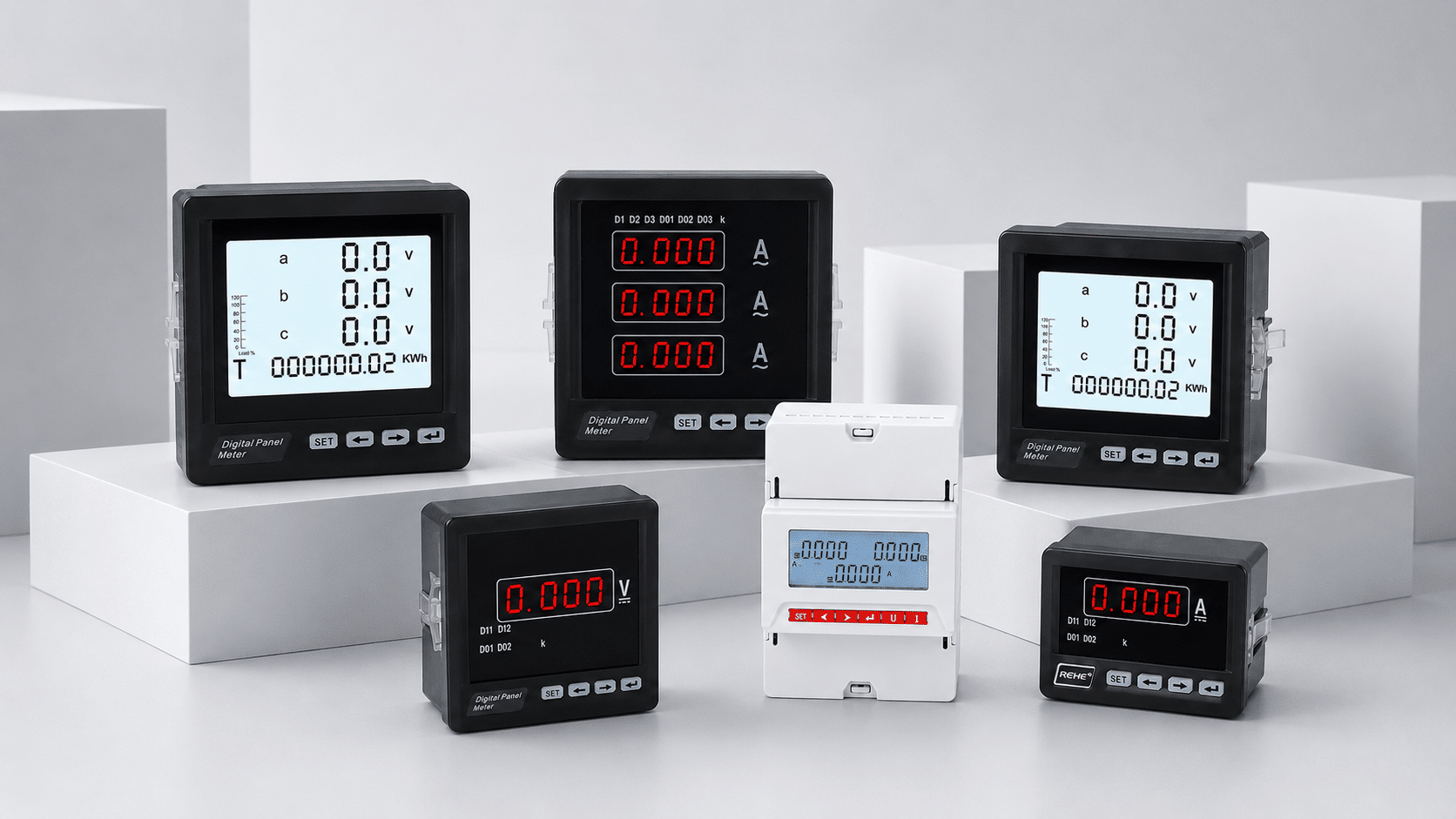
A current transformer (CT) scales primary current into the exact signal accepted by the meter. A voltage transformer (VT) scales voltage where the approved system requires it. Correct ratios are only the start: signal type, range, burden, phase-angle performance, direction, phase association, sensor closure, leads and settings all affect the result.
“Direct-connected” means the measured AC line current passes through the meter's current terminals within its approved ratings. It does not mean DC-side PV measurement. Other products may require a 1 A or 5 A current-output CT, a low-power voltage-output CT, or a Rogowski sensor and integrator. These input types are not interchangeable.
- Ratio: match the CT/VT nameplate and meter settings; a wrong ratio creates a proportional scaling error.
- Direction: record the positive-current orientation and sign convention rather than “fixing” an unexpected sign in software.
- Phase pairing: each current channel must be associated with the correct voltage phase under the configured topology.
- Three-phase totals: inspect per-phase values; an incorrect total can still look plausible.
Never open the secondary circuit of a conventional current-output CT while primary current may be flowing. Use the exact manufacturer-approved shorting, isolation, grounding and test arrangement. A dashboard or meter display is never proof that a circuit is de-energized.
Accuracy belongs to the complete channel
A meter-only class is not a blanket installed-system guarantee. Specify uncertainty and evidence against the decision the data will support.
Meter and sensor performance
Review meter accuracy conditions plus CT/VT ratio and phase-angle errors, burden, leads, input range and low-current behavior.
Configuration integrity
Preserve topology, ratios, phase map, sign, units, firmware, register map and settings export under change control.
Time alignment
Record time source, zone, daylight-saving policy, interval start/end meaning, polling rate and clock correction behavior.
Communications quality
Separate electrical availability from data availability. Keep quality flags, gaps, retries, backfill source and gateway logs.
Dashboard calculations
Audit signed/unsigned registers, multipliers, resampling, rounding, derived formulas and treatment of missing or estimated values.
Purpose and acceptance
Awareness, export control, commissioning, tenant allocation and billing reconciliation may need different accuracy and approval routes.
A successful data poll does not prove the value is correct
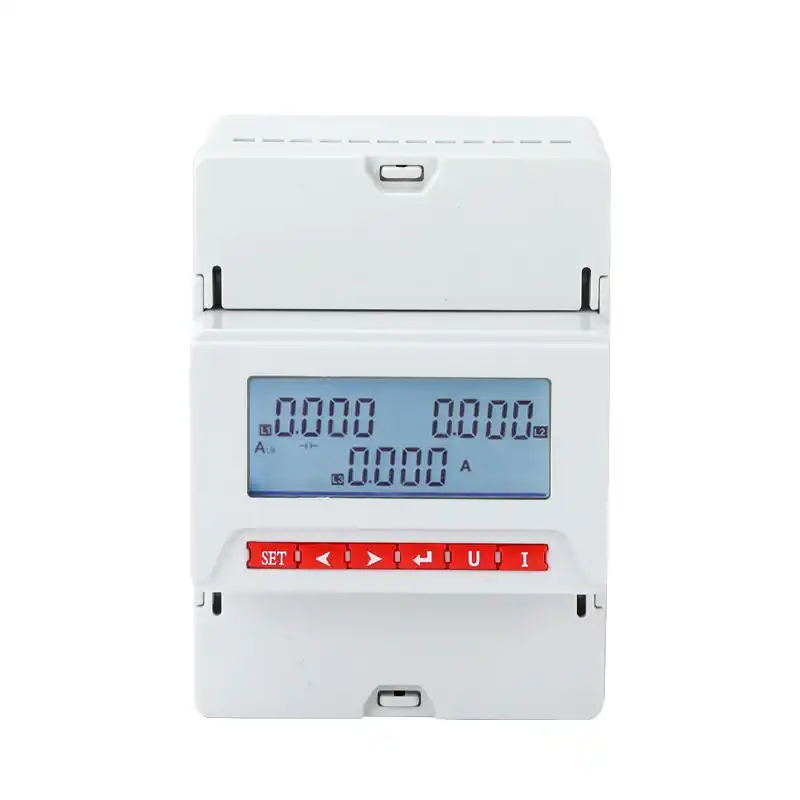
A local display and a monitoring platform are separate presentation layers. Modbus transports register data, but it does not make a vendor's electrical-data model self-describing. Commission the exact function code, address convention, data type, signedness, scaling, multi-register order, units and status or quality logic for the installed firmware.
Documentation may show human-readable register numbers while protocol data-unit addresses are zero-based. A gateway can therefore return a plausible value from the wrong register. Preserve the vendor map, firmware, point list, units and test evidence with the as-built record.
- Semantic check: confirm register identity, unit, multiplier, direction and phase before using the value in a formula.
- Data-quality check: distinguish measured, stale, missing, substituted and estimated values.
- Security check: traditional Modbus RTU/TCP is not authenticated or encrypted by default; apply manufacturer controls, segmentation or Modbus Security/TLS where supported.
Communications, gateway, historian or cloud outages can hide valid production data. Preserve raw registers or local logs where available, identify estimated values and distinguish a data gap from an inverter outage.
Turn installed hardware into defensible information
Commissioning begins with the required outputs and approved one-line, not with a dashboard screen.
Define outputs and signs
List production, load, import, export, storage, phase, demand and interval values. Record the positive direction for each.
Mark every boundary
Show the meter and each sensor on the one-line. Record which conductors and equipment are inside the measured gate.
Verify identity and settings
Confirm meter, firmware, sensors, ratios, topology, phase map, register map, units, network and clock against exact documents.
Cross-check known states
Under an approved test plan, compare signs and approximate relationships at the same boundary with an appropriate independent method.
Handover the data model
Preserve settings, as-built drawings, point list, timestamps, quality flags, acceptance evidence and what the system does not measure.
Installation, CT/VT work and work inside switchboards can expose personnel to shock, arc-flash, backfeed and stored-energy hazards. De-energize where required, control every source, apply the approved lockout/tagout procedure and have a qualified person verify absence of voltage with appropriately rated equipment. Monitoring data does not replace protection, anti-islanding, utility settlement or a required approved export-control function.
Check meaning before changing hardware
First verify what the value represents, then compare boundary and time. Only after that should you investigate sensors, settings, communications or equipment.
| Symptom | Check first | Evidence-based next action |
|---|---|---|
| Production exists but consumption is blank | No consumption meter/channel, wrong application setup, gateway or portal configuration. | Confirm the installed measurement point and designed channel list before replacing equipment. |
| Import appears as export or values are negative | Sign convention, CT direction, phase pairing, topology or product-specific reversal handling. | Review one-line, CT markings, phase labels and exact meter configuration under a known operating condition. |
| Total is a fixed multiple of expectation | CT ratio, VT ratio, unit multiplier or gateway scaling. | Compare nameplates, meter settings, register units and dashboard scaling. |
| Inverter kWh exceeds bill credit | Gross production versus export, self-consumption, battery flows, tariff intervals and different time windows. | Compare production with production and utility import/export with matching utility intervals. |
| Three-phase total looks normal but phases do not | CT-to-voltage phase mismatch, omitted phase, wrong topology, reversed CT or real load imbalance. | Inspect per-phase values and have qualified personnel verify phase association against the one-line. |
| Graph has gaps or sudden steps | Communications outage, restart, clock reset, register reset/rollover, firmware or settings change. | Check raw registers, quality flags, communication logs, time settings and change records. |
Why one number cannot explain a solar-plus-storage site
Assume a separate PV-only production path and a shared sign convention. Values are illustrative only and ignore small boundary losses. They are not a billing result or equipment design.
At this instant: PV supplies 6 kW, the battery charges at 1 kW, site loads use 4 kW and approximately 1 kW is exported.
If the inverter output combines PV and battery discharge, the “production” meter may no longer be PV-only. Use source-specific data or additional boundaries.
Send the measurement question, not only a meter size
SENTOP can review the required boundary, electrical topology, inputs, display, communication and documentation needs against an exact meter family. Final system design, installation and utility acceptance remain project responsibilities.
Solar meter questions answered by boundary first
Does a digital meter directly measure solar panel output?
It measures electrical quantities at its installed boundary. A meter on a PV-only inverter AC output can report AC production crossing that output. It does not measure DC array output unless the exact system includes approved DC-side instrumentation.
Can a utility smart meter show total solar production?
Not by itself in every installation. A service meter reports tariff-defined import and export at the utility boundary. Behind-the-meter PV can serve loads or charge storage without crossing that boundary.
Why can inverter kWh exceed utility export credit?
Inverter data may represent gross production, while the bill credits only exported energy or applies tariff intervals and settlement rules. Self-consumption, battery charging, losses, timing and billing policy can all create legitimate differences.
Do solar meters always use CTs?
No. Some are direct-connected AC meters; others require exact approved current-output CTs, low-power sensors or Rogowski arrangements. Input types and ratings are model-specific and are not interchangeable.
Can one meter measure production and consumption?
One meter measures one boundary. It may report production, service exchange or a load feeder, depending on its location. Reconstructing multiple flows usually requires more boundaries or a vendor-approved synchronized architecture.
Does a battery change the self-consumption calculation?
Yes. A battery may charge from PV or grid and discharge to loads or grid. Define how storage energy is treated and use synchronized PV, grid and battery data at known boundaries.
Why is a solar meter reading negative?
It may correctly indicate flow opposite the positive convention, such as export when import is positive. It can also indicate CT direction, phase mapping, topology or configuration issues. Verify the documented convention first.
How should two solar meters be compared?
Use the same AC/DC basis, electrical boundary, direction, unit and complete time interval. Then review CT/VT ratios, accuracy conditions, timestamps, missing data, losses, scaling and rounding.
Official sources behind the measurement boundaries
Product manuals illustrate model-specific behavior; they are not cross-brand wiring or configuration instructions.
- Schneider Electric - PM5500 measurements. Sampled voltage/current, power and bidirectional energy functions. Official documentation.
- Schneider Electric - CT safety. Safety precautions for current-transformer circuits and meter work. Official guidance.
- Fronius Smart Meter 50kA-3. Example of a meter requiring approved 1 A or 5 A current-output CTs, ratio, direction and phase association. Operating instructions.
- Fronius Smart Meter IP 5kA-3. Example of a different product requiring 333 mV CTs, demonstrating why sensor types cannot be generalized. Operating instructions.
- SolarEdge - production and consumption. Owner guidance distinguishing inverter production visibility from installed consumption metering. Official guidance.
- SolarEdge - hybrid/storage use cases. Examples showing external production measurement can include battery or third-party generation in multi-source architectures. Application note.
- U.S. Department of Energy - Homeowner's Guide to Solar. Net-metering and grid-export context. DOE guide.
- NREL Standard Work Specifications - Photovoltaics, Detail ID 0.0501.1. A U.S. home-energy-upgrade commissioning reference that includes independent confirmation of inverter meter/display readings. NREL specification.
- NREL - Overcoming Communications Outages. Distinguishing electrical operation from monitoring-data loss. NREL report.
- Modbus Organization - application protocol. Function, addressing and protocol data-unit context for register communication. Official specification.
- Modbus Organization - Modbus Security. TLS-based authentication and integrity options where supported by the product architecture. Official specifications.
- OSHA 29 CFR 1910.333. De-energization, lockout/tagout and qualified-person electrical work practices for U.S. workplaces. Official regulation.
Match the meter to the boundary, sensor chain and decision
Send SENTOP the one-line, required solar and grid flows, electrical topology, current range, sensor information, data/protocol needs, quantity, destination and target-market documentation requirements.

