

Many generator setups need two transfer switches when people want to power more than one circuit or use both inverter and generator power. This setup is common in RVs and mobile power systems.
- One transfer switch can switch between shore power and generator power.
- Another switch can control power between the first switch and an inverter.
It is very important to wire everything correctly and control the system carefully. If you do not do this, it can cause problems like backfeeding, too much power, or breaking the rules. Local rules, like NEC Article 700.5(D), have strong rules for safe use and keeping loads separate.
Key Takeaways
- Use two transfer switches to keep power sources apart. This keeps loads separate for safety. It also helps you follow the rules.
- Wire power conductors and control circuits the right way. This stops backfeeding and overloads. It also protects your equipment from damage.
- Pick a generator and transfer switches that fit your loads. Use load shedding and priority control if needed.
- Follow National Electrical Code rules and local laws. This makes sure your setup is safe and legal.
- Check and test your system often. This keeps it working well and stops surprise failures.
Using Two Transfer Switches
Automatic-transfer-switch-products.webp)
Feasibility
You can connect two transfer switches to one generator in many new electrical systems. Rules like UL 1008 and NEC Article 700 give safety instructions for this setup. Electricians use this method in homes and businesses to control more than one power source or to keep loads separate. If the wiring is done right and the control circuits are set up together, either transfer switch can start the generator. This setup lets you manage power in different ways and makes sure important loads get backup power when needed.
Modern automatic transfer switches (ATS) make using two switches easier. These switches have controllers that check voltage and frequency. They can change power sources by themselves, so you do not need to do it by hand. Some ATS models have extra features like load shedding and power management. These features stop the generator from getting too much power and help it work well. Closed transition switching lets the power change smoothly, so there are fewer power cuts.
Tip: Always make sure the transfer switches match the generator’s voltage and current. This step keeps your equipment safe and helps everything work right.
Common Applications
People use two transfer switches when they need to keep power sources separate. In homes, some people have both solar panels and a generator. Two transfer switches stop the solar inverter and generator from sending power to each other. This setup keeps things safe and protects equipment. In big places like mines, two transfer switches help control and separate different generators. Workers can send power to certain areas, like different mine shafts, when needed.
Some people think one generator can power two transfer switches for different panels without changes. But transfer switches are only made for one panel. Using them for more than one panel can break the rules and be unsafe. Electricians say it is better to put all generator-powered circuits in one panel or subpanel. This way, you follow the rules and make repairs easier.
New transfer switch technology helps with more complex power setups. For example:
- Modern ATS units can work with more than one power source, like utility and generator or two generators.
- Smart controllers let switches change by themselves using real-time electrical data.
- Some switches can be checked and controlled from far away, which is good for places like hospitals or data centers.
These new features make it easier and safer to use two transfer switches with one generator.
Wiring and Control
Power Conductors
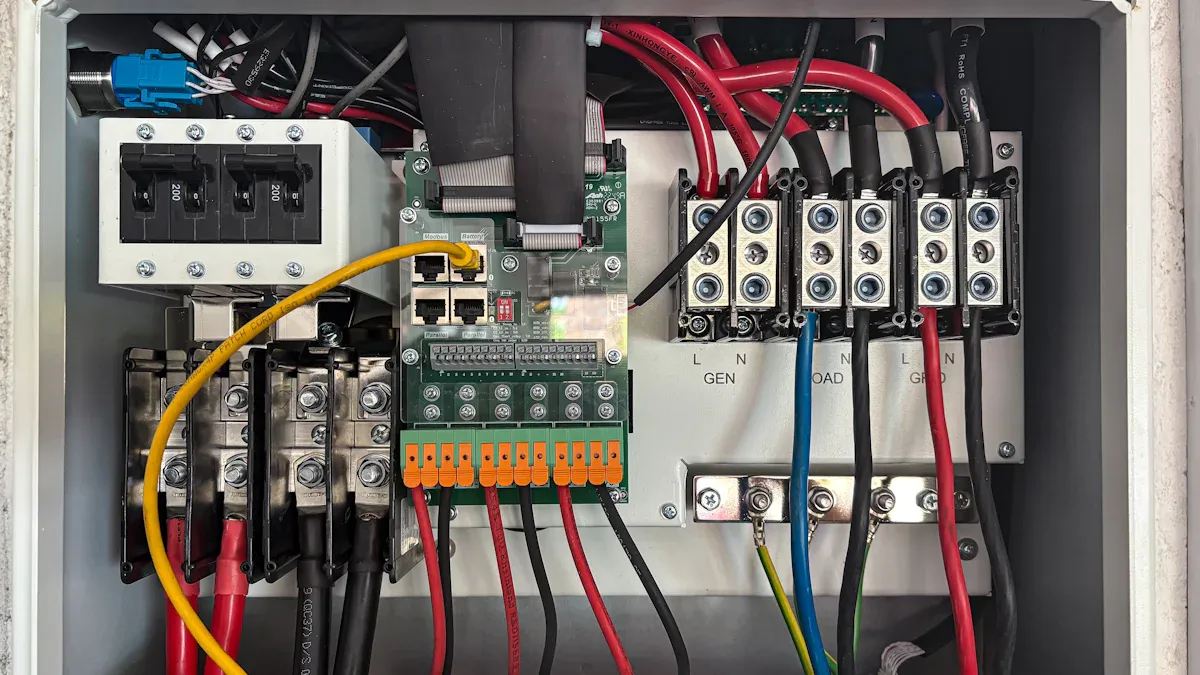
It is very important to wire power conductors the right way when using two transfer switches with one generator. Electricians must use permanent building wiring, like cable or conduit, from the generator inlet to each transfer switch. Flexible cords are not good for this job because they do not meet safety rules for permanent setups. Some transfer panels, such as certain Reliance models, switch the neutral conductor. This helps stop problems with neutral-to-ground bonding. With this design, the generator neutral stays bonded. This makes the system safer and more flexible.
A safe setup uses separate transfer switches. Each switch should feed its own subpanel. Each subpanel needs its own inlet and interlock. You should not connect two generator inlets or transfer switches together. Doing this can cause dead shorts, phase problems, and other dangers. Only one inlet per panel or house is allowed. This rule keeps things safe. Electricians must use the right transfer switches or interlocks. This makes sure only one power source feeds a panel at a time. This stops backfeeding and keeps people and equipment safe.
Note: Paralleling conductors in homes or small businesses is usually not allowed by code and can be unsafe. Complex setups with more than one transfer switch need careful planning, the right neutral switching, and must follow all codes.
Start Control Wiring
Start control wiring makes sure the generator starts by itself when either transfer switch loses utility power. The control wiring from each transfer switch must be connected the right way. This lets a start signal from either switch turn on the generator. This setup removes single points of failure and makes the system more reliable.
| Key Consideration | Explanation |
|---|---|
| Eliminate single points of failure | Use logic in each transfer switch so the system has backup and can handle problems. |
| Direct start signals | Send start signals straight from transfer switches to the generator, not through a main control. |
| Independent voltage sensing | Each generator must check bus voltage by itself for good operation. |
| Arbitration and breaker logic | Put arbitration logic in generator controls to stop more than one source from closing on a dead bus. |
| Synchronizing logic | Put synchronizing logic in generator controls for fast and good operation. |
When wiring start controls, electricians must not make a single control point that could fail and stop the generator from starting. Each transfer switch should send its own start signal. The generator must answer to either one. This way, the generator will start when needed, no matter which transfer switch finds a power outage.
Coordination
It is very important to coordinate two transfer switches and a generator for safe and reliable use. There are several ways to stop control problems and unsafe situations:
- Synchronism-check relays stop breaker closure if voltage, frequency, or phase angle differences are too high. This keeps out-of-sync connections from happening.
- Reverse power relays protect the generator by disconnecting it if power goes the wrong way, which helps stop equipment damage.
- Load sharing controllers help split power between transfer switches, so each load gets the right amount.
- Phase sequence checks make sure the phase rotation is right before syncing, which lowers the chance of faults.
- Automatic synchronization systems control when breakers close and check sync settings, which helps stop mistakes.
- Protective relays and sync modules work together to make sure breakers only close when it is safe.
NFPA 110 and the National Electrical Code say that overcurrent protection devices in transfer switch and generator setups must be coordinated. This helps trip only the right circuits during short circuits. It keeps bad circuits separate and stops big power losses and equipment damage. A trained engineer should do a short-circuit and coordination study to pick the right devices and settings.
⚠️ Caution: Bad coordination or wiring can cause backfeeding, equipment damage, fire, and code problems. Always ask a licensed electrician for help and follow all instructions and local codes.
Load Management
Generator Sizing
Getting the right size generator is very important when using two transfer switches. Each transfer switch often powers different things, like emergency or backup circuits. The generator must handle these loads without getting overloaded. Electricians use load shedding and set priorities to control how much power is used. This way, the generator gives power to the most important things first. Modern transfer switches can turn off less important loads by themselves.
The National Electrical Code (NEC) gives rules for sizing generators. Article 220 says you can use diversity factors. This means the generator does not need to be as big as all the loads added together. It can be smaller and still work well. But each transfer switch must still be big enough for all the loads it controls. The table below shows the main points about sizing a generator for two transfer switches:
| Aspect | Explanation |
|---|---|
| Multiple Transfer Switches | Using more than one switch helps set priorities and can let you use a smaller generator. |
| Load Shedding | You can turn off less important loads to save power. |
| NEC Load Diversity Factors | These rules let you use a smaller generator. |
| Conservative NEC Sizing | NEC rules may make you pick a bigger generator, but load shedding can help use a smaller one. |
| Transfer Switch Sizing | Each switch must be able to handle all its loads, even if the generator is smaller. |
| Load Control Features | Some switches can turn loads on or off based on how much power the generator can give. |
Tip: Always make sure the generator and transfer switches match the real power needs for safe and good use.
Load Calculation
Doing the math right makes sure the generator can run everything it needs to. Electricians look at the highest power use from utility bills to find the biggest need. They add extra, usually 25%, to cover power surges. Running wattage is the total of all the loads picked. The biggest starting wattage, often from motors, is added too. All numbers must be changed to watts to be correct.
People sometimes make mistakes, like forgetting starting loads, thinking everything runs at once, or not turning off things that are not needed. Manual transfer switches mean you have to turn off things you do not need so you do not overload the system. Selective load transfer switches let you pick what is most important, so the total load is less. Breakers must fit the loads for safety. NEC Articles 220, 445, and 702 give the rules for load math and transfer switch setups.
- Check the highest power use and add extra room.
- Add up running wattage and the biggest starting wattage.
- Change amps to watts if you need to.
- Do not overload the system; turn off things you do not need.
- Make sure breakers and wires are right for the load.
⚡ Note: Always follow local and NEC rules to stay safe and follow the law.
Safety and Code Compliance
NEC Requirements
The National Electrical Code (NEC) gives rules for using two transfer switches with one generator. These rules help keep people and buildings safe. Electricians must follow certain articles, depending on the building and what is powered. The table below shows the main NEC rules for using two transfer switches:
| NEC Article | Requirement Summary | Explanation |
|---|---|---|
| Article 700.5(D) | Transfer equipment shall supply only emergency loads. | When a generator powers both emergency and non-emergency loads, you must use more than one transfer switch to keep them apart. |
| Article 517.30(B)(4) | Exception for healthcare facilities with essential electrical system demand ≤ 150 kVA. | Healthcare buildings can use one transfer switch for different branches if their needs are special. |
| Article 517.26 | Precedence of Article 517 over Article 700 in healthcare. | Rules for healthcare are more important than general emergency system rules, so they can use different switch setups. |
Note: Article 700.5(D) says you need separate transfer switches for emergency and non-emergency loads most of the time. Article 517 lets healthcare buildings with smaller needs use just one switch.
Common Pitfalls
Many generator setups with two transfer switches break the rules or are unsafe. A common problem happens with multiwire branch circuits (MWBCs) and a 120V generator. If both hot wires of an MWBC connect to one 120V source, the neutral wire can get too much power. This does not follow NEC rules and can be dangerous. Using a 120/240V generator or splitting the circuits can stop this problem.
Other common mistakes are:
- Wrong wiring, like using wires that are too small or not grounding right.
- Overcurrent protection that does not fit the system.
- Not enough space around the generator for air, which can cause fires.
- Bad labeling of wires, which makes fixing things hard.
To stop these problems, electricians should make sure all wires are tight, give the generator enough space, and label every wire. Following NEC rules, using the instructions, and hiring trained workers keeps the setup safe and legal.
⚠️ Caution: Not following the rules can break equipment, cause fires, or get you in trouble. Always put safety and the rules first when working with generator transfer switches.
Best Practices for Two Transfer Switches
Checklist
A good checklist helps keep things safe and working well when using two transfer switches with a generator. Experts say you should follow these steps:
- Safety Precautions: Always turn off the main power first. Use tools with insulation and wear safety gear.
- Grounding: Connect the generator’s ground to a ground rod in the earth. Attach the transfer switch ground to the main panel ground.
- Electrical Clearances: Keep enough space around all equipment. Follow NEC and local rules for spacing.
- Load Calculation: Write down all important circuits and their wattage. Multiply the total by 1.25 for extra surge power.
- Generator and Switch Selection: Make sure the switch amps match the generator output. Pick the right transfer switch for your needs.
- Installation Steps: Put the transfer switch close to the main panel. Make sure all wires and connections are tight.
- Backfeed Prevention: Only use transfer switches that are listed. Put warning labels near the equipment.
- System Commissioning: Check every connection and setting. Write down the details of the setup.
- Load Testing: Pretend there is a power outage and test each circuit. Watch to see if the generator stays steady.
- Maintenance Schedule: Look at and clean the switches often. Write down all the work you do.
- Smart Home Integration: Make sure it works with smart devices if you want to watch it from far away.
- Tool Checklist: Use the right tools like insulated screwdrivers, voltage testers, and torque wrenches.
🛠️ Tip: Go over this checklist often to keep your system safe and working well.
Maintenance
Taking care of your generator and two transfer switches keeps them safe and working right. Each month, run the generator with a load for at least 30 minutes. Make sure both transfer switches work as they should. Every year, have a professional check the system. They will look at the electrical connections, check for rust, and make sure the switches move right.
Clean the switches and the area around them to stop dust from building up. Oil any moving parts and look for hot spots or worn contacts. Test the fuel and exhaust systems, check safety features, and keep good records of all work. If something is wrong, check the breaker positions, look at the control wiring, and check the generator control panel for error codes. Only trained people should fix or change anything.
⚡ Note: Start a regular plan for maintenance and testing right after you install or fix the system. This helps stop surprise problems and makes your equipment last longer.
Running two transfer switches with a generator needs good planning and safety. You must use transfer switches that fit your system. Always follow the rules and codes for safety. Experts say it is important to keep power sources separate and in sync. You should also check and fix things often.
- Workers need special training and certificates from groups like EGSA. This helps them install and fix systems safely.
Using a checklist often and asking experts for help with hard setups keeps things safe and working well.
FAQ
What does a transfer switch do in a generator system?
A transfer switch lets you change where power comes from. It switches power from the utility to the generator. This keeps the two power sources apart. The switch helps stop backfeeding and keeps people safe from shocks.
What problems can happen if someone wires two transfer switches incorrectly?
If you wire two transfer switches wrong, bad things can happen. There could be backfeeding, too much power, or even fires. It might also break the electrical rules. Electricians must use the right tools and follow all safety steps.
What loads should each transfer switch control?
Each transfer switch should only control its own loads. One switch is for emergency loads. The other switch is for non-emergency or extra loads. This setup keeps everything safe and follows the rules.
What maintenance does a dual transfer switch system need?
A technician should test both switches and the generator every month. They need to check for loose wires and clean the contacts. They should also look for any signs of damage. A professional should inspect the system once a year to help stop problems.
What codes cover the use of two transfer switches with one generator?
The National Electrical Code (NEC) has rules for these setups. Article 700 and Article 517 are the main rules to follow. Local codes might have more rules. Electricians must always check the newest code updates.
The following information may be of interest to you
How to use ATS in conjunction with a generator
Benefits of Installing an ATS for Household Backup Power
Comprehensive analysis of miniature circuit breakers
What size conversion switch is needed for a generator
How much does it cost for me to replace a circuit breaker