

A standard 120V socket can safely handle up to 1,800 watts on a 15-amp outlet or 2,400 watts on a 20-amp outlet. You find these numbers by multiplying amps by volts. The 80% rule means you should not use more than 1,440 watts on a 15-amp circuit for long periods. Some plugs limit you to 1,500 watts. Knowing these limits helps prevent overloads and reduces the risk of electrical fires in your home.
Key Takeaways
- A 15-amp outlet can hold up to 1,800 watts. But for long use, keep it under 1,440 watts. This helps stop overheating.
- A 20-amp outlet can take up to 2,400 watts. But for long use, keep it under 1,920 watts. This follows the 80% rule.
- Always look at the wattage rating on your devices and plugs. This helps you not overload the outlet. Plug high-wattage appliances right into wall outlets.
- Watch for warning signs like warm outlets, flickering lights, or burning smells. If you see these, unplug your devices right away.
- Check your wiring and outlets often, especially in older homes. This keeps you safe and follows electrical codes.
120V Socket Wattage Limits
15-Amp Outlets
A 15-amp outlet is one of the most common types you find in homes. You can safely use up to 1,800 watts with a 120V socket on a 15-amp circuit. This limit comes from multiplying 15 amps by 120 volts. The National Electrical Code sets this maximum to help you avoid overheating and fire risks.
- A 15-amp outlet at 120 volts can handle a maximum of 1,800 watts.
Most devices you plug into a 15-amp 120V socket use much less power. You often see small appliances, lights, and electronics on these outlets. The table below shows typical wattage requirements for common devices:
| Device Type | Typical Wattage Requirement |
|---|---|
| Small Appliances | Up to 1,440 watts |
| Lighting | Up to 1,440 watts |
| Electronic Devices (e.g., TVs) | Up to 1,440 watts |
If you use several devices at once, you need to add up their wattages. You should keep the total below 1,800 watts for safety. For continuous use, try to stay under 1,440 watts. This follows the 80% rule, which helps prevent overheating.
20-Amp Outlets
A 20-amp outlet gives you more power for larger appliances and tools. You can use up to 2,400 watts with a 120V socket on a 20-amp circuit. For long periods, you should not exceed 1,920 watts. This follows the 80% safety rule.
- The maximum wattage capacity of a 20-amp breaker in a 120-volt system is 1,920 watts, calculated using the 80% rule (2,400 watts × 0.8).
- A 20-amp circuit can support up to 10 outlets, with a total safe load of 1,920 watts before risking overload.
- The total capacity of a 20-amp, 120-volt circuit is 2,400 watts, but applying the 80% rule results in a safe operating load of 1,920 watts.
You often use 20-amp outlets for kitchen appliances, laundry machines, and power tools. The table below lists common appliances and their estimated wattages:
| Common Appliances | Estimated Watts |
|---|---|
| Coffee Maker | 600-1200 |
| Microwave | 1000-2000 |
| Waffle Iron | 800-1500 |
| Hot Plate | 750-1500 |
| Electric Skillet | 1000-1500 |
| Toaster Oven | 1200 |
| Toaster | 800-1500 |
| Hair Dryer | 1000-1875 |
| Vacuum Cleaner | 300-1500 |
| Space Heater | 750 / 1500 |
| Clothes Iron | 1000-1500 |
| Refrigerator | 500-750 |
| Chest Freezer | 600 |
| Washing Machine | 500-1000 |
| Circular Saw | 1400-1800 |
| Air Compressor 1 hp | 2000 |
Plug and Device Limits
Not all plugs and cords can handle the full wattage of a 120V socket. Many household plugs, like the NEMA 5-15, have a limit of 1,500 watts. You should plug high-wattage appliances, such as air fryers, directly into the wall outlet. Extension cords can overheat and cause fires if you use them with powerful devices.
- High-wattage appliances like air fryers should be plugged directly into wall outlets to prevent overload.
- Using extension cords for such appliances increases the risk of fire due to potential overloading.
- Chained extension cords, frayed cords, or inappropriate cords can further elevate fire hazards.
You need to know the difference between outlet, plug, and circuit wattage limits. The outlet is the place where you plug in your device. The plug is the connector on your device or cord. The circuit includes all outlets and wiring on the same breaker. Each part has its own limit. The table below compares wattage ranges for appliances and circuit types:
| Appliance | Wattage Range (Watts) | Circuit Type |
|---|---|---|
| Space Heaters | 1,000 – 1,500 | 15-amp / 20-amp |
| Microwaves | 600 – 1,200 | 15-amp / 20-amp |
| Hair Dryers | 800 – 1,800 | 15-amp / 20-amp |
| Vacuums | 500 – 1,500 | 15-amp / 20-amp |
| Coffee Pots | 600 – 1,200 | 15-amp / 20-amp |
| 15-amp Circuit | Up to 1,800 | N/A |
| 20-amp Circuit | Up to 2,400 | N/A |
Tip: Always check the wattage rating on your device and plug before using a 120V socket. This helps you avoid overloads and keeps your home safe.
Calculating Safe Usage
Amps x Volts Formula
You can find out how much power a 120V socket can handle by using a simple formula. The formula is:
Power (Watts) = Voltage (Volts) × Current (Amps)
This formula helps you know the maximum wattage for any circuit. For example, if you have a 20-amp circuit at 120 volts, you multiply:
- 120 volts × 20 amps = 2,400 watts
Here is a quick list to help you remember:
- Power is measured in watts.
- Voltage is measured in volts.
- Current is measured in amps.
You can use this formula for any household circuit. If you want to check the safe wattage for your devices, look at the label for amps and multiply by 120 volts.
| Circuit Type | Amperage (A) | Voltage (V) | Wattage (W) |
|---|---|---|---|
| 15-amp 120-volt | 15 | 120 | 1,800 |
| 20-amp 120-volt | 20 | 120 | 2,400 |
| 25-amp 120-volt | 25 | 120 | 3,000 |
The 80% Rule
You should not use the full wattage of a 120V socket for long periods. Electric codes recommend the 80% rule for continuous loads. This means you use only 80% of the maximum wattage to stay safe.
Tip: The 80% rule helps prevent overheating and keeps your home safe.
For example, on a 15-amp circuit:
- Maximum wattage: 1,800 watts
- Safe continuous load: 1,800 × 0.8 = 1,440 watts
On a 20-amp circuit:
- Maximum wattage: 2,400 watts
- Safe continuous load: 2,400 × 0.8 = 1,920 watts
The National Electrical Code (NEC) says you must size the circuit for at least 125% of the continuous load. This keeps your wiring and outlets from getting too hot.
| Description | Calculation | Result |
|---|---|---|
| Continuous Load (100 A) | OCPD Rating = 1.25 × Load Amps | 125 A |
| Percentage of OCPD Rating | % of OCPD Rating = (Load/OCPD) × 100% | 80% |
| NEC Reference | NEC 210.20(A) | 125% |
Example Calculation
Suppose you want to use a hairdryer (1,500 watts), a vent fan (120 watts), and a light fixture with three bulbs (180 watts total). Add up the wattages:
- Hairdryer: 1,500 watts
- Vent fan: 120 watts
- Light fixture: 180 watts
- Total load: 1,500 + 120 + 180 = 1,800 watts
You reach the maximum for a 15-amp 120V socket. If you use these devices for a long time, you should keep the total under 1,440 watts.
You can also check the amps:
Amps = Total Watts ÷ Voltage
Amps = 1,800 ÷ 120 = 15 amps
If you want to stay safe, keep your total load below 80% of the circuit’s rating.
Avoiding Overload
Adding Up Device Wattage
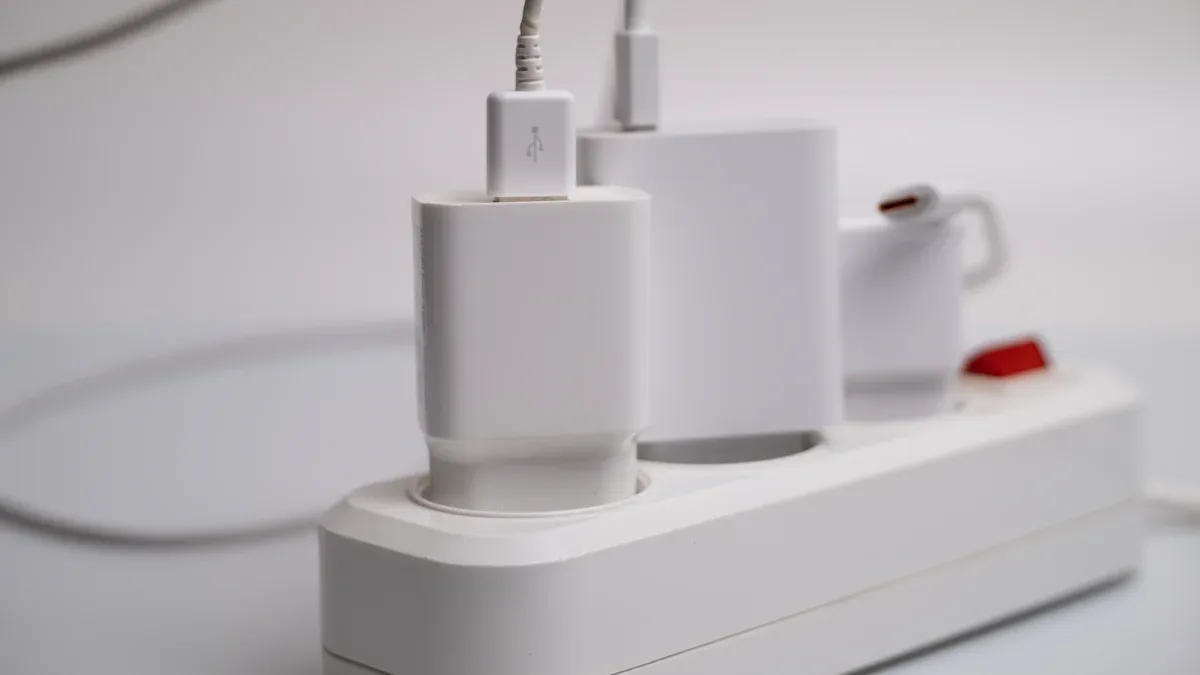
You need to know how much power your devices use. This helps you avoid overloading a 120V socket. First, check the amperage rating on your circuit breaker. This shows the most current your circuit can handle. Next, look at the wattage label on each device you want to plug in. Add up the wattage for all devices you plan to use together. Make sure the total stays under 80% of the outlet’s maximum. For a 15-amp circuit, do not use more than 1,440 watts for a long time.
Tip: Always check your math before plugging in many devices. This helps you avoid dangerous overloads.
Warning Signs
Watch for signs that your 120V socket is overloaded. If your breaker keeps shutting off, your circuit may have too much load. Outlet covers should not feel hot or look burned. If lights flicker or get dim, your circuit may be working too hard.
If you smell burning plastic, see sparks, smoke, or burn marks, unplug everything right away and call an electrician.
Prevention Tips
You can keep your home safe by following these tips. Plug big appliances straight into wall outlets. Do not use extension cords for these devices. Only use one heat-making appliance per outlet. Spread your appliances across different circuits to balance the load. Do not connect many power strips or extension cords together. Get regular safety checks, especially if your home is older than 20 years. If you use extension cords a lot, ask an electrician to add more outlets.
| Cause of Socket Overload | Description |
|---|---|
| Faulty Outlets and Appliances | Old or broken outlets and appliances can get too hot and start fires. |
| Misuse of Extension Cords | Using extension cords for a long time can make them overheat and cause fires. |
| Outdated Wiring | Old wiring may not handle today’s electrical needs. |
Overloading a socket can make it get too hot, cause short circuits, and even start fires. Always watch for warning signs and follow these tips to keep your home safe.
What Affects 120V Socket Capacity
Circuit Breakers
Circuit breakers help keep your home safe from too much electricity. They set the top amount of power each socket can use. Most homes have 15-amp or 20-amp breakers for outlets. You can look at your breaker panel to see the rating. A NEMA 5-15 goes with a 15-amp circuit. A NEMA 5-20 goes with a 20-amp circuit. All devices together should not use more than 80% of the breaker’s limit. For example, a 15-amp breaker is safe up to about 12 amps. A 20-amp breaker is safe up to about 16 amps. To check the load, use this formula: Amps = Watts ÷ Volts. If you plug in a 200-watt lamp to a 120V socket, it uses about 1.67 amps. You need to add up all devices to stay safe.
Wiring Quality
Good wiring is important for socket safety. Old wiring, like knob-and-tube, can be dangerous if not checked. If your home does not have proper grounding, shocks and fires are more likely. Bad wiring can cause overloads and short circuits. You should have an electrician check your wiring often. Good wiring and grounding help you use sockets safely.
- Old wiring can cause fires.
- Outlets without grounding are not safe for new appliances.
- Regular checks help keep your system safe.
Code Requirements
Electrical codes give rules for safe socket use. The National Electrical Code and local codes say how many outlets you can have and how much power they can use. The NEC does not set a limit for outlets, but experts say 10 on a 15-amp circuit and 13 on a 20-amp circuit is best. The NEC suggests using 180 watts per outlet when planning. New rules need GFCI protection near sinks and AFCI protection in many rooms. Some places must have tamper-resistant or weatherproof outlets.
| NEC Article | Description |
|---|---|
| 210.8(A) | GFCI protection for 15- to 20-amp outlets near sinks |
| 210.12 | AFCI protection in living areas |
| 406.3(C) | CO/ALR receptacles for aluminum wiring |
| 406.3(D) | Copper-clad aluminum conductors for 15A/20A outlets |
| 406.4 | GFCI or tamper-resistant outlets required |
| 406.9(B),(C) | Weatherproof outlets for wet locations |
Tip: Always follow local codes and get inspections to keep your electrical system safe.
You should keep your total load under 1,500 watts. This helps you avoid electrical dangers at a standard 120V socket. The 80% rule is important for safety. Always check how much power your devices use. This helps stop overheating and fire risks. People sometimes make mistakes with outlets. They use too many devices or pick the wrong cords. Some forget to get their outlets checked. Watch for flickering lights or hot outlets. If you smell something burning, get help fast. Good safety habits keep your home and family safe.
FAQ
What happens if you overload a 120V socket?
If you plug in too many things, the breaker might shut off the power. You could see outlets get warm or lights flicker. Sometimes you might even smell something burning. Too much power can start a fire or break your devices.
What devices use the most watts on a 120V outlet?
Devices that make heat use the most power. Some examples are space heaters, hair dryers, microwaves, and toasters. Always look at the label to see how many watts an appliance uses before plugging it in.
What should you do if your outlet feels hot?
Unplug everything right away if the outlet feels hot. A hot outlet means something is wrong. Do not use it again until an electrician checks it. Heat can be caused by too much power, loose wires, or broken parts.
What is the safest way to use extension cords with 120V sockets?
Only use extension cords for small things and for a short time. Never plug big, powerful appliances into extension cords. Always check the cord’s rating before using it. Do not connect many cords together.
Tip: Plug big appliances straight into the wall to stay safe.
See also
How many watts of power a 15 ampere circuit breaker can withstand
What Is the Maximum Number of Sockets on a 20A Circuit Breaker
How many lights can a circuit breaker control?
What Type of Breaker Works Best for a 1.5 Ton AC Unit
What is the Right Socket for Your Home, 15 Ampere or 20 Ampere