
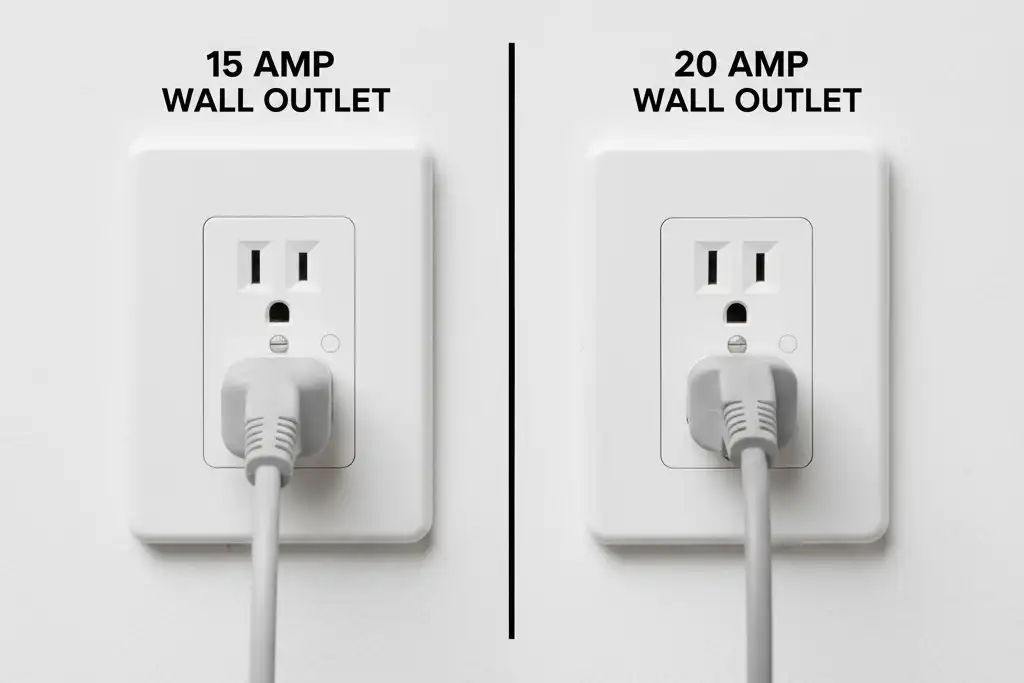
You want your home to be safe. You need the right socket for each appliance. Most rooms use a 15 ampere socket. This is because it works for most things and follows safety rules. If you have a strong appliance, you need a 20 amp socket. Electrical codes have rules for each type:
| Circuit Amperage | Required Receptacle | Notes |
|---|---|---|
| 15 Amps | 15-amp receptacle | Use 15-amp receptacles on 15-amp circuits. This stops the breaker from tripping and keeps things safe. |
| 20 Amps | 20-amp receptacle | Use 20-amp receptacles for single outlets on 20-amp circuits. This is important for safety. |
| 20 Amps | 15-amp receptacle | You can use 15-amp receptacles if there are many outlets on one circuit. Do not use them for just one outlet on a 20-amp circuit. |
Tip: Always look at your appliance’s power needs before picking a socket.
Disclaimer: This guide references the NEC 2023 edition for general guidance only. Local Authority Having Jurisdiction (AHJ) rules and adopted codes take precedence—verify requirements with your AHJ before design or installation. Do not perform electrical work unless you are a licensed electrician qualified under applicable laws; when in doubt, hire a licensed professional.
Key Takeaways
- Use a 15 amp socket in most rooms. It works for small things like lamps and chargers. This keeps your home safe. It also follows electrical rules.
- Pick a 20 amp socket for big appliances. Use it for things like microwaves and air conditioners. This stops overloads and keeps you safe.
- Always check what your devices need before plugging them in. This helps stop overheating. It also keeps breakers from tripping.
- Follow the National Electrical Code when you put in sockets. This makes sure you are safe. It also means you follow the rules.
- If you do not know what socket or amperage you need, ask an electrician. Safety matters most when you work with electricity.
Amperage Basics
What Is Amperage?
You might ask what amperage means in your house. Amperage shows how much electric current moves in a circuit. Electricians use amperes (A) to measure this flow. It tells you how much electricity goes through wires every second. Amperage helps you know how much power is in your home’s wires.
Amperage helps pick the right wire size and safety device. If you know the amperage, you can choose the best socket for your needs.
Most homes have circuits for 15 or 20 amperes. These numbers work well for lights and small appliances. A 15 ampere socket is found in bedrooms and living rooms. You use these sockets for lamps, chargers, or TVs.
- Amperage means the amount of electric current
- It is measured in amperes (A)
- Most home circuits are 15 or 20 amperes
Why It Matters
Amperage is important for how your home works and stays safe. The total amperage tells you how many things you can plug in at once. If you use too many devices, you can overload the circuit. This may make the breaker trip or even cause a fire.
Modern homes have safety tools like circuit breakers and GFCIs. These tools protect you from too much current and other dangers. Picking the right socket helps these safety tools work well.
- Amperage controls how much power your devices get.
- Low amperage can overload circuits and trip breakers often.
- Safety tools need the right amperage to work right.
If you learn about amperage, you can make smart choices for your home. You keep your family safe and your devices working well.
15 Ampere Socket vs 20 Amp Socket
Physical Differences
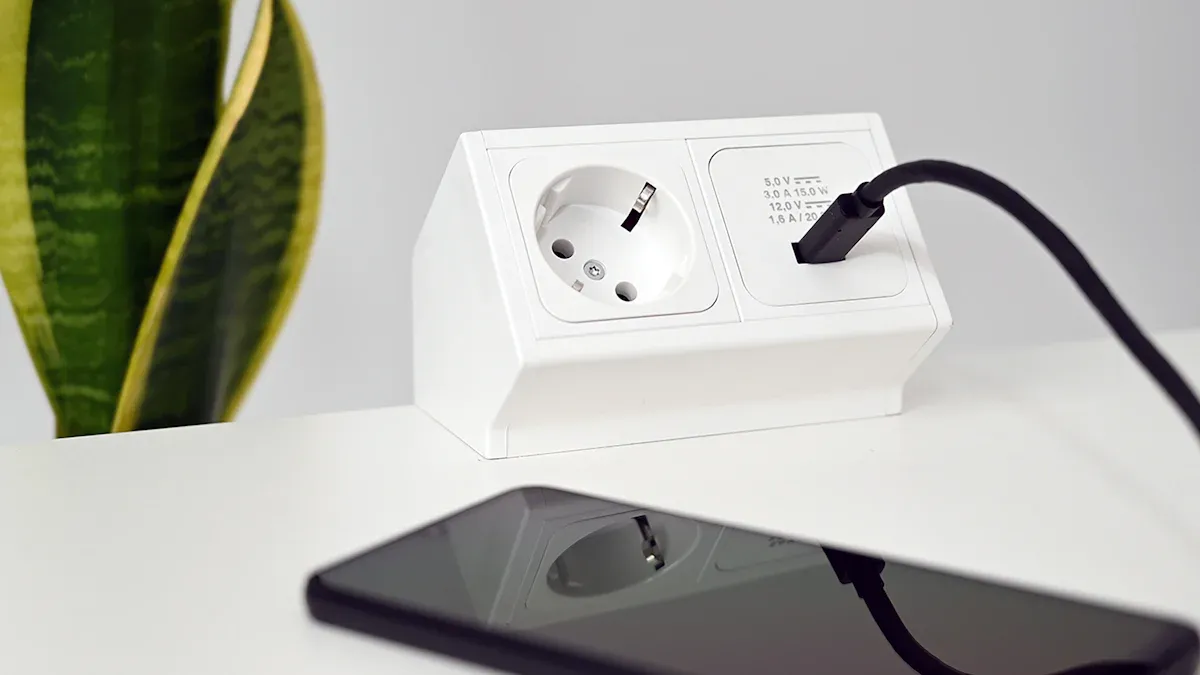
You can spot the difference between a 15 ampere socket and a 20 amp socket by looking at their shapes. A 15 ampere socket has two straight vertical slots and one round hole. This design looks like a simple face. A 20 amp socket has a special T-shaped slot on the left side, along with the regular vertical slot and round hole. The T-shaped slot lets you plug in both 15-amp and 20-amp plugs, but it also keeps you from plugging a 20-amp plug into a 15 ampere socket. This helps keep your home safe.
| Feature | 15 Amp Socket | 20 Amp Socket |
|---|---|---|
| Slot Configuration | Two vertical slots and one round hole | One vertical slot, one T-shaped slot, and one round hole |
| Appearance | Looks like a face with two vertical slots | Looks like a winking face with a T-shaped slot on the left |
Tip: If you see a T-shaped slot, you are looking at a 20 amp socket.
Power Capacity
The main difference between these sockets is how much power they can handle. A 15 ampere socket can safely support up to 1,800 watts at standard household voltage. A 20 amp socket can handle up to 2,400 watts. This means you can use more powerful appliances with a 20 amp socket.
| Socket Type | Maximum Wattage |
|---|---|
| 15 Ampere | 1,800 watts |
| 20 Ampere | 2,400 watts |
Some appliances need the extra power from a 20 amp socket. These include:
- Tabletop ovens
- Microwaves
- Mixers
- Blenders
- Food processors
- Electric ovens
- Frying pans
Most rooms in your house use a 15 ampere socket because regular devices like lamps, TVs, and chargers do not need much power. You only need a 20 amp socket for high-powered kitchen appliances or special equipment.
Code Requirements
The National Electrical Code (NEC) sets rules for how you can use these sockets. You can install a 15 ampere socket on both 15 amp and 20 amp circuits if there are several outlets on the same circuit. If you have only one outlet on a 20 amp circuit, you must use a 20 amp socket. This keeps your home safe and prevents overloads.
| Specification | Details |
|---|---|
| NEC Section | 210.21(B)(3) |
| Receptacle Ratings | 15 amp receptacles can be used on 20 amp circuits with multiple outlets |
| Load Limit | Continuous load on a 15 amp receptacle should not exceed 12 amps |
The NEC also updated its rules. Now, circuits with less than 15 amps are only for special uses like LED lighting. You cannot use them for regular outlets.
Note: Always follow code requirements when choosing sockets. This helps you avoid electrical problems and keeps your family safe.
Note on NEC 2023 receptacle rules and continuous loads
Clarify NEC 2023 requirements for 20 A branch circuits: a single receptacle on a 20 A branch circuit must have an ampere rating not less than the branch-circuit rating per NEC 2023 210.21(B)(1) (i.e., a single receptacle on a 20 A circuit must be a 20 A receptacle). Where a 20 A branch circuit supplies multiple receptacle outlets, NEC 2023 210.21(B)(3) allows 15 A receptacles at those multiple points. Also remember continuous loads must be sized at 125% (the common “80% rule”) when selecting conductors and overcurrent protection per NEC 2023 210.20(A). Apply these boundaries to avoid misapplied substitutions or retrofit errors.
You can remember these rules:
- Use a 15 ampere socket for most rooms and regular appliances.
- Use a 20 amp socket only on a 20 amp circuit and for high-powered devices.
- Check the number of outlets on your circuit before picking a socket.
When to Use a 15 Ampere Socket
Common Appliances
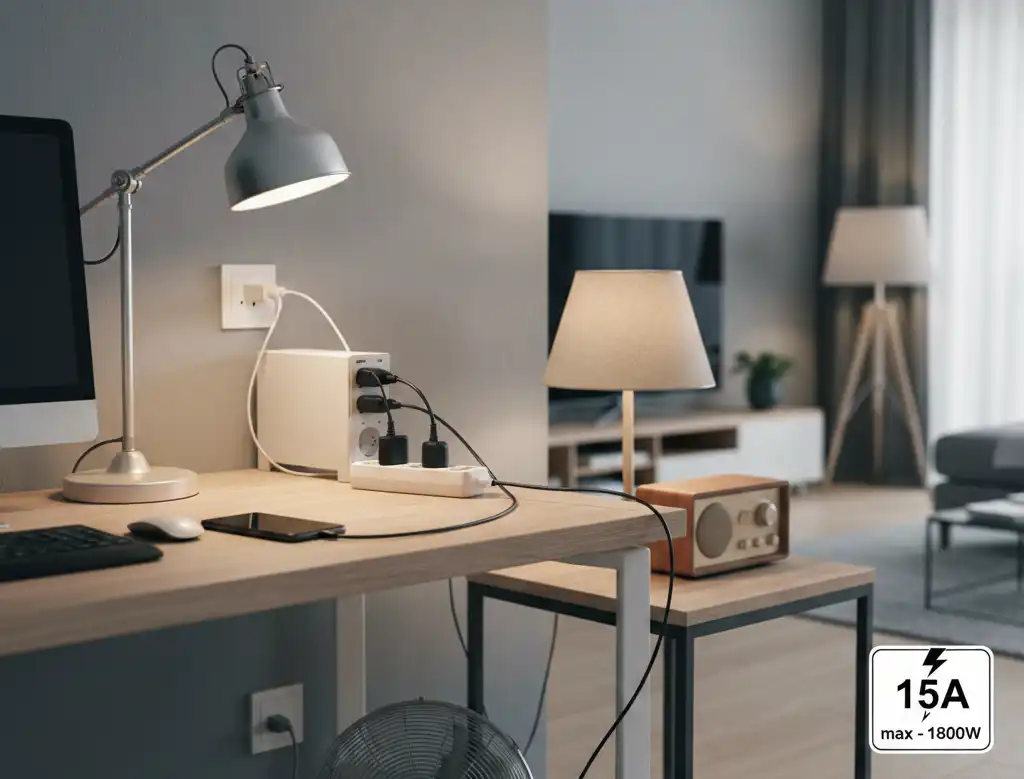
A 15 ampere socket works for many things at home. Most small gadgets and electronics use this socket safely. Here are some items you can plug in:
- Table lamps and floor lamps
- Phone and tablet chargers
- Alarm clocks
- Radios and speakers
- Televisions
- Desktop computers and monitors
- Fans
- Small printers
These things do not need much power. You can plug in a few at once. Just make sure you do not go over 1,800 watts. Always look at your device’s label to check its wattage. Add up the wattage of everything on one circuit. This helps you stop overloads.
⚡ Tip: If lights flicker or the breaker trips, you may have too many things plugged in. Unplug some devices to stay safe.
Typical Rooms
You see 15 ampere sockets in lots of rooms at home. Bedrooms almost always use 15 amp circuits. The National Electrical Code says you can wire bedrooms with these circuits. You can pick how many outlets you want. Living rooms and home offices also use 15 ampere sockets for most outlets. These rooms have many devices, but each uses little power.
- Bedrooms: It is normal to wire bedrooms with 15 amp circuits. You can put many outlets in each room.
- Living rooms: Most outlets in living rooms use 15 ampere sockets for TVs, lamps, and chargers.
- Home offices: Computers, printers, and desk lamps work well with 15 ampere sockets.
You should follow safety tips when using these sockets:
- Do not put too much on one circuit. Keep the total under 1,800 watts.
- Watch for signs like buzzing outlets or tripped breakers.
- Do not plug lots of power strips into one outlet.
A 15 ampere socket is good for bedrooms, living rooms, and offices. It gives you safety and works for most devices.
When to Use a 20 Amp Socket
High-Power Appliances
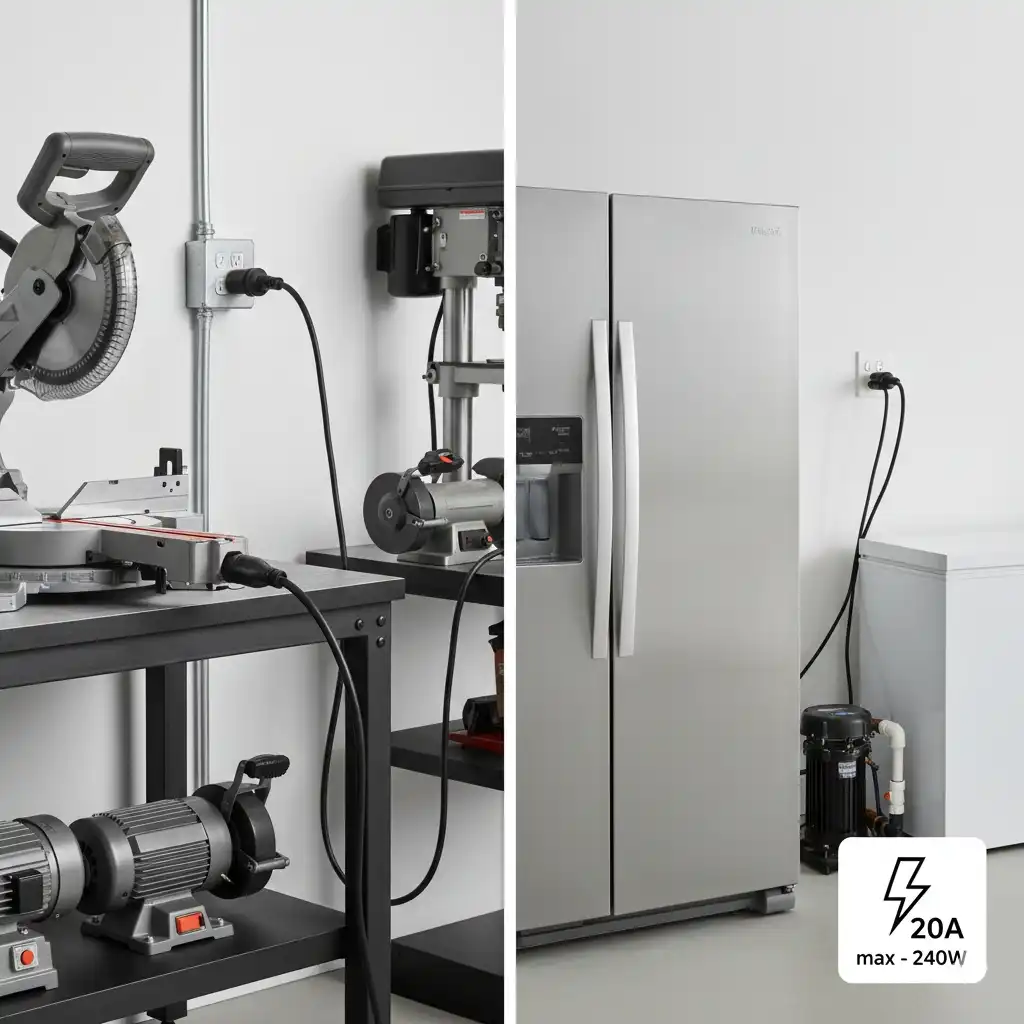
You need a 20 amp socket for strong appliances. These devices use more electricity than a 15 amp socket can give. Using the right socket keeps your home safe. It also helps your appliances work well.
Some common high-power appliances that need a 20 amp socket are:
- Sump pumps
- Large refrigerators
- Freezers
- Window air conditioners
- Bigger shop tools
- Commercial kitchen appliances
These appliances use lots of energy, especially when starting. If you use a 15 amp socket, you might overload it. Overloading can make the outlet get too hot. This can happen even if the breaker does not trip. A 15 amp outlet should only handle up to 12 amps. Using many strong devices at once can overload the outlet. This is more likely in cold months.
⚠️ Always look at your appliance’s label. If it needs more than 12 amps, use a 20 amp socket.
Example nameplate interpretations (typical ranges): a countertop microwave rated 1,000 W → ~8.3 A at 120 V (often OK on a 15 A multi‑outlet circuit unless the manufacturer calls for a dedicated circuit, see GE over‑the‑range/installation notes); a refrigerator running ~150–300 W → ~1.3–2.5 A but with compressor start surges commonly 3–10× running current (brief 15–30 A peaks); a 5,000–8,000 BTU window AC running ~8–12 A with locked‑rotor/start surges up to 2–6×. Rule of thumb: if the nameplate running current is <12 A and no manufacturer dedicated‑circuit requirement exists, 15 A may suffice; if running current ≥12 A or the manual specifies a dedicated 20 A, provide a 20 A or dedicated circuit and plan for inrush.
Special Areas
Some rooms need 20 amp sockets because of rules and the appliances used. You find these sockets in places with many strong devices.
Per NEC 2023 210.11(C)(1) and 210.52(B), dwelling kitchens, pantries, breakfast and dining areas must be supplied by at least two 20‑ampere small‑appliance branch circuits, not simply two 20A receptacles. These 20A circuits serve countertop and specified wall/floor receptacles; dedicated appliance circuits (for refrigerators, built‑ins, etc.) remain permitted as exceptions. Verify AHJ adoption of NEC 2023 for local applicability.
210.11(C)(4) Garage Branch Circuits. You must put in at least one 120-volt, 20-amp branch circuit for outlets in garages with electric power. This circuit cannot have other outlets.
You should use 20 amp sockets in kitchens, bathrooms, and garages. These places often have appliances or tools that need more power. Following these rules keeps you safe and helps your home follow the code.
Choosing the Right Socket
Safety Tips
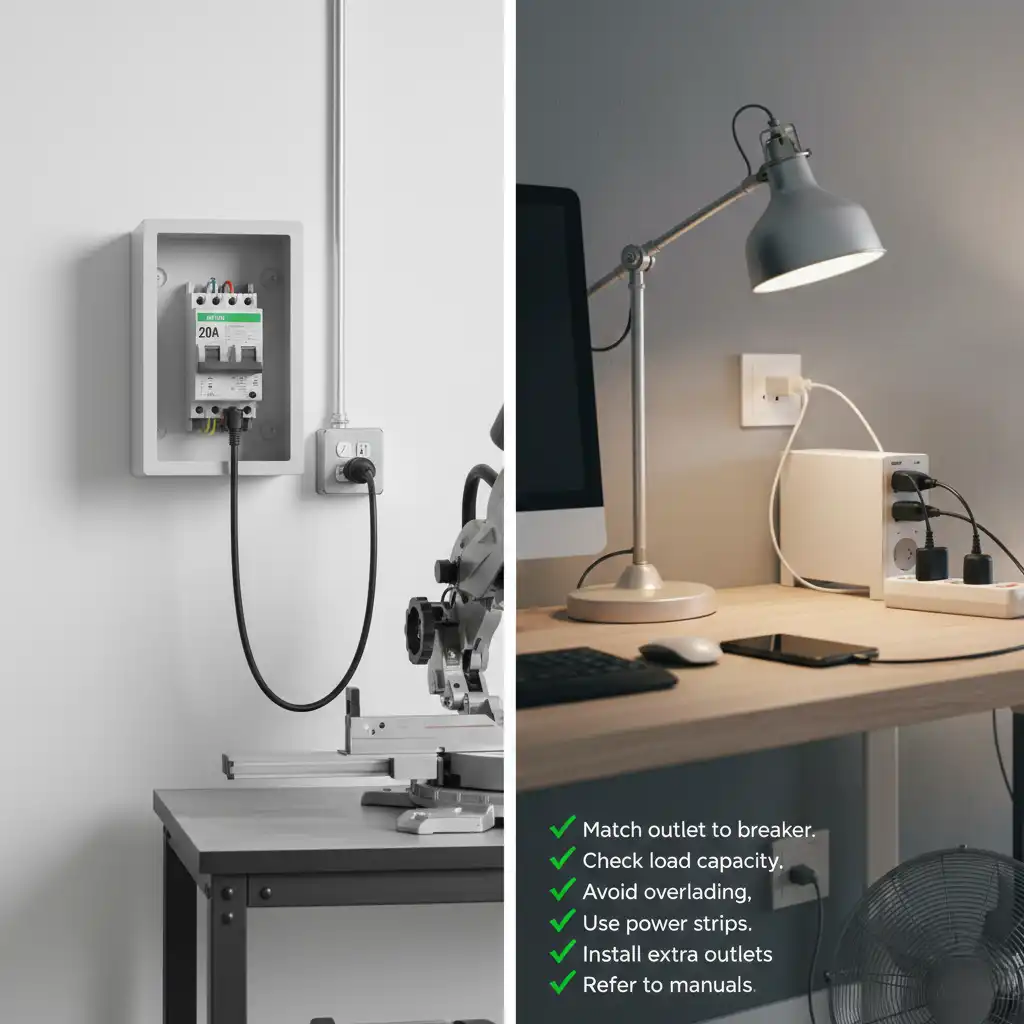
You want your home to stay safe when you choose sockets. You must match the outlet’s amperage rating with the circuit breaker. This step helps you avoid overloading and keeps your wiring cool. You should check the load capacity of each outlet. Most outlets handle either 15 or 20 amps at 120 volts. If you use too many devices on one outlet, you risk overheating and electrical fires.
⚡ Always look at the appliance manual or label. You find the specific amperage requirements there.
You can use power strips with built-in circuit breakers. These strips help manage the electrical load. If you need more outlets, consider installing extra ones. This step spreads out the load and keeps each outlet safe.
- Match the outlet’s amperage rating to the circuit breaker.
- Check the load capacity before plugging in devices.
- Avoid overloading outlets to prevent overheating.
- Use power strips with circuit breakers for added safety.
- Install extra outlets if you need to spread out the load.
- Refer to appliance manuals for amperage needs.
Quick Checklist
You can follow a simple checklist to decide what socket fits your room or appliance. This list helps you make safe choices and follow code rules.
- Find out your circuit rating. If you have a 15-amp circuit, use 15-amp receptacles.
- For a 20-amp circuit with several outlets, you may use 15-amp receptacles.
- If you have a dedicated 20-amp circuit for one appliance, use a 20-amp receptacle.
- Look at the appliance label for its amperage needs.
- Make sure the total load does not go over the outlet’s rating.
- Place high-power appliances in rooms with 20-amp sockets.
- Use 15-amp sockets for bedrooms, living rooms, and offices.
✅ Following this checklist helps you choose the right socket and keeps your home safe.
You should pick the right socket for every room and device. Here are some important tips:
- Pick a 15-amp socket for most rooms and small things.
- Use a 20-amp socket for strong appliances and special places.
- Make sure the socket matches the circuit breaker’s rating.
- Do not put too many things in one outlet, especially things that get hot.
- Check your circuits and devices often.
- If you are not sure, talk to a licensed electrician.
The checklist helps keep your home safe and makes sure you follow electrical rules.
FAQ
What happens if you use a 15 amp socket for a high-power appliance?
You risk overheating the socket. This can cause the breaker to trip or even start a fire. Always check the appliance label. Use a 20 amp socket for devices that need more power.
What does a 20 amp socket look like?
A 20 amp socket has a T-shaped slot on the left side. This slot lets you plug in both 15 amp and 20 amp plugs. You can spot it easily by looking for the sideways “T”.
What appliances need a 20 amp socket?
You use a 20 amp socket for large appliances. These include microwaves, window air conditioners, and power tools. Always check the wattage and amperage on the appliance label before plugging it in.
What is the main difference between 15 amp and 20 amp sockets?
A 15 amp socket handles up to 1,800 watts. A 20 amp socket supports up to 2,400 watts. The 20 amp socket also has a T-shaped slot. This design helps you use stronger appliances safely.
What should you do if you are unsure about your socket type?
You should check your circuit breaker and outlet. If you still feel unsure, ask a licensed electrician. Safety comes first. Never guess when it comes to electricity.
References
- NFPA 70, National Electrical Code (NEC), 2023 edition — full text (read-only) via NFPA. Accessed 2026-02-04. https://www.nfpa.org/NEC
- NEC Article references (210.11, 210.21, 210.52, 210.8, 210.12) — see the NEC 2023 online viewer for clause text and tables (NFPA). Accessed 2026-02-04.
- Mike Holt — NEC 690 & 706 explainers (practical interpretation of PV/ESS disconnecting means). Accessed 2026-02-04: https://www.mikeholt.com/newsletters.php?action=display&letterID=2819
- Eaton — UL 98B DC disconnects brochure (600–1000 Vdc) — example manufacturer guidance for UL 98B listings. Accessed 2026-02-04: https://www.eaton.com/content/dam/eaton/products/low-voltage-power-distribution-controls-systems/swiching-devices/resources/dcdisconnects600-1000vdc-br00802002e.pdf.pdf
- Socomec INOSYS LBS DC (IEC 60947-3 / DC-PV) — manufacturer catalogue extract for IEC DC-PV device categories (useful for IEC contrast). Accessed 2026-02-04: https://www.socomec.us/sites/default/files/2022-01/INOSYS-LBS-DC-IEC_CATALOGUE—EXTRACT_2019-06_DCG149073USA_EN-US.pdf
Note: NFPA free-access is the canonical source for NEC clauses; local AHJ adoption and jurisdictional amendments take precedence.