

You want to keep your electric vehicle charging pile safe at home or work. Check plugs and cables often for damage. Make sure the charger does not get hot when you use it. Use a grounded outlet to stop hazards. Do not push the plug too hard into the socket. Keep everything dry so you do not have electrical problems. Extension cords may not be strong enough, so use the right setup. Always follow the instructions from the maker to protect your vehicle and property.
Key Takeaways
- Check your EV charger and circuit breaker often for damage. This helps stop electrical problems. It also keeps charging safe.
- Always use a GFCI breaker outside or in wet places. This keeps you safe from electric shocks. It makes charging safer.
- Pick the right circuit breaker size for your EV charger. Make sure the breaker matches your charger’s amperage. This stops overloads.
- Follow local and national electrical codes when you install your charger. This keeps you safe and follows the rules.
- Keep the space around your charger open and airy. Good airflow stops overheating. It helps your charging equipment last longer.
Safety Basics
Circuit Breaker Role
It is important to know how a circuit breaker works. Circuit breakers are like switches that turn off power by themselves. They do this when too much electricity flows through the wires. This can happen if there is a short circuit or an overload. When this happens, the circuit breaker acts fast to stop harm. Some circuit breakers can handle very large amounts of electricity, like 25,000 amps at 900 volts. They turn off quickly if they sense trouble. Most circuit breakers can be turned back on after you check for safety. You do not have to buy a new one every time it turns off.
Tip: After your circuit breaker turns off, always check it. Fix the problem before you turn it back on.
Here is how a circuit breaker helps your electric vehicle charging pile:
- Turns off power if something goes wrong
- Handles big amounts of electricity safely
- Lets you use your charger again after you fix the issue
Key Protection Features
Your circuit breaker should have strong protection features. These features help keep your electric vehicle charging pile safe from danger. Look for these important things:
- Surge Protection: Stops sudden jumps in electricity from hurting your system.
- Overcurrent Protection: Stops too much electricity from flowing, which can cause fires.
- Overvoltage Protection: Blocks high voltage that can damage your charger and car.
- Ground Fault Protection: Finds leaks of electricity and turns off power to stop shocks.
- Temperature Monitoring: Checks for overheating and turns off power if it gets too hot.
- Automatic Shutoff: Turns off power right away if it finds a problem.
Note: If your circuit breaker does not have these features, you should get a better one. This helps keep your family and home safe.
A good circuit breaker with these features helps you feel safe. You can charge your electric vehicle at home or work without worry.
Standards Overview
NEC Guidelines
You must follow the National Electrical Code (NEC) when you put in an electric vehicle charging pile. The NEC has rules that help keep you safe and stop electrical problems. These rules tell you what size circuit breakers you need. They also explain how to set up your wires and protect your system from getting too much power.
Here is a table with some important NEC rules for electric vehicle charging:
| NEC Section | Requirement Description |
|---|---|
| 625.40 | Each outlet for EV charging must be on its own branch circuit. |
| 625.42 | EV charging loads are always on, so this affects circuit breaker ratings. |
| 80% Rule | You can use circuit breakers at 80% of their full power for EV charging. |
You need to use a Ground Fault Circuit Interrupter (GFCI) for safety. The GFCI will turn off the power if it finds a leak of electricity. This helps stop shocks. You also need a way to turn off the charger fast if there is an emergency. Make sure your equipment has the right certification, like UL listing, to show it is safe.
Tip: Always look for new NEC updates before you start. Rules can change, and you want to be safe.
IEC 61851
If you use rules from other countries, you should know about IEC 61851. This rule covers safety for electric vehicle charging piles in many places. IEC 61851 tells you how to test your system and what safety parts you need.
Here is a table that shows some safety tests from IEC 61851:
| Safety Test | Description |
|---|---|
| Hipot | High voltage test to check insulation strength |
| Insulation Resistance | Checks resistance to keep people safe from shocks |
| DC Ground Bond | Makes sure DC systems are grounded right |
| Leakage Current | Looks for extra current that could be dangerous |
You must have circuit breakers in your charging station. These breakers protect your system and keep you safe. IEC 61851 says you must test for insulation, grounding, and leakage current. You need to make sure your charging pile passes these tests before you use it.
- Circuit breakers help stop electrical problems.
- They keep you and your equipment safe.
- IEC 61851 says every charging station needs circuit breakers.
Note: If you want to put in a charging pile outside the United States, check if IEC 61851 is needed where you live.
Local Codes
You must also follow local electrical codes. These codes can be different from national or international rules. Local rules may ask for extra steps or special certifications. You need to check with your city or state before you start your project.
Here is a table that compares local codes with national and international rules:
| Aspect | Local Codes | National/International Standards |
|---|---|---|
| Compliance Requirements | Changes by region | Same in many places |
| Safety Guidelines | May have special local rules | Full guidelines (like NEC) |
| Certification | Local certifications may be different | UL certification means strong safety |
| Interoperability | Only works with local models | IEC rules work in many countries |
| Environmental Regulations | Local laws about the environment | Follows bigger international rules |
You might need extra permits or checks for your electric vehicle charging pile. Some places want special switches or more GFCI protection. Local codes may also have rules about where you can put your charger and how you protect the wires.
Reminder: Always talk to a licensed electrician who knows your local codes. This helps you avoid problems and keeps your project safe.
Electric Vehicle Charging Pile Safety
Proper Sizing
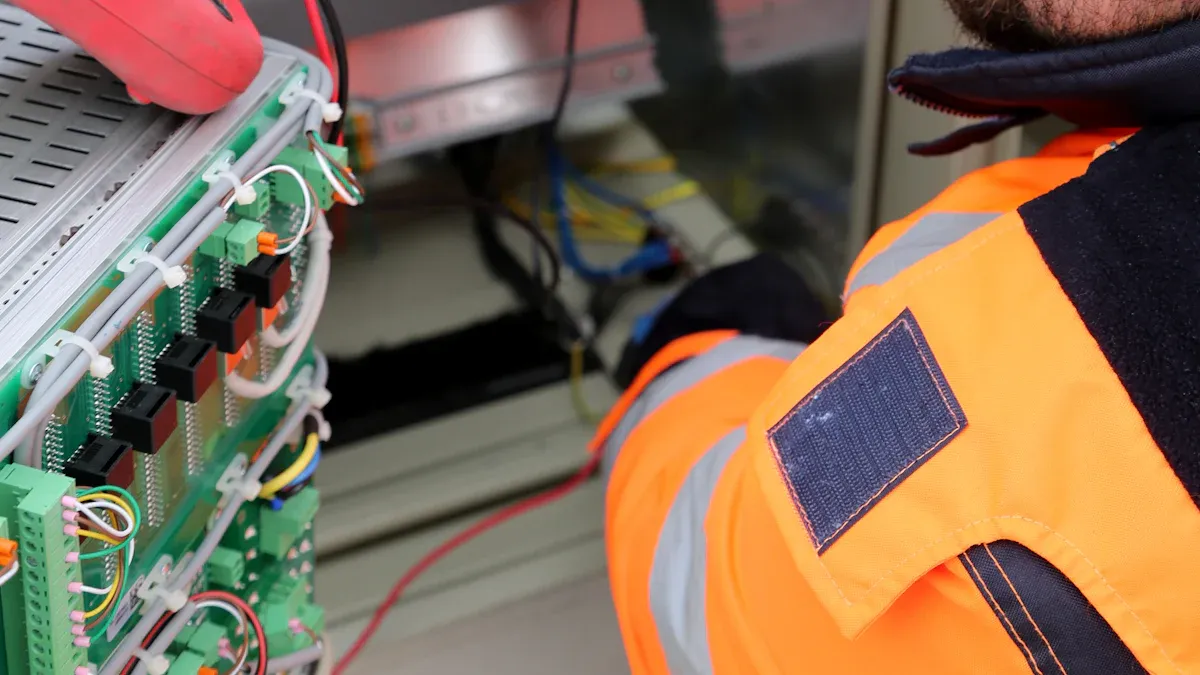
You need to choose the right circuit breaker size for your electric vehicle charging pile. If you pick a breaker that is too small, it will trip often. If you pick one that is too large, it may not protect your system. Use the following table to match your charger’s amperage to the correct breaker size:
| EV Charger Amperage | Recommended Breaker Size |
|---|---|
| 32A | 40A |
| 40A | 50A |
| 48A | 60A |
| 50A | 70A |
| 80A | 100A |
Always check your charger’s label and follow the manufacturer’s instructions. This helps you avoid overloads and keeps your charging safe.
Grounding and GFCI
Grounding and GFCI protection keep you safe from electric shock. The National Electrical Code (NEC) requires strict grounding and bonding. This means any extra electricity will move away from you if something goes wrong. GFCI devices cut power fast if they sense a ground fault. You must use GFCI protection for outdoor or damp locations.
| Requirement Type | Description |
|---|---|
| Grounding | The NEC mandates strict grounding and bonding protocols to ensure that excess electricity is safely directed away from users during a malfunction. |
| GFCI Protection | GFCIs are required for all outdoor charging stations and those in damp areas to prevent electric shock hazards by cutting power instantly in case of ground faults. |
- GFCIs detect ground faults and stop power to prevent shocks.
- They are important for high-voltage chargers, especially outside or in wet places.
- If your charger does not have a built-in GFCI, you need a separate one.
Tip: Always test your GFCI device each month to make sure it works.
Ventilation Needs
Proper ventilation protects your electric vehicle charging pile from overheating. When you charge your car, the system makes heat. If you do not remove this heat, it can build up and cause problems. Studies show that overheating can lead to thermal runaway or even fire. Air cooling is a simple and low-cost way to keep your charger safe.
| Study | Findings |
|---|---|
| Huang et al. (2020); Ye et al. (2021) | Overheating can lead to safety hazards such as thermal runaway and fire if Joule heat is not removed quickly. |
| Akbarzadeh et al. (2021); Saechan and Dhuchakallaya (2022); Z.Q. Zhang et al. (2022) | Air cooling is commonly used for heat dissipation due to its simple structure and low cost. |
| Bais et al. (2022); Tran et al. (2022); Y.Q. Wang et al. (2022) | Heat accumulation and temperature rise can reduce battery performance and accelerate aging. |
You should keep the area around your charger clear. Make sure vents are not blocked. Good airflow helps your charger last longer and work better.
Breaker Selection
Load and Rating
Picking the right circuit breaker helps keep your system safe. You need to think about a few things before you choose. Here are the main points to check:
- Power Requirements: Look at your charger’s power rating. If it uses more power, you need a bigger breaker.
- Wiring Size: Make sure your wires are thick enough. Bigger wires can carry more electricity.
- Continuous Load Factor: The NEC says your breaker should be 125% of the charger’s load.
- Future Expansion: Think about adding more chargers later or getting a faster one.
- Electrical Panel Limitations: Your panel must have room and enough power for the new breaker.
- Local Electrical Codes: Always follow your city or state’s rules for electrical work.
- Professional Assistance: Ask a certified electrician for help. This makes sure everything is safe and follows the rules.
Tip: Do not guess the breaker size. Always check the charger’s label and use the NEC rules.
Fast Charging Considerations
Fast charging stations use a lot more power than regular ones. The National Electrical Code has strict rules for these chargers. You must use the right breaker and wires to handle the extra power.
| Requirement | Description |
|---|---|
| GFCI Breaker for NEMA 14-50 | Needed to stop shocks, especially if water touches the circuit. |
| Dedicated Circuit for Level 2 | Must be rated at least 125% of the charger’s output to be safe. |
| 3-Phase AC Input for DC Fast | Needed for high power, often using a 600A or bigger breaker. |
Level 2 chargers need their own dual-pole circuit and 208 or 240 volts. DC fast chargers use 3-phase AC input and can give 150kW to 350kW of power. These need much bigger breakers and special wires. Always plan for these needs before you put in a fast charger.
Note: Only let a professional install fast charging stations. This keeps you, your property, and your electric vehicle safe.
Installation
Professional vs. DIY
You have a big choice when you put in an EV charging station. You can hire a professional or do it yourself. Licensed electricians know how to work with high-voltage systems. They follow safety rules and local codes. This helps keep your home safe from fire. Most makers want a professional to install the charger. This keeps your warranty safe. If you do it yourself, you might break the law. You could lose your warranty and make accidents more likely.
| Aspect | Professional Installation | DIY Installation |
|---|---|---|
| Compliance | Follows local codes and standards | Might not follow legal rules |
| Safety Assurance | Electricians lower the risk of accidents | More risk because of less skill |
| Warranty Protection | Keeps manufacturer warranties | Warranties can be lost |
Tip: Pick a professional for safe and proper installation.
Wiring and Connections
Good wiring and strong connections help your charging station work well. Use certified and high-quality equipment. Make sure all parts meet safety standards. Put your charger in a bright and easy-to-reach spot. Place it close to parking spaces. Check cables and connectors often for damage. Keep the area clean and free of things you can trip on. Put up safety signs and ground the station the right way.
- Use certified charging gear and materials.
- Look at cables and connectors for damage.
- Make sure your home’s system can handle Level 2 charging.
- Do regular checks to keep things safe.
Inspection Steps
You need to check your charging station before and after you install it. Look at the cable jacket and connector latch. Make sure there is no dirt or water in the inlet. Check that the lights work right. Each month, look for color changes at the plug, warm spots on the outlet, and loose hardware. Test the GFCI or RCD with the test button. Remove any water or rust you find.
| Check Interval | Tasks | Replace/Service if you see… |
|---|---|---|
| Pre-charge (Every Use) | Cable jacket is good, Connector latch is tight, No dirt or water in inlet, Lights are normal | Cracked cable, Loose connector, Dirt or water present, Fault lights |
| Monthly | Look for color changes at plug, Feel for warm spots on outlet, Check hardware for looseness, Remove things you can trip on, Look for water, Test GFCI/RCD | Burn marks or melted plastic, Loose wall mount or bracket, Water or rust that won’t go away, GFCI/RCD won’t work right |
Plan a yearly check with a licensed electrician. They will tighten connections, test safety features, and update software. This keeps your charging station safe and up to date.
Maintenance
Routine Checks
You should check your circuit breaker and charging station often. Doing this helps you find problems early and keeps things safe. Experts say you should look at your setup every month. Look for damage, test the electrical parts, and keep everything clean. Use this table to help you know what to check:
| Maintenance Task | Description |
|---|---|
| Visual Inspection | Look for cracks, broken parts, or signs of too much heat. |
| Electrical Testing | Do tests like insulation resistance, contact resistance, hi-pot, and timing tests. |
| Lubrication and Cleaning | Oil moving parts and clean contacts so everything works well. |
| Calibration and Adjustment | Make sure settings are right so it works and finds problems. |
| Documentation and Record-Keeping | Write down what you check and find so you remember later. |
Keep a log of your checks. Write down what you see and any fixes you make. This helps you notice patterns and plan for future checks.
Signs of Issues
You need to know the warning signs that mean your circuit breaker or charger has a problem. If you see any of these, stop using the charger and call an expert. Some signs are:
- The circuit breaker keeps turning off
- The charger will not turn on, even after you try again
- You keep getting error messages about charging problems
- You smell something burning or feel heat near the charger or outlet
Do not ignore these problems. Acting fast can stop bigger problems and keep your family safe.
Upgrades
Sometimes you need to get a new circuit breaker or charging equipment. Upgrades help you follow new safety rules and use more power. Watch for these signs:
| Indicator | Description |
|---|---|
| Frequent breaker tripping | Shows your system cannot handle the power. |
| Outdated panel | Might not be safe or strong enough for today’s needs. |
| Increased power needs | More chargers mean you need more electricity. |
Upgrade if your panel does not meet the rules anymore. A licensed electrician can check for bad wiring or recalled parts. If you want to add more chargers or charge faster, make sure your system can handle it. Upgrading keeps your charging station safe and ready for the future.
Workplace Charging
Power Demand
You need to think about how much power your chargers use. Level one chargers need a 20 Amp breaker. You should not use more than 80% of its power. This gives you about 1.9KW for charging. Fast chargers use much more power. If you have five fast chargers, you need a 750KVA service. Ten chargers need a 1500KVA transformer. Fifteen chargers need a 2000KVA transformer. Level three chargers use three-phase power. They usually use between 50KW and 180KW. Pick circuit breakers and transformers that fit your needs.
- Level one chargers: 20 Amp breaker, 1.9KW charging power
- Five fast chargers: 750KVA service
- Ten chargers: 1500KVA transformer
- Fifteen chargers: 2000KVA transformer
- Level three chargers: three-phase, 50KW–180KW
Tip: Check your building’s power before adding new chargers.
Multiple Stations
If you want more than one charging station, plan for safety and space. Put chargers where air can move around them. Use the right wires and circuit breakers for each charger. Ground every charger to help stop shocks. Put up signs and instructions so people know what to do. Teach workers how to use the chargers safely. Check and fix the chargers often. Leave 5 to 6 feet between each station. Outdoor chargers should not be close to the building. Make a plan to keep everything working well.
- Well-ventilated area
- Proper wiring and breakers
- Grounding for each charger
- Clear signage and instructions
- Employee training
- Regular inspections and maintenance
- 5–6 feet between stations
- Outdoor stations away from buildings
Employee Safety
You need to keep workers safe when they use charging stations. The table below lists important safety steps:
| Safety Measure | Description |
|---|---|
| Install chargers in a well-ventilated area | Keeps air moving and stops overheating |
| Use properly sized wiring and circuit breakers | Stops too much power and keeps things safe |
| Ground all chargers properly | Helps stop electric shock |
| Provide clear signage and instructions | Shows workers how to use chargers safely |
| Train employees on safe usage | Makes sure everyone knows what to do |
| Conduct regular inspections and maintenance | Keeps chargers safe and working |
| Installed by a qualified electrician | Follows safety rules |
| Located away from flammable materials | Lowers the chance of fire |
| Equipped with GFCIs | Protects people from electric shock |
| Safety features to prevent overcharging/overheating | Keeps chargers and cars safe |
| Clearly marked voltage and amperage | Shows power details for safe use |
Note: Following these steps and checking often keeps everyone safe.
Home Charging
Load Capacity
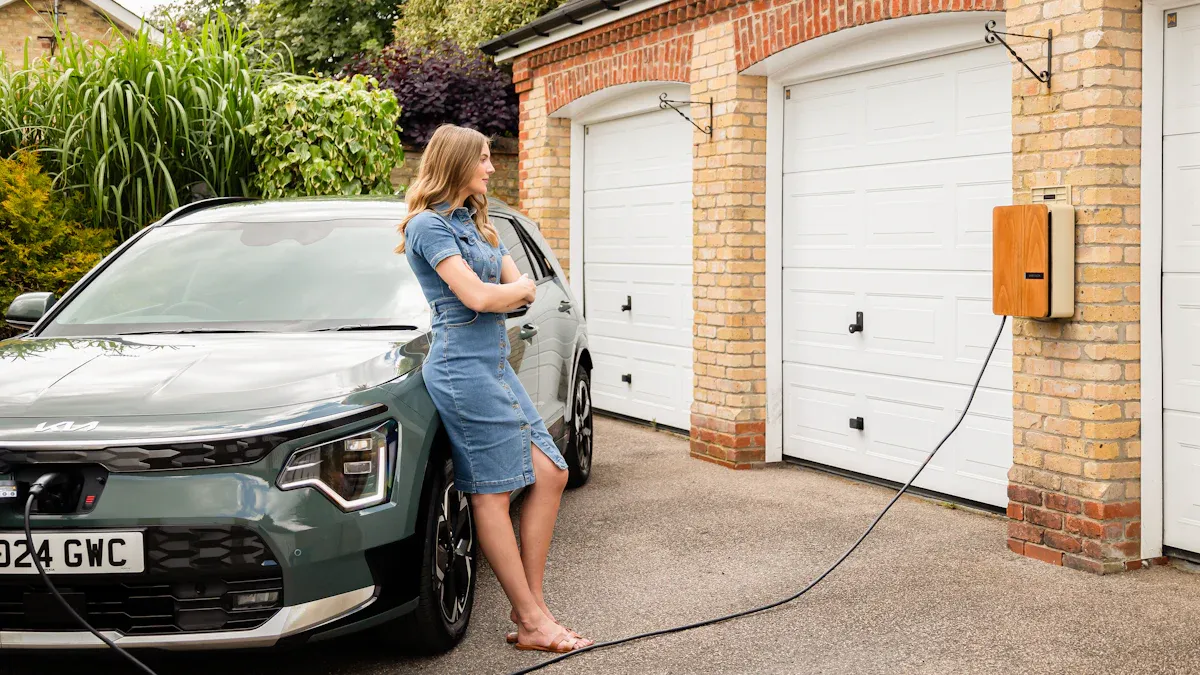
Check how much electricity your home uses before adding an EV charger. This helps you not overload your circuits. Look at your lights, appliances, and heating or cooling. A licensed electrician can do a load calculation for you. This shows if your panel can handle a Level 2 charger.
- Do a load calculation to know your power needs now and later.
- Have an electrician check if your panel is big enough.
- Find out how much power your home already uses.
- Different chargers need different amounts of power, so match the amperage.
- Make sure your home has enough power for safe charging.
Tip: Always let a licensed electrician do the load check and install your charger. This keeps your home safe.
System Integration
You want your EV charger to work well with your home’s system. Think about how far you drive each day. This helps you pick the right charger size. Most homes have 100 or 200 amp service. Make sure your system can handle the extra power from a Level 2 charger.
- Pick a charger with Wi-Fi or energy tracking if you want.
- Make sure your home’s power can support the charger’s needs.
- Get permits if your city or state asks for them.
- Plan ahead by using wiring that can handle more power later.
Here are the steps you should follow:
- Ask an electrician to check your home’s power.
- Get any permits you need from your city or state.
- Think about using stronger wires for future upgrades.
Note: Most EV chargers need their own circuit with higher amperage. Always talk to a pro before making changes.
Family Safety
You want your family to be safe when charging your EV at home. Keep the area around your charger and car clear. Move away anything that can burn or cause someone to trip. Use a surge protector to stop damage from power spikes. Put in a fuse board just for your charging station. This makes things even safer.
- Unplug your EV when it is done charging or use smart charging.
- Have a pro install your charging station.
- Check your charging gear often for damage or wear.
| Safety Step | Why It Matters |
|---|---|
| Clear area of clutter | Stops fires and tripping |
| Use surge protector | Guards against power surges |
| Dedicated fuse board | Makes charging safer |
| Professional installation | Keeps setup safe and working well |
| Regular inspection | Finds problems early |
😊 Keeping your charging area safe helps protect your family and your home.
Common Risks
Overload
You can have problems if you overload your circuit breaker when charging your EV. Some people plug in their car while using big things like a hot tub on the same circuit. Others use smart chargers with old panels that cannot handle extra power. Some put in strong charging stations, like for a Tesla, on circuits that are not made for high loads. These choices make your system work too hard.
- Plugging in your EV with other big appliances on the same circuit
- Using smart chargers with old electrical panels
- Putting high-power stations on weak circuits
The National Electrical Code (NEC) says not to use more than 80% of your breaker’s power for charging. If you do not follow this rule, your breaker can get too hot or stop working. You might see lights flicker, breakers trip, or smell something burning. Always check your setup before you charge your car.
⚡ Tip: Put your EV charger on its own circuit. This helps stop overload and keeps your home safe.
Skipped Inspections
You can be in danger if you skip regular checks. It is important to look at DC fast chargers and all charging gear often. You need to check cables, connectors, and the charger itself. If you do not check, you might miss signs of damage. Bad wires or broken parts can go unseen.
- Regular checks keep your charging station safe.
- Inspections help you find problems before they get worse.
- Hidden damage can make things stop working.
- Bad wiring makes accidents more likely.
- Safety problems can build up and cause big trouble.
Make a plan to check your charger. Look for cracks, loose wires, and hot spots. Fix problems right away so they do not get worse.
🛠️ Note: Checking every month helps you find problems early and keeps your family safe.
Non-Certified Equipment
Using chargers that are not certified is risky. You might save money, but you could lose much more. Non-certified chargers may not have good insulation or safety parts. They can get too hot, short out, or hurt your car. Insurance might not pay for damage from these chargers.
| Risk Type | Description |
|---|---|
| Electrical Safety | Non-certified chargers may not have good insulation, which can cause shocks or fires. |
| Fire Hazard | Bad chargers can get too hot or short out, which can start fires. |
| Damaged Vehicle | Using non-certified chargers can hurt your car’s battery or other parts. |
| Insurance Liability | Insurance may not pay for problems caused by non-certified chargers. |
Pick chargers with UL or other safety marks. This helps you avoid big mistakes and keeps your charging station safe.
🚗 Always use certified chargers to protect your car, your home, and your peace of mind.
Best Practices
Safety Checklist
You want your electric vehicle charging station to be safe. A safety checklist helps you find problems early. It also helps you avoid risks. Use the table below to help with your checks and setup:
| Item | Description |
|---|---|
| GFCI Breaker | Put in a ground fault circuit interrupter (GFCI) breaker or outlet. |
| Dedicated Circuit | Use a circuit only for your charger. Do not use it for other things. |
| Connector Type | Choose connectors and outlets that match your charger’s amperage. |
| Panel Lockout | Turn off the main breaker. Use a lockout/tagout device before you work. |
| Wire Gauge | Pick wire gauge that fits the circuit’s amperage. This helps stop fires. |
| Visual Inspections | Look at cords, connectors, and the station every month for damage. |
| Test GFCI | Press the GFCI test button each month. Make sure ground fault protection works. |
Tip: Print this checklist and keep it near your charging station. This helps you remember what to do.
Resources
You need good resources to learn about electric vehicle charging safety. Trusted sources help you follow new rules and best practices. Here are ways to keep your charging setup safe:
- Use certified charging stations that follow safety rules.
- Check charging cables, connectors, and ports for damage before you use them.
- Do not use non-grounded plugs. This lowers the risk of electric shock.
You can also do these steps to learn more about safety:
- Check certification labels on your charging station. Read the documentation.
- Follow public charging standards for low voltage and working together.
- Look at all charging parts before you start charging.
Note: You can ask a licensed electrician for help. You can also check official websites like the National Fire Protection Association (NFPA) and Underwriters Laboratories (UL) for updates.
You help keep your EV charging station safe. Always follow safety rules and use certified equipment. Check your charging setup often and use a safety checklist. Ask a licensed electrician if you need help.
- Pick circuit breakers that are certified.
- Look at your charging station often for problems.
- Follow the rules from your city and the country.
Safety is important for everyone with an EV. Make good choices to keep your home, work, and family safe.
FAQ
What size circuit breaker do you need for an EV charger?
You need to match the breaker size to your charger’s amperage. Most Level 2 chargers use a 40A or 50A breaker. Always check your charger’s label and ask a licensed electrician for advice.
Can you install an EV charger yourself?
You should hire a licensed electrician for installation. Professionals know safety rules and local codes. DIY installation can break your warranty and increase the risk of accidents.
How often should you inspect your EV charging station?
You should inspect your charging station every month. Look for damage, loose wires, and signs of overheating. Schedule a yearly check with a licensed electrician for extra safety.
What does a GFCI breaker do for EV charging?
A GFCI breaker protects you from electric shock. It shuts off power if it senses a ground fault. You need a GFCI for outdoor or damp locations to keep your charging safe.
See also
How to Prevent Shocks with RCD for Electric Vehicle Charging
Wall box fast electric charging station
How to Choose the Right Circuit Breaker for Your Electric Vehicle Charging Setup
What You Need to Know About Commercial EV Charging Costs
High quality RCD for electric vehicle chargers