You can stop electric shock when charging an EV by using an RCD for Electric Vehicle Charging. An RCD turns off the power fast if it finds a problem, so you stay safe. Safety rules like BS 7671 say you must use RCDs at charging spots and tell you which type to pick. If you follow these rules and pick the right device, you make charging at home and in public much safer. RCDs are an easy and trusted way to keep you and your things safe every time you charge.
Key Takeaways
- Use an RCD to help stop electric shocks when you charge your electric vehicle. – Pick the right RCD type, usually Type B, so it can find both AC and DC faults for better safety. – Follow safety rules like BS 7671 and IEC standards to make sure your charging setup is legal. – Have a certified electrician put in your RCD and charging station to avoid mistakes and get good protection. – Test your RCD every month with the test button and have a full check every year to keep your system safe and working well.
RCD Basics
What Is an RCD
You need to know what an RCD is before you can use it safely. An RCD, or Residual Current Device, is a safety switch that protects you from electric shock. It checks the flow of electricity in a circuit. If it finds a problem, it quickly shuts off the power. Dr. Gottfried Biegelmeier invented the first RCD in 1957. His work helped set the standards for electrical safety that you follow today.
RCDs come in different types and sizes. You can find them in homes, public places, and even in charging stations for electric vehicles. Most RCDs for personal safety trip at 30 mA or less. This level helps protect you from serious harm. Some RCDs protect equipment and trip at higher levels, like 100 mA or 300 mA. Standards such as BS EN 61008 and BS EN 62423 guide how RCDs should work and how sensitive they need to be.
Tip: Always check the label on your charging station or breaker box to see if you have an RCD installed.
How RCDs Prevent Shocks
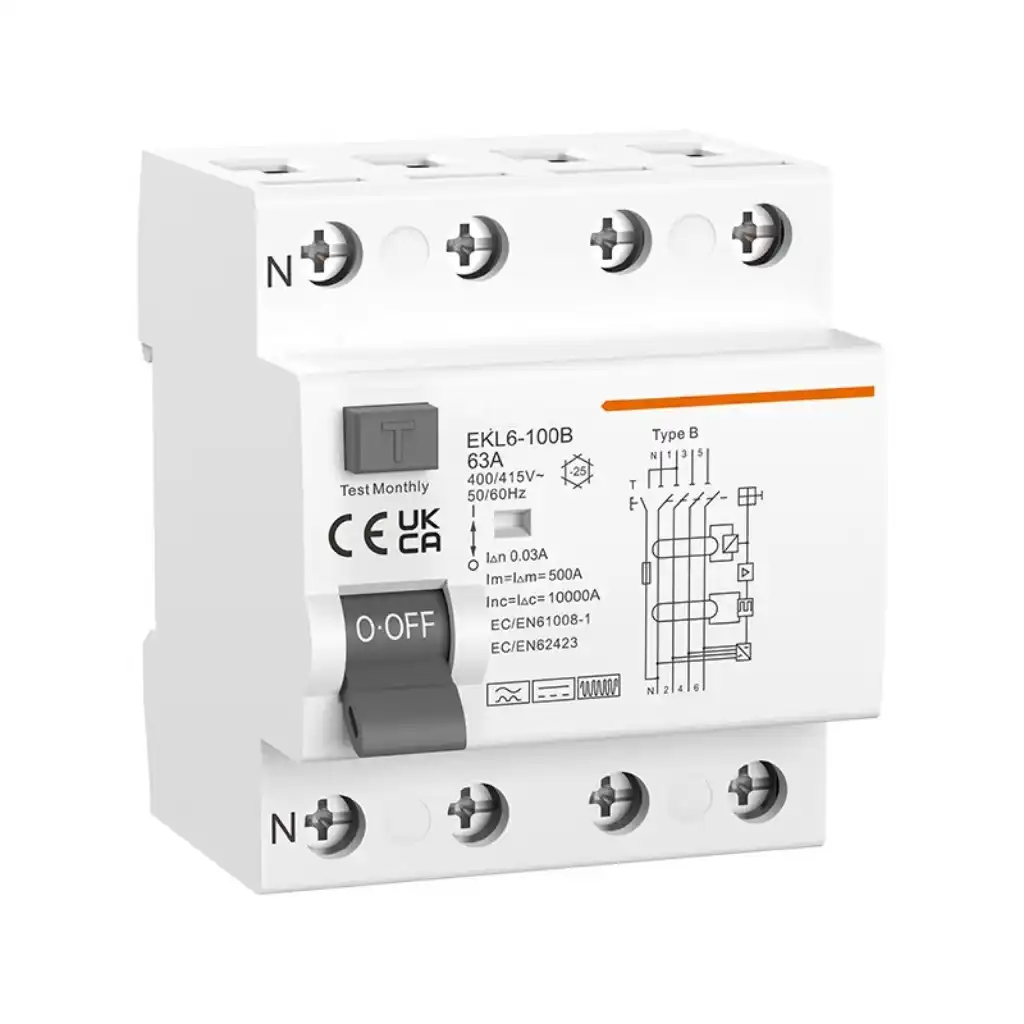
You stay safe during charging because RCDs watch for dangerous currents. They use a special transformer to sense the difference between the current going out and the current coming back. If the difference is too high, the RCD cuts the power in less than 300 milliseconds. This quick action stops you from getting a shock.
Here’s how RCDs work in simple steps:
- The RCD measures the current in the live and neutral wires.
- If the current is not equal, it means some electricity is leaking, possibly through you or another path to ground.
- The RCD trips and disconnects the circuit.
Modern systems, like RCD for Electric Vehicle Charging, face new challenges. Devices such as EV chargers and solar panels can create complex currents, including DC and high-frequency signals. Some RCDs may not detect these currents well. That is why you must choose the right type of RCD for your setup. Studies show that RCDs work well in most cases, but certain high-frequency or DC currents can affect their performance. You should always test your RCD regularly to make sure it works as expected.
| RCD Type | Detects AC? | Detects DC? | Best Use Case |
|---|---|---|---|
| AC | Yes | No | Simple home circuits |
| A | Yes | Some | EV charging, appliances |
| [B | Yes | Yes](https://www.onesto-ep.com/blog/what-makes-type-b-rcd-essential-for-ev-chargers/) | PV systems, advanced chargers |
Note: Using the correct RCD for Electric Vehicle Charging helps protect you and your equipment from electric shock and fire hazards.
RCD for Electric Vehicle Charging
Why RCDs Are Needed
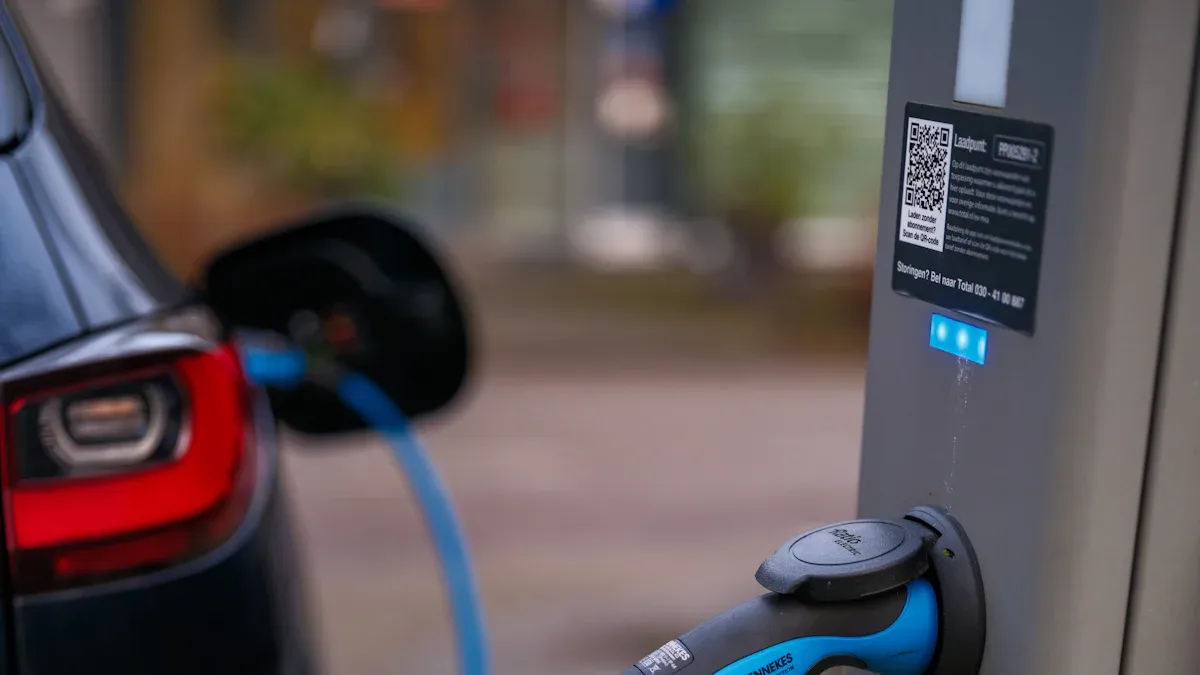
You need an RCD for Electric Vehicle Charging to stay safe. When you charge an electric vehicle, a lot of current moves through the cables. If something goes wrong, electricity can leak out. This can cause a shock or even start a fire. An RCD for Electric Vehicle Charging can sense this leak and turn off the power fast, before you get hurt.
Today’s rules say you must use RCDs that trip at 30 mA or less for most charging spots at home or in public. This low setting helps keep you from getting badly hurt. The RCD has to turn off all live wires, not just one. This is important because it makes sure no dangerous voltage is left in the system. If you use the wrong RCD or skip this step, you could get shocked or your car and charger could get damaged.
Here is a table that shows what the newest rules say about RCDs for EV charging:
| Aspect | Details |
|---|---|
| Regulation Reference | BS 7671:2018 and Amendment 2 (proposed) |
| RCD Requirement for EV Charging | Mandatory use of RCDs disconnecting all poles for all EV charging equipment |
| RCD Type | Type B RCD required unless the EV charger provides DC fault current protection, then Type A or Type F is acceptable |
| Residual Current Threshold | 30 mA RCD protection generally required for socket-outlets rated 32A or less, including typical domestic EV chargers |
| Regulation Supporting 30mA Threshold | Regulation 411.3.3 mandates 30 mA RCD protection for socket-outlets ≤32A unless a risk assessment states otherwise |
| Reason for All-Pole Disconnection | No selectivity with upstream non-delay RCDs, so all poles must be disconnected to ensure safety |
| Additional Notes | EV chargers often have built-in RCDs; separate RCD protection recommended for PV and EV circuits to avoid nuisance tripping |
| RCD Tripping Characteristics | 30 mA RCDs trip typically between 18-23 mA; must not trip below half rated current (15 mA) to avoid nuisance tripping |
| Protective Conductor Current Limit | Recommended to be limited to 30% of RCD rating (9 mA for 30 mA RCD) to prevent unwanted trips |
Tip: Always check your charging station for the right RCD type. Make sure it turns off all live wires.
Key Safety Standards
You must follow strict safety rules when you use an RCD for Electric Vehicle Charging. These rules help stop electric shocks and keep your charging area safe. International rules like IEC 61851 tell you what kind of RCD to use and how sensitive it should be.
- IEC 61851 gives the main safety rules for EV charging.
- Type A and Type B RCDs are used a lot. Type B is best for finding both AC and DC leaks.
- Type B RCDs protect you from tricky faults that can happen with new EV chargers.
- Other important rules are IEC 62752, UL 2231, IEC 62955, and ISO 5474. These explain how RCDs should work in EV charging stations.
- Some RCDs can find leaks as small as 5 mA.
- Type A RCDs may not find DC leaks above 6 mA, so Type B is safer for most EV charging.
- If you follow these rules, your charging station will keep you safe from electric dangers.
Note: Always pick an RCD for Electric Vehicle Charging that meets the newest rules. This gives you the best safety from shocks and faults.
Types of RCDs

Type A, Type B, and Type F
You need to know the differences between Type A, Type B, and Type F RCDs before you choose one for your EV charging setup. Each type detects different kinds of electrical faults. Type A RCDs can sense both standard AC faults and pulsating DC currents. They work well for most home appliances and can handle up to 6 mA of smooth DC leakage. Type F RCDs go a step further. They can detect composite currents with frequencies up to 1000 Hz and tolerate up to 10 mA of smooth DC leakage. Type B RCDs offer the highest level of protection. They can detect complex faults, including high-frequency and smooth DC leakage up to 10 mA. This makes Type B RCDs the best choice for EV chargers, especially if you have more than one charging point or use high-power chargers.
Here is a table to help you compare these RCD types for EV charging:
| Parameter | Type A RCD (or F) + RDC-DD 6mA | Type B RCD |
|---|---|---|
| Max DC leakage tolerated | 6 mA (Type A) / 10 mA (Type F) | Up to 60 mA |
| Max EV charging points downstream | 1 EV station | Multiple EV stations |
| Risk of blinding upstream RCDs | High | Low |
| Continuity of service under DC leakage | Nuisance tripping likely | Good |
| Suitability for upstream installation | Limited | Recommended |
| Compliance with IEC standards | IEC 62955 | IEC 62423 |
Tip: If you plan to install more than one EV charger, always pick a Type B RCD for better safety and fewer false trips.
Choosing the Right RCD
You must select the correct RCD to keep your EV charging safe and reliable. Start by checking your charger’s manual and local regulations. Most EV charging stations need a 30 mA RCD to protect against shocks and fire risks. For AC charging up to 22kW, you should use either a Type B RCD or a Type A/F RCD with RDC-DD 6mA DC protection. This matches the latest safety standards like IEC 61851-1.
When you choose an RCD, follow these steps:
- Make sure the RCD can detect both AC and DC faults.
- Check that it meets BS 7671 and IEC standards.
- Look for a test button so you can check the RCD works.
- Use special testers to verify the earth connection and RCD function.
- Avoid using PME (TN-C-S) earthing unless you have extra protection.
Note: Picking the right RCD and testing it often helps you avoid shocks and keeps your EV charging station safe every time you plug in.
Installation and Maintenance
Checking for RCD Protection
You need to check if your EV charger has the right RCD protection. Look at your charging station or breaker box for a label. The label shows the RCD type and rating. Many stations have a test button. Press the button to see if the power turns off. This helps you know the RCD is working.
To keep your system safe, follow these steps:
| Inspection Protocol / Measurement | Description | Numerical Assessment / Parameter |
|---|---|---|
| Continuity Check of Protective Conductor | Checks earth wiring is complete | 200mA test current |
| Insulation Resistance Measurement | Finds leaks in insulation | Up to 1000V test voltage |
| Earth Resistance Measurement | Checks if grounding is effective | Numerical earth resistance value |
| RCD Tripping Time and Current Tests | Measures how fast and at what current RCD trips | Records tripping time and current |
| Automatic Sequential Testing (AUTO function) | Runs all tests in order and gives pass/fail results | OK/NOT OK symbols |
These checks follow world safety rules. They help you find problems early.
Installation Tips
Always use a certified installer for your EV charger. Installers who follow local codes, like the NEC, keep your system safe. They use RCDs that trip fast to protect you from shocks and fires. Make sure your charging station is weatherproof if it is outside.
Here are mistakes you should avoid:
- Using the wrong RCD type for your charger
- Not checking for all-pole disconnection
- Ignoring local codes or instructions
- Not weatherproofing outdoor stations
Tip: A safe charging station always has a working RCD for Electric Vehicle Charging and good weather protection.
Regular Testing
You need to test your RCD often to keep your charging station safe. Press the test button every month. Get a full inspection at least once a year. In rainy or wet places, check more often because water can cause problems.
Testing often helps you find issues before they get dangerous. Studies show that charging stations with sensitive RCDs keep you safe, even in bad weather. Most accidents happen when equipment gets old or people skip maintenance. Smart systems can watch for leakage, temperature, and humidity to help you stay safe.
Note: Regular testing and care lower the risk of shocks and fires. They also help your charging station last longer.
You can prevent electric shocks by following a few simple steps. Always check your RCD for Electric Vehicle Charging before you plug in. Pick the right type and test it often. Experts use tools like the Fluke FEV350, which meets strict safety standards and tests many RCD types. This device checks tripping time, earth resistance, and more to keep your charging station safe.
| Test Feature | What It Checks |
|---|---|
| RCD Tripping Time | Fast power shut-off |
| Earth Resistance | Good grounding |
| Insulation Resistance | No leaks in wiring |
When you use the right RCD and keep it in good shape, you make every charging session safer. RCDs work well and give you peace of mind.
FAQ
What does the test button on my RCD do?
The test button lets you check if your RCD works. Press it once a month. If the power shuts off, your RCD protects you. If nothing happens, you need to replace the RCD.
Can I install an RCD for EV charging by myself?
You should not install an RCD by yourself. Always hire a certified electrician. This keeps you safe and makes sure your charging station meets all safety rules.
How often should I test my RCD?
Test your RCD every month. Use the test button. Schedule a full inspection by a professional once a year. This helps you catch problems early.
What type of RCD do I need for my EV charger?
Most home EV chargers need a Type B RCD. Some chargers work with Type A or Type F if they have extra DC protection. Always check your charger’s manual and local codes.
Tip: If you are not sure which RCD to use, ask a licensed electrician for advice.
The following information may be of interest to you
High quality RCD for electric vehicle chargers
How to Identify and Fix RCD Tripping Issues
Breaking Down the Cost of Residual Current Circuit Breakers in 2025
What Makes an RCD Trip Without Triggering the MCB
What circuits need RCD protection

Discover more from SENTOP Electrical Co., Ltd
Subscribe to get the latest posts sent to your email.