

You need circuit breaker protection to keep laboratory precision equipment safe. It helps the equipment work well. Two-pole breakers are best for labs. They control both hot wires in lab setups. GFEP and GFCI protection stop electrical shocks. They also protect against water dangers. You should check amp ratings before use. Look at things like humidity too. Check IP ratings to avoid trouble. Good breaker coordination stops full shutdowns if there is a problem.
Key Takeaways
- Pick two-pole circuit breakers for lab setups. They control both hot wires. This makes things safer.
- Pick thermal-magnetic or electronic circuit breakers for sensitive equipment. These types react fast to electrical problems.
- Always check the amp ratings before you install. Also, look at environmental factors. This makes sure the breaker fits the lab. It helps stop equipment damage.
- Look for safety features like overload and ground fault protection. These features help stop accidents. They protect equipment and people.
- Test and maintain circuit breakers often. This keeps them working well. It also keeps the lab safe.
Laboratory Precision Equipment Protection
Sensitivity Needs
You need to pick circuit breakers that fit the sensitivity of laboratory precision equipment. Sensitive devices can get hurt by even small electrical issues. Using the wrong breaker might break your equipment or make it stop working.
The table below tells you what to check for sensitive circuit breaker protection:
| Requirement Type | Description |
|---|---|
| Interrupting Capacity | Choose breakers with high interrupting capacity. This keeps equipment safe from strong surges. |
| Terminal Type | Use screw-terminal connections. These stay stable if equipment shakes. |
| Spacing Requirements | Leave at least 1 mm between thermal circuit breakers. This stops them from getting too hot. |
| Temperature Compensation | Pick breakers with temperature compensation. This helps them work well when lab temperatures change. |
Tip: Always read the technical data sheet for each breaker. Make sure it fits the needs of your laboratory precision equipment.
Reliability and Safety
You want circuit breakers that work well to keep laboratory precision equipment safe. Good breakers help stop accidents and keep experiments going. Safety features protect people and equipment.
Here are some important safety features to look for:
- Overload protection shuts off the breaker if equipment uses too much power.
- Short circuit protection stops power if a short happens.
- Ground fault protection finds stray currents and stops shocks.
- Arc fault protection finds sparks that could cause fires.
- Under voltage and overvoltage protection keep voltage safe for sensitive devices.
- Remote monitoring lets you check and control breakers from far away.
- Mechanical interlocks stop you from turning on the wrong breaker by accident.
- Dual rating means the breaker works in different places.
- Diagnostic features help you test and check breakers often.
You should also see if the breaker meets important standards. The table below lists some key standards for laboratory circuit breakers:
| Standard | Description |
|---|---|
| IEC 60947-2 | Sets rules for low-voltage circuit breakers. |
| UL 489 | Covers safety and overcurrent protection for molded-case breakers in the US and Canada. |
| ANSI C37 | Applies to medium-voltage breakers for power systems. |
| GB/T 14048.2 | Like IEC 60947-2, but used in China. |
Note: Laboratory safety codes may ask for extra features. For example, you might need emergency stop functions or overvoltage protection in automated systems. Always check local codes before picking a breaker.
When you pick the right circuit breaker, you keep laboratory precision equipment safe from harm and make the lab safer for everyone.
Circuit Breaker Types
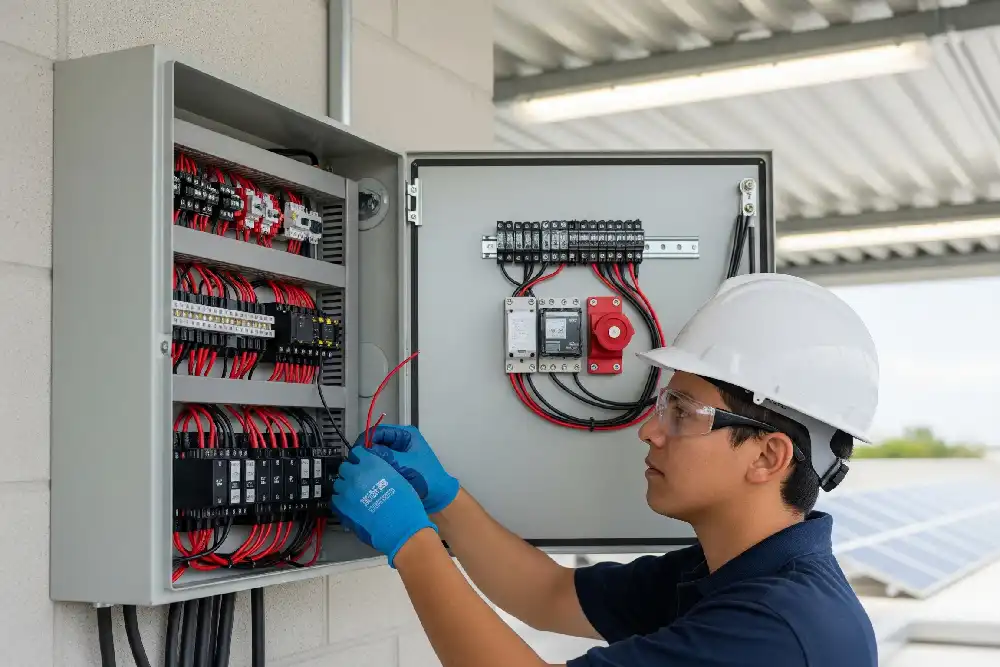
When you pick circuit breakers for laboratory precision equipment, you should know the different types. Each type helps protect sensitive devices in labs in its own way.
Thermal
Thermal circuit breakers use heat to find and stop electrical problems. These breakers are common in simple electrical systems. They have a bimetallic strip that bends when it gets hot from too much current. When the strip bends, it trips the breaker and stops electricity.
- Thermal tests show how these breakers handle heat.
- When current flows, the breaker gets warmer. The temperature can go up to 40°C if the current is below 800A.
- If the current is 800A or more, the temperature can reach 50°C.
Thermal breakers are good for slow and steady overloads. But they might not act fast enough for quick surges. Sensitive devices in labs need faster protection, so thermal breakers alone may not be enough.
Thermal-Magnetic
Thermal-magnetic circuit breakers use both heat and magnetism to trip. The thermal part works for slow overloads. The magnetic part acts quickly for short circuits. This gives better protection for laboratory precision equipment.
| Advantages | Disadvantages |
|---|---|
| Fast magnetic response to short circuits | Sensitive to ambient temperature changes |
| Slower thermal response to overloads | Variable reset time after tripping |
| Cost-effective and reusable after tripping | More complex than single-mechanism breakers |
- These breakers protect against overloads and short circuits.
- You can reset them after they trip, which saves time and money.
- The dual action makes them a good choice for laboratory precision equipment.
- They are more complex and cost a bit more than single-mechanism breakers.
Magnetic-Hydraulic
Magnetic-hydraulic circuit breakers use a magnetic field and fluid to trip. You see these breakers where reliability and accuracy are very important.
| Feature | Description |
|---|---|
| Reliability | These breakers stop electrical faults with high reliability. |
| Safety | They handle overcurrent well and keep labs safe. |
| Robustness | The design uses magnetic fields and hydraulic damping for accurate tripping. |
| Application | You find them in places like data centers and hospitals where power must stay on. |
You can use magnetic-hydraulic breakers for laboratory precision equipment if you need very accurate and reliable protection. They work well in labs with sensitive or expensive devices.
Electronic
Electronic circuit breakers use sensors and microchips to watch and control electricity. These breakers have advanced features for modern labs.
| Benefit | Description |
|---|---|
| Advanced Monitoring Capabilities | These breakers watch the load current and act fast to stop overcurrent. |
| Compact Design | They take up less space in your panel, which helps in crowded lab setups. |
| NEC Class 2 Compliance | Some models make it easier to install larger power supplies safely. |
| Enhanced Safety and Uptime | They improve safety and keep your lab running with reliable protection and diagnostics. |
You may want electronic breakers for laboratory precision equipment that needs the best monitoring and fast response.
Best Choice for Laboratory Precision Equipment
You need to choose the right breaker type for your lab. For most laboratory precision equipment, thermal-magnetic or electronic circuit breakers are best. They respond quickly to short circuits and give steady protection from overloads. Electronic breakers add features like remote monitoring and diagnostics, which help keep your lab safe and working.
Tip: Always use two-pole circuit breakers for laboratory setups with higher voltages. These breakers can safely stop both hot wires at once, which is important for lab safety.
Ground-fault equipment protection (GFEP), like GFCI devices, adds more safety. These devices find ground faults and stop power before anyone gets shocked. Special-purpose GFCIs protect circuits with higher voltage to ground, which you often see in labs.
When you pick the right circuit breaker, you keep laboratory precision equipment safe and protect everyone in the lab.
Standards and Ratings
UL 489 vs UL 1077
You need to know which standards are important when picking circuit breakers for laboratory precision equipment. There are two main standards: UL 489 and UL 1077. Each one helps protect lab devices in a different way.
| Aspect | UL 489 | UL 1077 |
|---|---|---|
| Purpose and Application | Gives main circuit protection | Gives extra protection |
| Protection Level | Stops big electrical faults | Handles smaller faults |
| Testing and Certification | Needs tough testing | Needs lighter testing |
| Common Uses | Used in electrical panels | Used in control panels and appliances |
UL 489 circuit breakers give main protection. They stop big electrical problems and keep lab equipment safe. UL 1077 breakers give extra protection. You use them inside equipment for more safety. Knowing these standards helps you pick the right protection for sensitive lab devices.
Tip: Use UL 489 breakers for main power circuits in labs. Use UL 1077 breakers for extra safety inside equipment.
Environmental Factors
You need to think about the environment when picking circuit breakers for labs. These things change how well breakers work and how long they last.
- Temperature: High heat can make parts get bigger. This might break the breaker or cause sparks. You should lower the breaker rating if it gets hotter than 104° F.
- Moisture and Humidity: Water can make parts rusty. Humidity can hurt insulation and cause shorts or sparks. Water drops can damage contacts and trip parts.
- Mechanical Shock: Labs with lots of shaking need special devices to protect breakers.
- Altitude: If your lab is over 6,000 feet high, you need to lower the breaker rating. Thin air makes it harder for breakers to cool down.
- Installation Conditions: How you put in the breaker matters. Windy places or strange mounting can change how the breaker works.
Note: Fast temperature changes can wear out parts inside. Cold can make materials shrink, so breakers might trip too soon.
You keep laboratory precision equipment safe when you match circuit breaker standards and ratings to your lab’s environment. Always check these things before you pick or install a breaker.
Common Mistakes
Wrong Ampere Rating
Some people think a higher ampere rating is better for laboratory precision equipment. This idea is not correct. Using the wrong ampere rating can cause big problems.
- If you use a breaker with too high a rating, wires can get too hot.
- Hot wires can start fires, which is very dangerous in labs.
- If the load is too much for the breaker, it can hurt safety and equipment.
- Wrong ampere ratings can make measurements wrong and give bad results.
- You could have safety problems and bad product batches.
- Equipment can break because test devices give false readings.
Ignoring Environment
Sometimes people forget to check the lab environment before putting in circuit breakers. This mistake can make equipment stop working and cause safety problems.
- Corrosive fumes in labs can make circuit breakers rust.
- Broken equipment can make electric shock and fire more likely.
- Circuits with too much load and broken devices can cause safety problems.
- Sparks from electrical equipment can light flammable vapors or materials.
- Doing regular maintenance stops rust and keeps breakers working.
Installation Tips
You should follow the right steps when putting in circuit breakers for laboratory precision equipment.
- Check the electrical panel for damage or wear before you start.
- Turn off the power and test for voltage to stay safe.
- Read and follow the manufacturer’s instructions for putting in the breaker.
- Pick the right size breaker for the electrical load.
- Make sure all wiring connections are tight to stop hazards.
- Test and check the installation to make sure it works.
Tip: Always put ground-fault circuit interrupter (GFCI) protection near water. GFCIs keep people safe from electric shocks in wet places. You must put GFCIs on circuits within 6 feet of water. They turn off the circuit right away if a ground fault happens. Without GFCI protection, people can get badly hurt or even die.
Table: Frequent Errors in Breaker Selection
| Mistake Type | What Happens |
|---|---|
| Picking the wrong type of LV circuit breaker | Causes performance problems and weak protection |
| High CB rating to avoid in-rush tripping | Too much protection and lots of interruptions |
| Lack of breaker spacing | Makes breakers too hot and less sensitive |
| Over specifying IP protection | Costs more money than needed |
| Forgetting to derate for environment | Breakers can fail and cause safety problems |
You need the right circuit breaker to keep lab equipment safe. The breaker type, rating, and safety features must match your needs. This helps stop damage and keeps your equipment working. High interrupting capacity is important for strong surges. Adjustable tripping levels help protect different devices. Breakers that resist heat and moisture last longer in labs.
Electronic circuit breakers with current limits and selective shut-off give the best protection in new labs.
Here is a simple checklist for picking and putting in circuit breakers:
| Checklist Item | Description |
|---|---|
| Power Supply Inspection | Look at voltage, cables, grounding, and connections. |
| Circuit Breakers and Fuses | Test if they work and check the rating. |
| Electrical Panel and Connections | Clean and see if parts are tight or worn out. |
| Surge Protectors | Check and test if the rating is right. |
| Grounding System | Test if it works and look at the grounding rods. |
| Electrical Insulation | Look for damage and change it if needed. |
| Overload Protection | Test if overload circuits and thermal devices work right. |
ONESTOP Electrical creates the best circuit breaker protection solution for laboratory precision equipment
Click-to-view.webp)
FAQ
What is the main purpose of a circuit breaker in a laboratory?
A circuit breaker keeps lab equipment safe. It stops electricity if there is a problem. This helps protect devices and people from harm.
What type of circuit breaker should you use for sensitive lab equipment?
You should pick thermal-magnetic or electronic circuit breakers. These breakers act fast if there is too much power or a short. They help keep sensitive lab devices safe.
What does GFCI protection do in a laboratory?
GFCI protection helps stop electric shocks. It finds ground faults and turns off power quickly. You need GFCI outlets close to water in your lab.
What should you check before installing a circuit breaker?
Always look at the ampere rating, breaker type, and lab conditions. Make sure the breaker fits your equipment and lab needs.
What happens if you use the wrong ampere rating?
If you pick the wrong ampere rating, wires can get too hot. Your equipment might not work right. This can cause fires or break lab devices.
See also
Comparison between residual current device and GFCI
How to Test a GFCI Circuit Breaker Safely
UL 489 and UL 1077: Understanding Electrical Protection
What You Need to Know About Ground Fault Causes