

A thermal magnetic miniature circuit breaker keeps electrical circuits safe. It finds overloads and short circuits. This device shuts off the circuit in 10 milliseconds. That is faster than a blink. It has two systems. The thermal part works for slow, steady overloads. The magnetic part works for sudden surges. It handles big and changing electrical loads. This keeps homes, businesses, and factories safe. You can reset the breaker fast after it trips. This helps lower downtime and makes things safer.
Key Takeaways
- A thermal magnetic miniature circuit breaker keeps circuits safe. It quickly stops power if there is too much electricity or a short circuit. It has two parts. The thermal part works slowly when there is a steady overload. The magnetic part works right away if there is a sudden surge. You can reset the breaker after it trips. This saves time and money. Fuses need to be replaced, but breakers do not. These breakers are small and work well. They fit in homes, offices, factories, and data centers. They help keep people and equipment safe. Testing them often is important. Picking the right breaker type also helps protect electrical systems.
Purpose and Basics
Why Circuit Protection Matters
Circuit protection helps keep people and things safe. It stops fires, shocks, and broken equipment. Safety rules say all electrical systems need circuit protection. These rules tell us how to stop dangerous voltages, high currents, and unsafe heat.
Note: Circuit protection devices, like circuit breakers, act fast before trouble gets worse. They are like a safety net for electrical systems.
The table below explains what technical standards say about circuit protection:
| Aspect | Description |
|---|---|
| Purpose of Circuit Protection | Stop damage, keep people safe, and help systems work better by guarding against electric shock, fire, and dangerous heat. |
| Equipment Classes | Class I: Basic insulation and earth grounding. Class II: Double or strong insulation. Class III: Uses Safety Extra Low Voltage (SELV). |
| Voltage Definitions | Hazardous Voltage: More than 42.2 Vac or 60 Vdc. ELV: 42.4 Vac or less, or 60 Vdc or less. SELV: Cannot reach dangerous voltage. |
| Insulation Types | Basic, extra, double, or strong insulation. |
| Protective Measures | Earth wire, space between parts, fire safety, and limits on leaking current. |
Many studies show circuit protection lowers the risk of shocks, burns, and fires. Safety plans use circuit breakers and other devices to keep live parts away from people. Standards like NFPA 70E and CSA Z462:21 say these devices need regular checks and care.
Common Electrical Faults
Electrical faults can happen in any system. These faults make strange currents or voltages. This can break equipment or start fires. The most common types are:
- Overloads: Too many things use power at once, so wires get hot.
- Short Circuits: Wires touch by mistake, making a path with almost no resistance.
- Ground Faults: Electricity goes to the ground, sometimes through a person or machine.
- Arc Faults: Sparks jump between wires or parts, which can start fires.
Circuit protection devices, like Arc Fault Circuit Interrupters (AFCIs) and Ground Fault Circuit Interrupters (GFCIs), find these problems early. AFCIs stop sparks before a fire can start. GFCIs keep people safe from shocks by finding ground faults. The National Electrical Code says these devices must be used in many places to protect people.
Tip: Test and check circuit breakers often to make sure they work. If you switch them a lot, if it is dusty, or if equipment is old, check more often to keep things safe.
Thermal Magnetic Miniature Circuit Breaker
What Is It
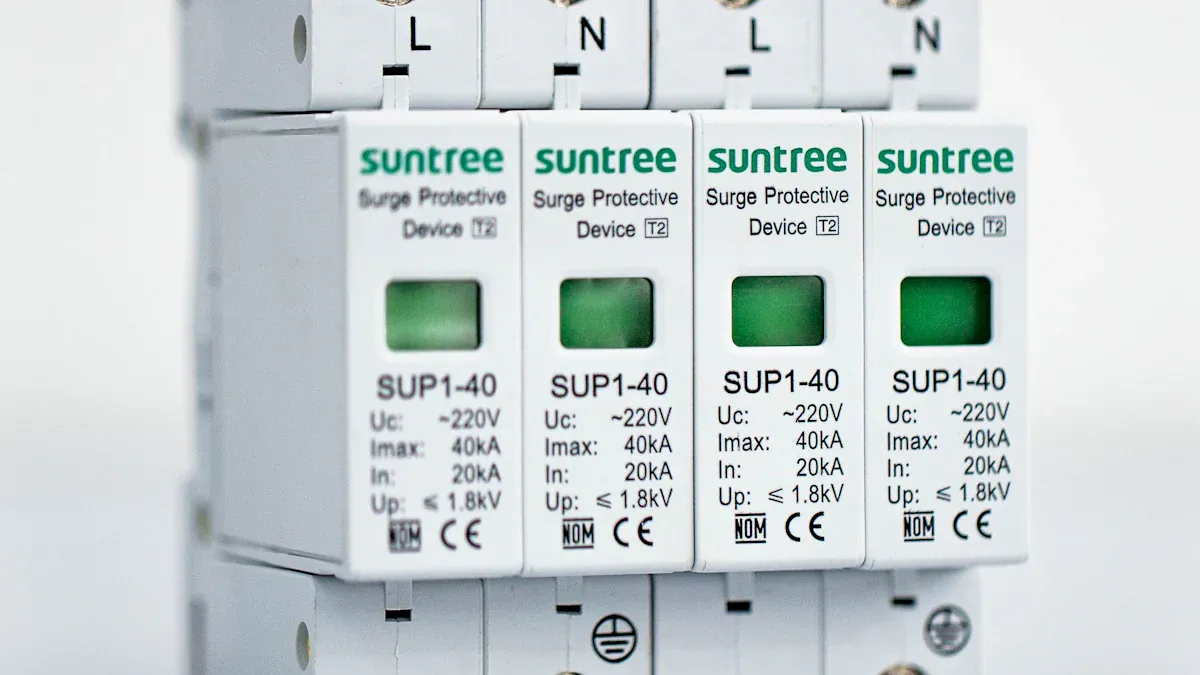
A thermal magnetic miniature circuit breaker is a safety device. It keeps electrical circuits from getting damaged. This device has two ways to protect things. The thermal part reacts to slow, steady rises in current. The magnetic part acts fast when there is a sudden surge. It helps stop wires and equipment from getting too hot or shorting out. People use this device in homes, schools, offices, and factories.
The main job of a thermal magnetic miniature circuit breaker is to stop electricity if there is a problem. It works very quickly, faster than a blink. After it trips, you can reset it by flipping a switch. This makes it simple to use and helps things run again fast.
Industry standards like IEC 60898-1 and IEC 60947-2 say how these breakers should work. These rules make sure the breakers are safe and work well in many places. The table below shows how these two standards are different:
| Aspect | IEC 60898-1 | IEC 60947-2 |
|---|---|---|
| Application Domain | Residential and similar low-voltage systems | Industrial and commercial low-voltage systems |
| Rated Current Range | Up to 125 A | From a few Amps up to 6300 A and higher |
| Rated Voltage | Typically 230/400 V AC | Up to 1000 V AC and 1500 V DC |
| Breaking Capacity (Icn/Icu) | Max 25 kA (Icn) | Higher breaking capacities (e.g., 10 kA, 50 kA) |
| Intended Users | Ordinary persons | Skilled persons (electricians, engineers) |
| Performance Criteria | Defines rated current, breaking capacity, thermal and magnetic trip functions | Broader performance requirements including ultimate breaking capacity and service breaking capacity ratios |
| Typical Use Cases | Homes, schools, offices, shops | Utilities, manufacturing facilities, industrial electrical distribution |
| Marking and Certification | MCBs marked according to IEC 60898-1 | MCBs marked according to IEC 60947-2 |
Note: These rules help people pick the right breaker. They also make sure the device works as it should.
Main Components
A thermal magnetic miniature circuit breaker has many important parts inside. Each part does a special job. The main parts are:
- Bimetallic Strip: This strip bends when it gets hot from too much current. If the current stays high, the strip bends more and trips the breaker.
- Magnetic Coil (Solenoid): This coil makes a strong magnetic field during a short circuit. The field pulls a plunger that trips the breaker right away.
- Latch Mechanism: This part keeps the contacts closed when things are normal. When the bimetallic strip or magnetic coil moves, the latch lets go and opens the contacts.
- Arc Chute: When the contacts open, an electric arc forms. The arc chute breaks the arc into smaller pieces and cools it down, making it safe to stop the current.
- Manual Switch: This lets a person turn the breaker on or off by hand.
- Shell: The outside case keeps all the parts safe and separates them for each job.
The diagram below shows how protection features are different for each breaker type:
| Protection Feature | Thermal/Magnetic Protection (Baseline) | AFI Breakers (Arc Fault Circuit Breakers) | CAFI Breakers (Combination Arc Fault Circuit Breakers) |
|---|---|---|---|
| Overload Protection | Yes | Yes | Yes |
| Short Circuit Protection | Yes | Yes | Yes |
| Parallel Arc Protection | No | Yes | Yes |
| Series Arc Protection | No | No | Yes |
| Typical Use | Standard circuit breakers | Protects against parallel arcing between wires of different voltages | Protects against both parallel and series arcing within wires |
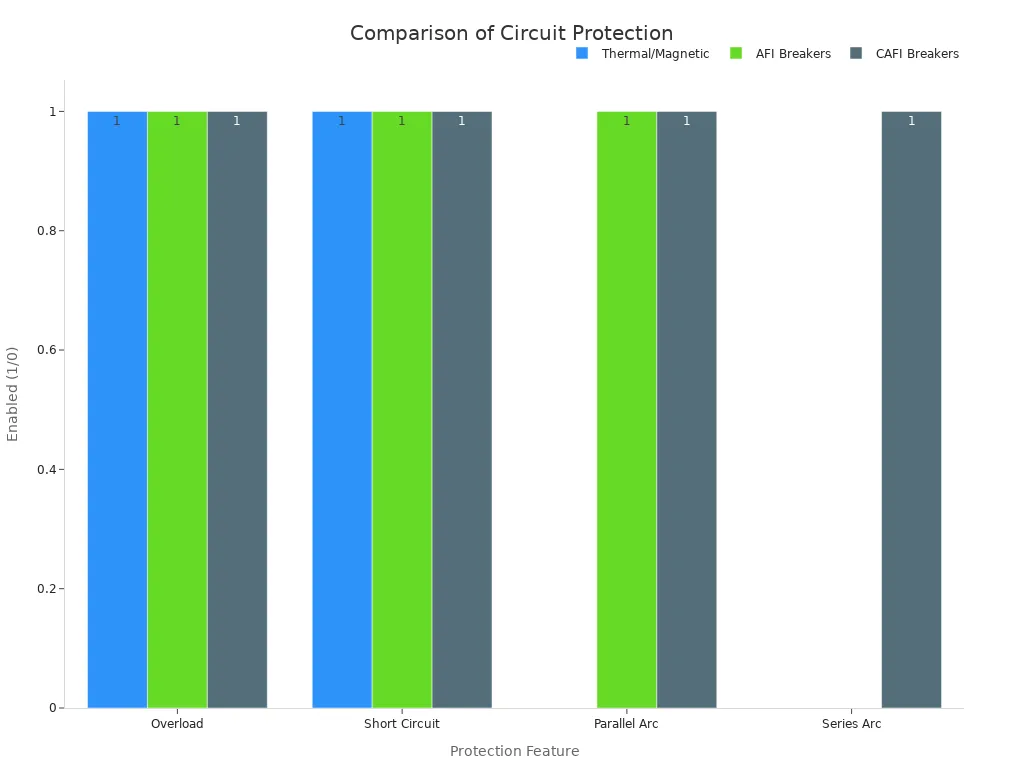
Tip: The thermal magnetic miniature circuit breaker does not stop arc faults. For more arc protection, people use AFI or CAFI breakers.
Technical documents explain how these parts work together. The bimetallic strip and magnetic coil are two ways to trip the breaker. The latch and plunger help open the contacts when needed. The arc chute makes sure the arc does not hurt anything. The shell keeps everything together and safe.
A thermal magnetic miniature circuit breaker can be reset after it trips. This means you do not have to buy a new one every time. The reset feature saves time and money. The device follows strict safety rules, so people can trust it to keep their electrical systems safe.
How It Works
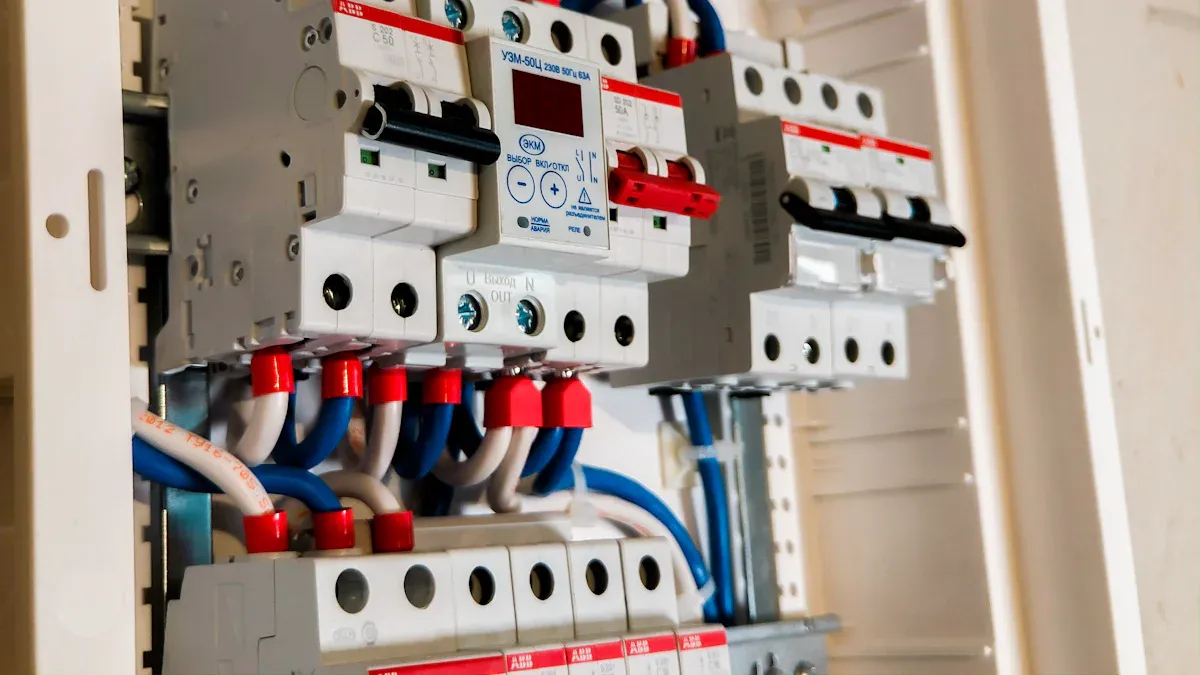
A thermal magnetic miniature circuit breaker uses two ways to keep circuits safe. Each way helps with a different problem. The thermal part helps with slow overloads. The magnetic part helps with fast surges. These two systems work together to protect people and equipment.
Thermal Protection
Thermal protection works by feeling heat from too much current. Inside the breaker, there is a bimetallic strip. This strip has two metals that grow at different speeds when hot. If the current stays high for a long time, the strip gets hot and bends. When it bends enough, it opens a latch and stops the electricity.
The steps are:
- The circuit has normal current. The strip stays straight.
- Too much current flows. The strip gets hot.
- The heat makes the strip bend slowly.
- When it bends enough, it lets go of the latch.
- The breaker trips and stops the current.
You can reset the breaker after it cools down. This saves time and money because you do not need a new breaker every time.
Thermal protection does not work right away. It waits a little before tripping. This helps it ignore short bursts, like when a motor starts. The wait time depends on how much the current goes over the safe level. A small overload takes longer to trip. A big overload trips faster. The maker sets the trip point and delay to follow safety rules.
| Parameter | Description | Typical Value/Range |
|---|---|---|
| Thermal Protection Pickup (Ir) | Current where tripping starts | 0.7 to 1.0 × rated current |
| Thermal Protection Time Delay (tr) | Time before breaker trips at overload | Fixed, not user-adjustable |
Thermal protection helps stop fires and damage by turning off the circuit before wires get too hot. The breaker trips when it feels too much heat. Engineers use alarms and tools to check if the breaker trips at the right time. They look at trip events and compare them to patterns to make sure the breaker works right.
- Time delays let the breaker ignore harmless surges but stop real danger.
- Rules like IEC 61008 and IEC 61009 set the trip points and delays.
Magnetic Protection
Magnetic protection works much faster than thermal protection. It protects against short circuits, which cause very high currents. Inside the breaker, there is a magnetic coil near the main contacts. When a short circuit happens, the big current makes a strong magnetic field in the coil. This field pulls a plunger or lever and trips the breaker almost right away.
The steps are:
- The circuit works normally. The coil does not move.
- A short circuit makes the current jump up fast.
- The jump makes a strong magnetic field in the coil.
- The field pulls a plunger and opens the latch.
- The breaker trips in less than 10 milliseconds and stops the current.
Magnetic protection stops damage from big, fast surges. It acts so fast that wires and equipment do not get too hot or burn.
The trip point for magnetic protection depends on the breaker type. A “B” type trips at 3 to 5 times its rated current. A “C” type trips at 5 to 10 times. A “D” type trips at 10 to 20 times. This helps stop the breaker from tripping when you turn on lights or motors.
| Breaker Type | Instantaneous Trip Threshold (times rated current) |
|---|---|
| B | 3 to 5 |
| C | 5 to 10 |
| D | 10 to 20 |
Tests show the coil can handle more than twice the needed current without burning out. This makes the breaker strong, even in hard situations. Good magnets and coil designs help magnetic protection work well in all kinds of places.
Comparing the Two Mechanisms
Thermal and magnetic protection work together in the breaker. The thermal part reacts to slow overloads with a delay. The magnetic part reacts right away to short circuits. Both parts make sure the breaker protects against many problems.
- Thermal protection uses heat and time to trip the breaker.
- Magnetic protection uses a strong field to trip the breaker fast.
- Both systems reset easily, so you can use the breaker again.
A thermal magnetic miniature circuit breaker uses both ways to give safe, fast, and reliable protection for electrical systems.
Benefits and Applications
Key Advantages
Thermal magnetic circuit breakers have many good points for safety. They keep circuits safe by cutting power if there is a problem. This helps stop fires and keeps equipment from breaking. It also lowers the risk of shocks. These breakers are small, so they fit in many panels.
- The breaker uses a bimetallic strip and an electromagnet to find trouble. The strip bends when it gets hot from too much current. The electromagnet acts fast if there is a short circuit.
- You can change the trip settings to fit your needs. The breaker can stop big fault currents without getting damaged.
- After the breaker trips, you can reset it. This saves time and money because you do not need a new one each time.
- Some smart breakers let you check and control them from far away. This helps people find problems fast and reset the breaker without being close.
Companies say these breakers are reliable, small, and meet safety rules like IEC 60898 and UL 489. More people want these breakers because of strict safety laws and the need for good protection in homes, businesses, and factories.
Here is a table that shows how circuit breakers and fuses are different:
| Feature | Circuit Breakers | Fuses |
|---|---|---|
| Durability | You can use again after tripping | Use once, then replace |
| Ease of Resetting | Reset by hand or automatically | Must put in a new fuse |
| Fault Clearing Time | A bit slower because of moving parts | Faster because it melts right away |
| Maintenance Downtime | Little, since you do not replace anything | More, because you must change the fuse |
| Additional Features | Can have arc fault, ground fault, smart checks | Only basic overcurrent protection |
Typical Uses
Miniature circuit breakers are used in many places today. They protect single circuits in homes, schools, and offices. In big buildings, they keep lights, outlets, and air systems safe. Factories use them to guard machines and control panels.
- Residential: Keeps wires, outlets, and home appliances safe.
- Commercial: Used in offices, stores, and hospitals for lights and power.
- Industrial: Protects motors, pumps, and machines from faults.
- ICT and Data Centers: Keeps servers and network gear working safely.
- Process Control: Helps keep automated systems and factory lines safe.
Companies make breakers in many sizes and types. You can pick different current ratings, trip curves, and smart features. This means you can find the right breaker for any job. The market is growing as new tech and safety needs come up.
A thermal magnetic miniature circuit breaker keeps electrical systems safe. It stops dangerous currents before they cause harm. This device uses heat and magnets to find overloads and short circuits. People use these breakers in homes, businesses, and factories because they trust them. They are easy to reset and work well every time.
- These breakers help stop fires and protect equipment from damage.
- They can fit into many different electrical panels.
Picking the right thermal magnetic miniature circuit breaker helps keep circuits safe and working well.
FAQ
What does a thermal magnetic miniature circuit breaker do?
A thermal magnetic miniature circuit breaker keeps circuits safe. It turns off power if there is too much current or a short circuit. This helps stop fires and keeps equipment from getting ruined.
What makes thermal and magnetic protection different?
Thermal protection uses heat to react to slow overloads. Magnetic protection acts right away when there is a sudden surge or short circuit. Both types work together to keep everything safe.
What happens after the breaker trips?
The breaker shuts off the electricity to stop any danger. You can turn the breaker back on by flipping its switch. This makes it simple to use again.
What types of places use these breakers?
People put these breakers in homes, offices, schools, factories, and data centers. They fit many electrical panels and protect lots of equipment.
What is the main advantage over fuses?
Fuses must be replaced after they trip, but these breakers can be reset. This saves time and money because you do not need a new one every time.
The following information may be of interest to you
Electronic vs Thermal Magnetic Molded Case Circuit Breaker
Breaking Down the Three Types of Circuit Protection for Beginners
Adjustable MCCB Thermal Control Modular Circuit Breaker
What Miniature Circuit Breakers Do and Where to Find Them
What Components Make Up a Standard MCCB