
Here are four things you should know about circuit breakers in a UPS system:
- Picking the right size breaker keeps your equipment safe.
- Matching breakers helps you find problems fast.
- Using the correct breaker type makes the system work better.
- Taking care of breakers helps them work well.
These facts help you keep your UPS system safe, stop downtime, and make sure power is managed safely.
Key Takeaways
- Pick the correct size circuit breaker. This helps keep your equipment safe. It also makes sure power works well.
- Use circuit breakers that fit your UPS system. This helps you find problems fast. It also helps you fix them quickly.
- Choose the right breaker type. This makes your system work better. It also keeps it safer.
- Check your UPS system often. This helps it last longer. It also stops it from breaking down.
- Set up breaker coordination. This keeps power steady. It also lowers downtime when power goes out.
UPS System Sizing
Picking the right size circuit breaker keeps your UPS safe. It also helps your power stay on when you need it. You have to check both the breaker rating and the load needs. This makes sure everything works right.
Breaker Rating
You need to pick breakers that fit your UPS system. Breakers stop too much current and short circuits. If you choose the wrong size, your equipment can get hurt. You might also have power problems. Look at the table below to see the main breaker types and what to think about:
| Breaker Type | Functionality | Key Considerations |
|---|---|---|
| Moulded Case Circuit Breakers | Overcurrent and short circuit protection | Check short circuit withstand capacity for your system components |
| Thermal Magnetic Release | Overcurrent protection | Offers both thermal and magnetic protection |
| Electronic Release | Adjustable settings | Gives you precise control for different applications |
| Microprocessor Release | Advanced protection | Lets you set up complex coordination and protection |
| i2t Characteristics | Short circuit protection | Make sure upstream device’s i2t is higher than downstream device’s |
When you pick breaker sizes, think about load, battery charging, and short circuit withstand. The breaker should trip for weak sources like generators. It must also handle strong sources without breaking.
Load Requirements
You need to know how much power your UPS will use. First, find the VA rating. Multiply amps by voltage. Then divide by the power factor. For motors, size for the starting current. Motors use five to seven times more current when they start. If you forget this, your UPS may shut down or not protect your gear.
Tip: Always use special AC breaker panels for your UPS. Size the load breakers to match the gear they protect.
Here are some things to remember:
- A UPS that is too small can overload and shut off in a power outage.
- This can make you lose data, break equipment, and cause downtime.
- A UPS that is too big wastes energy and costs more to run.
- The right size keeps your UPS working well and saves energy.
You should also think about backup time. More load means less backup time. Think about UPS efficiency and battery charging when you pick breaker sizes.
Coordination
Fault Isolation
Breaker coordination helps keep your UPS system safe. It stops problems from spreading to other parts. This is very important in places like hospitals and data centers. These places need power all the time.
Good coordination helps you find problems fast. You can fix them quickly and keep the power on.
You should use main breakers and LSIG-equipped breakers for better protection. LSIG means Long time, Short time, Instantaneous, and Ground fault. These breakers let you change how fast they trip. You can set them to match your system’s needs. This helps you stop faults close to where they start.
Here are some ways fault isolation helps:
- You can fix failures faster.
- You protect your system from slow problems, like wires getting hot.
- You protect your system from fast problems, like sudden surges.
Fault isolation keeps your equipment safe. It stops electricity from going backward. This lowers the risk of shocks. It blocks power from reaching devices that cannot handle surges. Power only goes where it is needed, so you get better efficiency.
Power Continuity
Breaker coordination helps your UPS system run smoothly. It keeps things working during power problems. When breakers work together, outages are smaller and shorter. Your equipment does not get stressed or damaged. This helps it last longer.
LSIG-equipped breakers let you set trip points for your system. This makes protection more reliable. It stops outages that do not need to happen.
Breaker coordination makes your power system more stable. You avoid big failures and voltage swings. Your system stays secure, even when something goes wrong.
Here is a table to show how breaker coordination helps your UPS system:
| Benefit | Description |
|---|---|
| Faster Recovery | You fix problems quickly and keep power flowing. |
| Less Equipment Damage | You protect devices from surges and stress. |
| Better Stability | You avoid big outages and keep voltage steady. |
When you plan your UPS system, always think about breaker coordination. You will keep your power safe. Your equipment will keep working. You will have less downtime.
Breaker Types
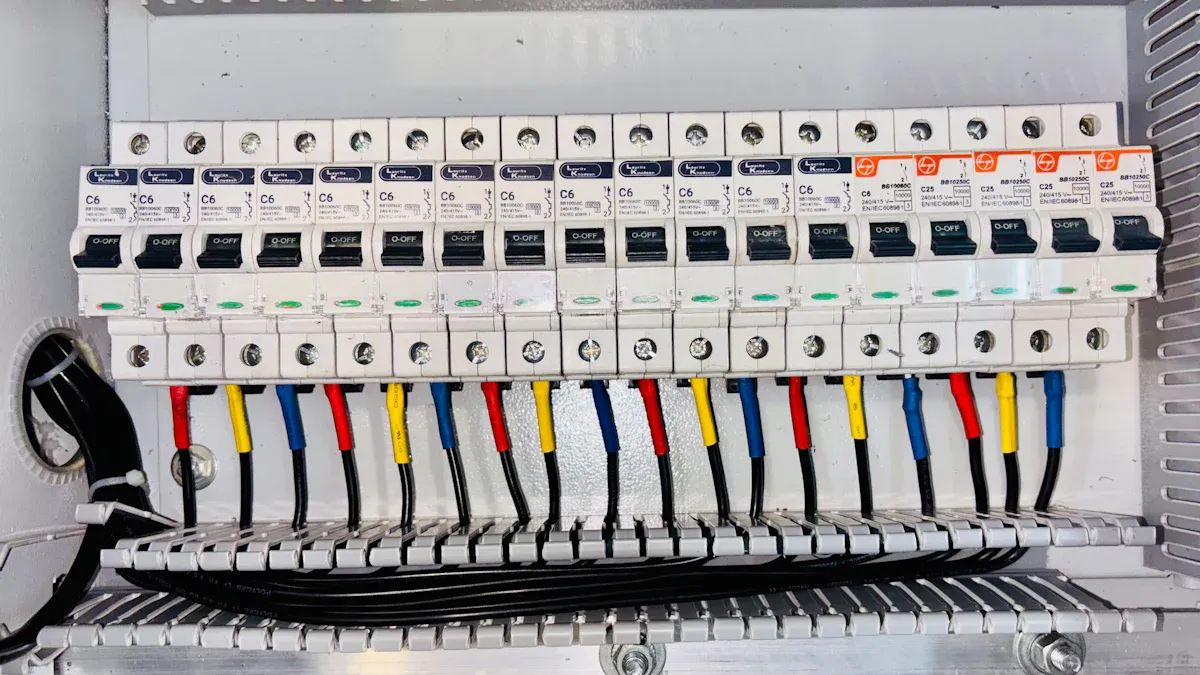
Picking the right breaker type is important for your UPS system. It helps keep things safe and working well. There are two main types you will see: thermal-magnetic and electronic. Each type works in its own way to protect your equipment.
Thermal-Magnetic
Thermal-magnetic breakers use heat and magnets to trip when there is a problem. The heat part works when there is too much power for a long time. The magnet part acts fast if there is a short circuit. This helps your UPS stay safe from many electrical issues.
| Breaker Type | Characteristics | Benefits |
|---|---|---|
| Thermal-Magnetic | Uses both heat and magnets; trips fast for short circuits; can handle big power surges. | Gives overload and short circuit protection in one device; can stop big faults. |
You might use thermal-magnetic breakers where motors start and stop a lot. These breakers can handle big power surges, so they do not trip by mistake. They are good for factories where power changes often.
Advantages:
- Stops power during problems, which lowers fire risk.
- Can be used again after tripping, so you save money.
- Lets you change trip settings for different needs.
Disadvantages:
- Needs time to cool down before you can reset it.
- Can be affected by temperature, so watch your loads.
- More complex and costs more than simple breakers.
Tip: If your UPS runs things that start and stop a lot, thermal-magnetic breakers can help protect your system.
Electronic
Electronic breakers use sensors and digital parts to find problems. They trip faster and more exactly than thermal-magnetic breakers. You can set their trip points to fit your needs, which helps protect sensitive gear.
| Feature | Functionality | Characteristics |
|---|---|---|
| High Precision and Sensitivity | Finds small electrical problems and protects sensitive equipment. | Trips at low levels; reacts fast to stop faults. |
| Adjustable Trip Settings | Lets you change settings for different power needs. | You can pick how much current and time before it trips. |
| Low Arc Flash Energy | Helps stop big arc flash events and keeps people safe. | Finds arc faults; limits energy to make arc flashes smaller. |
| Advanced Communication | Gives real-time info and helps you check your system. | Has digital parts for SCADA systems; lets you watch from far away. |
You should use electronic breakers in important UPS systems, like in hospitals or data centers. These breakers keep your key equipment running by only turning off the part with a problem. They also help you watch your system and fix things before they cause trouble.
3-Pole vs. 4-Pole Breakers
When you choose between 3-pole and 4-pole breakers, think about your load and safety. Three-pole breakers work for most UPS systems and help stop problems like a floating neutral. Four-pole breakers give extra safety for the neutral line. Use them if you have special loads or need more safety, like with medical gear. This extra step helps stop overloads and makes sure things disconnect safely during problems.
Remember: Picking the right breaker type and pole count keeps your UPS system safe and ready for anything.
Maintenance
Isolation
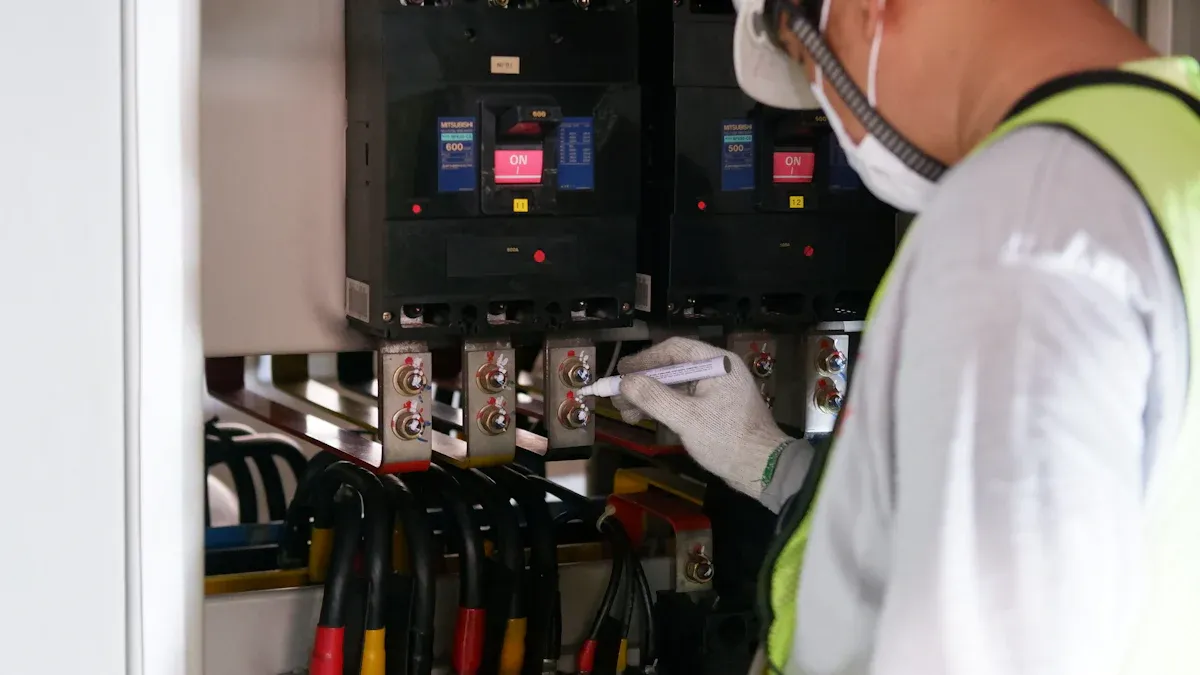
You must isolate your UPS system before any work. This keeps you safe from dangerous voltages. Many people think turning off the output breaker is enough. That is not true. Deadly voltages can still be inside the UPS system.
Always open the circuit breaker in the panel that powers the UPS system. Open the UPS bypass circuit breaker. Disconnect the battery’s direct current link. Some parts, like capacitors, may still hold energy. Discharge them before you touch anything. Be careful every time you work on UPS equipment. This helps prevent serious injury or death.
Only trained people should do these steps. If you are not trained, just report problems. Never try to fix or open the UPS system yourself.
To make maintenance easier and safer, install enough input and output breakers. This lets you isolate parts of the system without shutting down everything. You can keep some loads running while you work on other parts.
Routine Checks
Regular checks help your UPS system last longer. They also help it work better. You need to inspect and test all circuit breakers often. This keeps your power reliable. It also stops sudden failures.
Industry standards, like NFPA 70B and IEEE 446, say to follow the manufacturer’s schedule. Most UPS systems need checks at different times:
- Weekly, monthly, quarterly, and yearly inspections and tests.
- Always follow the manufacturer’s instructions first.
Here is a table showing how often you should do key maintenance tasks:
| Maintenance Task | Frequency |
|---|---|
| Visual inspection of component integrity | Once each quarter |
| Check of climate control system and batteries | Once every six months |
| Operational test and thermal scan | Once each year |
| Test power system, battery backups, and generators | Every two years |
When you do routine checks, follow these steps:
| Step Type | Description |
|---|---|
| Visual Inspection | Make sure the UPS area is clean and dust-free. |
| Look for damage to the UPS cabinet. | |
| Operational Parameters Checking | Measure input and output voltages. |
| Check that frequencies are correct. | |
| Functional Testing | Test all control buttons and alarms. |
| Safety and Documentation | Make sure safety gear is present and easy to find. |
A well-maintained UPS system gives you reliable service for many years. Regular maintenance helps you find problems early. It helps you avoid costly downtime.
You have learned four important things about UPS system circuit breakers. If you pick the right size, match them, choose the best type, and do regular checks, your equipment stays safe. These actions keep power steady and help stop problems. You can avoid losing power and keep everyone safe at work.
- Uninterrupted power keeps your systems working.
- Fast backup and voltage control protect sensitive devices.
- You keep important data safe during power loss.
| Benefit | Description |
|---|---|
| Increased Reliability | Regular checks stop UPS failures by finding problems early. This keeps everything running. |
| Extended Equipment Lifespan | Routine service helps your equipment last longer. It saves money by delaying new purchases. |
| Improved Efficiency | Good maintenance makes UPS systems work better. This lowers energy use and saves money. |
| Safety Enhancements | Regular checks stop accidents from broken parts. This keeps your workplace safer. |
| Cost Savings | Preventive care lowers costs from sudden breakdowns and repairs. |
Use these facts for your UPS system. You will get better results, face fewer problems, and save more money.
ONESTOP provides reliable circuit breaker solutions for UPS systems and explores our product line
Click-to-view.webp)
FAQ
What happens if you use the wrong size breaker in a UPS system?
If you use the wrong size breaker, your UPS may not protect your equipment. A breaker that is too small trips too often. A breaker that is too large may not trip during a fault. Always match the breaker to your system.
How often should you test UPS circuit breakers?
You should test your UPS circuit breakers at least once a year. Regular testing helps you find problems early. This keeps your power system safe and reliable.
Can you reset a tripped UPS breaker yourself?
You can reset a tripped breaker if you know the cause and it is safe. First, check for overloads or faults. If you are unsure, ask a trained technician for help.
Why do some UPS systems use 4-pole breakers?
You use 4-pole breakers when you need extra safety for the neutral line. This is important for special loads or sensitive equipment. Hospitals and data centers often use 4-pole breakers for better protection.
What is the main difference between thermal-magnetic and electronic breakers?
Thermal-magnetic breakers use heat and magnets to trip. Electronic breakers use sensors and digital parts. Electronic breakers react faster and let you set trip points for your needs.
Tip: Always follow the manufacturer’s instructions for your UPS system. This helps you stay safe and keep your equipment working.
See also
Durable miniature circuit breaker characteristics
Electronic vs Thermal Magnetic Molded Case Circuit Breaker
Thermal magnetic circuit breaker and electronic circuit breaker
Electronic RCBO with overcurrent protection
Difference between electromagnetic and electronic RCCB