

You may ask if using a three-pole circuit breaker for single-phase loads is safe. The answer depends on the type of breaker you have. Some breakers can be used this way, but only if the maker says they are for single-phase circuits. Always look at the labels and instructions before you put in or change any breaker. 🛑 If you ignore these details, you could have unsafe wiring or break the rules.
Key Takeaways
- Always look at the breaker’s label and instructions first. Make sure it says you can use it for single-phase before you put it in.
- If you use a three-pole breaker that is not marked for single-phase, it can be dangerous. It can make the wiring unsafe. It might not trip the right way. It can also break the rules in the code.
- Double-pole breakers are usually better for single-phase circuits. They cost less money. They take up less space. They give the right protection.
- Follow all safety rules and the maker’s instructions. This keeps your electrical system safe. It also helps keep your warranty.
- If you do not know which breaker to pick, ask a qualified electrician. This helps make sure your system is safe and follows all the rules.
Three-Pole Circuit Breaker Basics
KC6-KU-3-pole-circuit-breaker.webp)
What Is a Three-Pole Circuit Breaker
A three-pole circuit breaker helps keep circuits safe from too much current or short circuits. It is used when you need to control three wires at once. You will see this breaker in places like factories and big buildings.
Here are some key things to know:
- Rated Current: This is the most current the breaker can safely carry.
- Trip Current: If the current gets too high, the breaker will turn off.
- Ampere Frame (AF): This shows the breaker’s size and how much current it can handle. For example, a 125AF breaker can be set for trip currents from 60A to 125A.
- Number of Poles: A three-pole circuit breaker has three poles. This means it can connect and protect three wires at the same time.
The way it works is easy to understand. When you switch on the breaker, it closes the main contacts. If there is too much current, a bimetal strip or magnet will trip the breaker and open the circuit. Some breakers have extra safety features like undervoltage or shunt trips.
Three-pole circuit breakers come in different sizes. Some can handle 50A, 60A, 75A, or 100A. They work at 50Hz or 60Hz and can stop short circuits up to 25kA. Most last a long time, so you can use them many times.
Single-Phase vs. Three-Phase Circuits
You should know how single-phase and three-phase circuits are different before picking a breaker. The table below shows the differences:
| Aspect | Single-Phase Circuit | Three-Phase Circuit |
|---|---|---|
| Number of Conductors | 2 or 3 (with neutral) | 3 or 4 (with neutral) |
| Voltage Peaks | Peaks twice per cycle | Peaks six times per cycle |
| Power Delivery | Pulsating, not constant | Continuous, smoother delivery |
| Applications | Homes, small shops | Factories, large buildings |
| Motor Efficiency | Lower, less starting torque | Higher, more starting torque |
Single-phase circuits use one current that goes up and down. This makes them good for homes and small things. Three-phase circuits use three currents that are spaced apart. This gives steady power, which is better for big machines. You will mostly see three-pole circuit breakers in three-phase systems. They can handle bigger loads and give better protection.
Code Compliance and Markings
When you choose a three-pole circuit breaker for a single-phase load, you must check if it meets code rules and has the right markings. Not every breaker is safe or legal for this use. You need to look for special labels and follow the maker’s instructions. This helps you avoid unsafe wiring and keeps your work up to code.
UL 489 Requirements
UL 489 is a safety standard for circuit breakers. It tells you what tests and rules a breaker must pass before you can use it in your building. Most three-pole circuit breakers are tested for three-phase systems. You should only use them for single-phase loads if the breaker is marked for that use.
Tip: Always look for the UL mark on your breaker. This mark means the breaker passed safety tests and meets the rules.
Here is a table that shows common UL markings and what they mean:
| Certification/Marking Type | Description | Application/Significance |
|---|---|---|
| UL Listing Mark | Shows the breaker passed UL safety tests. | Safe for use in many applications. |
| UL Classification Mark | Breaker is safe for special uses or hazards. | Use only in special cases with limits. |
| UL Certified Mark | Combines UL marks for different countries. | Easy to check if the breaker is safe in your area. |
| 3-Pole — 1-Phase Rated Marking | Breaker is safe for both three-phase and single-phase (if marked). | Use for single-phase only if you see this marking. |
| DC Rated Marking | Breaker is safe for DC systems if marked. | Use in DC systems like solar or batteries. |
| Multi-Wire Circuit Marking | Breaker is safe for multi-wire circuits if marked. | Prevents mistakes in special circuits. |
| 100 Percent Continuous Rated | Breaker can run at full current all the time if marked. | Good for loads that never turn off. |
You should never guess if a breaker is safe for single-phase use. Always check for the right UL marking and read the label.
Manufacturer Labels
Manufacturers put labels on their breakers to tell you how you can use them. These labels show if a three-pole circuit breaker is approved for single-phase loads. Some breakers have clear markings for single-phase use. Others do not. You must read the label before you install the breaker.
Here is a table that shows how different breaker types are labeled for single-phase use:
| Product Line / Type | Labeling for Single-Phase Use | Notes / Regulatory References |
|---|---|---|
| Powerpact M, P, R | Marked “single phase any 2 poles” | Approved for single-phase use |
| Powerpact L | Marked for single-phase use on 240Vac circuits only | Use any 2 poles |
| Powerpact H and J | Marked for single-phase use (some trip units) | Check for U31X and U33X marking |
| Powerpact B | Not marked for single-phase use | Not approved |
| Powerpact Q (QB, QD, QG, QJ) | Not marked for single-phase use | Not approved |
| EDB, EGB, EJB | Not marked for single-phase use | Not approved |
| LA, LH, LAL, LHL | Marked for single-phase use | Use any two poles |
| Legacy Breakers | Some marked, most are not | Always check the label |
Note: The National Electrical Code (NEC) Article 240.85 says you can use a breaker for single-phase if the label allows it and the voltage is right. The UL White Book also says you must see a label like “For 1-phase connections, use two outside poles” before using a three-pole circuit breaker for single-phase.
You should always follow the label and the maker’s instructions. If you do not see a marking for single-phase use, do not use the breaker for that purpose. This keeps your wiring safe and legal.
Three-Pole Circuit Breaker Risks
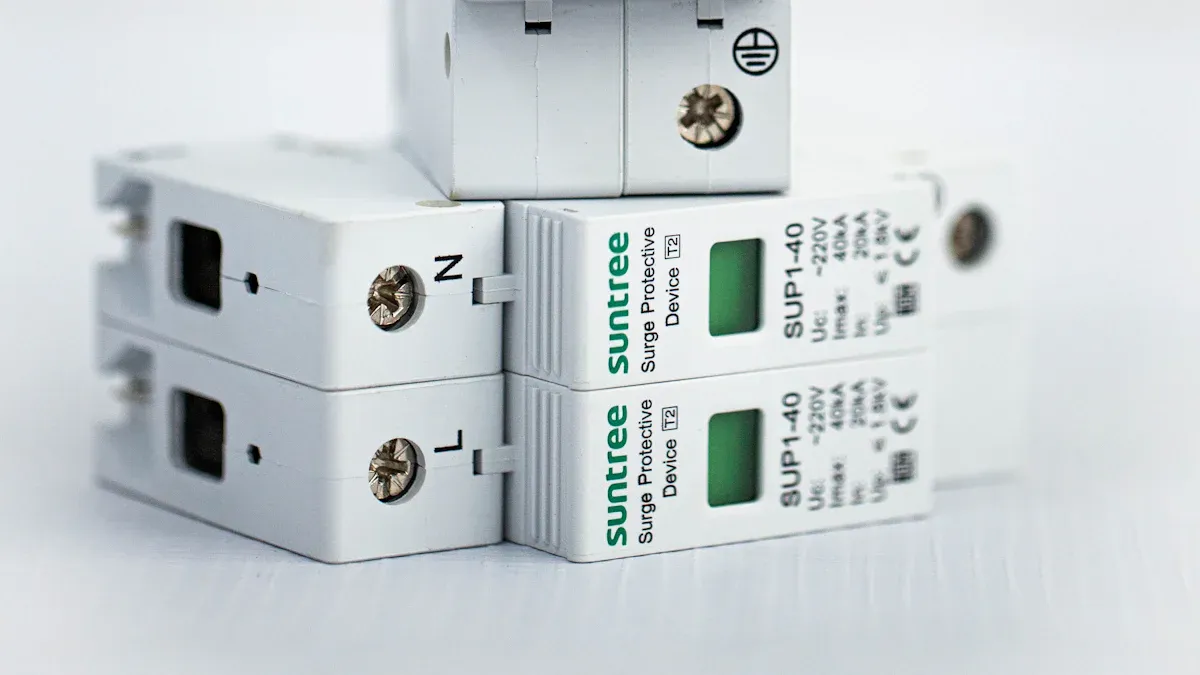
Improper Protection
When you use a three-pole circuit breaker for a single-phase load, you may not get the right protection. Each pole in the breaker is designed to protect one wire in a three-phase system. If you only use one or two poles, the breaker may not trip as expected. This can leave your wiring and equipment at risk.
- You might connect only two poles for a single-phase circuit. The third pole stays unused. This setup can confuse people who work on the panel later.
- If the breaker is not marked for single-phase use, it may not trip at the correct current. Your equipment could overheat or catch fire.
- Some breakers have internal links between poles. If you use the wrong type, you might lose protection on one side of your circuit.
⚠️ Warning: Using a breaker in a way not listed on its label can void your warranty and break electrical codes.
You should always check the label and instructions. If you do not see approval for single-phase use, pick a different breaker. This keeps your system safe and up to code.
Tripping Issues
A three-pole circuit breaker may not trip the way you expect when used for single-phase loads. The tripping mechanism is designed for three-phase currents. If you only use two poles, the breaker may not sense a problem on both wires.
Here are some common tripping issues:
| Issue | What Happens | Why It Matters |
|---|---|---|
| Only One Pole Trips | Breaker may trip on one wire but not the other. | Leaves part of the circuit live. |
| Delayed Tripping | Breaker trips slower than needed. | Increases fire risk. |
| No Trip at All | Breaker does not trip during a fault. | Equipment damage or shock risk. |
- You may think your circuit is protected, but a hidden problem can remain.
- If only one pole trips, the other wire can still carry voltage. This can shock anyone who works on the circuit.
- Some breakers need all three poles to sense a fault. If you use only two, the breaker may not work at all.
💡 Tip: Always test your breaker after installation. Make sure it trips as expected for your load type.
You should use a breaker that is marked and tested for single-phase use. This helps you avoid dangerous tripping problems.
Practical Considerations
Cost and Space
You might think about using a three-pole circuit breaker for a single-phase load. Most of the time, this is not a good idea. Three-pole breakers cost more than double-pole breakers. They also take up more room in your panel. If you use a three-pole breaker for a single-phase circuit, one pole will not be used. This wastes space that could be used for other circuits.
Double-pole breakers are better for single-phase loads. They cost less and use less space. This helps avoid confusion for people working on your panel later. Using the right breaker makes your system easier to fix and safer to check.
💡 Tip: Always look at your panel size before picking a breaker. Saving space now lets you add more circuits later.
Alternatives
There are different ways to protect single-phase circuits. Each breaker type has its own use and care needs. The table below shows common choices and what you should know:
| Breaker Type | Typical Use Case | Maintenance Considerations |
|---|---|---|
| Miniature Circuit Breaker | Homes, small shops | Replace after limited use; not repairable |
| Residual-Current Device | Earth fault protection | Replace after limited use; plug-in or wired |
| Molded-Case Circuit Breaker | Larger loads, some single-phase circuits | More robust; maintenance depends on design |
| Air Circuit Breaker | Large buildings, main panels | Needs regular checks; more complex |
Pick a breaker that matches your load and fits your panel. Miniature circuit breakers are good for homes and small shops. Molded-case breakers are better for bigger loads. Air circuit breakers work for large systems but need more care.
If you use the right breaker, it is easier to fix and check your system. You also keep your warranty safe. Using a breaker in a way not listed by the maker can cancel your warranty and cause problems later.
Best Practices
Safe Use
You should always follow safe use guidelines when working with a three-pole circuit breaker. Start by checking your system’s voltage, load type, and power needs. This helps you pick the right breaker for your job. Look at the label to see if the breaker is approved for single-phase or three-phase use. Always match the voltage rating to your circuit.
Industry guidelines suggest these steps for safe use:
- Assess your system’s voltage and load before choosing a breaker.
- Decide if you need neutral line protection. Sometimes, a four-pole breaker is better.
- Make sure your breaker meets national and industry standards.
- Choose the right current rating and breaking capacity for your load.
- Follow the manufacturer’s instructions for installation and maintenance.
- Think about the environment, durability, and temperature where you install the breaker.
🛡️ Tip: Always keep your panelboard and breakers clean and dry. This helps prevent damage and keeps your system safe.
You should also follow safety standards like ANSI/NEMA PB 1.1-2023. This standard covers how to install and use panelboards with circuit breakers in commercial buildings. It helps you use overcurrent devices safely.
Recommended Choices
When you select a breaker, you should look for one that matches your system. Three-pole circuit breakers work best in three-phase systems, such as those found in factories or large buildings. These breakers protect all three wires and help keep loads balanced.
For single-phase loads, you should use a double-pole breaker unless the label on a three-pole circuit breaker says it is safe for single-phase use. Always check for clear ON/OFF markings and make sure the breaker is easy to reach. In some cases, you may need a four-pole breaker for extra safety, especially if your system needs neutral protection.
| Breaker Type | Best Use Case | Extra Notes |
|---|---|---|
| Three-pole | Three-phase circuits | Use only as labeled |
| Double-pole | Single-phase circuits | Most common for homes |
| Four-pole | Circuits needing neutral line | Extra safety in complex systems |
⚡ Note: Always follow OSHA and NEC rules for breaker installation. This keeps your system safe and up to code.
You should always put safety first when working with electrical panels. Check for the right markings before you do anything. Follow what the manufacturer says in the instructions. Look for certification marks like UL Listing on the breaker. These marks mean the breaker is safe to use. They help stop electrical shock and fire. If you do not see approval for single-phase use, do not use a three-pole circuit breaker. If you are not sure, ask a qualified electrician for help.
ONESTOP Electrical provides customized solutions for you. Click to view the product series and find the right choice for you.
Click-to-view.webp)
FAQ
What happens if you use a three-pole breaker for a single-phase load without proper markings?
You risk unsafe wiring and code violations. The breaker may not trip correctly. This can cause fire or shock hazards. Always check for single-phase approval on the label.
What should you check before installing a three-pole breaker on a single-phase circuit?
Always read the manufacturer’s label. Look for markings that say the breaker is safe for single-phase use. If you do not see this, choose a different breaker.
What are the main risks of using the wrong breaker?
- Improper protection
- Tripping failures
- Voided warranty
- Code violations
You could damage equipment or cause injury.
What breaker should you use for most single-phase loads?
You should use a double-pole breaker. It fits single-phase circuits and meets code. Only use a three-pole breaker if the label says it is safe for single-phase.
What should you do if you are unsure about breaker selection?
Ask a qualified electrician for help. They know the codes and can check the labels. This keeps your system safe and legal.
The following information may be of interest to you
Can you place the three pole circuit breaker on the single-phase panel
Single Phase vs Three Phase Electricity: Which is Best for You?
How to Safely Connect Miniature Circuit Breakers Step by Step
How to Identify Certified Single Phase MCCB
Single vs Three Phase MCCB: Key Differences