
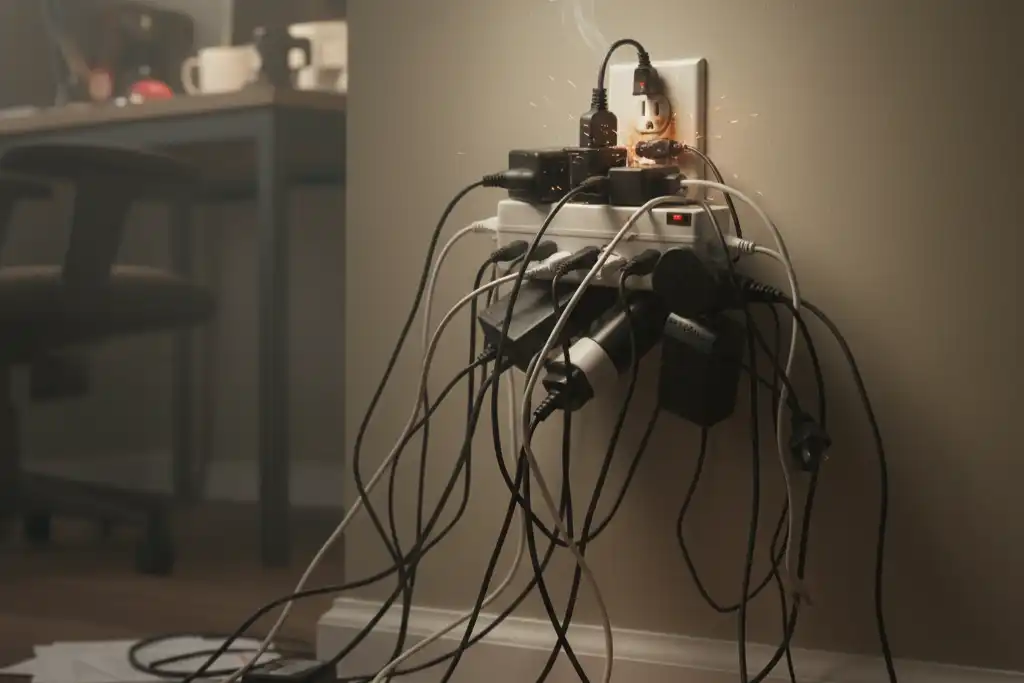
You want your family to stay safe from socket overload and electrical hazards. Plug only a few devices into each outlet. Pick extension leads that have surge protection. Check your circuit breakers often. Do not tape them down. These easy steps help stop fires and injuries.
Electrical safety is important. In 2023, socket overload caused 23,700 home fires in the U.S. There were 305 deaths and $1.5 billion in property loss. Around the world, 400 people get electrocuted at home each year. There are 200 deaths from this.
| Year | Fires | Deaths | Injuries | Dollar Loss |
|---|---|---|---|---|
| 2023 | 23,700 | 305 | 800 | $1.5 billion |
| Description | Number |
|---|---|
| People electrocuted at home | 400 |
| Resulting deaths | 200 |
Key Takeaways
- Do not plug too many devices into one outlet. This helps stop overheating and fires.
- Use surge protectors for electronics that are sensitive. They keep your devices safe from power spikes.
- Check your electrical system often. Replace cords that are old or damaged to stay safe.
- Put high-power appliances on different circuits. This stops socket overload.
- Unplug devices you are not using. This lowers fire risks and saves money on electricity.
Spotting Socket Overload
Warning Signs
You can notice socket overload before it gets risky. Watch for these things near your outlets and switches:
- Wall plates feel hot or warm when you touch them.
- You see burn marks or color changes on sockets or switches.
- Outlets make buzzing, crackling, or sizzling noises.
- Sparks jump out when you plug something in.
- A burning smell comes from a switch or outlet.
- You get a small shock or tingle using appliances.
- Lights blink, flicker, or get dim for no reason.
- Circuit breakers trip a lot or fuses blow often.
- Appliances seem weak or do not work well.
Tip: If you see any of these signs, unplug things right away and call a licensed electrician. Always put safety first!
Here’s a quick table to help you spot common signs of socket overload:
| Signs of Overload | Description |
|---|---|
| Breaker Tripping | Circuit turns off to stop overheating. |
| Dimming Lights | Lights get dim when you use more devices. |
| Buzzing Outlets or Switches | Odd sounds mean electrical problems. |
| Warm Outlet Covers | Covers feel hot, showing too much power is used. |
| Burning Odors | Smells mean wires may be melting or too hot. |
| Scorched Plugs or Outlets | Damage shows a bad overload happened. |
| Insufficient Power | Appliances do not work as they should. |
Why It Happens
Socket overload happens when too many things are plugged into one outlet or circuit. Big appliances like space heaters or hair dryers use lots of electricity. If you use a few of these on the same circuit, it can’t handle it. Old wiring and old panels have trouble with today’s power needs. Loose or broken wires and bad equipment make it worse. Sudden voltage changes can push your system too far.
You might see lights flicker or breakers trip when the circuit is overloaded. Outlets can get hot and even smell like something is burning. Plugging in lots of things, especially big ones, makes the risk higher. If your house has old wiring, socket overload can happen more easily.
Note: Spread out your appliances and do not plug many big devices into one outlet. This easy step helps keep your home safe.
Preventing Electrical Hazards
Safe Outlet Use
You want your home to be safe from socket overload. Know how many things you can plug into each outlet. The National Electrical Code says a 15-amp circuit should have only 8-10 outlets. Plugging in too many devices can make outlets overheat and start fires. Always check the outlet before you plug in something new. If the outlet feels warm or you hear buzzing, unplug a device right away.
Spread your appliances out across different outlets and circuits. Big items like air conditioners and washing machines need their own circuits. This helps keep the power balanced and stops socket overload. Never plug more than one heat-making appliance into the same outlet. If you need more outlets, ask a licensed electrician to put them in. Do not use block adaptors, especially unfused ones, because they can get too hot and start fires.
Tip: Look at your breaker box two times each year. If your panel is older than 20 years, check it every three to four months. This helps you find loose wires or worn breakers before they cause trouble.
| Step | Description |
|---|---|
| 1 | Do not overload outlets. Know their limits. |
| 2 | Use surge protectors to stop power surges. |
| 3 | Check your electrical system often. |
| 4 | Upgrade your system if it is not safe. |
Extension Cords and Power Strips
Extension cords and power strips help you use more devices. But they can be dangerous if you use them wrong. Every year, extension cords cause thousands of house fires. Most fires happen when cords are overloaded, damaged, or run under rugs.
Here are ways to use extension cords and power strips safely:
- Pick cords and strips that match your devices. Look for UL certification.
- Put cords where you can see them. Do not run them under rugs or near water.
- Use surge protectors for electronics that need extra care.
- Check cords often. If you see frayed wires or damage, throw them away.
- Coil cords loosely and keep them in a cool, dry place.
- Replace old or broken cords right away.
Multi-way bar extension leads are safer than block adaptors. Make sure any adaptor has a fuse up to 13A. Block adaptors can get too hot and start fires, especially if they do not have fuses. Never use extension cords for big appliances like refrigerators or air fryers. These appliances use more power than the cord can handle. This can make the cord overheat and cause a fire.
Alert: Extension cords and power strips cause about 5,000 house fires each year. These fires lead to deaths and injuries. Always use cords and strips carefully.
| Risk Type | Description |
|---|---|
| Electrical Fires | Too much heat from overloaded outlets can start fires. |
| Overheating | High-power devices can make wires too hot and unsafe. |
| Damage to Appliances | Overloading can break devices and make them work worse. |
| Tripping Circuit Breakers | Too much load can make breakers trip and stop power. |
Appliance Placement
Where you put your appliances matters for safety. Bad placement can make socket overload and fires more likely. Keep appliances away from water. If an appliance gets wet, unplug it right away. Appliances with three-prong plugs should go into grounded outlets. Clean your appliances and check their cords often. If you see damage, fix it or get a new appliance.
Put your appliances on different circuits. Big devices need their own circuits. This keeps your wiring safe and stops overload. Check your electrical system regularly. Replace old outlets and put GFCI outlets in bathrooms, kitchens, and other wet places. These outlets shut off power if there is a problem, so you stay safe from shocks.
Use timers for holiday lights and decorations. Timers turn off the lights when you are asleep or away. This lowers the chance of overheating and fires. Unplug devices you do not use. This easy step helps stop electrical hazards, especially in homes with old wiring.
Note: Unplugging appliances when you are not using them can lower the risk of electrical fires and other dangers. The U.S. Fire Administration says electrical faults cause almost 7% of home fires. Unplugging unused devices is a smart way to keep your home safe.
Equipment and Safety Devices
AFCIs and GFCIs
You can make your home much safer by installing the right safety devices. Two of the most important are AFCIs (Arc Fault Circuit Interrupters) and GFCIs (Ground Fault Circuit Interrupters). These devices protect you from electrical fires and shocks.
| Device | Function | Description |
|---|---|---|
| GFCI | Prevents electric shock | Shuts off power when a ground fault is detected, protecting you from shock. |
| AFCI | Prevents electrical fires | Detects dangerous arcing and interrupts the circuit to stop fires. |
GFCIs work best in places where water is nearby, like kitchens, bathrooms, and laundry rooms. They sense when electricity tries to travel through water or your body. When this happens, they cut the power in a split second. You stay safe from shocks.
AFCIs help you avoid fires. They watch for dangerous arcs, which can happen if wires get damaged or worn out. When an AFCI finds a problem, it shuts off the circuit before a fire can start. You should have AFCIs in bedrooms and other sleeping areas.
Tip: Modern building codes require GFCIs in all kitchen outlets and many appliances. AFCIs are needed in sleeping areas. If your home is older, you can ask an electrician to add these devices.
You can also use other safety equipment:
- Fuses melt and break the circuit if too much current flows.
- Circuit breakers turn off power when they sense trouble.
- Overcurrent relays and current-limiting devices help in bigger or more complex systems.
Correct Wattage
Using the right wattage for your appliances and bulbs keeps your home safe. If you use a bulb or device with too high a wattage, you risk overheating the socket or wiring. This can lead to fires or damage.
Here’s how you can avoid problems:
- Always check the wattage rating on your light fixtures and appliances.
- Never use a bulb with a higher wattage than the fixture allows.
- Spread out high-wattage devices across different outlets and circuits.
If you use a bulb that is too strong, it can make the socket and wires too hot. This heat can melt parts, damage your lamp, or even start a fire. Always match the bulb’s wattage to what the fixture says is safe.
Note: Knowing the limits of your outlets and using the right wattage helps prevent overload and keeps your home safe.
You can keep your home safe from socket overload and electrical hazards by doing a few easy things:
- Plug big appliances right into the wall.
- Unplug small appliances when you are done.
- Put devices on different circuits to spread them out.
- Look at cords for damage and change them if needed.
- Watch for warning signs like hot outlets or lights that flicker.
Check your outlets and cords often to find problems early. If you see burn marks or your breaker trips a lot, call an expert. Making electrical safety part of your daily habits helps you in the long run:
| Benefit | Description |
|---|---|
| Reduce waste | Safe systems stop electricity from being wasted. |
| Extend appliance life | Checking devices often keeps them working longer. |
| Lower surge risk | Fixing cords keeps your electronics safer. |
| Save money | Unplugging things saves money and protects circuits. |
For more help, you can look at ESFI’s safety checklists and virtual home tours. Stay careful, use safe habits, and make electrical safety part of your day.
FAQ
How many devices can you plug into one outlet?
You should plug in only one high-power device per outlet. For small electronics, keep it to two or three. Always check the outlet for heat or buzzing before adding more.
Can you use extension cords for heaters or fridges?
No, you should never use extension cords for heaters, fridges, or other big appliances. These devices need direct wall outlets to stay safe and avoid fires.
What should you do if your circuit breaker keeps tripping?
Unplug some devices right away. Check for damaged cords or overloaded outlets. If the breaker trips again, call a licensed electrician for help.
How do you know if an outlet is safe to use?
Touch the outlet cover. If it feels cool and you hear no buzzing, it’s likely safe. Look for burn marks or smells. If you notice anything odd, stop using it.
Do surge protectors stop all electrical hazards?
Surge protectors help with power spikes, but they don’t fix overloads or bad wiring. You still need to spread out your devices and check outlets often.
See also
How to Identify the Most Suitable Wall Socket for Your Space
What is the Right Socket for Your Home, 15 Ampere or 20 Ampere
Can You Connect Multiple Surge Protectors Together Safely
How Many Watts Can a 120V Socket Handle Safely
What should I do if the circuit is overloaded?