

If you use a 100 watt solar panel, you often see about 18 volts when the sun is bright and everything is perfect. Voltage can change. You may get 12 volts on cloudy days. You may get up to 24 volts if nothing is connected. Here is a quick chart to show what you might see:
| Specification | Value | What It Means |
|---|---|---|
| Maximum Power (Pmax) | 100W | Highest power it can make |
| Optimum Operating Voltage (Vmp) | 20.4V | Voltage when making the most power |
| Open-Circuit Voltage (Voc) | 24.3V | Highest voltage with nothing attached |
Knowing the voltage helps you choose the right battery or device for your solar setup.
Key Takeaways
- A 100 watt solar panel usually makes about 18 volts when conditions are perfect, but this number can change from 12 to 24 volts based on sunlight and how you set it up.
- Knowing the open circuit voltage helps you pick the right charge controller for your solar system, so you can use energy safely and well.
- Keep your solar panels clean and in the right spot to get the most voltage and work better.
- Use the formula Watts = Volts × Amps to find out how much current your solar panel can make, which helps you pick the right devices and batteries.
- On sunny days, a 100 watt solar panel can make up to 100 watts of power, so it works well for small things like LED lights and phone chargers.
100 Watt Solar Panel Voltage
Standard Voltage Output
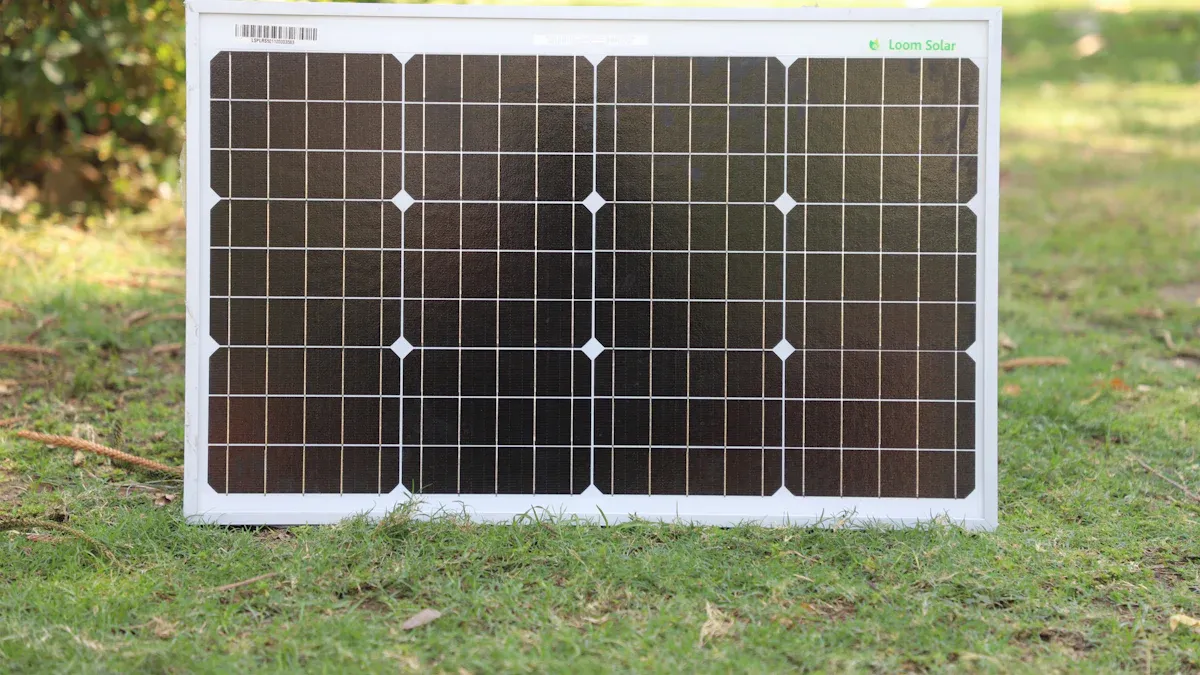
If you use a 100 watt solar panel, you might wonder about its voltage. Most of these panels give between 18 and 22 volts when the sun is bright and the weather is cool. This is called the standard voltage output. You see this voltage when the panel is hooked up to a battery or device and is working well.
- Sunlight and temperature change the voltage you get.
- The voltage goes up on sunny, cool days.
- It goes down if it is hot or cloudy.
The standard voltage output helps you pick the right battery or device. If you have a 12-volt battery, your panel should give a little more than 12 volts to charge it well.
Manufacturers check the voltage of a 100 watt solar panel with special tools. They use an I-V curve tracer and put the panel in direct sunlight. The tracer makes a graph that shows how much current and voltage the panel can make in different conditions. This test makes sure the panel gives the power and voltage it promises.
Open Circuit Voltage
Open circuit voltage, or Voc, is another key number for a 100 watt solar panel. This is the highest voltage the panel can make when nothing is connected. You measure it with a voltmeter on the panel’s terminals, with no wires going to a battery or device.
- Most 100 watt solar panels have an open circuit voltage from 20 to 25 volts.
- A common value is about 22.4 volts.
- You only see this voltage when the panel is not powering anything.
The open circuit voltage is always higher than the voltage you get when the panel is working. When you connect a device, the voltage drops to the standard output. This happens because the panel starts sending current, and the voltage settles where it can make the most power.
Open circuit voltage shows the highest voltage your panel can reach. It helps you pick the right charge controller or inverter for your setup.
What is the difference between standard output and open circuit voltage?
Open circuit voltage is what you measure when the panel is not connected to anything. The voltage at maximum power point, or Vmp, is what you see when the panel is working and making its most power. Open circuit voltage is always higher than the voltage at maximum power point. This is normal and helps you know how your 100 watt solar panel will work in real life.
Voltage Factors
Sunlight and Weather
The voltage from your 100 watt solar panel changes with the sun and weather. Bright, sunny days help your panel work really well. Clouds, rain, and shade make the voltage and power go down. Temperature is important too. Cooler air helps your panel make more voltage. Hot weather can make the voltage lower.
Here is a table that shows how different things in the environment change the voltage output:
| Environmental Factor | Effect on Voltage Output |
|---|---|
| Temperature | Hot weather lowers voltage and power. Cool air makes voltage go up. |
| Weather Conditions | Clouds and rain can drop output by more than half. |
| Shading | Shadows from trees or buildings block sunlight and lower efficiency. |
Your solar panel works best around noon when the sun is high. On cloudy days, your panel might only give you 30-60% of its full power. Shade can make the current drop, but the voltage usually stays close to normal. For steady power, keep your panel in direct sunlight as much as you can.
Panel Quality
The quality of your solar panel is important. Good panels make better voltage and last longer. Clean panels work best. Dirt or dust blocks sunlight and lowers voltage. Monocrystalline panels usually give a little more voltage than polycrystalline panels. All panels lose some power over time. In hot, dry places, your panel can lose about 1% of its power each year. In cooler places, the loss is smaller.
- Good panels give better voltage.
- Keeping panels clean helps them work well.
- Monocrystalline panels have a bit more voltage than polycrystalline panels.
- Old panels lose voltage slowly as years go by.
System Setup
How you set up your solar system changes the voltage you get. If you connect panels in series, the voltages add up. If you use parallel wiring, the voltage stays the same, but the current goes up. You need to match your setup to your battery or device. Charge controllers help control voltage and keep your battery safe. MPPT controllers use the panel’s voltage better than PWM controllers.
| Wiring Configuration | Voltage Output | Current Output |
|---|---|---|
| Series | Voltages add up | Current stays the same |
| Parallel | Voltage stays the same | Current adds up |
The angle and direction of your panel matter too. Panels work best when sunlight hits them straight on. If you tilt your panel the right way, you can get up to 30% more energy.
Watts, Volts, Amps
The Relationship
When you look at a solar panel, you often see numbers for watts, volts, and amps. These numbers tell you how much power the panel can make and how it works with your devices. The main formula you need to know is:
Watts = Volts × Amps
This formula helps you understand how much electricity your solar panel can provide. If you know two of these numbers, you can always find the third. For example, if you know the watts and volts, you can find the amps by dividing watts by volts.
- Power (watts) shows how much energy the panel can make.
- Voltage (volts) tells you the strength of the electricity.
- Current (amps) shows how much electricity flows.
Most solar panels for homes have a power rating between 100 and 500 watts. The rating tells you the most power the panel can make when the sun is bright and the weather is good.
Remember: The formula Watts = Volts × Amps is the key to understanding your solar panel’s performance.
100 Watt Solar Panel Example
Let’s see how this formula works with a 100 watt solar panel. If your panel operates at 18 volts, you can find the current like this:
Amps = Watts ÷ Volts
Amps = 100 ÷ 18 ≈ 5.5
So, your 100 watt solar panel will produce about 5.5 amps when it runs at 18 volts. This calculation helps you know what kind of battery or device you can power.
Real-world conditions can change these numbers. Less sunlight means less current. Hot weather can lower the voltage and current. If your panel gets old or dirty, it will not make as much power. The angle and direction of your panel also matter. If you point your panel the right way, you get more power.
| Condition | Effect on Output |
|---|---|
| Less sunlight | Lower current |
| High temperature | Lower efficiency |
| Wrong angle or direction | Less power |
| Aging panel | Lower current over time |
Knowing how watts, volts, and amps work together helps you plan your solar setup. You can choose the right battery, inverter, or device for your needs.
A 100 watt solar panel usually gives you about 18 volts, but you might see anywhere from 12 to 24 volts depending on sunlight and setup. Knowing this helps you pick the right battery or device for your needs.
- You can get between 280Wh and 480Wh daily, based on how much sun you get.
- On a sunny day, the panel can reach up to 100 watts of power with a maximum voltage near 21.2V.
- Many people use strong batteries or DC LEDs to match their energy needs with the panel’s output.
Understanding voltage helps you build a solar system that works well for you.
FAQ
What devices can you power with a 100 watt solar panel?
You can run small devices like LED lights, phone chargers, or a small fan. You can also charge a 12V battery for camping or backup power.
What does open circuit voltage mean for your solar panel?
Open circuit voltage shows the highest voltage your panel can reach when nothing is connected. You use this number to pick the right charge controller.
What happens if your solar panel gets dirty?
Dirt blocks sunlight. You get less voltage and power. Clean your panel often to keep it working well.
What is the best way to connect multiple solar panels?
You can use series wiring to add voltages or parallel wiring to add currents. Match your setup to your battery or device needs.
What should you check before buying a solar panel?
Check the voltage, wattage, and type of panel. Make sure the panel fits your battery or device. Look for good reviews and a strong warranty.
See also
How many watts can a 20 ampere circuit breaker handle
How many watts of power a 15 ampere circuit breaker can withstand
What Is the Maximum Number of Sockets on a 20A Circuit Breaker
How many lights can a circuit breaker control?
How to calculate the power generation of a 400 watt solar panel
