

You may wonder about the reason for circuit breaker tripping frequently in your home. The main three reasons for circuit breaker tripping are overloaded circuits, short circuits, and ground faults. Approximately 80% of tripped circuit breaker cases occur due to simple overloads. The remaining 20% is attributed to short circuits and ground faults. Additionally, faulty breakers with outdated components or high power demands from large appliances can also lead to tripping. Understanding these common reasons for circuit breaker tripping can help you identify why it happens and enhance the safety of your home.
Key Takeaways
- Overloaded circuits cause most tripping. Unplug some devices to stop overloads. Use fewer devices at the same time.
- Short circuits are very dangerous. Watch for sparks or burning smells. Call a professional if you think there is a short circuit.
- Ground faults happen a lot in wet places. Be careful when using appliances near water. Fix any problems right away.
- Check your circuit breaker and wiring often. Change bad breakers to stay safe and stop trips.
- If your breaker trips a lot, call a licensed electrician. They can find hidden problems and keep your home safe.
Main Reason for Circuit Breaker Tripping
You often see circuit breakers trip in your home. The three main causes are circuit overload, short circuit, and ground fault. Each reason for circuit breaker tripping has clear signs you can spot. You can use these signs to keep your home safe and prevent bigger problems.
Tip: If you notice frequent trips, check for these common causes first before calling an electrician.
Here is a simple table that shows how you can identify each cause:
| Cause | Identification Method |
|---|---|
| Circuit Overloads | High cooling demands, especially in summer, lead to frequent trips. |
| Short Circuits | Sparks, loud noises, and burning smells from outlets or panels, often with visible arcing. |
| Ground Faults | Hot wires touch ground wires, common in wet areas like bathrooms and kitchens. |
Overloaded Circuit
You may experience an overloaded circuit when you plug in too many devices at once. This often happens during hot summer days when air conditioners run for long hours. The breaker trips to protect your home from overheating and fire. You should unplug some devices and spread out your usage to avoid this problem.
Short Circuit
A short circuit happens when wires touch in ways they should not. You might hear a loud pop or see sparks. Sometimes you smell something burning near the outlet or panel. These signs mean you need to act fast. Turn off the power and call a professional to fix the issue. Short circuit problems can damage your appliances and even start a fire.
Ground Fault
Ground faults occur when a hot wire touches a ground wire or a metal part. You often find this in wet places like bathrooms or kitchens. You may notice the breaker trips when you use an appliance near water. Ground faults can shock you, so you should stay alert and fix them quickly.
Other causes like faulty breakers and inrush currents can also make your breaker trip. If you check for the main causes and still have problems, you may need to replace the breaker or adjust your electrical setup.
Overloaded Circuit
What Is It?
An overloaded circuit happens when you use too much electricity at once. This means the wires carry more power than they should. When this happens, it is called circuit overload. You use more power than the circuit can handle. This can make your home get too hot and may cause a fire.
How It Trips
The circuit breaker keeps you safe by checking for overloads. If you plug in too many things, the breaker notices the extra power. It has a thermal trip unit with a bimetal device. When it gets hot, the metal bends and opens the breaker. This stops the power from flowing. The breaker also has an inverse-time-delay overload feature. It trips faster if the overload is bigger. The table below explains how these parts work:
| Component | Function |
|---|---|
| Thermal trip unit | Uses heat to bend metal and open the breaker, stopping the flow of electricity. |
| Inverse-time-delay overload | Adjusts how quickly the breaker trips, depending on how much extra current flows. |
Signs to Watch
You can see warning signs before the breaker trips. Look for these clues:
- Lights flicker after you plug in new things
- You smell burning near outlets or switches
- The circuit breaker trips a lot
- Outlets make buzzing or crackling sounds
- Big appliances like space heaters or vacuums use too much power
Tip: If you see water or rust near outlets, you could have an overload risk.
Prevention Tips
You can stop overloads by doing a few easy things:
- Check your circuit breaker ratings to fit your needs
- Put your appliances on different circuits
- Do not plug many big devices into one strip
- Change old wires to handle more power
- Look at your electrical system often for problems
These steps help keep your home safe and your electricity working well.
Short Circuit
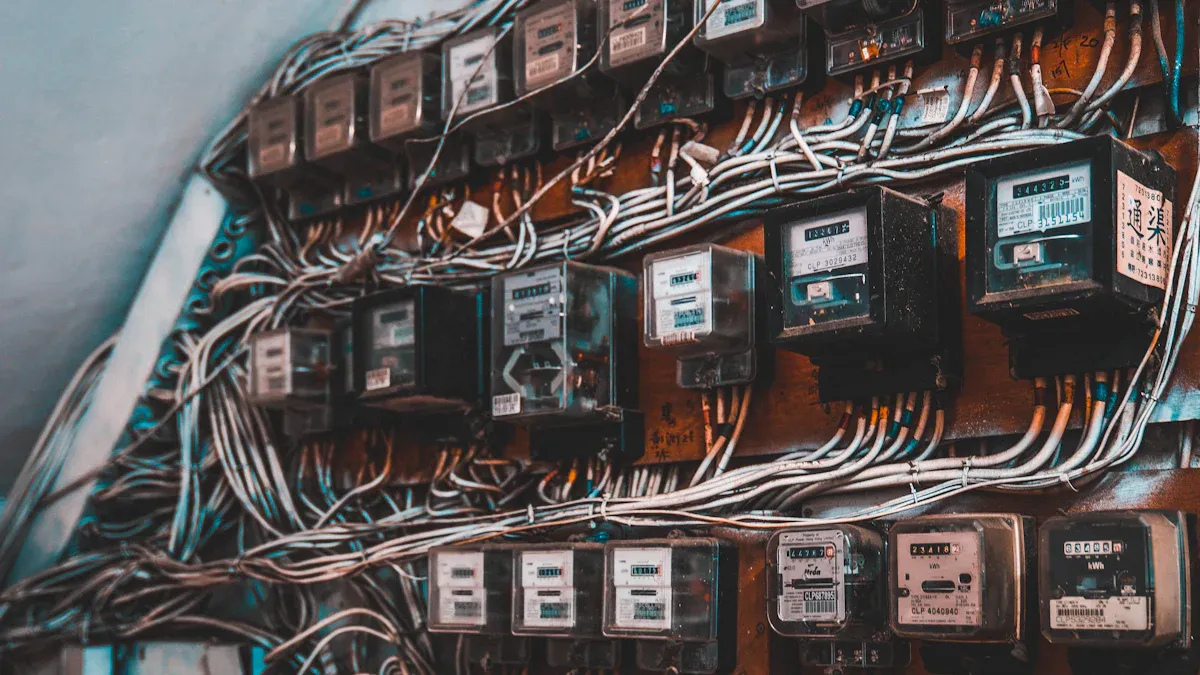
What Is It?
You may hear the term short circuit when talking about electrical problems at home. A short circuit means two wires that should not touch each other make contact. This abnormal connection happens between two points in your wiring that have different voltages. When this occurs, electricity flows quickly through the wires, limited only by the resistance of the rest of the network. This can cause overheating, damage, or even fire. Unlike a circuit overload, a short circuit is more sudden and dangerous.
Common causes of short circuits in homes include:
- Loose connections where wires are not attached tightly
- Old or outdated wiring, especially in homes over 30 years old
- Faulty appliance wiring, such as damaged plugs or cords
- Damaged insulation that lets wires touch
How It Trips
A short circuit triggers your circuit breaker to trip almost instantly. When active wires touch neutral wires, a surge of electricity rushes through the circuit. The breaker senses this spike and shuts off power to prevent damage. You stay safe because the breaker acts as a guard, stopping the flow before it can start a fire or ruin your appliances.
Note: The breaker trips much faster for a short circuit than for a circuit overload.
Warning Signs
You can spot warning signs of a short circuit if you know what to look for. Watch for these clues:
- The breaker flips off suddenly
- Appliances stop working or act strangely
- Outlets or switches feel warm to the touch
- You hear popping or crackling sounds near outlets
The first sign is often a flipped breaker. Appliances may show damage, such as melted insulation or excessive heat. Warm spots near outlets mean electricity may be leaking, which can get worse quickly. Sounds like popping or crackling suggest loose connections that need attention.
What to Do
If you suspect a short circuit, act quickly to keep your home safe. Follow these steps:
- Turn off power right away. Go to your electrical panel and switch off the breaker for the area.
- Look for the cause. Check for damaged wires, overloaded circuits, or broken appliances.
- Call a licensed electrician if you cannot find or fix the problem. A professional can troubleshoot and repair the issue safely.
Tip: Never ignore signs of a short circuit. Quick action protects your home and family.
Ground Fault
What Is It?
You may hear the term “ground fault” when talking about electrical safety. A ground fault happens when electrical current leaves its intended path and flows directly to the ground. This usually occurs because a live wire touches a grounded surface, such as metal or water pipes. Unlike a short circuit, which sends current back to the power source, a ground fault directs current to the ground. This situation can be dangerous because you or your pets might become part of the current path, increasing the risk of electric shock. Damaged or exposed wires often cause ground faults, especially in wet areas like bathrooms or kitchens.
How It Trips
Your circuit breaker protects you from ground faults by acting quickly. When a live wire touches a conductive surface that is not part of the circuit, a surge of current flows to the ground. The breaker’s magnetic tripping mechanism senses this sudden increase and shuts off the power right away. This fast response helps prevent electrical fires and keeps you safe from shocks. You should always trust your breaker to act as a safety guard in these situations.
Indicators
You can spot ground faults by looking for certain signs. Here are some reliable indicators:
- Ground fault indicators monitor electrical currents and trigger an alarm when a fault occurs.
- Clamp meters help you locate ground faults by checking current readings.
- If a circuit trips, switch it off immediately and label the affected area.
- Inspect wires and equipment for burning smells, exposed conductors, or visible damage.
Tip: If you notice any of these signs, act quickly to prevent further problems.
Safety Steps
You should follow these safety steps if you suspect a ground fault:
- Turn off power at the breaker panel. Flip the correct breaker to “OFF.”
- Use a voltage tester to make sure the power is off. Test between hot and neutral, and hot and ground.
- Wear insulated gloves, rubber-soled shoes, and safety glasses.
- Keep the area dry and let others know you are working on the electrical system.
⚡ Safety First: Never touch exposed wires or wet surfaces until you confirm the power is off.
Faulty Breaker
A faulty breaker can cause repeated problems in your home’s electrical system. You may notice your tripped circuit breaker even when there is no clear reason. This can happen if the breaker itself is damaged or worn out. A faulty breaker cannot protect your home from electrical dangers. You should learn how to spot the signs and know when to replace it.
Signs of Fault
You can look for several signs that show your breaker is faulty. These signs help you decide if you need to take action. Here are some common clues:
- The breaker trips with no load or issue present.
- The breaker feels physically warm or hot to the touch.
- It fails to reset or resets inconsistently.
- You smell a burning odor from the panel.
- You hear buzzing or humming sounds from the breaker.
- You see corrosion or rust on the breaker.
The table below shows more details about these signs:
| Sign of Fault | Description |
|---|---|
| Burning Odor | A burning smell from the panel means overheating and serious electrical problems. |
| Excessive Heat | If the breaker feels hot, it may be overloaded or have a loose connection. |
| Frequent Tripping | The breaker trips often when using certain appliances, which may mean it is failing. |
| Corrosion or Rust | Visible corrosion or rust suggests you need to replace the breaker soon. |
| Unusual Sounds | Buzzing or humming noises can mean loose wiring or an overloaded circuit. |
Tip: If you notice any of these signs, you should act quickly to keep your home safe.
When to Replace
You should replace your breaker if you see any of these problems:
- You smell burning or see burn marks on the breaker.
- The breaker trips frequently, even with normal use.
- You find physical damage or corrosion on the breaker.
- The breaker will not stay reset or works inconsistently.
- The breaker feels hot to the touch.
- The breaker is older than 25-30 years.
- You notice flickering or unstable performance.
Replacing a faulty breaker helps protect your home from electrical fires and keeps your system working well. If you are unsure, you should call a licensed electrician for help.
Other Causes
Inrush Currents
Sometimes your circuit breaker trips when you turn on big appliances. Things like air conditioners or refrigerators use a lot of power at startup. This quick burst of power is called inrush current. The inrush can be as high as 2600 to 3000 amps. If your breaker’s trip setting is lower than this, it will trip. The appliance may work fine after it starts.
Thermal-magnetic breakers react to both heat and strong surges. The magnetic part trips right away if the current gets too high. Inrush current can be five times more than what the motor uses later. Newer devices often need more power than old circuits can give. Using shared outlets and old wires can make tripping worse.
Tip: If your breaker trips only when you start a big appliance, ask an electrician to check your wiring and breaker settings.
Here are some common reasons inrush currents cause tripping:
- Big appliances use lots of power when starting.
- Breaker trip settings might be too low for the surge.
- Old wires and shared outlets make tripping more likely.
Relay Settings
Relay settings help decide when your circuit breaker trips. If you set relays right, only the broken circuit turns off. This keeps other circuits working and stops extra outages. The main breaker should not have an instant trip setting. If it does, many breakers might trip at once during a problem.
Setting the instant trip to the highest level on main breakers helps. This lets other breakers work first and stops unwanted tripping. It also keeps your home’s power running well.
You should know these facts about relay settings:
- Good relay settings stop unwanted tripping.
- Only the broken circuit turns off, others stay on.
- Main breakers should not have instant trip for better control.
- Highest instant trip settings help other breakers work right.
⚡ Note: Ask a licensed electrician to check your relay settings if your breaker trips often or for no clear reason.
Troubleshooting Tips
What to Check
When your circuit breaker trips, you can follow these steps to find the problem:
- Check if your neighbors have power. If they do, your issue is inside your home.
- Go to your main circuit breaker. Switch it off, then on, two times. This helps reset the system.
- Turn all circuit breakers back on.
- Unplug all appliances from the affected circuit. Try resetting the breaker again.
- Listen for buzzing sounds or feel for heat near outlets. These signs may mean loose connections or a bad breaker.
- If the breaker does not reset, you may have a short circuit or ground fault.
Tip: Always look for signs like burning smells or warm outlets. These clues help you spot trouble early.
Resetting Safely
You must stay safe when you reset a tripped breaker. Here are some important safety steps:
- Stand to the side of the panel and use only one hand to reset the breaker. This protects you from electrical arcing.
- Make sure the breaker is off before you switch it back on.
- Disconnect all devices from the circuit before you reset.
- Wear rubber-soled shoes for extra protection.
- Check for water damage near the panel or outlets.
- Close the panel door after you finish.
⚡ Alert: If the breaker trips again right away, do not reset it. This means you have a bigger problem that needs expert help.
Professional Help
Sometimes you need a licensed electrician. Call a professional if you notice these problems:
- The breaker will not reset or stay on.
- You hear buzzing sounds from outlets or the panel.
- Outlets or switches feel warm.
- The same breaker trips often in one room.
- You see signs of electrical emergencies, like sparks or smoke.
Note: Electricians have special tools and training. They can fix problems safely and keep your home protected.
You have learned the top 3 reasons for circuit breaker tripping. These are overloaded circuits, short circuits, and ground faults. The table below explains each reason and how you can stop it:
| Reason | Description | Prevention Methods |
|---|---|---|
| Overloaded Circuit | This happens when too many strong devices use one circuit. | Try using other outlets, unplug things you do not need, or add a new circuit. |
| Short Circuit | This is when a hot wire touches another hot or a neutral wire. | Ask an electrician to check and fix any outlets that seem bad. |
| Ground Fault | This happens if a hot wire touches the ground wire or a metal box. | Look at outlets for damage and unplug things until an electrician checks it. |
Other things, like a faulty breaker or inrush currents, can also make the breaker trip. You should act fast if you see a problem. Circuit breakers keep you safe from fires and shocks. If you ignore trips, your home could get damaged and you could get hurt.
- Call a professional if you are not sure or if the problem keeps happening.
- A licensed electrician can find hidden problems and help keep your home safe.
🏡 Stay aware and do something fast. This helps keep your home and family safe.
FAQ
Why does my circuit breaker trip when I use my microwave?
Your microwave uses a lot of power. If you plug it into a circuit with other big devices, the breaker may trip. Try using the microwave on its own circuit.
Can I reset a tripped breaker myself?
You can reset a breaker by switching it off, then on. Stand to the side and use one hand for safety. If it trips again, call an electrician.
What should I do if my breaker keeps tripping?
Unplug all devices on the circuit. Reset the breaker. If it trips again, you may have a wiring problem or a faulty breaker. Contact a professional for help.
How do I know if my breaker is faulty?
Look for signs like burning smells, buzzing sounds, or a breaker that feels hot. If the breaker will not reset or trips with no load, you may need a replacement.
Is it dangerous if my breaker trips often?
Frequent tripping means your electrical system has a problem. You risk fire or electric shock. You should fix the issue quickly to keep your home safe.
See also
5 reasons and solutions for circuit breaker tripping
Why Won’t My Circuit Breaker Reset and What Can I Do?
Analysis of 7 Major Causes of Circuit Breaker Damage
Analysis of the cause of air conditioning circuit breaker tripping
How to determine whether to replace an overload circuit breaker after it trips