

You want your home to be safe, right? Making your electrical system safer in 2025 really helps. Residual current circuit breakers protect you when you need it most. These devices notice danger very quickly. With an rccb, you can stop many electrical problems before they hurt anyone. Old breakers can’t give you the same safety. Look at what you have now—does it keep you as safe as you want?
Key Takeaways
- Upgrade to residual current circuit breakers (RCCBs) for better safety from electric shocks. They work faster than old breakers. They stop power in just a few milliseconds.
- RCCBs help stop electrical fires by finding leaks. They turn off power before anything gets damaged. Regular check-ups can help you avoid expensive repairs.
- These devices protect you from both direct and indirect electric shocks. This makes your home safer for everyone. They are very helpful in places with more risk.
- A professional can easily install an RCCB. Testing them often makes sure they work right. This gives you strong and steady protection.
- Pick RCCBs for peace of mind. They protect better than normal breakers. They help keep your family safe from electrical dangers.
Electric Shock Protection
How Residual Current Device Works
You want to know how a residual current device keeps you safe from electric shock. It works by watching the flow of electricity in your wires. If it spots a leak, it acts fast. The device checks both the line current and any leakage current. When the leakage goes above a safe level, usually 30mA, the device trips and cuts off the power in milliseconds. This quick action can save you from serious harm.
Let’s break down the science behind it:
- Residual current devices look for imbalances in the electrical current. If the current going out doesn’t match the current coming back, something is wrong.
- The device uses Kirchhoff’s law to compare the current in the live and neutral wires.
- If there’s a difference, the device disconnects the circuit to stop electric shock.
Here’s a simple way to picture it:
- The device has two coils, one for the live wire and one for the neutral wire.
- If the current is balanced, nothing happens.
- If there’s an imbalance, the device trips and shuts off the power.
Residual current circuit breakers do a better job than regular breakers. Standard breakers only react to overloads or short circuits. Residual current circuit breakers respond to ground faults and leakage currents, which are the main causes of electric shock.
Preventing Direct and Indirect Shocks
You face two types of electric shocks: direct and indirect. Direct shocks happen when you touch a live wire. Indirect shocks occur when a metal part becomes live because of a fault. Residual current devices protect you from both.
| Type of Electric Shock | Description | RCD/RCCB Protection |
|---|---|---|
| Direct Contact | You touch a live part, and current flows through your body to the ground. | Device detects abnormal current and disconnects power. |
| Indirect Contact | A metal part gets live due to a fault, and current flows through it. | Device senses the difference and trips the circuit. |
You might wonder if these devices really make a difference. In a large hospital, staff replaced thousands of old devices with improved residual current circuit breakers. They saw a big drop in electric shock incidents and fewer nuisance trips. This shows that upgrading your system can protect you from ground faults and keep your home safer.
Tip: If you want the best protection against ground faults, choose a residual current device for your home. It reacts faster and covers more risks than older systems.
Fire Hazard Prevention
Detecting Electrical Leakage
You want your house to be safe from fires. Hidden electrical leaks are a big danger. Wires can get old or damaged. Sometimes wires become loose. You might not see these problems until it is too late. Residual current circuit breakers watch electricity all the time. They use sensors to check if the live and neutral wires match. If a small amount of electricity leaks out, just 0.03 amps, the device acts quickly. It shuts off power in less than 30 milliseconds. This fast action stops leaks before they cause fires or shocks.
Here are some reasons why electrical leaks happen at home:
- Wires are not put in right or are loose
- Circuits get too full and wires get hot
- Rodents chew on cables
- Electrical systems get old or worn out
Tip: If your house is old or you have many gadgets, check your wiring. Think about using a residual current device for more safety.
Stopping Faulty Appliance Accidents
Broken appliances can start fires or give shocks. You may not know there is a problem until you smell smoke or see sparks. Residual current circuit breakers help by cutting power when they sense trouble. They look for imbalances in the current. This often means an appliance has a fault. When this happens, the breaker turns off the circuit right away. This helps stop fires and keeps you safe from shocks.
Let’s look at some numbers:
| Statistic Description | Value | Source |
|---|---|---|
| Deaths each year from faulty electrical equipment | 70 | Peabody |
| Injuries each year from faulty electrical equipment | 350,000 | Peabody |
| Accidental fires each year caused by electricity | 20,000 | Electrical Safety First |
| Fires from appliances in 2018 | 71% | Electrical Safety First |
| Electrical injuries from appliances each year | 3,000 | Electrical Safety First |
Most electrical fires start with appliances. Using the right protection lowers your risk. It helps keep your family safe.
Why Choose Residual Current Circuit Breakers
Fast Circuit Disconnection
You want your house to stay safe if something bad happens. An rccb is great for this. Old breakers are slow, but an rccb can turn off power in just 25 to 40 milliseconds. That is faster than you can blink! This quick action can stop electric shocks before they hurt anyone.
Here is how fast these devices work:
| Tripping Current | Tripping Speed |
|---|---|
| 30mA | 300ms |
| 10mA | 40ms |
Most rules say a regular residual current device should trip in less than 300 milliseconds. Some types are even faster. This helps keep you and your family safe.
Let’s compare rccb to old breakers:
| Feature | Residual Current Circuit Breakers (RCDs) | Traditional Circuit Breakers |
|---|---|---|
| Primary Function | Protect against electric shocks due to leakage currents | Protect against overloads and short circuits |
| Response Time | Cuts off power within 25-40 milliseconds | Slower response to overloads |
| Application | Used in high-risk environments (e.g., wet areas) | General electrical protection |
| Detection Mechanism | Detects imbalances between live and neutral wires | Detects excess current flow |
| Safety Focus | Primarily for human safety | Equipment protection |
You can see that rccb is made to keep people safe, not just machines.
Ground Fault Protection
Ground faults are tricky. They happen when electricity goes to the ground, sometimes through a person or water. An rccb looks for these problems. It checks if the power going out matches the power coming back. If there is a leak, even a small one, the rccb turns off the power.
Here are some common ground fault problems and how an rccb helps:
| Ground Fault Scenario | Mitigation Strategy |
|---|---|
| Broken wires or loose ends | rccb trips if it senses a leak, stopping danger. |
| Moisture and water intrusion | rccb reacts fast to leaks in wet areas. |
| Overloading and circuit imbalance | rccb detects imbalances and cuts power. |
| Lightning and surges | rccb adds a layer of safety with quick disconnection. |
You might wonder if these devices really help. They do! If you drop a hair dryer in water, the rccb trips right away. If you cut a cord with a trimmer, the rccb acts in 30 milliseconds. Even a broken microwave gets stopped before it can shock you.
Many places use rccb for safety. Homes with rccb have 30% fewer electrical accidents. Stores and factories have fewer problems and safer workers. Subway systems use them to keep trains safe.
Tip: For the best safety from ground faults, use a residual current device in every risky area at home.
Residual current circuit breakers and residual current devices help you feel safe. You know your family and home have strong protection.
RCCB Maintenance and Cost Savings
Lower Repair Bills
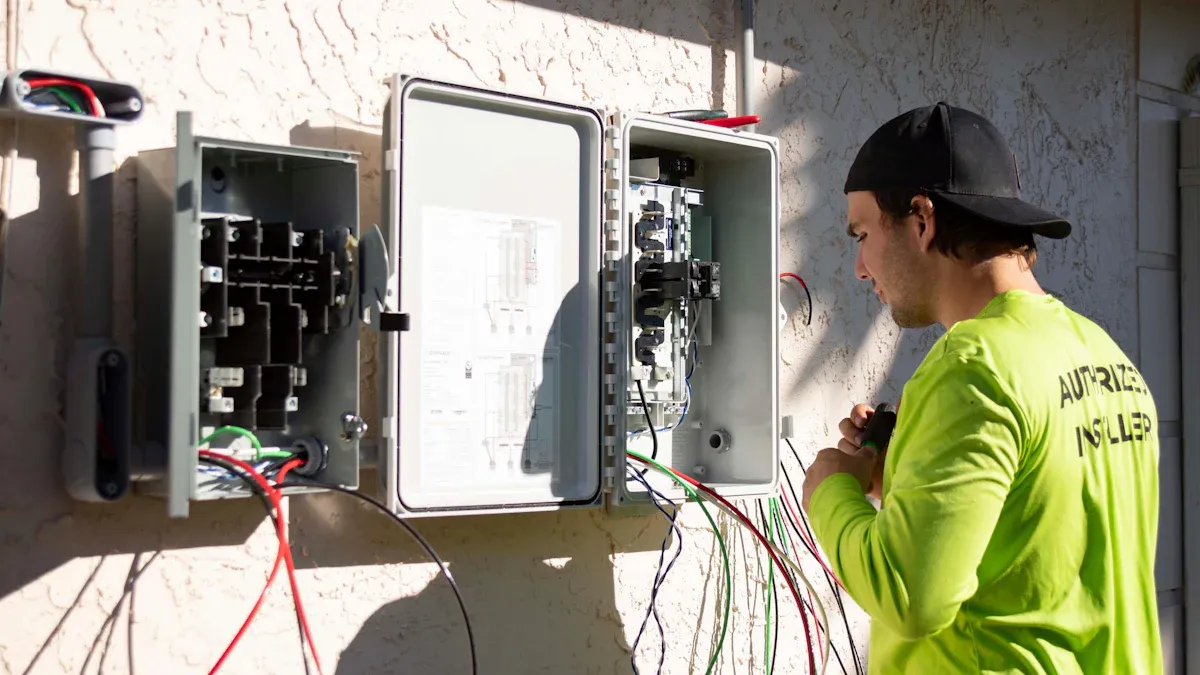
You want to save money on home repairs, right? When you keep your rccb in good shape, you avoid big repair bills. Regular care for your rccb means you catch problems early. You stop small issues before they turn into expensive disasters. Here’s how regular rccb maintenance helps your wallet:
- Enhanced safety: You lower the risk of electric shocks and fires. These problems can cost a lot to fix.
- Extended service life: You spot trouble early. Your rccb lasts longer, so you don’t have to buy a new one soon.
- Reliable performance: A well-maintained rccb works every time. You avoid costly breakdowns and emergency calls.
If you ignore your rccb, you might face big repair bills. Fires, damaged appliances, and even wiring problems can all cost more than a simple check-up.
Tip: A little attention to your rccb now can save you a lot of money later.
Simple Upkeep
You don’t need to be an expert to keep your rccb working well. Most tasks are simple and quick. Here’s what you should do to keep your rccb in top shape:
- Test your rccb every six months. Use the test button to make sure it trips.
- If your rccb trips often, find out why. It could be a faulty device or a wiring problem.
- Unplug all your appliances. Reset the rccb and see if it stays on.
- Check your cables and sockets. Look for any signs of damage or wear.
- Keep damp areas dry. Use waterproof covers for outdoor sockets.
- Test each circuit one at a time. This helps you find which one has a problem.
- Call a professional if you can’t fix the issue. Sometimes, you need an expert.
You help your rccb protect your home from ground faults and other dangers when you follow these steps. Simple upkeep keeps your rccb ready to act fast and keeps your repair bills low.
User Satisfaction and Support
Warranty and Service
When you buy an rccb, you want to know it will last and work when you need it. Most major brands offer strong warranties. These warranties show that the company trusts its product. You get full coverage for defects and performance issues. If something goes wrong, you can count on customer service to help you out.
Here’s a quick look at what you can expect:
| Warranty Feature | Description |
|---|---|
| Longer Warranties | Shows the brand trusts the rccb’s reliability. |
| Full Coverage | Protects you from defects and performance issues. |
| Customer Service | Good reviews mean better support for you. |
You also get service agreements with clear terms. Most rccb products come with a 90-day warranty against defects in materials or workmanship. Services are also covered for 90 days. Keep in mind, warranty service happens during business hours. If you use non-approved parts or don’t follow the rules, you might lose coverage. Always use your rccb the right way and let the company know if you spot a problem.
Tip: Always check the warranty details before you buy an rccb. Good support makes a big difference if you ever need help.
Positive Homeowner Experiences
You want to feel good about your choice. Homeowners who install an rccb often share positive stories. Many say the installation is simple. They feel safer right away. People like knowing their rccb protects them from ground faults and other dangers.
Here’s what surveys show:
| Evidence Type | Description |
|---|---|
| Installation Process | Easy setup means fewer repairs and happier users. |
| Customer Support | Strong support helps when you need parts or answers. |
| After-sales Service | Quick help after buying gives you peace of mind. |
| Reliability Insights | Reviews help you pick the best rccb for your home. |
You can trust your rccb to work when it matters most. Homeowners say they sleep better at night knowing their family is safe. If you ever have a problem, good after-sales service means you get help fast. That’s real peace of mind.
Note: Reading reviews and checking support options helps you choose the right rccb for your needs.
You want the best for your home and family. Upgrading to an rccb gives you real peace of mind. Here are the top reasons to make the switch:
| Benefit | What It Means for You |
|---|---|
| Electrical Shock Protection | Stops shocks fast |
| Fire Prevention | Reduces fire risk |
| Versatility in Sensitivity | Fits many needs |
| Selective Coordination | Keeps most circuits running if one trips |
| Ease of Installation | Simple to add to your system |
You can take action today. Follow these steps for a safe upgrade:
- Turn off power before you start.
- Wear safety gear.
- Test your rccb every month.
- Check for loose wires.
- Call an electrician once a year.
- Replace old rccb models.
- Keep a record of all rccb checks.
When you use an rccb, you protect against ground faults and other dangers. You invest in safety that lasts for years. Make this the year you choose an rccb for your home.
FAQ
What is the difference between an RCCB and a regular circuit breaker?
An RCCB protects you from electric shocks and fire by detecting small leaks in current. A regular breaker only stops big problems like overloads or short circuits. You get more safety with an RCCB.
How often should I test my RCCB?
You should test your RCCB every six months. Just press the test button. If it trips, it works. If not, call an electrician.
Tip: Set a reminder on your phone so you never forget!
Can I install an RCCB myself?
You should not install an RCCB by yourself. Only a licensed electrician should do this job. They know how to connect wires safely.
Safety first! Always call a pro for electrical work.
Will an RCCB work with all my appliances?
Yes, an RCCB works with most home appliances. It protects you if something goes wrong. Some sensitive devices may need special types, so ask your electrician if you have questions.
See also
Top 8 Residual Current Circuit Breaker Brands for Home Safety
What Are Residual Current Circuit Breakers and How Do They Work
What Leads to RCCB Malfunction and Damage
Breaking Down the Cost of Residual Current Circuit Breakers in 2025
What Is the Full Name of RCCB in Electrical Systems