
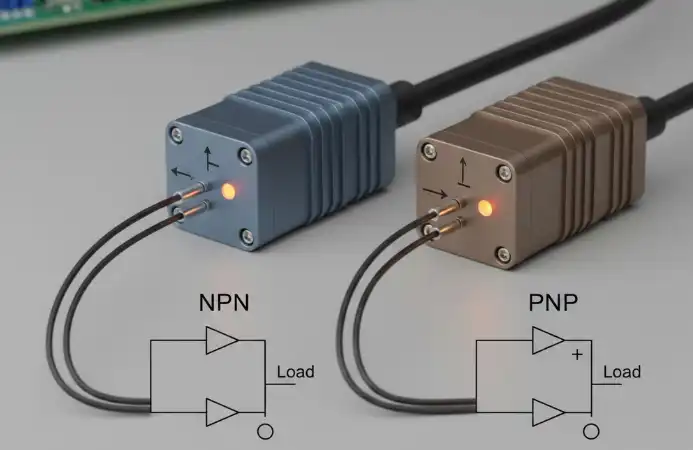
When you look at NPN and PNP sensors, the biggest difference is in their output wires and the kind of signal they send. NPN and PNP sensors use voltage and ground in opposite ways. This changes how you hook them up to a control system. If you pick the wrong sensor, you might have trouble with wiring or need more parts. The table below shows how each sensor type is different:
| Aspect | PNP Sensors | NPN Sensors |
|---|---|---|
| Output Type | Positive voltage to input | Ground signal to input |
| Wiring Configuration | Needs specific PLC settings | Needs specific PLC settings |
| Integration Complexity | Possible complications if mismatched | Possible complications if mismatched |
| Cost Implications | May need extra components if wrong type is chosen | May need extra components if wrong type is chosen |
Key Takeaways
- NPN sensors send a ground signal. PNP sensors send a positive voltage signal. Pick the right sensor for your control system.
- To wire NPN sensors, put the load between the positive supply and the sensor output. For PNP sensors, put the load between the sensor output and ground.
- Using the wrong sensor can cause system problems or wrong readings. Always match the sensor output type with your PLC input.
- PNP sensors work better in noisy places. They can handle electrical interference. Use them in factories or other busy areas.
- Before you pick a sensor, check what voltage and signal type your system needs. This helps make sure everything works together.
NPN and PNP sensors Overview
NPN Sensor Basics

NPN sensors are used in lots of automation systems. These sensors work by letting current flow to ground. When something gets close, the sensor links the output to ground. This finishes the circuit and tells your controller. NPN sensors are good for systems with negative voltage signals.
Here is a simple look at how NPN sensors work:
| Wire Color | Connection Description |
|---|---|
| Brown | Goes to positive supply voltage (+12V or +24V DC) |
| Blue | Goes to common ground (0V) |
| Black | Output signal wire |
- NPN sensors let current flow to ground. When a target is found, the sensor links the output wire to ground.
- In a normally-open setup, the output wire does not connect until a target is found.
- You can use NPN and PNP sensors together in some systems, but you need the right controller inputs.
New NPN sensors, like the LANBAO PST Series, are small and have bright LED lights. These features help you put sensors in small spaces and check them fast. They also block light interference, so signals stay steady even when light changes.
PNP Sensor Basics
PNP sensors work by sending current out. When you find an object, the sensor sends positive voltage to the output. This makes it easy to use with most PLCs.
Here is a table that shows how PNP sensors act in different states:
| Feature | Normally Open (NO) | Normally Closed (NC) |
|---|---|---|
| Inactive State | Output switch is OPEN; no current flows. | Output switch is CLOSED; current flows. |
| Active State | Output switch CLOSES; sends positive voltage. | Output switch OPENS; stops sending voltage. |
| Application | Output ON only when target is present. | Used for safety, ON until target is found. |
- Always wire PNP sensors the right way for good results. Use brown for positive voltage, blue for ground, and black for the output signal.
- PNP sensors send current to the load. When they are active, they link the output to the positive supply.
- Always check your controller’s input type before picking a PNP sensor.
- For long cables or noisy places, use shielded cables to stop signal problems.
NPN and PNP sensors now come in many shapes, including small models with bright LEDs and strong resistance to interference. These upgrades help you get better results and reliability in your automation projects.
Key Differences
Sourcing vs. Sinking Output
You might hear “sourcing” and “sinking” when learning about NPN and PNP sensors. These words show how the sensor moves electric current in a circuit.
- Sourcing (PNP): The sensor gives current to the load. The load sits between the sensor output and DC ground. When the sensor finds a target, it sends positive voltage to the output.
- Sinking (NPN): The sensor takes current from the load. The current goes through the load, then the sensor output, and then to ground. When the sensor finds a target, it connects the output to ground.
You can remember the paths like this: Sourcing Path (PNP): Power goes to the sensor, then to the load, then to ground. Sinking Path (NPN): Power goes to the load, then to the sensor, then to ground.
If you use a programmable logic controller (PLC), you must match the sensor type with the PLC input. PNP sensors work best with sinking PLC inputs. These inputs want a positive voltage for a “true” signal. NPN sensors fit sourcing PLC inputs. These inputs want a ground signal for “true.”
Tip: Picking the right sensor type makes wiring easier and helps your system work well.
Signal Type and Wiring
NPN and PNP sensors send different signals and need different wiring. You must connect each sensor the right way so it works.
| Feature | NPN Sensor | PNP Sensor |
|---|---|---|
| Signal Output | Sends a negative (ground) signal | Sends a positive signal |
| ON Logic Level | ON when connected to ground (0V) | ON when connected to positive voltage |
| Wiring Setup | Load wired between positive supply and sensor output | Load wired between sensor output and ground |
When you wire NPN sensors, put the load between the positive supply and the sensor output. For PNP sensors, put the load between the sensor output and ground. If you mix up the wiring or use the wrong sensor, your PLC might read the wrong signal or not work.
You should always check your control system’s input type before picking a sensor. Using the wrong sensor can cause logic errors or even break your equipment. Mixing NPN and PNP sensors in one system without special circuits can also cause problems.
Safety and Compatibility
Safety is very important in automation. You must pick the right sensor type for your control system to keep things safe and working well. NPN and PNP sensors change how your system acts during failures or power loss.
- PNP sensors source current and often need simpler wiring. They also handle electrical noise better, so they are safer in noisy places.
- NPN sensors sink current and can cost less, but you must set them up carefully to avoid safety risks.
You must always match the sensor output type with your PLC or controller input. If you do not, your system could stop working or become unsafe. In safety systems, many engineers pick PNP sensors. If a wire breaks in a PNP setup, the system loses the signal and can shut down safely. The logic level from the sensor must match what your controller needs for alarms or normal work.
Note: In North America, most PLCs use PNP sensors. In other places, NPN sensors are more common. Always check your system’s needs before you choose.
NPN and PNP sensors are important for safety and making sure your system works with your controller. Picking the right one helps you avoid wiring mistakes, keeps your system safe, and makes fixing problems easier.
NPN and PNP sensors Applications
Industrial Uses
NPN and PNP sensors are used in many factories. These sensors help control machines and count items. They also help keep workers safe. In big factories, PNP sensors are common. They work well near motors and loud electrical noise. PNP sensors give steady signals in tough places.
Here is a table that shows when PNP sensors are best:
| Application Environment | Recommended Output Type | Reason |
|---|---|---|
| Heavy industry with motors | PNP | Better noise immunity, stable signals |
| Equipment needing global standards | PNP | European and North American standards |
You use PNP sensors to turn on things with a high signal. This includes relays and lights. Most factory systems want sourcing inputs. PNP sensors work well for these systems. PNP sensors also fight noise better. This helps in busy electrical places.
Tip: If your machines are in noisy areas, use PNP sensors for better results.
Choosing the Right Sensor
You need to think about a few things before picking a sensor. Voltage and signal type are important. Many places use 24 VDC three-wire sensors. These are safe and simple. You should check if your system works with NPN or PNP sensors.
Here is a table to help you choose:
| Factor | Description |
|---|---|
| Voltage and signal type | 24 VDC three-wire sensors are common for safety and ease of use. |
| Compatibility | Make sure the sensor matches your automation system. |
| Normally-open or closed | Pick based on your logic and safety needs. |
Think about the logic you want. PNP sensors send a high signal when they see something. NPN sensors finish the circuit by grounding the output. If your system needs a high signal for “on,” pick PNP. If it needs ground for “on,” pick NPN.
The environment can change how sensors work. Electrical noise can cause trouble for both types. PNP sensors usually handle noise better. Always check your system and the area before you decide.
Note: Picking the right sensor keeps machines safe and helps stop downtime.
You should learn the main differences between NPN and PNP sensors. This helps you make good choices in automation. The table below shows how they are not the same:
| Difference | NPN Sensor | PNP Sensor |
|---|---|---|
| Signal Output | Sends a negative (ground) signal | Sends a positive voltage signal |
| ON Logic Level | ON when connected to ground (0V) | ON when connected to positive voltage |
| Wiring Setup | Load wired between positive supply and output | Load wired between output and ground |
| Regional Use | More common in Asia | More common in Europe and North America |
| Common Confusion | Often mistaken for positive output | Often mistaken for negative output |
To choose the right sensor, do these things:
- Learn the basic differences between NPN and PNP sensors.
- Make sure the sensor output matches your PLC or control device input.
If you know how NPN and PNP sensors work, your machines stay safe. Your automation system will also work well.
FAQ
What happens if you connect an NPN sensor to a PNP input?
You will not get the right signal. The sensor and input will not match. Your system may not work or could give false readings. Always match sensor type to input type.
Can you use NPN and PNP sensors together in one system?
You can use both types, but you need special wiring or interface modules. Most systems work best with one sensor type. Mixing them can cause confusion and errors.
How do you tell if a sensor is NPN or PNP?
Check the sensor’s datasheet or look for wiring diagrams. NPN sensors usually have the load between the positive supply and output. PNP sensors have the load between output and ground.
Which sensor type is safer for emergency stops?
PNP sensors are often safer. If a wire breaks, the system can detect the loss of signal and stop the machine. This helps protect workers and equipment.
see also
What Are Automatic Transfer Switches and Their Key Functions
Thermal magnetic circuit breaker and electronic circuit breaker
Detailed explanation of the workflow of automatic switch
Terminal Block or Connector Which One Fits Your Project
Factory Price TB Fixed Type Barrier Terminal Block