
You need to check and take care of the maintenance and upkeep of circuit breakers often to keep your electrical systems safe. Most experts say you should look at them once a year. If the area is dusty, check them more often.
- Lubricate the operating mechanism every two years or after 2,000 uses.
- Always look at the equipment after any big repair or overhaul.
Predictive maintenance can help your system work better and stop expensive downtime. Taking care of the maintenance and upkeep of circuit breakers keeps your system safe and helps your equipment last longer.
Key Takeaways
- Look at circuit breakers at least once each year to stop problems and keep things safe.
- Doing regular maintenance lowers the chance of fires and stops damage to equipment, which saves you money over time.
- Make a plan for checks based on the kind of breaker and where it is to help your system work well.
- Write down all maintenance work to watch for problems and make future checks better.
- Teach your team often to build skills and make sure maintenance is done well.
Maintenance and upkeep of circuit breakers
Why regular upkeep matters
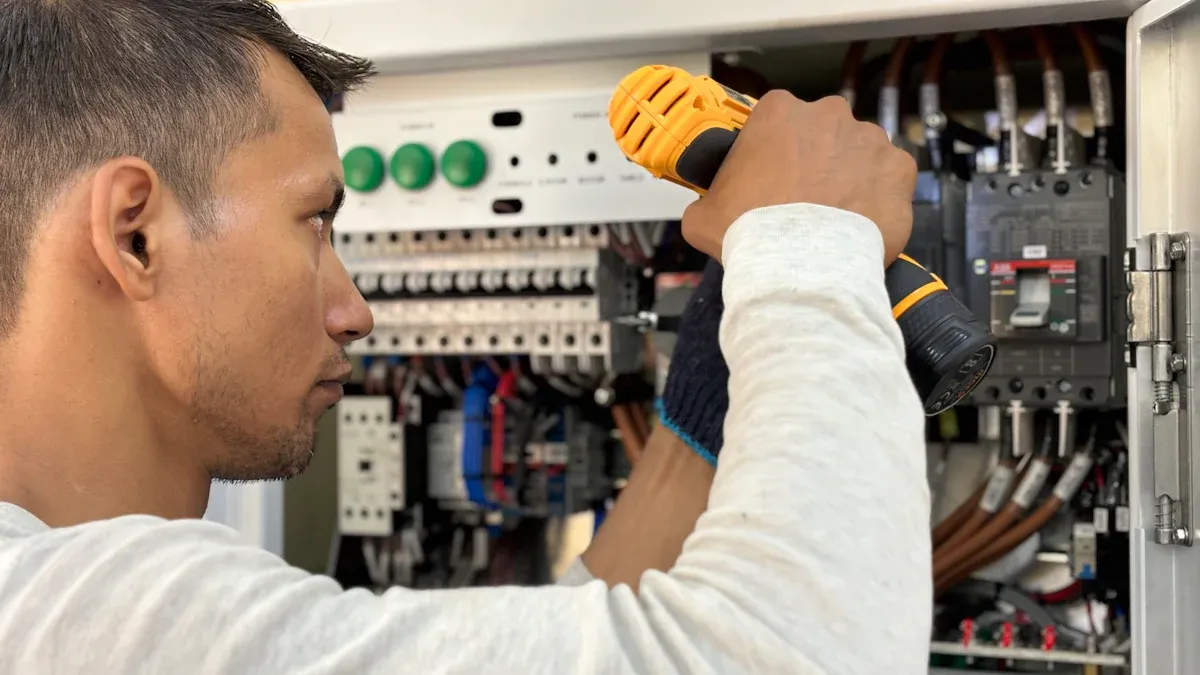
Circuit breakers help keep your home or business safe. They stop electricity when something is wrong. If you do not check them often, you could have big problems. Overloads, short circuits, and ground faults can make breakers stop working. If you skip checks, dust or water can get inside and hurt the equipment. Even small problems can turn into big ones if you wait too long.
Checking circuit breakers often helps you find problems early. You can stop fires, protect your things, and keep your building safe. When you look at your breakers a lot, you make sure they work fast and stop trouble before it spreads.
Some common reasons circuit breakers fail that you can stop with care are:
- Overloads from using too much power
- Hazards like dust or water
- Not doing regular checks
Key benefits
If you take care of circuit breakers often, you get many good things:
- You lower the chance of fires and broken equipment.
- You find wear, rust, or damage before it gets worse.
- You have less surprise downtime and fewer big repairs.
- You keep safety systems like fire alarms and lights working.
- You save money by stopping bigger problems later.
The Institute of Electrical and Electronics Engineers (IEEE) says equipment fails three times more if you do not have a plan for checks. You also help your system last longer and work better.
| Type of Circuit Breaker | Tripping Characteristics | Common Applications |
|---|---|---|
| Type B | 3 to 5 times rated current | Residential lighting and resistive loads |
| Type C | 5 to 10 times rated current | High inductive loads like small motors |
| Type D | 10 to 20 times rated current | Very high inductive loads like heavy motors |
| Type K | 8 to 12 times rated current | Heavy inductive loads in industries |
| Type Z | 2 to 3 times rated current | Sensitive medical and semiconductor equipment |
| MCCB | Up to 2500 Amps | Applications exceeding MCB ratings, adjustable trip |
If you do not check circuit breakers, you might pay more for energy. Your appliances can break, and you could have safety problems. Some circuit breakers may not trip after a few years if you do not care for them. Make checking and caring for circuit breakers important to keep your system safe and working well.
Inspection and maintenance intervals
Standard schedules
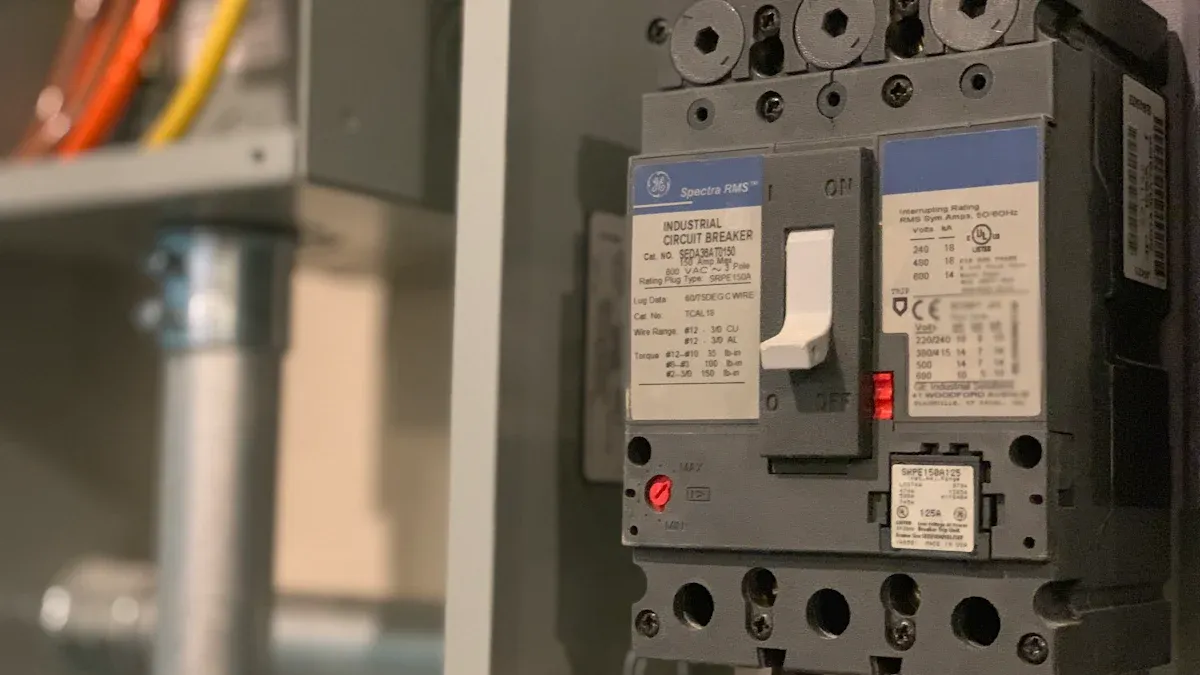
You should check your circuit breakers on a set schedule. Experts say to check high-voltage circuit breakers every 6 to 12 months. Medium-voltage breakers need checks about once a year. For low-voltage breakers at home, test them one or two times each year. In places like hospitals or data centers, check them every month or even every week.
Tip: Test your breakers after a big problem, after 1,000 uses, or after a service visit. This helps you find issues early and keeps your system safe.
Here is a simple guide for when to check your breakers:
| Setting/Type | Recommended Interval |
|---|---|
| High-voltage | Every 6-12 months |
| Medium-voltage | Annually or as needed |
| Residential | Once or twice a year |
| Commercial/Industrial | Every 6 months or quarterly |
| Hospitals/Data Centers | Monthly or weekly |
| After major fault/service | Immediately after event |
Industry rules suggest these times for equipment up to 1,000 V in businesses. These rules help you plan when to check your circuit breakers and keep your system working well.
Factors affecting frequency
Not all buildings or breakers need the same schedule. You need to think about your building, how much you use your breakers, and if they had problems before. These things can change how often you check and care for your breakers.
- If you use heavy loads or switch often, check more often.
- Dust, wet air, and hot or cold weather can cause trouble. In these places, check your breakers more often.
- If your breakers had problems before, check them more to stop new trouble.
Note: Wet air can make rust inside your breakers. Dust can make them too hot or trip by mistake. Bad air can hurt the parts inside. In tough places, check and care for your breakers more to stay safe.
Here are some things that can change your schedule:
- Usage Levels: If your building uses lots of power, like a factory, check breakers more than in a small office.
- Environmental Conditions: If your breakers are in a place with dust, water, or chemicals, check them more often.
- Fault History: If a breaker tripped a lot or had problems, check it more often.
How often you check depends on the type of breaker, how much you use it, and where it is. If your breakers work all the time or handle big loads, check them more than ones used less.
By changing your schedule for these things, you make sure your care for circuit breakers fits your needs. This helps you stop failures and keeps your system safe.
Maintenance process steps
Visual and mechanical checks
Always start by making sure you are safe. Turn off the power before you begin. Wear safety gear to protect yourself. Some parts can still be hot after turning off the breaker, so be careful. Only people who are trained should do these checks. Look for signs of trouble like a burning smell or hot spots. Check for things like melted plastic or scorch marks. See if there are loose wires or rust. Look for wires with broken covers. Use your eyes and hands to find problems. These steps help you find issues before they get worse.
- Look for broken parts and rust.
- Check for bad wires and grounding problems.
- Make sure there are no code mistakes or loose wires.
Electrical testing
After looking at the breaker, test the electrical parts. Use a digital multimeter to check voltage. Test if the wires are connected right. Use an insulation tester to find weak spots. Try a primary injection test set to see if the breaker trips. Use a thermal camera to find hot spots.
| Testing Method | Description |
|---|---|
| Load Testing | Checks if the breaker trips with real loads. |
| Insulation Resistance Testing | Finds weak insulation that could cause problems. |
| Multimeter Voltage Testing | Measures voltage to make sure it works. |
| Continuity Testing | Checks if the breaker lets power flow when ON and stops it when OFF. |
Cleaning and lubrication
Clean the outside of the breaker first. Dirt and dust can make it overheat or trip. Use a dry cloth or vacuum to clean it. Put lubricant on moving parts as the maker says. This helps stop rust and makes the breaker last longer. Do not use too much lubricant or it will collect more dirt.
- Look for broken or worn parts.
- Make sure moving parts move easily.
- Lubricate as the maker tells you.
Documentation
Write down every maintenance job you do. Record what you checked and what you fixed. This helps you keep track of your breakers. Good records show you follow safety rules. They help you see problems before they get big. The National Fire Prevention Association and OSHA say you must keep these records for checks.
Tip: Use your notes to plan future work and make your maintenance better.
Setting up a maintenance program
Scheduling
You need a good plan to keep circuit breakers safe. Make a schedule for regular checks and care. Many big buildings use special software for this. These programs remind you to check, test, or clean your breakers. Here are some common choices:
| Software Name | Key Features | Specific Use for Circuit Breakers |
|---|---|---|
| Maintenance Connection | Preventive maintenance scheduling, asset management | Yes |
| MaintainX | Maintenance management, task tracking | Not specifically highlighted |
| UpKeep | Mobile maintenance management, work order tracking | Not specifically highlighted |
Set reminders for checking, testing, and cleaning. Plan for calibration and keeping records too. Sticking to a schedule helps you find problems early. This can stop expensive repairs.
Assigning responsibilities
Giving the right jobs to the right people helps a lot. You can split the work into three groups:
| Maintenance Level | Actions | Frequency |
|---|---|---|
| Routine Inspection | Visual checks, operation counters, pressure gauges | 6 months to 1 year |
| Minor Maintenance | Thorough inspection, breaker testing, easy part replacement | 6 to 8 years |
| Major Maintenance | Opening assemblies, accessing internal parts | 12 to 20 years (varies) |
Give each job to trained workers. Make sure everyone knows what to do and when. Good teamwork keeps your power system working well. Remember, you need both visual checks and electrical tests for all breakers.
Continuous improvement
You can make your maintenance plan better over time. Try these ideas:
- Use predictive maintenance to find problems early.
- Try condition-based maintenance. Check only when needed.
- Add new tools for better watching and data.
- Train your team often. Certification keeps skills strong.
Tip: Watch numbers like mean time to repair (MTTR), mean time between failures (MTBF), and how often you do preventive maintenance. These numbers help you see if your plan works or needs changes.
By doing these things, you make a strong plan. This keeps your circuit breakers safe and your system running well.
You can keep your building safe and save money by checking circuit breakers often. Doing regular maintenance helps stop dangers and keeps everything working right. Many places have saved a lot of money:
- One factory had 40% less downtime after they started regular checks.
- A data center stopped expensive outages by checking breakers before busy times.
If you take care of your breakers, you can find problems early and keep your equipment safe. Look at your maintenance plan now to make sure your system stays strong and works well.
FAQ
How do you know when a circuit breaker needs maintenance?
You may notice flickering lights, frequent tripping, or a burning smell. These signs mean you should check your circuit breaker soon. Regular checks help you catch problems before they get worse.
Can you perform circuit breaker maintenance yourself?
You should let a trained electrician handle most maintenance tasks. Some simple checks, like looking for dust or loose wires, are safe for you. Never open or repair a breaker if you are not qualified.
What tools do you need for basic inspection?
You need a flashlight, screwdriver, and safety gloves. For deeper checks, use a digital multimeter and an insulation tester. Always wear safety gear to protect yourself.
How long does a typical inspection take?
A basic inspection usually takes 15 to 30 minutes. If you need to test or clean more parts, it may take longer. Plan extra time for larger systems.
What happens if you skip regular maintenance?
- You risk fire hazards.
- Your equipment may fail without warning.
- Repairs can cost more later.
Regular maintenance keeps your building safe and saves you money.
See also
The service life of miniature circuit breakers
How to Maintain Molded Case Circuit Breakers Effectively
How to Replace the Distribution Panel and Wiring in Your Home
How many times can a circuit breaker trip before it is damaged?
How Air Circuit Breakers Differ from Vacuum Circuit Breakers