
You should know how ACDB and DCDB are different in solar systems. Each board controls a different kind of power. ACDB works with alternating current after the inverter. DCDB works with direct current before the inverter. Knowing this helps keep your solar system safe and working well.
| Contribution Type | Description |
|---|---|
| Safety | ACDB stops short circuits and overloads. This keeps power safe. |
| Compliance | Good ACDB and DCDB panels follow strict utility and local rules. |
| Efficiency | Special boards help organize wires and balance loads. They also help you check how the system works. |
| Maintenance Facilitation | Clear break points let you fix things safely. You do not have to turn off the whole system. This saves time. |
| Equipment Protection | Strong panels keep important parts safe from power spikes. This helps them last longer. |
ACDB and DCDB panels help organize wires and balance loads. They make it easy to find problems fast. This keeps your equipment safe and your solar power running well.
Key Takeaways
- ACDB and DCDB have different jobs in solar systems. ACDB controls AC power after the inverter. DCDB controls DC power before the inverter.
- Safety is very important. ACDB stops short circuits and overloads. DCDB keeps solar panels safe from too much current and voltage spikes.
- Where you put them matters. Put the DCDB close to the solar panels. Place the ACDB near the inverter. This helps stop power loss and makes repairs easier.
- Pick the right boards for your system. Think about the size, voltage, and current you need. This helps keep your system safe and working well.
- Maintenance is important. Check the connections, fuses, and breakers every three months. This helps your solar system work well all the time.
ACDB Overview
ACDB Purpose
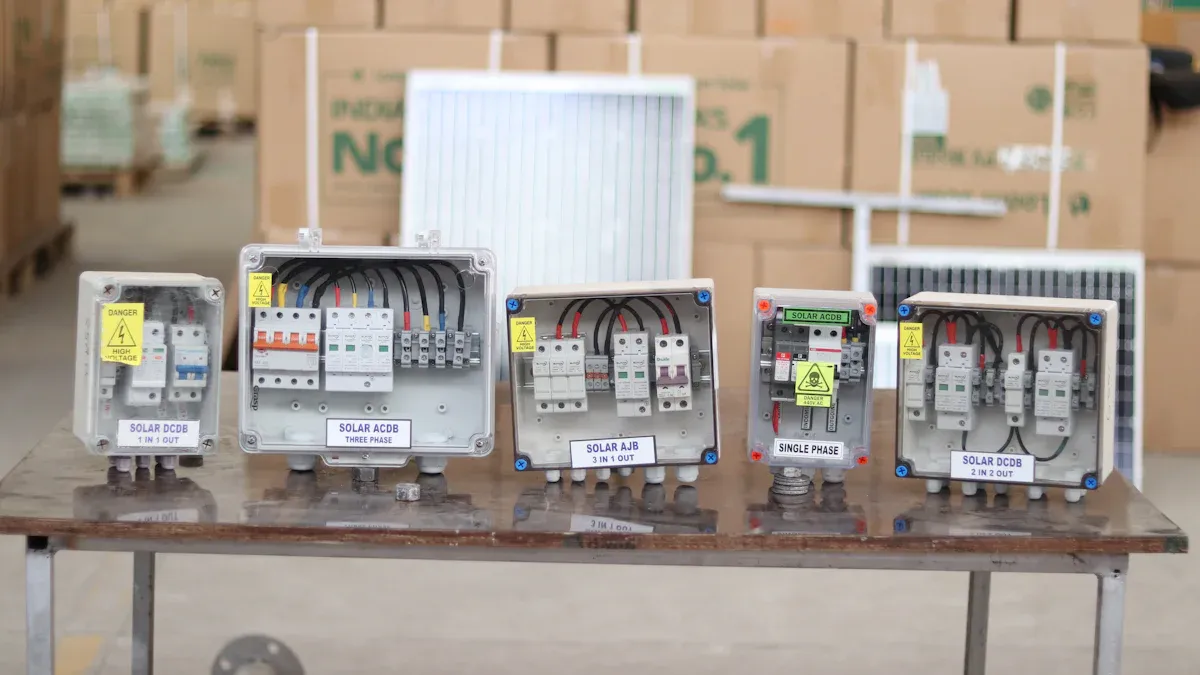
The AC Distribution Board, or ACDB, helps control AC power in your solar system. It sends AC power from the inverter to different places in your building. This means you can use solar energy in many rooms at once. The ACDB keeps your system safe. It has circuit breakers and switches. These let you turn off only the part with a problem. The rest of your system keeps working. Meters inside the ACDB show how much energy you use or send to the grid. If something bad happens, the ACDB stops power surges and short circuits. This protects your equipment.
- Main functions of an ACDB:
- Sends power to different places
- Keeps things safe with breakers and switches
- Tracks your system with meters and gauges
- Protects from problems like short circuits
ACDB Placement
You put the ACDB after the inverter in your solar setup. The inverter changes DC power from the panels into AC power. The ACDB takes this AC power and sends it to your home, business, or the grid. You usually put the ACDB near the inverter or main panel. This makes it easy to connect and control electricity.
Tip: Putting the ACDB close to the inverter helps stop power loss and makes repairs easier.
ACDB Components
The ACDB has many important parts. Circuit breakers protect each circuit from too much power or short circuits. Surge protection devices keep your equipment safe from voltage spikes. Energy meters show how much power you use or send to the grid. Isolator switches let you turn off power for repairs. Terminal blocks connect wires from the inverter, loads, and grid. Some ACDBs have contactors for extra control.
| Technological Advancement | Impact on ACDB and DCDB Design |
|---|---|
| Arc fault detection | Lowers fire risks and makes things safer |
| Remote monitoring integration | Lets you check your system in real time |
| Enhanced thermal management | Makes your system work better and last longer |
ACDB and DCDB panels now often have these new features. This makes your solar system safer and more reliable.
DCDB Overview

DCDB Purpose
A Direct Current Distribution Board (DCDB) helps control DC power from solar panels. The DCDB gathers power from all the panels and sends it to the inverter. The inverter changes DC power into AC power for your house or business. The DCDB keeps your system safe. It stops too much electricity from flowing. If you need to fix your system, you can turn off the solar array safely. The DCDB also protects your equipment from sudden voltage jumps that could hurt your solar setup.
A DCDB works like a traffic cop for your solar panels. It lets only the right amount of power go forward and blocks dangerous spikes.
DCDB Placement
You put the DCDB between your solar panels and the inverter. The DCDB acts as a combiner box. It takes power from many strings of solar panels and puts them together. This makes it easier to handle the direct current. You usually find the DCDB close to the solar panels. Sometimes it is even on the same frame. This spot keeps wires short and helps stop power loss.
DCDB Components
A DCDB has important parts that help your solar system work safely:
- Fuses: These keep each string of solar panels safe from too much current.
- Surge Protection Devices (SPDs): These protect your system from sudden voltage jumps.
- Isolator Switches: You use these to turn off the solar array for repairs or emergencies.
- Busbars and Terminal Blocks: These help organize and connect all the wires from your panels.
- Monitoring Meters: Some DCDBs have meters to show how much DC power your panels make.
You need both ACDB and DCDB in your solar system to keep things safe and neat. Each board does a special job, but together they help your solar power system work well and last longer.
ACDB and DCDB Comparison
Function
ACDB and DCDB do different things in a solar system. The ACDB works with alternating current after the inverter. It sends AC power to your house, business, or the grid. The DCDB works with direct current before the inverter. It takes DC power from solar panels and sends it to the inverter.
| Board Type | Main Function | Power Type | Typical Use |
|---|---|---|---|
| ACDB | Sends AC power to loads or grid | AC | After inverter, to building or grid |
| DCDB | Combines and protects DC strings from panels | DC | Before inverter, from solar panels |
Both boards are needed to keep your solar system safe and working.
Placement
You put ACDB and DCDB in different places. The DCDB goes between solar panels and the inverter. It is often close to the panels, sometimes on the same frame. This keeps wires short and helps stop power loss. The ACDB goes after the inverter. You usually put it near the inverter or main panel. This makes it easy to control and protect AC power.
| Configuration Type | Description | Benefit |
|---|---|---|
| 1-in 1-out | One string to one input. | Simple, but not much isolation. |
| 2-in 2-out | Each string has its own protection. | Weak strings are separated, so you get more power. |
| Combined outputs | Many strings go to one MPPT. | Uses parts well and gives good protection. |
Note: ACDB can be single-phase or three-phase. Pick the type that fits your building.
Components
ACDB and DCDB have different parts because they handle different power. The ACDB has circuit breakers, switches, bus bars, and sometimes meters. These parts protect your home from too much power or short circuits. The DCDB has fuses, disconnect buttons, and surge protection devices. These parts keep your solar panels safe from too much current or voltage spikes.
| Component | ACDB (Alternating Current Distribution Board) | DCDB (Direct Current Distribution Board) |
|---|---|---|
| Circuit Breakers | Yes | Sometimes |
| Fuses | No | Yes |
| Switches/Isolators | Yes | Yes |
| Surge Protection | Yes | Yes |
| Bus Bars | Yes | Sometimes |
| Monitoring Meters | Sometimes | Sometimes |
Some parts are the same, but each board has special features for its job.
Safety
Safety is a main reason to use both ACDB and DCDB. The DCDB keeps solar panels safe with fuses and isolators. It stops too much power and lets you turn off panels for repairs. The ACDB keeps your home or business safe from too much voltage, current, or short circuits. It uses circuit breakers and isolators to protect you.
| Feature | DCDB | ACDB |
|---|---|---|
| Protection Against Overload | Fuses and isolators | Circuit breakers and isolators |
| Monitoring | Sometimes checks each string | Makes repairs easy |
| Surge Protection | Surge protection devices (SPDs) | Circuit breakers and isolators |
Putting ACDB and DCDB in the right place helps your solar system last longer and work better. These boards do not cost much, but they are very important for safety and easy control.
ACDB and DCDB Safety
Protection
ACDB and DCDB help keep your solar system safe every day. These boards stop problems before they hurt your equipment or cause danger. Each board uses special devices to protect against risks like too much power, short circuits, and surges.
- Miniature Circuit Breakers (MCBs) cut off power if there is too much current. This keeps wires from getting too hot and stops fires.
- Surge Protection Devices (SPDs) block sudden jumps in voltage. These jumps can happen from lightning or changes in the power grid.
- Motor circuit protection guards against too much current from short circuits or ground faults.
- Fuses in the DCDB keep each string of solar panels safe from too much current.
If you use good boards and check connections often, you lower the chance of loose wires, overheating, or arc faults. These problems can melt insulation or even start fires.
You should also look out for problems like bad work, loose wires, or SPD failure. These can make your system less safe and repairs harder.
Efficiency
Using ACDB and DCDB helps your solar system work better and last longer. These boards do more than just protect—they help your system run well.
- The DCDB keeps your solar panels safe from too much power, so they last longer.
- String monitoring in the DCDB lets you find problems early. You can fix them before they get worse.
- Surge protection in the DCDB keeps your system working, even during storms.
- The ACDB controls how AC power moves in your building. This helps you use more energy from your solar panels.
- Both boards make fixing things easier. You can repair one part without turning off the whole system, so you have less downtime.
Good cable routing and proper setup stop hot spots and power loss. Always check that jumper bends are right and wires are tight.
If you take care of your boards and keep them safe from heat and water, your solar system will stay safe and work well for many years.
Choosing ACDB and DCDB
Selection Tips
You must pick the right ACDB and DCDB for your solar system. First, think about how big your system is and what kind it is. Homes and businesses need different things. Look at the table below to see what is important for each one:
| Feature | Residential Systems | Commercial Systems |
|---|---|---|
| Protection Against Overload | Needed for safety and longer life | Very important because of bigger systems and more power |
| String Monitoring | Helps find problems in small systems | Needed to watch how big systems are working |
| Surge Protection | Needed to stop damage from power spikes | Very important to protect big business systems |
Pick a board that fits your system’s voltage and current. Make sure there is enough room for all wires and breakers. Always check for good surge protection and meters that are easy to read. If you want your system to work well, get boards with string monitoring. This helps you find problems early.
Tip: Ask your installer about certifications. Many people suggest certifications like NABCEP or SolarEdge Home Hub. These show your installer knows how to set up ACDB and DCDB safely.
| Certification Name | Description |
|---|---|
| Home Hub Certification | Needed for SolarEdge Home Hub inverter jobs and service. |
| Home Battery Certification | Needed to buy and put in SolarEdge Home Batteries. |
| Commercial Installer Certification | For people who lead commercial installs, electricians, and staff. |
| NABCEP Credits | Known standard for solar workers in the U.S. |
Mistakes to Avoid
Many people make mistakes when picking or putting in ACDB and DCDB. You can stop these problems by learning from others:
- Some people choose a bad distribution box. This can make the install fail.
- Many do not know how important these boards are. They skip picking the right ones or installing them right.
- Bad design can cause surges, fires, or problems you do not see.
- Some systems do not have enough protection from short circuits or voltage changes.
- Too much power can make your system less safe and not work well.
You can follow these steps to stop mistakes:
- Draw a clear plan of your system before you start.
- Label every cable so repairs are easy.
- Pick the right cable size to stop wires from getting too hot.
- Use fuses or circuit breakers to stop too much power.
- Check your boards and cables often to find problems early.
Remember: ACDB and DCDB are more than just boxes. They keep your solar system safe and working well. Pick them carefully and take care of them.
You now understand how ACDB and DCDB are not the same in solar systems. ACDB works with AC power after the inverter. DCDB takes care of DC power before the inverter. The table below shows the main technical differences:
| Feature | DC Circuit Breakers | AC Circuit Breakers |
|---|---|---|
| Arc Extinction | Made for DC, so they handle arcs better | Uses natural zero-crossing |
| Voltage Ratings | Can go up to 1,500V in big systems | Usually between 120V–480V |
| Price Point | Costs more because of special design | Costs less |
To keep your system safe and working well, check fuses, breakers, and wires every three months. Do a thermal scan and check insulation once a year to help your solar system last longer.
FAQ
What happens if you skip using an ACDB or DCDB?
You risk damaging your solar system. Without these boards, you cannot protect your equipment from overloads or surges. You also make repairs harder and less safe.
Can you use the same board for both AC and DC?
No, you cannot. ACDB and DCDB have different designs. Each board handles a specific type of power. Using the wrong board can cause safety problems.
How often should you check your ACDB and DCDB?
You should check both boards every three months. Look for loose wires, signs of heat, or broken parts. A yearly thermal scan helps find hidden issues.
Do ACDB and DCDB work with all solar panel types?
Yes, you can use these boards with any solar panel type. Just make sure the board matches your system’s voltage and current.
Why do some ACDBs have meters and others do not?
Some ACDBs include meters to help you track energy use or grid export. Not all systems need this feature. You can choose a board with or without meters based on your needs.
See also
What is the Full Name of ACDB in Electrical Systems
How to choose the size of the distribution board
How to Tell When a Distribution Board Is Overloaded
5 basic components required for each distribution board
Distribution Box Industry Comparison of Types and Uses
