

You should use an MPPT controller if your solar panels give more than 100W. You should also use one if the panel voltage is much higher than your battery voltage. It is important to match your solar panel voltage to your battery voltage. This helps you store and use more energy. MPPT controllers work best with higher voltage panels and the right battery system. This guide will show you if your setup needs MPPT. It uses easy steps and examples.
Key Takeaways
- Use an MPPT controller if your solar panels are over 100W. Use it if the panel voltage is much higher than your battery voltage. This helps store energy well.
- Always pick an MPPT controller that matches your total solar panel wattage. This helps charge your batteries faster. It also keeps your system safe.
- For best results, make sure your solar panel voltage is at least 1.3 times your battery voltage. This lets the MPPT controller work well.
- Think about how big your solar setup is. MPPT controllers work best for systems over 150W. They help charge faster and collect more energy.
- Plan for upgrades by picking a controller with a safety margin above your needed current. This helps your system handle extra loads.
MPPT Basics
What Is MPPT
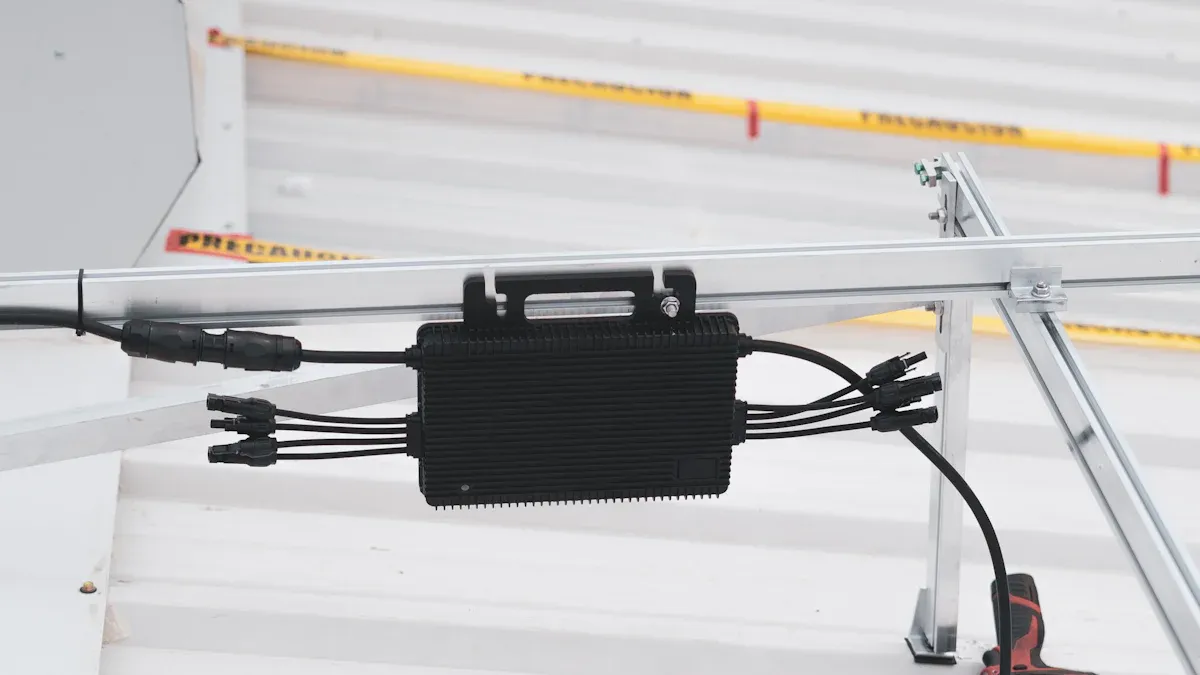
MPPT means Maximum Power Point Tracking. You use MPPT controllers to get more energy from solar panels. These controllers use smart computer programs. They find the best voltage and current for your system. Solar panel voltage often does not match battery voltage. MPPT controllers fix this by changing the voltage and load. This helps you collect more energy, even if sunlight changes.
MPPT controllers can give you 15-30% more energy than old PWM controllers. You get the most extra energy when it is cloudy or your solar panels are partly in shade.
Many companies make MPPT controllers for homes and businesses. Some popular brands are Renogy, Victron Energy, EPEVER, and Morningstar Corporation. These companies make controllers that work well in many places. New MPPT controllers have special features like adaptive tracking and AI. These features help you get more power from solar panels, even when sunlight changes fast.
Why Size Matters
The size of your solar panels and system voltage change how well MPPT works. If you use small solar panels, MPPT may not help much. Bigger solar panels or higher voltages make MPPT more useful. When you use bigger panels, you need a controller that can handle more power.
- MPPT controllers work best when panel voltage is much higher than battery voltage.
- If you have many solar panels or use them in different weather, MPPT helps you get more energy.
- New MPPT controllers can be over 98% efficient. They use smart parts and software to save energy.
You should always match your controller size to your total solar panel wattage. This helps you charge batteries faster and keeps your system safe. When you size your system right, you get the most from your solar panels and protect your equipment.
Sizing MPPT for Solar Panels
Panel Wattage
To pick an MPPT controller, you need to know your solar panels’ total wattage. Each controller has a limit for how much power it can take. This limit depends on the highest voltage and current it can handle. Some brands, like Victron Energy and Morningstar, let you use more panel wattage than the controller’s output rating. This is okay if you do not go over the voltage and current limits. This is called oversizing. For example, Victron MPPT controllers can take up to twice their rated wattage if you keep them cool.
Tip: Always read the controller’s manual for the max input wattage, voltage, and current. Never go over these numbers to keep your system safe.
You need to match the controller’s amp rating to the current from your solar panels. Use this formula to find the current:
Current (Amps) = Power (Watts) / Voltage (Volts)
If your solar panel makes 250 watts at 24 volts:
Current = 250W / 24V = 10.42A
If you connect panels in series, the voltage adds up. The current stays the same. If you connect panels in parallel, the voltage stays the same. The current adds up.
| Connection Type | Voltage Behavior | Current Behavior |
|---|---|---|
| Series Connection | Voltages add up | Current stays the same |
| Parallel Connection | Voltage stays the same | Currents add up |
Panel Voltage
The voltage of your solar panels is very important for MPPT controllers. The panel voltage must be higher than your battery voltage for the controller to work well. For a 12V battery, your solar panel voltage should be at least 18V. This extra voltage helps the MPPT controller find the best power point. It works even when sunlight is weak or it is hot outside.
- Higher panel voltage means lower current for the same power. This helps save energy in the wires.
- When you connect panels in series, you raise the voltage. This makes wiring easier and better.
- A higher voltage also helps the MPPT controller work better when it is cloudy or some panels are in shade.
Note: For best results, your solar panel voltage should be about 1.3 times higher than your battery charging voltage. For a 12V battery, this means your panel voltage should be at least 18V to 20V.
System Voltage
You need to know your system voltage before you pick an MPPT controller. Off-grid solar systems often use 12V, 24V, or 48V batteries. Grid-tied systems use much higher voltages, from 150V to 500V. Most home solar systems use 12V, 24V, or 48V. These are safe and work with most batteries.
- 12V systems are good for small setups like RVs or boats.
- 24V and 48V systems are better for bigger homes or cabins. They let you use thinner wires and longer cables with less energy loss.
- Most inverters and controllers are made for a certain voltage. Make sure your battery, inverter, and controller all use the same voltage.
Things like temperature and shade can change how well your MPPT controller works. High temperatures can make your solar panels less efficient. This makes the controller work harder. Shade from trees or clouds can also lower the energy you get. You should always think about these things when you size your system.
Remember: Always match your controller’s voltage and current ratings to your solar panels and batteries. This keeps your system safe and helps you get the most energy.
When to Use MPPT
Small Panels
If you use a small solar setup, such as a single panel under 100 watts, you may not need an MPPT controller. PWM controllers work well for these systems. They cost less and are easier to install. You can see the main differences in the table below:
| Feature | PWM Charge Controller | MPPT Charge Controller |
|---|---|---|
| System Size | Best for under 100W | Best for 150W or more |
| Efficiency in Cooler Conditions | Good | 20-25% more charging |
| Efficiency in Warmer Conditions | Similar | More efficient |
For small systems, the extra cost of MPPT may not give you enough extra energy to make it worth it.
Medium Panels
When your system grows to 150–200 watts, MPPT controllers start to show real benefits. You get faster charging and better performance, especially if you live in a place with changing weather. The table below shows how MPPT can help:
| Panel Size (Watts) | MPPT Efficiency Benefit | PWM Efficiency Benefit |
|---|---|---|
| A few hundred | Up to 30% faster charge | Standard charge rate |
MPPT controllers cost more, but they can pay for themselves over time by giving you more usable energy.
Large Panels
If you use a large system, such as for a home or cabin, MPPT controllers become the best choice. They handle higher power and work better with higher voltages. MPPT controllers last longer, often over 10 years, while PWM controllers last about 5–7 years.
| Controller Type | Lifespan |
|---|---|
| PWM Controller | 5–7 years |
| MPPT Controller | 10+ years |
In big systems, MPPT controllers can pay for themselves in 2–3 years because they collect more energy.
Multiple Panels
When you connect several panels together, MPPT controllers help you get the most power. They work well with different sunlight and weather. Here are some reasons to use MPPT with multiple panels:
- MPPT controllers pull more power from many panels.
- They manage bigger systems better than PWM controllers.
- MPPT works well when sunlight changes during the day.
If you plan to expand your system, MPPT controllers give you more flexibility and better performance.
How to Check Your Solar Panel Setup
Step-by-Step Guide
You can follow these steps to see if you need an MPPT controller and what size fits your system:
- Find Your Total Panel Wattage
Add up the wattage of all your panels. If you have three 150W panels, your total is 450W. - Check Your System Voltage
Look at your battery bank. Most home systems use 12V, 24V, or 48V. - Calculate Required Controller Amps
Divide your total panel wattage by the lower voltage between your solar array and battery.
For example:900W ÷ 24V = 37.5AAdd a 25% safety margin for current spikes:
37.5A × 1.25 = 46.9AChoose a controller rated for at least 50A.
- Check Panel Voltage
Make sure your panel voltage is at least 1.3 times higher than your battery charging voltage. For a 12V battery, your panel voltage should be at least 18V. - Pick a Reliable Controller
Look for trusted brands. Victron, Renogy, BougeRV, and Morningstar all offer high efficiency and strong reliability.
Tip: Always size your controller with a 25% margin above your calculated current. This keeps your system safe and ready for future upgrades.
Quick Checklist
Use this checklist to review your setup:
- Total panel wattage is above 100W.
- Panel voltage is at least 1.3 times battery voltage.
- You calculated controller amps and added a 25% margin.
- You matched controller voltage to your battery bank.
- You chose a controller from a reliable brand.
Here is a quick reference table for MPPT controller sizing:
| Total Panel Wattage | System Voltage | Minimum Controller Amps | Suggested Controller Size |
|---|---|---|---|
| 100W | 12V | 8.3A | 10A |
| 300W | 12V | 25A | 30A |
| 600W | 24V | 25A | 30A |
| 900W | 24V | 37.5A | 50A |
| 1200W | 48V | 25A | 30A |
Note: Always round up to the next available controller size. This helps your system handle extra loads and future expansions.
You should pick an MPPT controller if your system uses more than 100W. You also need one if your panel voltage is much higher than your battery voltage. Always match the controller size to your total wattage and voltage. This keeps charging safe and reliable.
| Factor | Description |
|---|---|
| Charging Current | Divide your total power by battery voltage to get the right controller size. |
| Maximum Input Voltage | Multiply open circuit voltage by the number of panels in series. Add a safety factor. |
- If you overload the controller, your system can fail.
- If you ignore voltage limits, your system can break.
- Planning for the future helps you avoid buying new equipment.
- If you do not leave a safety margin, your system can overheat.
- If you ignore voltage ratings, your controller can get damaged.
- If you do not plan for upgrades, your system may be too small.
Use the guide and table to check your system. New MPPT controllers have smarter features and better ways to store energy.
FAQ
What happens if you use an undersized MPPT controller?
If your MPPT controller is too small, it can overheat or shut down. You may lose power and damage your system. Always choose a controller that matches or exceeds your panel wattage and current.
Can you use MPPT with any solar panel?
You can use MPPT with most solar panels. Make sure your panel voltage is higher than your battery voltage. Check that the controller supports your panel’s voltage and current.
How do you know if your panel voltage is high enough for MPPT?
Check your panel’s open-circuit voltage (Voc). It should be at least 1.3 times your battery charging voltage. For a 12V battery, look for panels with at least 18V Voc.
Is it safe to oversize your solar array for an MPPT controller?
You can oversize your array within the controller’s voltage and current limits. Some brands allow more panel wattage. Always read the manual and never exceed voltage or current ratings.
Do MPPT controllers work better in cold weather?
Yes, MPPT controllers work better in cold weather. Cold panels produce higher voltage. The controller can capture more energy and charge your batteries faster.
See also
How to connect solar panels to 12 volt batteries and inverters
What You Need to Know About PWM and MPPT in 2025
How to choose to install a solar inverter
How to Safely Connect 12V Solar Panels in Series or Parallel
How to Accurately Calculate Electricity Load for Your Household
