You may ask which solar charge controller is best for you in 2025. The main difference between PWM and MPPT is how they use energy from solar panels. MPPT controllers use smart technology to get the most charging power. PWM controllers are simple and cost less money. In 2025, more people pick MPPT controllers because they work better and are more efficient:
- MPPT controller sales are rising fast, and could reach 70 million units each year by 2028.
- PWM controller sales are growing slowly as MPPT gets more popular.
| Feature | MPPT Controllers | PWM Controllers |
|---|---|---|
| Efficiency | Higher, gets more charging power | Lower, may lose power |
| Cost | Costs more | Costs less |
| Suitability | Good for big, grid-tied systems | Good for small systems |
Knowing these differences helps you pick the right solar setup.
Key Takeaways
- MPPT controllers work better than PWM controllers. They give up to 30% more energy. This is most true when the weather is cool.
- Pick PWM controllers for small solar setups. They help you save money. PWM controllers cost less and are simple to use.
- Buy MPPT controllers for bigger solar systems. Get them if you want to add more panels later. MPPT controllers can handle higher voltages. They work better for large setups.
- MPPT controllers cost more at first. But they help you save money over time. They make more energy in the long run.
- Make sure your controller fits your system’s voltage and current. This helps you avoid losing energy.
PWM and MPPT Basics
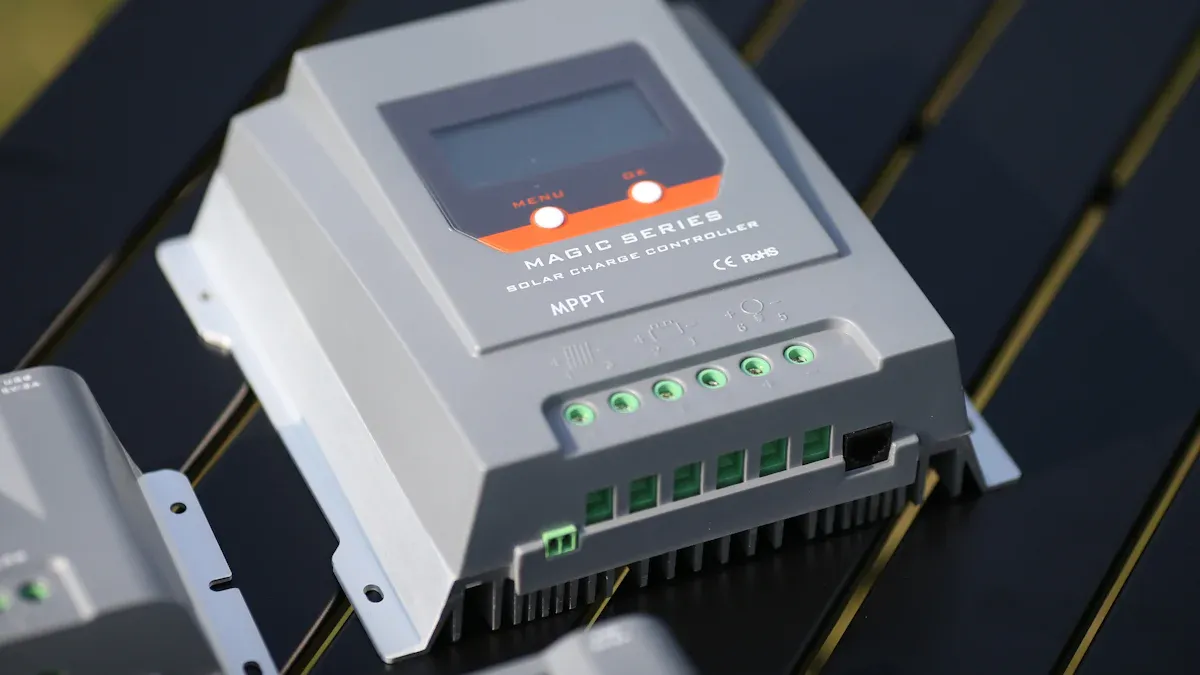
What Is PWM?
You might notice the word PWM when looking at solar charge controllers. PWM stands for Pulse Width Modulation. This controller links your solar panels straight to your battery. It controls charging by turning the connection on and off very fast. PWM controllers use the same voltage as the battery. They are usually smaller and cost less money. People use PWM controllers in small solar setups, like cabins or tiny homes with simple power needs. These controllers work best with 36-cell solar modules. They do not change how they work if sunlight or temperature changes.
Tip: Pick PWM controllers for easy systems if you want to save money and do not need high efficiency.
What Is MPPT?
MPPT stands for Maximum Power Point Tracking. This technology uses smart electronics to find the best voltage and current from your solar panels. MPPT controllers can get up to 30% more power in summer and 15% more in winter than PWM controllers. Some models can reach 98% efficiency or even higher. MPPT controllers lower the higher voltage from solar panels to match your battery. This helps stop energy loss. You get more power, especially when it is cool or when your solar panel voltage is much higher than your battery voltage. MPPT controllers are good for bigger systems and can work with different kinds of solar modules.
| Factor | PWM Controller | MPPT Controller |
|---|---|---|
| Temperature Conditions | Not as efficient in cool weather; charges at battery voltage. | More efficient in cool weather; uses extra voltage. |
| System Size | Good for small systems; keeps the same efficiency. | Better for systems 170W or more. |
| Cost | Usually costs less. | Costs more but works better in some cases. |
Why It Matters
Knowing about PWM and MPPT helps you make smart choices for your solar system in 2025. If you want a simple and cheap setup for basic needs, PWM might be right for you. If you need more power for things like lights, fridges, or computers, MPPT gives you better performance and saves energy. Most new home solar systems use MPPT because they work with bigger battery banks and handle changing weather well. You can get more energy from your panels and save money over time. Picking the right controller helps you get the most from your solar setup.
Efficiency and Performance
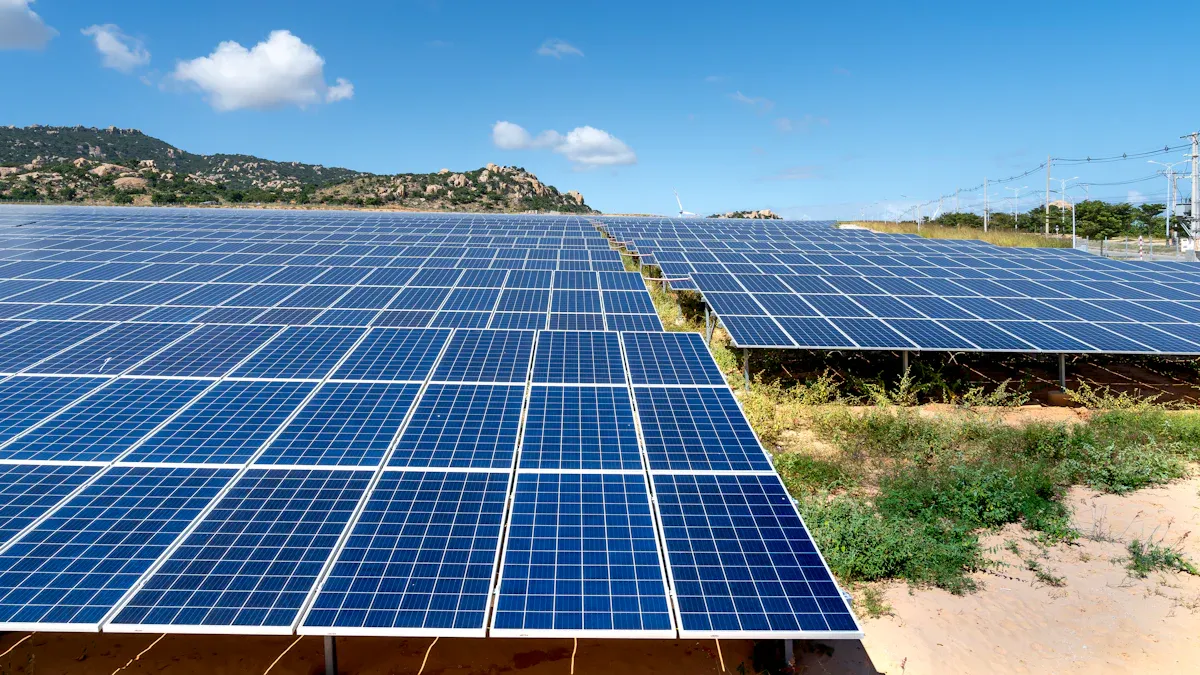
Power Output
You want your solar system to give you lots of energy. How PWM and MPPT controllers work changes how much power you get. MPPT controllers use smart tracking to find the best voltage and current. This helps you get up to 30% more energy than PWM controllers. This is most helpful when sunlight is weak or it is cold outside. PWM controllers connect your solar panels right to your battery. They do not use extra voltage, so some energy turns into heat and is lost.
Here is a simple table that shows the difference:
| Controller Type | Efficiency | Environmental Performance |
|---|---|---|
| MPPT | Higher output (up to 30%) | Better in cold/low-light conditions |
| PWM | Lower output | Less efficient in low sunlight |
MPPT controllers help you get more power from your solar panels. PWM controllers work best when your battery is almost full and the weather is sunny and warm.
Note: MPPT controllers use extra voltage from your solar panels. PWM controllers do not use extra voltage, so you get less energy.
Climate Impact
The weather where you live changes how well your solar system works. MPPT controllers work better in cold and mild places. They can use extra voltage from solar panels when it is cool. This means you get much more energy than with PWM controllers.
| Climate Type | Expected Percentage Increase in Energy Harvest |
|---|---|
| Cold | Double-digit percentage gains over PWM |
| Temperate | Significant increase compared to PWM |
In warm places, the difference between PWM and MPPT is smaller. Both controllers work well when the sun is strong and your battery is charged. MPPT controllers still give you a little more energy, but not as much as in cold weather.
- MPPT controllers work best in cold weather and low light.
- PWM controllers are good in warm, sunny places.
- High heat can make solar panels less efficient and affect how well MPPT controllers work.
Tip: If you live where winters are cold or days are cloudy, MPPT controllers help you get more energy.
System Size
How big your solar system is matters when you pick between PWM and MPPT. PWM controllers are good for small systems, like cabins or RVs. They work with lower voltages and simple setups. MPPT controllers are better for bigger systems. They handle higher voltages and let you use more solar panels.
- PWM controllers are best for small systems with basic needs.
- MPPT controllers are good for large systems and work with many types of solar panels.
- You can add more panels with MPPT controllers for extra power.
MPPT controllers help big systems use energy better. If you want to power a whole house or many things, MPPT is the best choice.
Reminder: Think about how big your system is before you choose a controller. Small systems do well with PWM. Large systems need MPPT for the best results.
Cost and Value
Price Difference
When you look at solar charge controllers, you will notice a big difference in price. PWM controllers cost much less than MPPT controllers. In 2025, you can expect MPPT controllers to cost two to four times more than PWM units. This higher price can make your solar setup more expensive at first.
- MPPT controllers usually add $150 to $300 more to your upfront costs.
- PWM controllers often stay under a few hundred dollars.
- The price gap comes from the advanced technology inside MPPT controllers.
You might wonder if the extra cost is worth it. MPPT controllers give you more energy and can help your batteries last longer. Over time, these benefits can balance out the higher price you pay at the start.
Tip: If you have a small system or a tight budget, PWM controllers help you save money right away. For bigger systems or long-term savings, MPPT controllers may be a better choice.
Value for Money
You want to get the most out of your investment. MPPT controllers offer more value for money in many cases. They give you up to 30% more energy from your solar panels. This means you can power more devices or store more energy each day.
Here is a table that shows how MPPT and PWM controllers compare over five years:
| Aspect | MPPT Controllers | PWM Controllers |
|---|---|---|
| Upfront Cost | $150-300 more | Lower cost |
| Extra Daily Capacity | 80W | N/A |
| Extra Energy Over 5 Years | 146 kWh | N/A |
| Battery Life Extension | 30-50% | N/A |
| Avoided Replacement Costs | $240-400 | N/A |
MPPT controllers also come with longer warranties and often last longer. You can use them with grid-tied systems, which gives you more options for your solar setup. PWM controllers use older, stable technology and work well for small, simple systems.
- PWM controllers are reliable and easy to use.
- MPPT controllers need careful selection. Low-quality models may not last as long.
Note: Always check the warranty and reliability ratings before you buy. A good MPPT controller can save you money and energy for many years.
PWM and MPPT Comparison
Table Overview
The table below shows how PWM and MPPT controllers are different. It lets you compare their good and bad points quickly.
| Feature | PWM Controllers | MPPT Controllers |
|---|---|---|
| Efficiency | Not as efficient, can waste some energy | Very efficient, gets the most power |
| Cost | Cheaper at first | Costs more, but saves money later |
| Suitability | Best for small systems with lots of sun | Great for big systems and changing weather |
| Long-Term Savings | Might cost more over time from lost energy | Saves more money by using more energy |
| Advantages | Easy to use, works well, low price | Very efficient, gets more energy |
| Disadvantages | Uses about 80% of parts, wastes some power | More parts, can get hot and noisy |
Tip: Look at this table to help you pick the right controller for your solar setup.
Main Differences
You need to think about how each controller works for your solar system. MPPT controllers can give you up to 30% more energy, even when the weather is not great. You get more power, so you can use more things or charge batteries faster. PWM controllers are good for small setups and cost less, but they do not use all the energy your panels make.
- Efficiency: MPPT controllers find the best power point and use more energy from your panels. PWM controllers are not as efficient and may waste some energy.
- Cost: PWM controllers are cheaper at first. MPPT controllers cost more, but you save money later because you get more energy.
- Suitability: PWM controllers are best for small, simple systems. MPPT controllers are better for big systems or places where sunlight changes a lot.
- Design: PWM controllers are simple and last a long time. MPPT controllers use smart technology and might need more care.
Pick the controller that fits your system size, how much money you have, and how much energy you need. If you want the most energy from your solar panels, MPPT is usually the best pick. If you want something simple and cheap, PWM might be better for you.
Choosing the Right Controller
Key Factors
Picking the right solar charge controller is important. First, think about how big your solar setup is. Next, look at how much money you want to spend. Also, think about how much energy you need each day. The table below shows how these things matter:
| Factor | PWM Controllers | MPPT Controllers |
|---|---|---|
| System Size | Suitable for small setups | Ideal for larger installations |
| Budget | Generally lower cost | Higher initial investment |
| Energy Needs | Efficient for modest energy demands | Maximizes output for higher energy needs |
| Battery Type | Works well with simpler battery types | Compatible with various battery types |
| Voltage/Current Needs | Basic requirements | Adapts to changing conditions |
| Additional Features | Simplicity and reliability | High efficiency and adaptability |
Keep these ideas in mind when you choose:
- PWM controllers are good for small setups, like cabins or RVs. They cost less and are easy to use.
- MPPT controllers are better for big homes or places that use lots of energy. They give you more power and can do more things.
- Make sure your controller works with your battery type and system voltage, like 12V, 24V, or 48V.
- Check that the controller can handle the current from your solar panels. Leave some extra room for safety.
- Look for safety features, such as overcharge protection and reverse polarity protection.
Tip: Think about the future. If you want to add more panels later, pick a controller that can grow with your system.
Common Mistakes
People sometimes make mistakes when picking between PWM and MPPT controllers. Try not to do these things:
- Picking a controller that is too small for your solar panels. This can make it get too hot or even break.
- Using a PWM controller with solar panels that have high voltage. This wastes energy, especially in RVs or mobile setups.
- Not checking if the controller matches your system’s voltage and current needs.
- Forgetting to give MPPT controllers enough airflow. They need to stay cool so they do not overheat.
- Not planning for upgrades. If you add more panels later, you might need a new controller.
- Thinking MPPT is always better. For small, simple systems, PWM can be the smarter pick.
Note: If you pick the wrong controller, you could lose up to half your solar power. Take your time and match your controller to your system.
Tips for 2025
You can make a smart choice for your solar setup by following these tips:
- Check Voltage and Current Capacity: Make sure your controller can handle the highest voltage and current from your solar panels.
- Pick the Right Type: Use PWM for small, simple systems. Choose MPPT for bigger or more complex setups.
- Look for Extra Features: Things like Bluetooth, remote monitoring, and easy-to-read screens can help you use your system.
- Focus on Safety: Pick controllers with overcharge, reverse polarity, and short-circuit protection.
- Plan for the Future: Buy a controller that can support more panels if you want to add them later.
- Install Carefully: Put your controller in a cool, dry place with good airflow. This helps stop it from getting too hot.
- Read the Manual: Set up your controller using the instructions for your battery and system voltage.
- Ask for Help: If you are not sure, talk to a solar expert before you buy.
🛠️ Pro Tip: MPPT controllers work best if the weather changes a lot or if you use different kinds of solar panels. For simple, sunny setups, PWM controllers are easy to use and take care of.
Now you know the main differences between PWM and MPPT controllers. By thinking about your system size, budget, and energy needs, you can pick the best controller for your solar project in 2025.
You now understand the main differences between PWM and MPPT controllers. Choosing the right one helps your solar system work well. It also saves you money in the long run. Here is a simple summary:
| Feature | MPPT | PWM |
|---|---|---|
| Cost | Higher | Lower |
| Efficiency | Up to 30% more output | Lower output |
| System Size | Best for large systems | Best for small setups |
| Scalability | Easy to expand | Limited expansion |
- MPPT controllers are good for big systems and upgrades.
- PWM controllers are best for small and basic setups.
- Make sure your controller matches what your system needs.
If you are not sure, ask a solar expert for help. Picking the right controller keeps your solar project working well for many years.
FAQ
What does a solar charge controller do?
A solar charge controller protects your battery from overcharging. It controls how much power goes from your solar panels to your battery. You keep your system safe and make your battery last longer.
Can you use MPPT controllers with any solar panel?
You can use MPPT controllers with most solar panels. They work best with panels that have higher voltage than your battery. Always check your controller’s manual for the right panel type.
Do PWM controllers work in cold weather?
PWM controllers work in cold weather, but you get less energy. MPPT controllers give you more power when it is cold or cloudy. You get better performance with MPPT in these conditions.
How do you know which controller to choose?
You look at your system size, budget, and energy needs. Pick PWM for small setups and MPPT for bigger systems. If you want to add more panels later, MPPT is a better choice.
Can you upgrade from PWM to MPPT later?
You can upgrade from PWM to MPPT. You need to check if your battery and solar panels match the new controller. Upgrading helps you get more energy and better efficiency.
See also
How to choose to install a solar inverter
How to connect solar panels to 12 volt batteries and inverters
50-60kW three-phase dual MPPT grid connected solar inverter
Equipped with MPPT solar hybrid inverter