You may hear the word LT in electrical engineering. LT means Low Tension, which is for systems using up to 1,000 volts. People use LT systems to make power safe and work well in homes, schools, factories, and farms. These systems help keep people and machines safe from electrical dangers. Today, LT panels are very important in many places. The world market for these panels was about USD 5.8 billion in 2024. It may grow to over USD 11 billion by 2033 with a steady growth rate of 7.45% each year.
Key Takeaways
- LT means Low Tension. It is for electrical systems with voltages up to 1,000 volts. These systems help deliver power safely to homes, schools, and small businesses.
- LT systems are safer and easier to use than High Tension systems. You do not need special training to use them. People use them every day for things like lights and appliances.
- Regular checks and certified LT panels make things safer and more reliable. Check your LT panel often to make sure it works well and is safe.
- LT systems save money, so many people choose them for homes and small businesses. They cost less to put in and take care of than High Tension systems.
- LT panels help connect solar and wind power to the grid. This helps use cleaner energy and supports a healthy environment.
LT in Electrical Engineering: Definition and Voltage
What Is LT?
You see LT a lot in electrical engineering. LT means Low Tension. This means the system uses lower voltages. Groups that set rules say LT is for things that work at up to 1,000 volts AC or 1,500 volts DC. You use LT systems every day. They help bring electricity from the grid to safe levels for homes, schools, and small businesses. LT in electrical engineering makes power safer for you and your devices.
Tip: LT systems keep you safe from high voltage dangers. They make electricity simple to use and control.
LT Voltage Range
LT systems are found in many places because they use safe voltages. Most countries set LT below 1,000 volts. This includes common numbers like 230 volts or 400 volts. You see these voltages in wall outlets and small machines. The table below shows how LT is different from other voltage systems:
| System Type | Voltage Threshold |
|---|---|
| Low Tension (LT) | Below 1 kV |
| High Tension (HT) | Above 1 kV |
| Low Voltage (LV) | Up to 1 kV |
| High Voltage (HV) | From 35 kV to over 765 kV |
You use LT in electrical engineering for most daily jobs. You do not need special training to work with LT systems at home or in offices.
LT vs HT Systems
You might wonder how LT and HT are not the same. HT means High Tension. HT systems use much higher voltages than LT. You see HT in big factories or power plants. These systems need special safety steps and equipment. LT systems are safer and easier to use. The table below shows the main differences:
| Aspect | Low Tension (LT) | High Tension (HT) |
|---|---|---|
| Voltage Level | Up to 1kV (e.g., 230V, 400V) | Above 1kV (e.g., 11kV, 33kV) |
| Application | Domestic and small commercial uses | Industrial and power transmission |
| Safety | Safer for public use | Requires special safety precautions |
| Switchgear | Simple switchgear (MCB, MCCB) | Complex protection systems (CB, Relays) |
You use LT in electrical engineering for homes, shops, and schools. You need HT for big factories and power stations. LT systems keep you safe and make electricity easy to handle.
LT System Applications
Residential and Commercial Use
LT systems are used in many places every day. Most homes and businesses need LT panels to keep electricity safe. These panels help with lights, air conditioning, elevators, and fire safety. LT in electrical engineering lets you control power for shared spaces, water pumps, and backup generators. The table below shows where LT panels are most useful:
| Application Type | Examples |
|---|---|
| Commercial Buildings | Shopping malls, office buildings, hotels, hospitals |
| Residential Housing Societies | Big apartments, places with lighting, pumps, fire systems, backup |
LT panels are found in almost all new buildings. They help you get steady power for daily life.
Note: More than 90% of homes and businesses use LT panels for safe and easy power.
Industrial and Renewable Sectors
Factories and energy plants use LT systems for many jobs. LT panels run machines, control heating and cooling, and help with making products. LT in electrical engineering also connects solar and wind power to the grid. The table below shows some key examples:
| Case Study | Description |
|---|---|
| Hybrid Renewable Energy Utility Systems | Mix solar, wind, and other sources to power factories. |
| Equinor’s Offshore Wind Investment | Uses North Sea sites for wind energy, moving from oil to renewables. |
| Total’s Solar and Battery Storage | Works on solar power and batteries, aiming for 20% renewables by 2035. |
| Shell’s Carbon Reduction Goals | Plans to cut carbon use by half by 2035, switching to renewable energy. |
LT systems help factories be cleaner and work better. They also let you use more solar and wind energy.
Tip: LT panels help connect solar and wind power with inverters and batteries. This keeps your electricity steady and safe.
Agricultural Applications
Modern farms use LT systems to work better and save resources. LT panels help with watering, lights, and machines. Vertical farming uses LT systems to grow more food in less space. Machines like tractors can work all day, saving money and making more crops. Here are ways LT systems help farms:
- Vertical farms grow 10–20 times more food per area than regular farms.
- A 10,000 square foot vertical farm can match 50–100 acres of normal farmland for leafy greens.
- Tractors that drive themselves work all day, doing the job of 2–3 regular tractors and cutting costs by up to 40%.
- LT systems help use land better and save resources.
- Farms become more green and make more food with LT systems.
Tip: Put LT panels on farms 7–12 feet high so machines fit and sunlight reaches plants. Make rows wider and plan wires for both solar and farm needs.
LT Panel Components
Main Components Overview
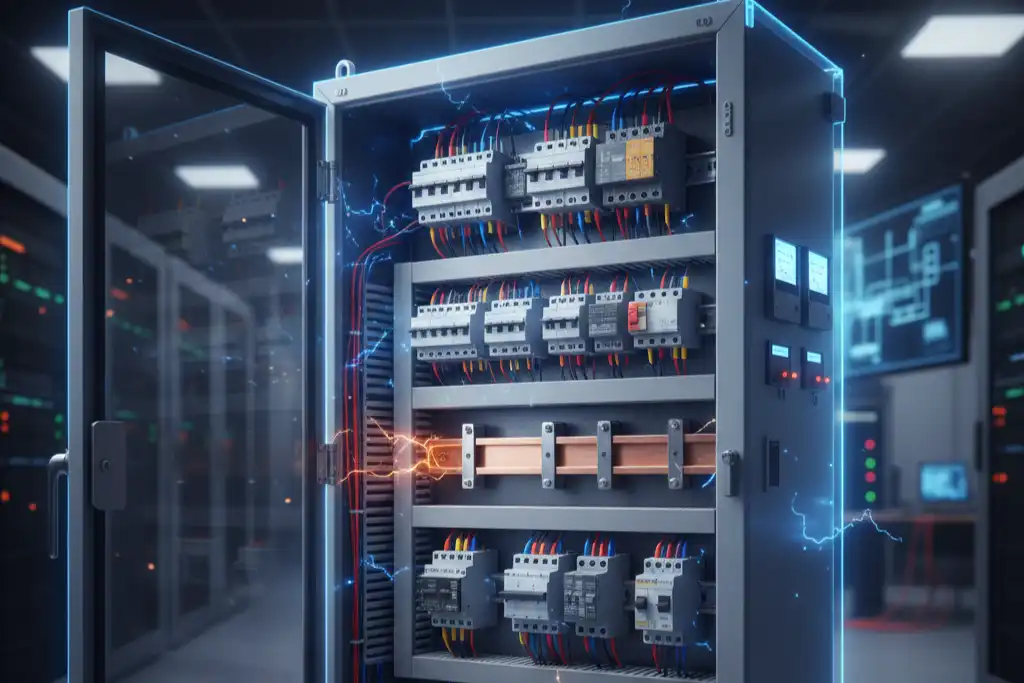
An LT panel has many important parts inside. Each part does a special job to keep power safe and steady. The table below shows the main parts and what they do:
| Component | Function |
|---|---|
| Busbar | Shares current with many feeders and handles big currents safely. |
| Circuit Breakers | Protect equipment, stop bad sections, and make things safer. |
| Current Transformers (CTs) | Check current and send numbers to meters and relays. |
| Relays and Protection Devices | Look for problems and give quick protection. |
| Meters and Indicators | Let you watch the system and warn you about odd things. |
| Wiring, Terminal Blocks, Ferrules | Make neat connections and help fix problems. |
| Control Switches and Push Buttons | Let you control feeders or machines from the front of the panel. |
You use these parts when you turn on lights or machines. LT in electrical engineering needs these parts for safe and steady power.
Safety and Reliability Features
LT panels have many things to keep you safe and make sure power works well. They have special circuit protection that stops too much power or short circuits. If something goes wrong, fault tolerance helps the panel keep working. Overload protection turns off power if it gets too high. Short-circuit management lowers the chance of fire or damage. Panels are tested hard to make sure they can handle tough times.
New panels use materials that do not burn easily and have safe locks. Flash devices warn you if the system is on. Some panels let you check them from far away and can shut down by themselves for extra safety.
Tip: Check your LT panel often, clean it, and use thermal scanning. This helps your panel last longer and work better.
Certifications and Quality
You should look for certifications before buying an LT panel. Certified panels follow strict rules in the US, EU, and India. For example, BIS Certification Rules 2025 set rules for panels in India. Other groups check factories to make sure panels are built right. Certified panels lower the chance of fire, overload, and short circuits. They also help you join government jobs and sell to other countries. Certification lasts three years, but you need to check every year to keep it.
| Requirement/Benefit | Description |
|---|---|
| BIS Certification Rules 2025 | Sets new rules for India. |
| Third-Party Auditing | Checks and tests panels for good quality. |
| Market Credibility | Makes people trust the product. |
| Reduced Failure Rates | Lowers the chance of fire and electrical problems. |
| Export Advantages | Meets world safety rules for selling to other countries. |
| Mandatory for Government Projects | Needed for government and business jobs. |
Always pick certified LT panels for the best safety and steady power.
Importance of LT Systems
Safety and Reliability
LT systems help keep your power safe. They lower the chance of electric shock or fire. You find LT systems in homes, schools, and factories. These systems protect people and machines. LT panels are strong and have smart safety features. Circuit breakers and relays stop problems fast. You can trust LT systems during storms or power surges. Regular checks and certified parts keep your power working every day.
Cost-Effectiveness
LT systems help you save money. LT panels cost less to put in and fix than high-tension systems. You do not need special training to use them. LT systems use simple parts, so repairs are quick. Many people pick LT panels because they fit small budgets. They work well for homes and small businesses. The table below shows why many firms in developing countries pick LT systems:
| Key Messages on Technology Adoption Factors in Developing Countries |
|---|
| Most firms do not know they are behind in technology. |
| Technology levels are very different in each area. |
| The move to new industry ways is not finished. |
| Jumping ahead in technology is not common. |
| Using new technology helps work better and makes economies stronger. |
| Good internet and roads help but are not enough. |
| Competition makes companies use new technology. |
| Rules should help people use technology, not just get it. |
| COVID-19 made companies upgrade their technology faster. |
Using LT systems helps you work better and spend less money.
Global Support
You get good help when you use LT systems. Companies give support by phone, email, and chat. You get training to avoid problems and use your system well. Clear guides help you start using your LT panel. Warranties and returns make you feel safe. Companies listen to your feedback and try to make products better. You can get help in many languages, so you fix problems fast. Good service after you buy builds trust and keeps your system working.
Tip: Pick LT panels from companies with strong support and easy guides. This keeps you safe and helps you get help when you need it.
You use LT systems to get safe and steady power at home, work, and on farms. Good LT panels keep you and your machines safe. When you pick LT equipment, make sure it has good safety parts. You should also check numbers like how often problems happen and how much you use your equipment.
- Safety parts are things like alarms, covers, and checking the system often.
- These numbers show if your system is working well.
If you are not sure, ask an expert before you put in or change your LT panel.
FAQ
What does LT stand for in electrical engineering?
LT stands for Low Tension. You use LT to describe electrical systems that work at voltages up to 1,000 volts. These systems help you get safe and reliable power in homes, schools, and small businesses.
Where do you find LT panels most often?
You see LT panels in homes, offices, shops, and farms. These panels control electricity for lights, machines, and safety devices. Most new buildings use LT panels to keep power safe and easy to manage.
Tip: Always check your LT panel for safety labels before you use it.
How do LT panels keep you safe?
LT panels use circuit breakers, relays, and alarms. These parts stop electricity if something goes wrong. You stay safe from shocks and fires because the panel reacts quickly to problems.
Can you install an LT panel by yourself?
You should ask a trained electrician to install an LT panel. This keeps you safe and makes sure the panel works right. You avoid mistakes and lower the risk of electrical accidents.
See also
Everything You Need to Know About the Rated Current of ACB
How material selection influences terminal block durability and efficiency
Step-by-Step Guide to Replacing Your Circuit Breaker Panel
Three Phase Distribution Box Functions and Applications Explained
Washing machine socket: Can you use a regular socket?