Wholesale Terminal Blocks: How to Source the Right Models in Bulk
A useful bulk quote begins with a frozen specification and BOM—not a catalog-size promise. Use this guide to compare families, verify exact-model documents, approve samples, define packaging and turn every delivery date into a written milestone.
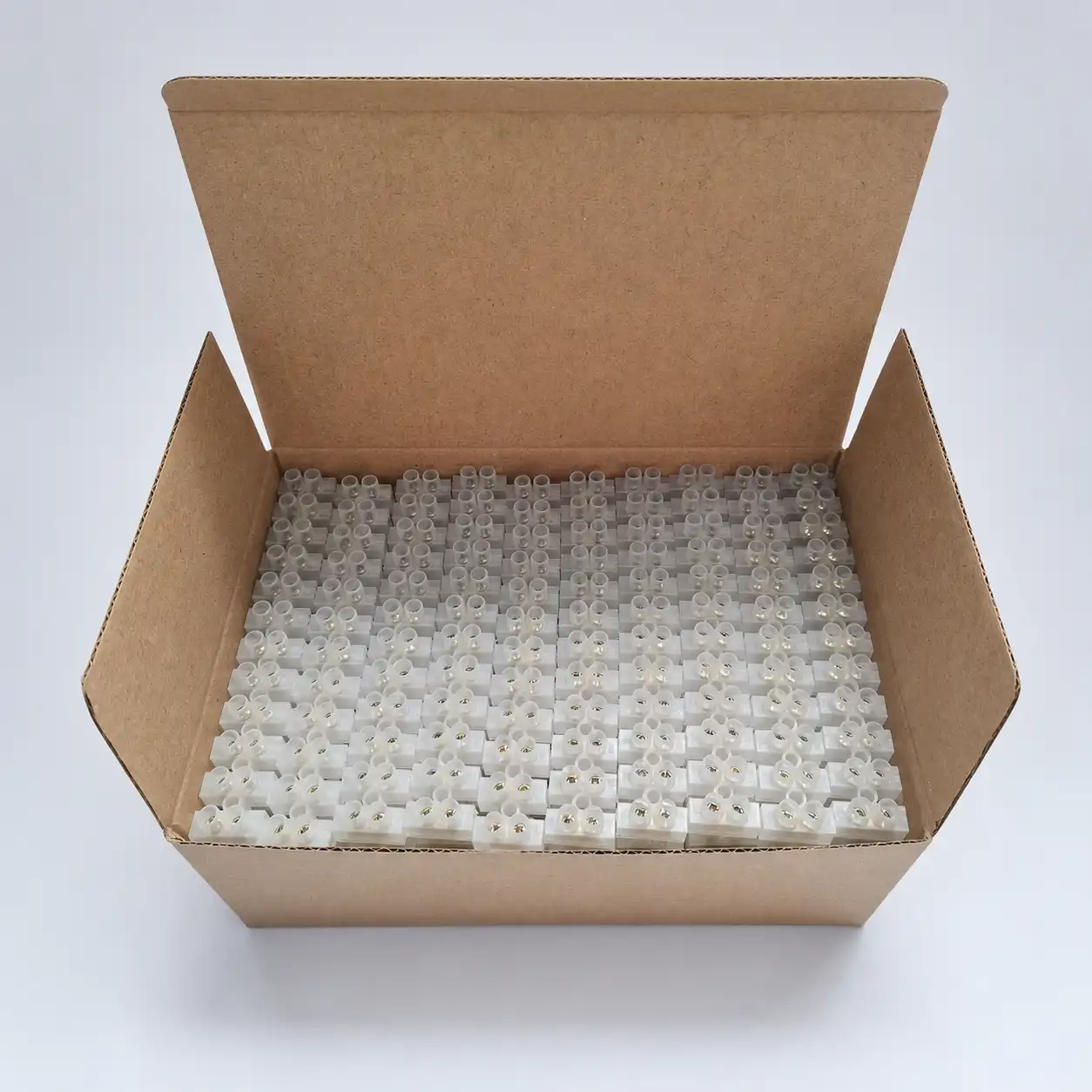
Wholesale terminal-block sourcing should start with a confirmed specification and BOM. Define connection type, ratings under the applicable approval, conductor range, mounting, poles, accessories, documents, quantities, packaging and destination before comparing price, MOQ or lead time.
What does “10,000+” mean in a reliable RFQ?
It can describe an order quantity, but it should not be treated as proof that a supplier carries 10,000 terminal-block SKUs or can ship every configuration immediately. A 10,000-piece request may be one mature part number, ten coordinated releases or a mixed BOM containing blocks, end clamps, jumpers and markers. Those are different manufacturing, packing and inventory problems.
The first purchasing decision is therefore not “Who advertises the largest catalog?” It is “Which supplier can identify the exact configuration, document what will be supplied and quote a realistic cargo-ready plan?” SENTOP presents multiple terminal block families, but availability, MOQ, production lead time and shipping date still depend on the exact model, quantity, packaging, customization and destination.
When wholesale ordering actually helps
Bulk purchasing creates value when the specification is stable enough to offset the extra inventory, inspection and change-control risk.
Repeat panel builds
A released design uses the same terminal system across recurring control panels. Scheduled releases can align purchasing with the production plan without assuming all stock must arrive at once.
Distributor replenishment
Demand history supports reorder quantities by SKU, and the distributor can preserve lot identification while controlling slow-moving variants and accessory compatibility.
OEM platform standardization
Several machines share a qualified family, drawing and accessory set. Consolidation can simplify assembly and service only after alternates and change notification are controlled.
Project-based mixed BOM
A project needs related feed-through, PE, disconnect, multi-level or pluggable parts. Grouping the RFQ can improve coordination, but each line still needs its own quantity and approval status.
Choose by installation task, then verify the model
Connection technology is a starting point, not a rating. Similar-looking blocks may have different conductor permissions, dimensions, accessories and approval values.
| Family | Typical selection question | Verify on the exact model | SENTOP range |
|---|---|---|---|
| Screw DIN rail | Is a familiar, tool-tightened field connection preferred? | Conductor type and range, strip length, torque, rail, jumpers, markers, current and voltage under the applicable approval. | View family |
| Spring / push-in | Does the assembly prioritize fast, consistent conductor insertion? | Direct-insertion permissions, ferrule rules, release method, conductor range, test points, rail and environmental limits. | View family |
| Fixed / barrier | Is a panel-mounted strip or covered barrier format required? | Pitch, positions, mounting centers, screw or clamp method, cover, terminals, creepage/clearance and exact ratings. | View family |
| Pluggable | Must a harness or module disconnect without removing every conductor? | Header/plug pair, pitch, keying, mating cycle, orientation, PCB layout, locking and compatible coding accessories. | View family |
| PE / ground | Is the block part of the protective-earth path? | Rail bonding method, conductor range, markings, installation instructions and certification conditions for the grounding function. | View DIN range |
| Fuse / disconnect | Does the circuit need isolation, test or overcurrent components at the terminal? | Component type, replacement limits, indication circuit, operating method, accessories and end-equipment coordination. | View combined range |
| Multi-level | Is higher wiring density needed within limited rail space? | Level-to-level connection map, marking visibility, bridge paths, conductor access, dimensions and heat/loading conditions. | View combined range |
“Typical” describes the selection task, not a universal application approval. The released datasheet, drawing, instructions and certification record control.
Do not transfer data between look-alike parts
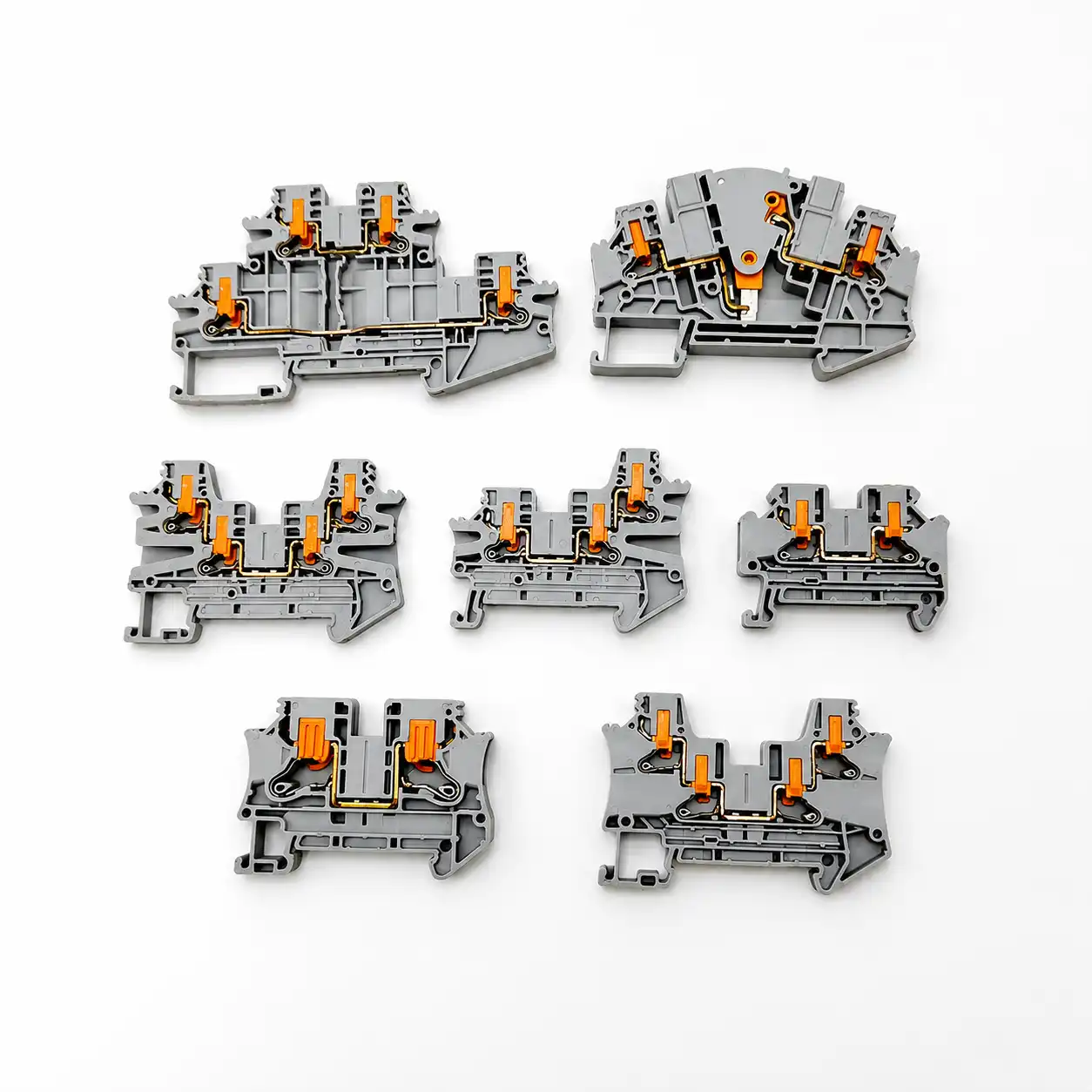
A housing color or connection style does not establish the conductor material, clamp design, current, voltage, temperature or certification. Match the manufacturer, catalog number and revision throughout the quote, sample, certificate and shipment.
Freeze the BOM before asking for volume price
The fastest useful quotation is built from complete line items. Attach drawings whenever dimensions, connection paths or markings matter.
- IdentityManufacturer, family, catalog number, revision and approved alternate status.
- Electrical dutyCurrent, voltage, circuit function and the approval system that applies.
- ConductorsMaterial, solid/stranded class, AWG or mm², quantity per point and preparation.
- GeometryPitch, poles or levels, dimensions, mounting method, rail and clearance envelope.
- TerminationStrip length, ferrule or lug permission, screw/clamp method, torque and tooling.
- AccessoriesEnd plates, end clamps, bridges, separators, markers, covers and test plugs.
- EnvironmentTemperature, vibration, corrosion, condensation, pollution and enclosure context.
- QuantityPer-SKU total, release schedule, sample quantity, pack multiple and forecast horizon.
- DocumentsDatasheet, drawing, certificate record, declaration, CoC and inspection reports.
- Commercial dataDestination, Incoterm, named place, currency, packaging, labels and required dates.

One order can contain many families—but not vague line items
A mixed terminal block BOM can simplify coordination for a panel builder or distributor. It does not make MOQ, price break, packaging or availability identical across every SKU. Ask the quotation to preserve line-level detail while showing any order-level commercial assumptions separately.
- Separate core blocks from accessories. A “set” must state exactly what it includes.
- Separate approved alternates. No substitution should occur without documented buyer approval.
- Separate stock from production. Available-to-promise quantity and the production balance need different dates.
- Separate standard from custom. Marking, color, material, packaging or geometry changes may affect tooling and certification review.
Compare landed cost—not a headline discount
There is no universal terminal-block discount table. Price breaks are supplier-, SKU-, quantity-, package- and date-specific.
Goods + tooling/NRE + samples and inspection + packaging + origin handling + freight and insurance + duties/taxes + receiving + inventory and change risk
Exact SKU quantity
Give quantity and release timing per part. Combined volume may help planning, but it does not automatically create one price break.
Pack and labels
Standard cartons, small bags, grouped kits, barcodes, private labels and lot separation create different work and material.
Customization
Color, marking, geometry, material or packaging may require review, samples, tooling, NRE and document updates.
Evidence and testing
Define which declarations, certification records, inspection reports or agreed tests are included and which carry a charge.
Delivery term
State the Incoterms® 2020 rule and named place. Freight, import clearance, duties and risk transfer depend on that choice.
Currency and validity
Record currency, payment terms, quotation expiry and the rule for material or exchange-rate changes.
Put every supplier on the same comparison sheet
A quotation is comparable only when its scope and timing fields mean the same thing.
| Field | What the quote should state | Why it matters |
|---|---|---|
| Line identity | Exact model, revision, quantity, pack multiple and permitted substitute. | Prevents price comparison between different parts. |
| Price basis | Unit and extended price, included accessories, tooling/NRE, samples and document/test charges. | Exposes costs hidden outside the unit price. |
| Packaging | Pieces per inner/outer pack, model separation, labels, barcode, pallet and moisture protection if required. | Controls receiving labor and traceability. |
| Availability | Available-to-promise stock, allocation status and production quantity. | Separates physical stock from a generic “in stock” label. |
| Dates | Sample date, approval deadline, production-ready date, carrier handover date and transit estimate. | Shows which party controls each milestone. |
| Trade term | Incoterms® 2020 rule plus named place, freight inclusion, insurance, clearance and duty/tax responsibility. | Creates a fair landed-cost comparison. |
| Commercial validity | Currency, quotation validity, payment terms, warranty/return reference and change conditions. | Turns assumptions into PO-ready terms. |
Verify the document, the database and the exact model
“Certified terminal block” is not enough. Requirements depend on the destination market, end equipment, catalog number and conditions of use.
Datasheet and drawing
Match identity, dimensions, conductor configurations, torque or operating method, current/voltage conditions, temperature and accessory references. Resolve conflicts before sample approval.
UL record where applicable
Search the exact catalog number, file and product category in UL Product iQ. Record ratings and Conditions of Acceptability. A Recognized Component is not the same as a standalone Listed end product.
IEC product standard
IEC 60947-7-1:2025 covers specified terminal-block products, but a claim of conformity does not by itself establish suitability for the finished equipment or every market.
CE documentation
CE marking is a manufacturer declaration under applicable EU legislation, not a generic third-party product approval. Where CE applies, request the model-specific EU Declaration of Conformity and its legislation/standard references.
RoHS and REACH
Request dated, part-number-specific declarations against the applicable RoHS scope and the current REACH Candidate List. Capture exemptions and any required substance disclosure instead of accepting an undated logo.
Lot and change evidence
Define CoC content, lot/PO identity, agreed inspection reports and change notification. A CoC does not automatically contain test results; request separate batch data when required.

Approve what production must reproduce
Use a representative sample or pilot lot when the supplier, tooling, design, material, marking, packaging or risk level makes verification appropriate. The approved sample should point to the same frozen drawing and BOM used for production.
Part/revision, pitch, dimensions, rail or panel fit and accessory mating.
Permitted conductor, preparation, strip length, insertion/release and documented torque.
Housing, conductor parts, clamp/screw assembly, markings and agreed materials.
Continuity and any agreed tests using documented methods, limits and equipment.
Quantity, model separation, labels, lot ID, CoC and required inspection records.
Sample marking and catalog number correspond to current certification and declarations.
“Fast delivery” needs five separate dates
Stock status, production lead time and transportation are connected, but they are not interchangeable.
ATP confirmation
Quantity actually available to promise, location and allocation expiry.
Sample approval
When the buyer will approve the released sample, drawing and deviations.
Cargo ready
When the agreed quantity is packed and available for pickup or dispatch.
Carrier handover
When responsibility transfers to the carrier under the agreed shipping plan.
Arrival estimate
Transit estimate to the named place, excluding unpromised customs outcomes.
Control customization as a release process
Custom labels, model marking, grouped packaging or product changes should move through approval gates—not informal messages.
Define requirements
Provide target model, drawing, quantity, application context, label files, pack plan, destination and required evidence.
Review feasibility
Confirm what is standard, what changes, whether tooling/NRE applies and whether certification review is needed.
Approve evidence
Release the drawing, artwork, sample, deviations, inspection plan and document list before production.
Produce and inspect
Use the approved revision, record lot identity and complete agreed inspections without silent substitutions.
Pack and hand over
Check pack count, model separation, labels, documents and carrier handover against the quotation and PO.
Custom feasibility, MOQ, tooling, sample charges and schedule can only be confirmed after requirements and drawings are reviewed.
Send enough information to quote the right order once
A spreadsheet BOM plus drawings is better than a product photo and a total piece count.
Buyer sends
- Company, contact, destination country and receiving location
- Exact part number or fully defined technical specification
- Per-SKU quantity, annual estimate and requested release schedule
- Drawings, connection map, conductor details and accessory list
- Required certification records, declarations and test/inspection documents
- Sample or pilot-lot need and acceptance criteria
- Packaging, model separation, label, barcode and traceability requirements
- Requested Incoterms® 2020 rule, named place and target milestones
Supplier returns
- Matched catalog number, revision and documented deviations
- MOQ/SPQ and price breaks per line, with currency and validity
- Included accessories, tooling/NRE, sample and document/test charges
- Available-to-promise stock and production balance
- Sample, cargo-ready and carrier-handover dates
- Pack configuration, labels, lot control and shipping dimensions
- Applicable datasheets, drawings, certificate records and declarations
- Payment terms, trade term, freight scope and change-notification process
Ready to turn your BOM into a comparable quote?
Send SENTOP the exact models or specifications, per-SKU quantities, accessories, documents, packaging, destination and requested dates. The response can then confirm matching, MOQ, pricing and schedule for the actual order.
Related terminal block resources
Wholesale terminal block FAQ
What is the MOQ for wholesale terminal blocks?
There is no universal MOQ. It depends on the exact model, standard pack quantity, per-SKU volume, stock or production status, customization, packaging and documentation. Ask the written quotation to show MOQ and SPQ for every line rather than one order-wide number.
Can I combine different terminal block types in one bulk order?
Yes, a supplier may review a mixed BOM containing multiple terminal block families and accessories. Keep each SKU, revision, quantity, pack requirement, approval status and required date on its own line. Combined purchasing does not guarantee a common MOQ, discount or lead time.
Can I request samples before placing a bulk order?
Samples can be requested, but eligibility, quantity, cost, freight and timing must be confirmed for the exact part. Approve the sample against the frozen drawing, conductor requirements, accessories, markings, documents and agreed inspection criteria before releasing production.
What information should I include in a terminal block RFQ?
Include the exact model or full specification, conductor details, electrical duty, positions or levels, pitch and mounting, accessories, per-SKU quantities, drawings, required documents, sample and inspection needs, packaging and labels, destination, requested Incoterm with named place and milestone dates.
Which terminal block families can SENTOP help supply?
SENTOP presents fixed, feed-through, spring, screw, plug-in, DIN-rail, barrier and combined terminal block families, plus related accessories. Exact model availability, ratings, documents, MOQ and schedule should be confirmed from the current catalog data and formal quotation.
Does SENTOP support OEM labels and custom packaging?
SENTOP can review requirements for customer labels, model marking and grouped packaging. Feasibility, artwork approval, MOQ, charges, production schedule and any certification impact depend on the requested model and change, so they must be documented before the purchase order.
How long does a bulk terminal block order take?
Timing depends on available-to-promise stock, quantity, material and capacity, sample approval, customization, testing, packaging, destination and carrier route. Request separate written dates for the sample, cargo readiness, carrier handover and transit estimate instead of relying on a generic delivery claim.
Which certificates and documents should I request?
Start with the destination market, end-equipment standard and exact catalog number. Depending on the application, request the current datasheet and drawing, certification database record and conditions, model-specific declaration, dated RoHS/REACH statements, CoC, lot traceability and agreed inspection or test reports. No single document package fits every order.
Primary sources used in this guide
- UL 1059, Sixth Edition—Terminal Blocks
- UL Product iQ certification database
- IEC 60947-7-1:2025 official scope
- European Commission CE marking guidance
- European Commission RoHS overview
- ECHA REACH Candidate List
- ICC Incoterms® rules
- SENTOP terminal block product families
This article is a procurement framework, not an electrical design approval, certification decision, legal opinion or guaranteed commercial offer. Always use the exact product drawing, installation instructions, current certification record, applicable end-equipment requirements and written quotation.