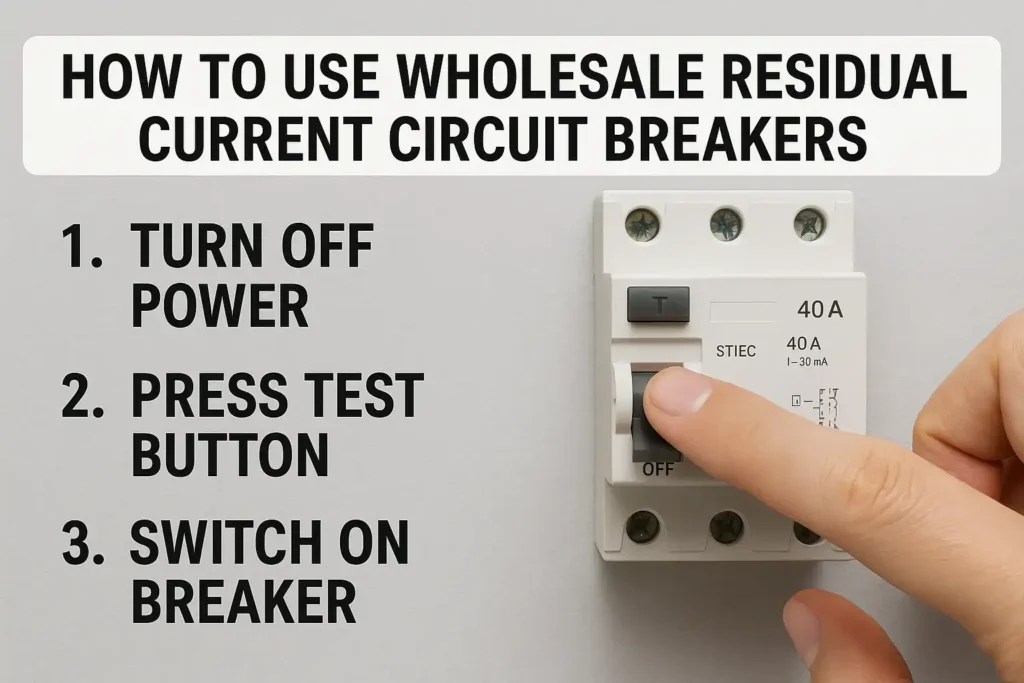
When you use wholesale residual current circuit breakers, your electrical projects are safer. These devices find problems fast and stop electricity right away. This helps keep accidents from happening. RCBO protection has ground fault and overload safety in one device. You get quicker and better safety with it. More people around the world are buying these breakers, especially for solar projects. Type B RCCBs work with both AC and DC currents. They are the best for new energy systems.
You should always pick certified products that fit your needs. This way, you can make safer and better systems.
Key Takeaways
- Pick the right type of residual current circuit breaker for your project. This helps give the best protection. Types are AC, A, or B.
- Always buy certified RCCBs from trusted sellers. This makes sure you get safe and good products that work well.
- Install RCCBs with care by following each step in the guide. Test them often to keep your electrical system safe.
- Do regular checks and maintenance to find problems early. This helps stop electric shocks or fire from happening.
- Buying RCCBs in bulk saves money and gives a steady supply. It also keeps the quality the same for all your projects.
Wholesale residual current circuit breakers
Types and Applications
There are different kinds of wholesale residual current circuit breakers. Each one is made for a special job. The main types are Type AC, Type A, and Type B.
- Type AC finds only sinusoidal alternating currents. You can use it for simple home or office wiring.
- Type A works with both sinusoidal AC and pulsating DC currents. This type is good for things like washing machines with electronic parts.
- Type B finds AC, pulsating DC, and smooth DC currents. You should pick this one for factories, solar power, and EV charging. It gives the best protection when DC is in the system.
You can get RCCBs with different pole setups. Single pole is for easy circuits. Double pole turns off both live and neutral wires, so it is safer. Four pole RCCBs protect three-phase systems in big buildings or factories. You can put these on DIN rails or panels, so they are easy to install.
Here is a table that shows where each type is used:
| Aspect | Industrial Applications | Solar and EV Charging Systems | Residential and Commercial Applications |
|---|---|---|---|
| RCCB Type | Type B RCCB preferred because it finds AC and pulsating DC | Type B RCCB needed for DC in solar and EV systems | Type B RCCB used for extra safety in some areas |
| Current Sensitivity | Finds AC and pulsating DC, protects machines | Needed to find DC leaks from solar and EV chargers | Stops earth leaks in homes and businesses |
| Application Environment | Used in factories, labs, hospitals, and IT rooms | Used in solar power and EV charging spots | Used in kitchens, bathrooms, malls, and offices |
| Protection Focus | Keeps people and important equipment safe | Stops DC leak problems in solar and EV charging | Stops electric shocks and fire risks |
Key Safety Features
Wholesale residual current circuit breakers keep you safe by cutting power fast if they find dangerous leaks. Most have sensitivity between 5 mA and 30 mA to protect lives. For homes, use 30 mA devices. In factories, higher ratings like 100 mA help stop fires.
You should always pick RCCBs with certifications like IEC 61008, IEC 61009, CE, CB, or UKCA. These make sure the device will trip fast and handle strong surges. Trusted brands like Siemens or ABB have these certifications.
Tip: Always choose the right RCCB type and sensitivity for your project. This helps stop electric shocks and fire dangers.
Wholesale residual current circuit breakers also help you work safely. If you install them right and check them often, you lower the chance of accidents and damage.
Selection and Quality
Assessing Quality and Certifications
You must check the quality of each residual current circuit breaker before using it. Good breakers keep your system safe and working well. First, look at the technical benchmarks. These features show how the device works during problems and normal times.
Here is a table that shows the main technical benchmarks for residual current circuit breakers:
| Feature Parameter | Description |
|---|---|
| Maximum Closing Voltage | The highest voltage the breaker can handle when closing. |
| Closing Bounce Time | How long the contacts bounce after closing before the arc goes out. |
| Arc Platform Time | The time when the arc stays stable with little change in current and voltage. |
| Arcing Time | The total time from when the contacts separate to when the arc stops. |
| Arc Energy | The heat made by the arc from start to finish. |
| Average Arcing Power | The average power used during the arcing period. |
| Arc Platform Time Proportion | The part of the arcing time when the arc is stable. |
| Accumulated High-Energy Arcing | How often high-energy arcs happen in a set time or overall. |
You should also check for these important features:
- High breaking capacity, like 100A, protects big circuits.
- Strong anti-interference keeps the device safe from noise.
- Impact and heat resistance means it can handle tough conditions.
- Double busbar design lets you wire things in more ways.
- Fault current indicator helps you find leaks fast.
Certifications are very important. Always pick breakers with marks like IEC 61008, IEC 61009, CE, CB, or UKCA. These marks show the product meets strict safety rules. Certified devices trip faster and can handle strong surges. Using certified wholesale residual current circuit breakers lowers the risk of shock and fire.
Tip: Always check the label for certification marks before you buy or install any breaker.
Choosing the Right Supplier
Choosing the right supplier helps you get safe and good products. You should follow these steps to make a smart choice:
- Check the Supplier’s Reputation
Find suppliers with good reviews and a long history. Trusted suppliers often work with big brands. - Ask About Product Testing
Good suppliers test their products before sending them. Ask for test reports or certificates. - Review the Range of Products
A good supplier has many types of breakers, like Type AC, Type A, and Type B. This helps you pick the right one for each job. - Look for After-Sales Support
Good suppliers help you after you buy. They answer questions and fix problems fast. - Compare Prices and Delivery Times
Make sure the supplier has fair prices and delivers on time. This keeps your project moving.
Note: When you buy wholesale residual current circuit breakers from a trusted supplier, you get better quality and safer results.
SENTOP provides high-quality RCCB and supports customized solutions

Installation Guide
Step-by-Step Process
Installing wholesale residual current circuit breakers helps you keep your electrical projects safe. You need to follow each step carefully to make sure the device works as it should. Here is a simple guide you can use:
- Turn off the main power supply. Always wear personal protective equipment before you start.
- Pick the right spot for the RCCB. Most people install it inside a box on a DIN rail.
- Check the RCCB’s type, rating, and if it matches your connected loads.
- Disconnect the power supply to the distribution board or consumer unit.
- Connect the RCCB to the distribution board. Follow the manufacturer’s instructions. Make sure you connect the live, neutral, and earth wires securely.
- Fix the RCCB inside the box on the DIN rail. Make sure it is tight and lines up straight.
- Reconnect the power supply. Look at all the connections to see if there is any damage or wear.
- Test the RCCB by pressing the test button. This simulates a fault and checks if the breaker trips.
- Use a testing device to check the tripping time. The RCCB should trip quickly.
- Perform an earth fault loop impedance test. This makes sure the path for fault current is low.
- Plan regular inspections and maintenance. Test the RCCB often to keep it working well.
- Always follow the manufacturer’s guidelines and local rules during installation and testing.
Tip: Always double-check your work before turning the power back on. This helps you avoid mistakes that could cause danger.
Common Mistakes
Many people make errors when installing wholesale residual current circuit breakers. These mistakes can lower the safety of your system. You can avoid problems by learning about the most common issues and how to fix them.
- Some people set the sensitivity wrong. You need to match the sensitivity to your equipment and the risk level.
- Improper wiring happens often. Always use the right size cables and make sure each circuit has its own breaker.
- Installing the RCCB far from the power source is a mistake. You should place it as close as possible to the start of the installation.
- Skipping regular tests is risky. You need to do trip tests and earth loop impedance tests to make sure the breaker works.
- People sometimes forget to look for physical damage or dirt. You should inspect the RCCB often and keep it clean.
- Not following the manufacturer’s instructions can lead to problems. Always read the manual before you begin.
Note: If you find a problem, fix it right away. Regular checks and proper installation help you prevent electric shocks and fire risks.
Maintenance and Testing
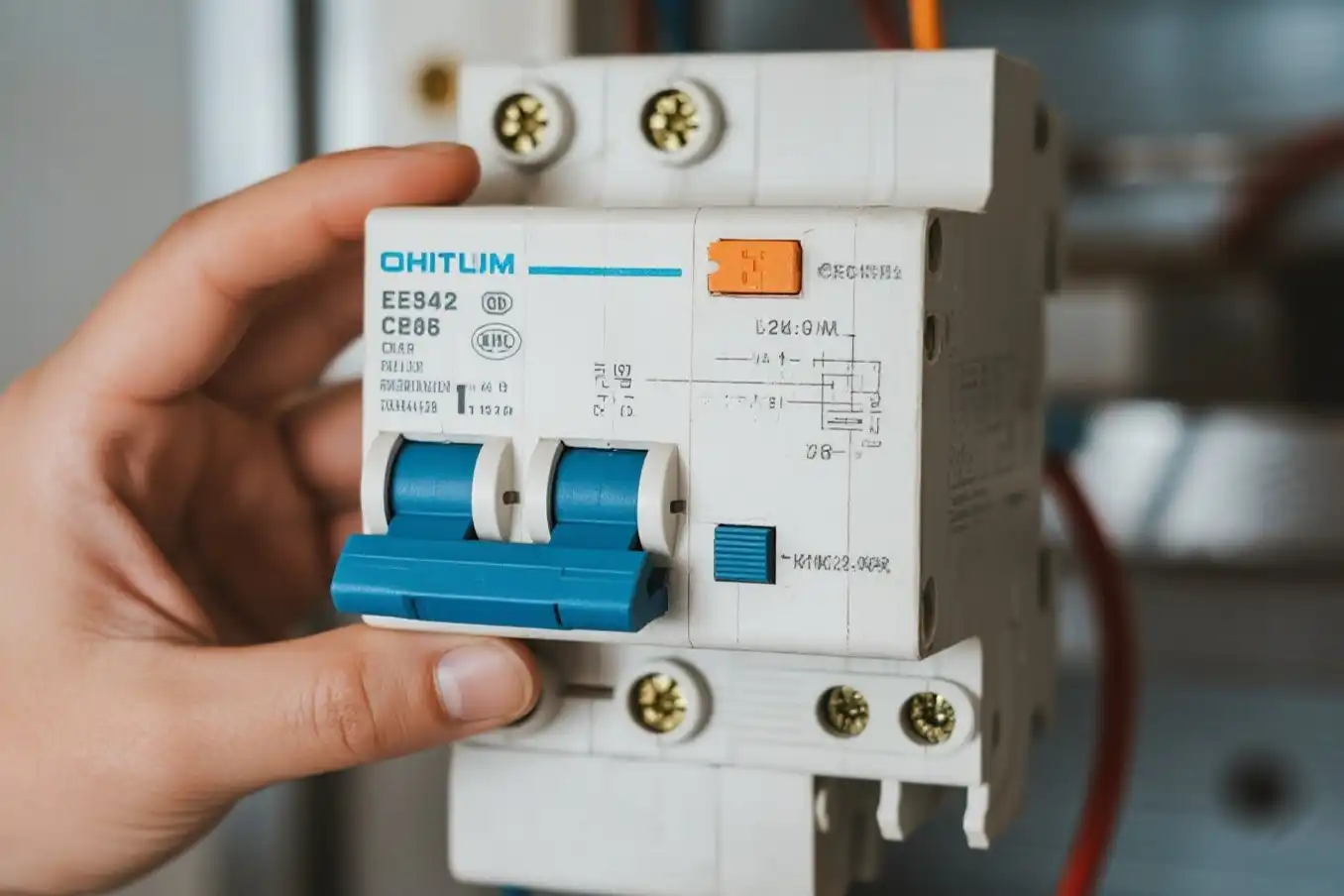
Routine Checks
You have to keep your residual current circuit breakers in good condition. This helps your project stay safe. Regular checks help you find problems early. Industry standards like IEC 61008-1 and IS 12640-1 say these steps are important. Here is a table that shows the main routine check procedures:
| Routine Check Procedure | Description | Validated By Standards |
|---|---|---|
| Test Button Activation | Press test button every 6 months to verify tripping | IEC 61008-1, IS 12640-1 |
| Visual Inspection | Check terminals for discoloration, overheating, or looseness | IEC 61008-1, IS 12640-1 |
| Insulation Testing | Use megohmmeter to check cable insulation resistance | IEC 61008-1, IS 12640-1 |
| Load Balancing Check | Verify balanced load to prevent nuisance tripping | IEC 61008-1, IS 12640-1 |
You should press the test button every 3 to 6 months. This makes sure the breaker trips when it should. You can use an ELCB tester for extra checking. Always wear personal protective equipment when testing. Look for damage like burn marks or loose wires. Use a megohmmeter to check if the insulation is good. Make sure the load is balanced so the breaker does not trip for no reason.
Tip: Set a reminder to test your breakers two times each year. This easy step can stop big problems.
Troubleshooting and Replacement
Sometimes, breakers do not work right. You need to know how to find and fix these problems. Here are some common issues and what you can do:
- Breaker does not trip during test: Check the wiring and see if the test button works. If it still does not trip, you need to replace it.
- Breaker trips too often: Check for unbalanced loads or broken appliances. Fix the wiring or change the bad device.
- Overheating or discoloration: Turn off the power. Check the terminals and tighten any loose wires. Replace the breaker if you see damage.
- Physical damage or cracks: Change the breaker right away. Broken breakers cannot keep you safe.
If you find a problem inside or a short circuit, stop using the breaker. Put in a new certified one. Always follow safety rules and wear protective gear when working with electrical panels.
Remember: Acting fast keeps your system safe and working well. Regular checks and quick replacement help you avoid accidents and downtime.
Bulk Purchase Benefits
Cost and Supply Advantages
If you buy a lot of wholesale residual current circuit breakers at once, you pay less for each one. Suppliers usually give better prices when you order many at the same time. This helps you spend less money on your project. You also do not run out because you have enough in stock. Your work goes faster since you do not wait for more to arrive.
Buying in bulk lets you control your supply better. You can plan your work because you know you have enough breakers. Many suppliers let you pick special features or your own brand with OEM or ODM services. You can ask for things that fit your project best.
Tip: Always ask your supplier about lower prices and special features when you order a lot.
Here is a quick look at the main benefits:
| Benefit | How It Helps You |
|---|---|
| Lower unit price | Reduces total project cost |
| Steady supply | Prevents work stoppages |
| Customization options | Matches your exact requirements |
Ensuring Consistent Quality
When you buy in bulk from a trusted supplier, you get the same quality for your whole project. You get all your residual current circuit breakers from one place. This means every device follows the same safety rules and works the same way.
Having the same quality makes your project safer. You do not need to worry about using different brands or models. If you test one breaker, you know the others will work the same. This helps you stop problems and keeps your system working well.
Note: Always check that your supplier gives certified products before you buy a lot.
Using wholesale residual current circuit breakers for big projects helps you keep things safe and finish on time. Buying in bulk makes your work easier and keeps everyone safe.
You can make your projects safer by following a few key steps. First, choose the right RCCB for your needs. Next, install it carefully and test it often. Keep up with regular maintenance to catch problems early. When you buy in bulk, you save money and keep your supply steady. Start using these steps today to build safer electrical systems.
FAQ
What is the main job of a residual current circuit breaker?
A residual current circuit breaker protects you from electric shocks. It quickly cuts off power if it detects a leak or fault in the circuit. This helps prevent injuries and electrical fires.
How often should you test your RCCB?
You should test your RCCB every three to six months. Press the test button to make sure it trips. Regular testing keeps your system safe and working well.
Can you use one RCCB for all types of electrical systems?
No, you need to choose the right type for each system. For example, use Type B for solar or EV charging. Always match the RCCB to your project’s needs.
What should you do if your RCCB trips often?
Check your wiring and connected devices. Unplug appliances one by one to find the problem. If the RCCB still trips, call a qualified electrician for help.
Why should you buy RCCBs in bulk for large projects?
Buying in bulk saves you money and time. You get a steady supply and consistent quality for your whole project. This helps you finish your work faster and safer.
The following information may be of interest to you
A guide to sourcing micro-circuit breakers at wholesale prices
KRC6N Wholesale AC/A Type 220V RCCB
Wholesale MCB vs. Individual Circuit Breakers
Top 8 Residual Current Circuit Breaker Brands for Home Safety
What Are Residual Current Circuit Breakers and How Do They Work