
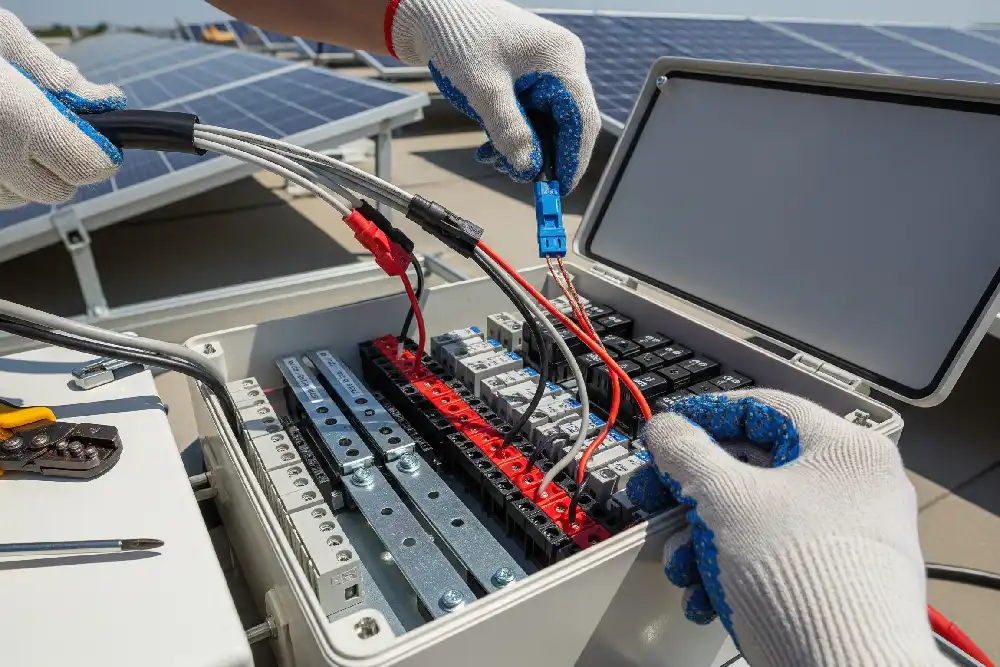
A solar combiner box can connect three to 52 photovoltaic strings. The number depends on how the box is made. You need to know the exact number for safety. The combiner box gathers power from many strings. It sends the power safely to the inverter. This setup stops too much current from flowing. It helps your solar system work well. Local electrical codes have rules for safety. For example, the U.S. National Electrical Code has rules. These rules often need overcurrent protection for each string. Knowing the right capacity helps you follow these rules. It also helps you avoid safety problems.
Key Takeaways
- A solar combiner box can link 2 to 52 photovoltaic strings. The number depends on how it is made and used.
- Always look at the manufacturer’s guide for input ports and current ratings. This helps you not to overload the system.
- Follow local safety rules and standards. This keeps your solar system safe and working well.
- Use a safety factor of 1.25 when you figure out the current for each string. This helps you follow electrical code rules.
- Clean your solar combiner box often and check the connections. This helps it work well for a long time.
Solar Combiner Box String Capacity
Typical Range
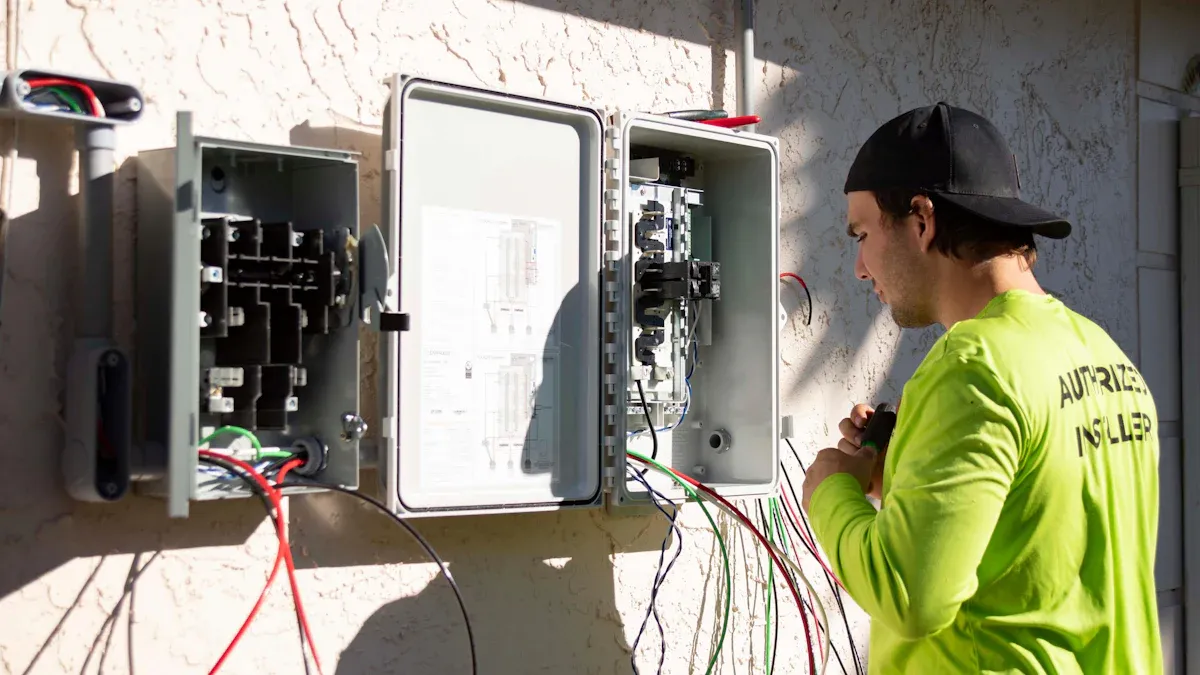
The string capacity of a solar combiner box changes with the project type. The number of strings you can connect is not the same for every system. Residential, commercial, and utility-scale systems all have different needs. Each one uses different power and voltage levels. Look at this table to see the usual range for each:
| Application | Power Range | Number of Strings | Voltage |
|---|---|---|---|
| Residential | 3kW – 15kW | 2 – 4 | 600V or 1000V |
| Commercial | 20kW – 500kW | 6 – 24 | 1000V |
| Utility-Scale | 1MW – 300MW+ | 16 – 48+ | 1500VDC |
A home solar combiner box usually connects 2 to 4 strings. For a business, you might connect 6 to 24 strings. Big utility projects can use boxes for 16 to 48 or even more strings. The voltage goes up as the system gets bigger. This helps move more power and lose less energy.
Manufacturer Limits
Manufacturers give clear rules for each solar combiner box. Always check the label or manual before you connect your strings. The main limits are the number of input ports, the highest current for each string, and the total voltage. Here is a table with some common limits from manufacturers:
| Specification | Value |
|---|---|
| Maximum input current for each string | 15A |
| Maximum input strings | 12 |
| Maximum Number Of Input Channels | 16 |
Some boxes are made for 10A, 15A, 20A, or 32A per string. The right fuse size keeps your system safe. Some boxes have smart features for extra help. Smart combiner boxes have sensors and ways to talk to other devices. You can check each string from far away. Some new boxes use digital twin technology and AI to spot problems early. Cloud platforms and edge computing help you get alerts fast and handle data. Manufacturers also add strong cybersecurity to keep your system safe.
Tip: Always read the manufacturer’s documentation before you connect your strings. This helps you avoid overloading the box and keeps your solar system safe.
A solar combiner box lets you safely join power from many strings. You must follow the manufacturer’s limits. This keeps your system working well and protects your equipment.
Key Factors
When you decide how many photovoltaic strings to connect, you need to look at several key factors. These include the number of input ports, the voltage and current ratings, and the safety codes that apply to your system.
Input Ports
The number of input ports on a solar combiner box tells you the maximum number of strings you can connect. Each port connects to one string. If your box has six input ports, you can connect up to six strings. Here is a table that shows how different models compare:
| Model | Number of Input Ports | Maximum PV Strings |
|---|---|---|
| 1000V DC Combiner | 2 | 2 |
| 1000V Solar Combiner Box BHS-6-3 | 6 | 6 |
| 1000V Solar Combiner Box BHS-4-4 | 4 | 4 |
Tip: Always match the number of strings to the number of input ports for safe operation.
Voltage and Current
You must check the voltage and current ratings of your system. These ratings decide how many strings you can connect safely. Here are some important points:
- When you connect strings in parallel, the current increases, but the voltage stays the same.
- If you connect three strings of two panels each in parallel, the voltage doubles, and the current triples.
- The total current is the sum of each string’s current.
- The inverter must handle the combined voltage and current.
All panels in a string should have the same output amperage. If one panel produces less current, it limits the whole string. For example, if each panel gives 24V and 5A, two panels in series give 48V and 5A. If one panel underperforms, the string’s output drops.
Safety Codes
You must follow safety codes and standards when you install a solar combiner box. These rules protect you and your equipment. Here are some important codes and standards:
| Certifying Body | Standard | Region |
|---|---|---|
| UL | UL 1741 | North America |
| IEC | IEC 61439 | International |
| CSA | CSA C22.2 No. 14 | Canada |
| Safety Code | Description |
|---|---|
| NEC 690.12 | Requires rapid shutdown for emergencies. |
| NEC 690.11 | Needs arc-fault protection for DC circuits. |
| NEC 690.15 | Requires a local disconnect for rooftop combiners. |
| UL 1741 | Ensures safety and performance. |
Note: Following these codes helps you avoid hazards and keeps your system running smoothly.
Calculating Maximum Strings
Step-by-Step Guide
You need to know what steps to follow to find the maximum number of photovoltaic strings for your system. This process helps you match your solar array to the right combiner box and avoid safety risks.
Here is what you should check:
- Count the number of solar panel strings you plan to connect. Each string is a group of panels wired together in series.
- Look at the number of input ports on your combiner box. This tells you the highest number of strings you can connect.
- Check the current rating for each string. Most combiner boxes list a maximum current per string, such as 15A.
- Multiply the current of each string by 1.25. This safety factor helps you meet electrical code requirements.
- Add up the total current from all strings. Make sure this total does not go over the combiner box’s maximum output current.
- Review the fuse or circuit breaker ratings. These must match or exceed the current from each string.
- Make sure your cable size can handle the total current without overheating.
Tip: Always use the safety factor of 1.25 when you calculate string current. This keeps your system safe and code-compliant.
Here is a table that shows what variables you need to check:
| Key Variable | Description |
|---|---|
| Number of Input Strings | The total number of PV strings connected to the combiner box, affecting its output capacity. |
| Current Rating of Fuses and Circuit Breakers | Limits the output capacity based on the protective devices used in the system. |
| Cable Sizing | Determines how much current can be safely carried without overheating, impacting overall efficiency. |
| Efficiency of the Combiner Box | Affects how much input power is converted to usable output power, influencing the effective capacity. |
Example Calculation
You can use a simple example to see what this process looks like in practice.
- Count your strings. Suppose you have 20 solar panels. You wire them into 4 strings of 5 panels each.
- Check the combiner box. It has 6 input ports, so it can handle up to 6 strings.
- Find the current for each string. Each string produces 8A.
- Multiply by 1.25 for safety: 8A × 1.25 = 10A per string.
- Add the total current: 4 strings × 10A = 40A.
- Check the combiner box’s output rating. If the box is rated for 50A, you are within the safe limit.
- Make sure each fuse or breaker is rated for at least 10A.
Note: If you want to add more strings, make sure you do not go over the number of input ports or the total current rating.
You now know what steps to follow and what numbers to check. This helps you choose the right solar combiner box for your project and keeps your system safe.
Best Practices
Avoid Overloading
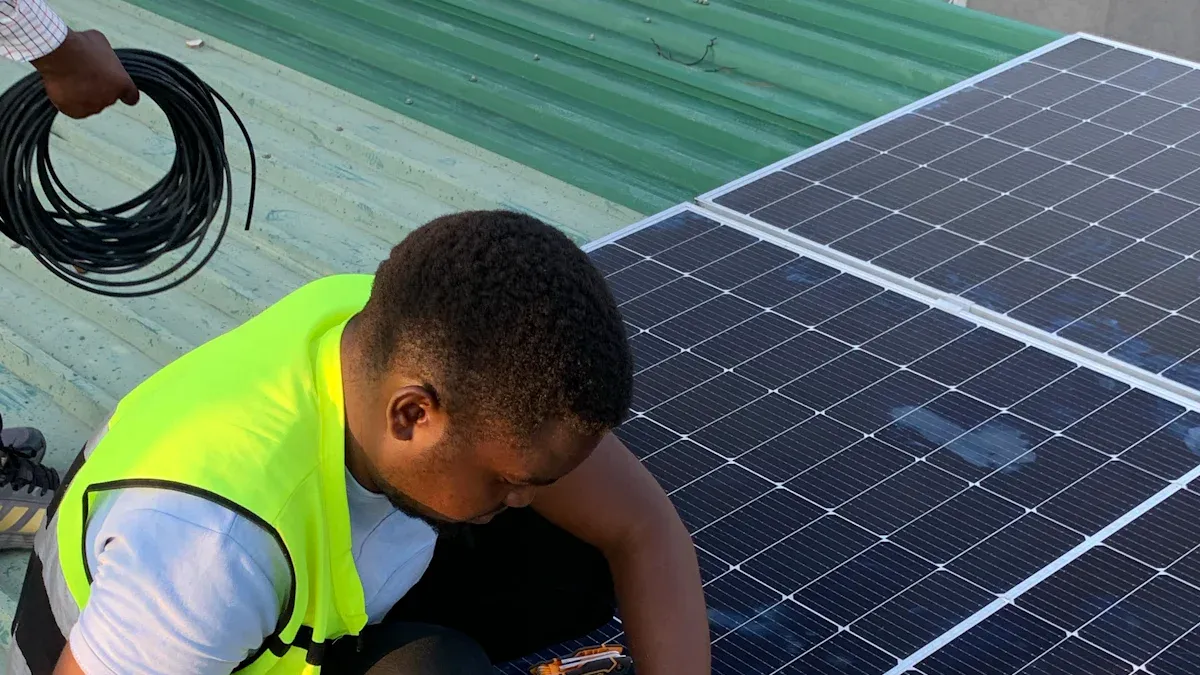
Overloading happens if you connect too many strings. It also happens if you go over the current rating. This can make things get too hot. It can cause too much current or even start a fire. Always check the number of input ports first. Also check the current rating before you connect anything. Here is a table that shows what can happen if you overload the system:
| Failure Mode | Description |
|---|---|
| Overcurrent Faults | Some strings get too much current, especially in bad weather. |
| Overheating | Too much current or not enough air can make parts hot and break. |
| Electrical Connection | Loose or old cables waste power and can hurt equipment. |
Tip: Always match the number of strings to the box’s rated capacity. Use the safety factor of 1.25 when sizing fuses or breakers.
Proper Protection
You need to keep your system safe from too much current and short circuits. Fuses and breakers do this job. Most systems use one fuse for each string. Fuses can handle higher voltages than breakers. Pick fuses or breakers that are rated for at least 1.25 times the highest current. This stops false trips and keeps your system working well.
- Use fuses rated for 600 to 1000 volts DC.
- Put one breaker or fuse on each string.
- Pick the right wire size, like 12 AWG for short wires, to stop overheating.
- Make sure all fuses and breakers are listed or certified.
Note: Good protection stops damage and keeps your system safe.
Safe Connections
Safe connections help your system work well and stop dangers. Here are some best ways to do this:
- Use color-coded cables and label every wire to avoid mistakes.
- Ground the box and all strings with the right size wires.
- Keep wires neat with cable glands and tie mounts.
- Tighten all screws with a torque wrench so nothing is loose.
- Use weatherproof boxes with high IP ratings to keep out dust and water.
- Put the box in a dry, shady, and easy-to-reach place.
- Test each string with a multimeter before turning on the system.
- Clean the box and look for rust or wet spots often.
Checking your system often and keeping cables neat helps stop problems and makes your solar combiner box last longer.
You must make sure the number of strings matches the box’s rated capacity. This keeps your system safe and working well. Always look at the manufacturer’s rules and follow safety codes.
- Picking the right size stops things from getting too hot or catching fire.
- Using the wrong number of strings can hurt the inverter or make less power.
- Checking your system often helps it last longer.
If you are not sure, ask an expert for help and buy from good brands. Safety is the most important thing.
FAQ
What is a photovoltaic string?
A photovoltaic string is made of solar panels in series. Strings add up the voltage from each panel. This helps send power to the combiner box and inverter.
What happens if you connect too many strings to a combiner box?
Too many strings can make things get too hot. It can cause electrical problems or even a fire. The combiner box might stop working. Always follow the manufacturer’s rules to stay safe.
What safety devices should you use in a solar combiner box?
Use fuses or circuit breakers for every string. These keep your system safe from too much current or short circuits. Pick devices that match your system’s voltage and current.
What do you check before connecting strings to a combiner box?
Check how many input ports the box has. Look at the current and voltage limits. Read safety codes and the manufacturer’s instructions. This helps you avoid mistakes and keeps everything safe.
What maintenance does a solar combiner box need?
Clean the box and look for rust or water. Test all the connections. Check the fuses and breakers. Regular checks help your system last longer and work safely.
See also
How to Calculate Max Strings for Solar Combiner Box
How to Check the Ampere Number on Your Circuit Breaker
Solar Combiner Boxes and Voltage Changes: What to Know
Analysis of key components of solar photovoltaic combiner box
What Determines How Many Solar Combiner Boxes You Need