
When considering the installation of automatic transfer switch systems for your home, you’re making an important decision. The cost for installation of automatic transfer switch units typically ranges from $600 to $2,500. Manual transfer switches are generally less expensive. If you choose to hire a professional for the installation of automatic transfer switch equipment, expect to pay about $50 to $100 per hour for labor.
| Installation Type | Cost Range (USD) | Notes |
|---|---|---|
| Installation of Automatic Transfer Switch | $600 – $2,500 | Best for standby generators |
| Manual Transfer Switch | $400 – $1,300 | Suitable for portable generators |
| Average Transfer Switch Cost | $1,200 – $1,600 | Typical installation cost |
Attempting the installation of automatic transfer switch systems without proper knowledge can lead to safety, code, and insurance issues.
- Risks include backfeeding and fire hazards.
- It’s essential to follow electrical codes and obtain the necessary permits.
- Insurance may not cover damages if the installation of automatic transfer switch is done incorrectly.
Key Takeaways
- Installing an automatic transfer switch costs $600 to $2,500. Professional labor costs $50 to $130 each hour.
- DIY installation can save money at first. But it has risks like safety problems and breaking rules. You might lose your warranty or insurance.
- Professional installation is safer. It follows electrical codes. It often comes with a warranty. This can lower repair costs and risks later.
- You need permits and inspections for safe and legal installation. Costs are different in each place.
- Regular maintenance and safety checks help your transfer switch work well. They also keep your home safe from electrical problems.
Cost Comparison
DIY Costs
If you install a transfer switch yourself, you pay for materials and tools. You need to buy the transfer switch unit and wiring. You also need tools if you do not have them. For indoor setups, materials cost about $300 to $500. Outdoor panels can cost up to $1,000. Wiring is a big cost too. It is about $600 online, but stores may charge double. Tools like wire strippers, voltage testers, and screwdrivers add $400 to $500 if you need them. Doing it yourself for a manual transfer switch usually costs $700 to $1,500 or more. The price depends on your home and how hard the job is. Automatic transfer switches cost more. The units alone are $500 to over $2,000.
⚠️ Note: DIY installation looks simple, but you must know about electricity and follow safety rules.
Professional Costs
If you hire an electrician for installation of automatic transfer switch, it costs more at first. But you get safety and the job follows the rules. The switch unit costs $400 to $2,000. The price depends on the type and features. Labor costs are usually $200 to $500. Hard jobs or high rates can make it more. Electricians charge $50 to $130 per hour. Some jobs take many hours. You might need extra parts like a power inlet box ($20–$100) or a heavy-duty power cord ($30–$350). Permits and inspections cost $50 to a few hundred dollars. On average, you pay $1,200 to $1,600 for a professional installation of automatic transfer switch. Hard jobs can cost $2,800 or more.
💡 Tip: Professional installation checks for safety, makes sure it works, and often gives you a warranty.
Comparison Table
The table below shows the main cost differences for manual and automatic transfer switches. It also compares DIY and professional installation:
| Transfer Switch Type | Equipment Cost Range | Installation Cost Range | DIY Installation Feasibility | Professional Installation Requirement |
|---|---|---|---|---|
| Manual | $300 - $700 | $200 - $500 | Possible if experienced | Recommended |
| Automatic | $500 - $2,000+ | $500 - $1,500 | Generally not recommended | Required |
- Manual transfer switches cost less and are easier for people with experience.
- Automatic transfer switches cost more but switch power by themselves and protect better.
- Professional installation follows safety rules and lowers risk.
📝 Summary: The installation of automatic transfer switch costs more than manual ones, especially with a professional. But you get safety, peace of mind, and it lasts longer.
Cost Breakdown
Equipment
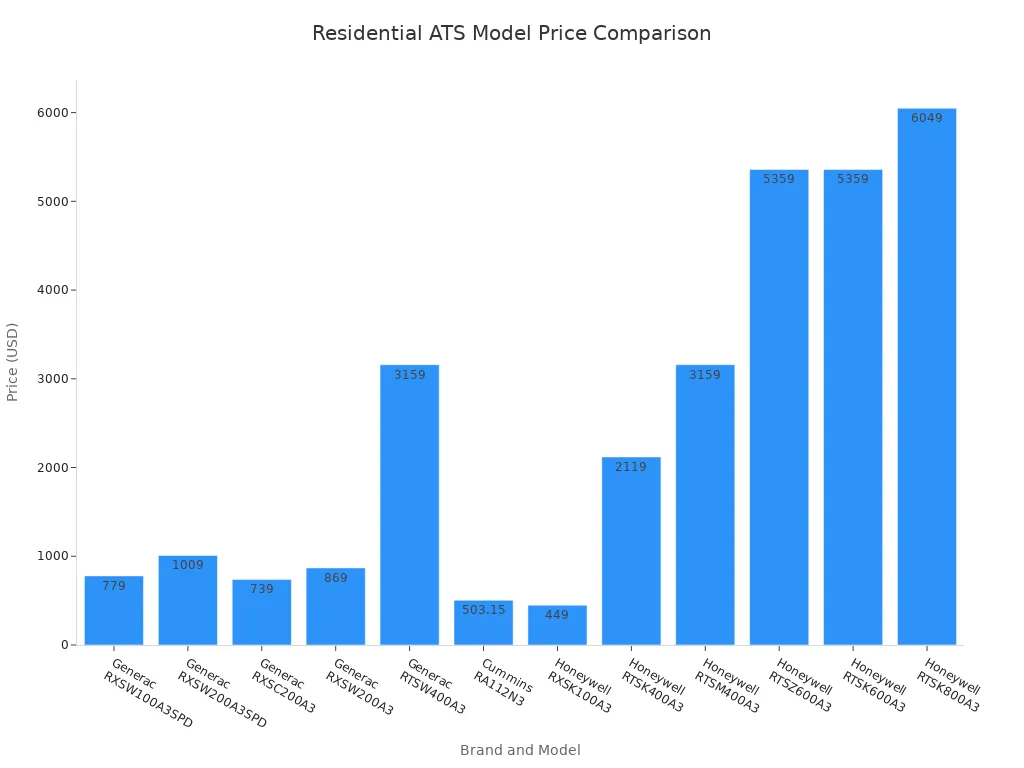
The price for automatic transfer switch equipment can be very different. It depends on the brand, how many amps it has, and if it is new or used. A used Zenith model (150A) costs about $650. A used ASCO model (260A) can cost up to $1,900. New equipment from big brands like Caterpillar, ABB, and ASCO needs a special price quote. These prices do not include tax, shipping, or putting it in. For homes, Generac and Honeywell are popular choices. The Generac RXSW100A3SPD (100A) is about $779. The Honeywell RXSK100A3 (100A) is about $449. Bigger models like the Generac RTSW400A3 (400A) can cost more than $3,000.
| Brand | Model | Amperage | Price (USD) | Notes |
|---|---|---|---|---|
| Generac | RXSW100A3SPD | 100 Amp | $779 | 2-Pole SPD NEMA 3R |
| Generac | RTSW400A3 | 400 Amp | $3,159 | Service Rated Single Phase |
| Honeywell | RXSK100A3 | 100 Amp | $449 | Smart Sync, Non-Service Rated |
| Honeywell | RTSK400A3 | 400 Amp | $2,119 | Sync Smart, Non-Service Rated |
Labor
The cost for labor depends on the electrician’s skill and where you live. Journeyman electricians charge $70 to $100 per hour. Master electricians can charge $100 to $140 per hour. In big cities, the price is often over $100 per hour. In the country, you might pay closer to $50 per hour, but there may be travel fees. Most jobs take a few hours or up to two days. Simple jobs cost $150 to $300. Harder jobs can cost a lot more.
Permits and Extras
You need permits for most automatic transfer switch jobs. Permits make sure your project is safe and meets insurance rules. In big cities, a building permit is about $205. An electrical permit is $85. If you need work on gas lines, a plumbing permit is $85 more. The total for permits is usually about $375. Extra fees can be added for filing, plan checks, or inspections. If your house is old, you may need to upgrade your electric system. Inspections and working with the power company can add more time and cost.
- Filing fee: $100 (you do not get this back)
- Permit fee: $25 for each $1,000 of cost (at least $63)
- City and state surcharges: $7.50 for each permit
- Optional plan review: $1,050
Tip: Always check your local rules before you start. Permit costs and rules can change depending on where you live.
Installation of automatic transfer switch
DIY Steps
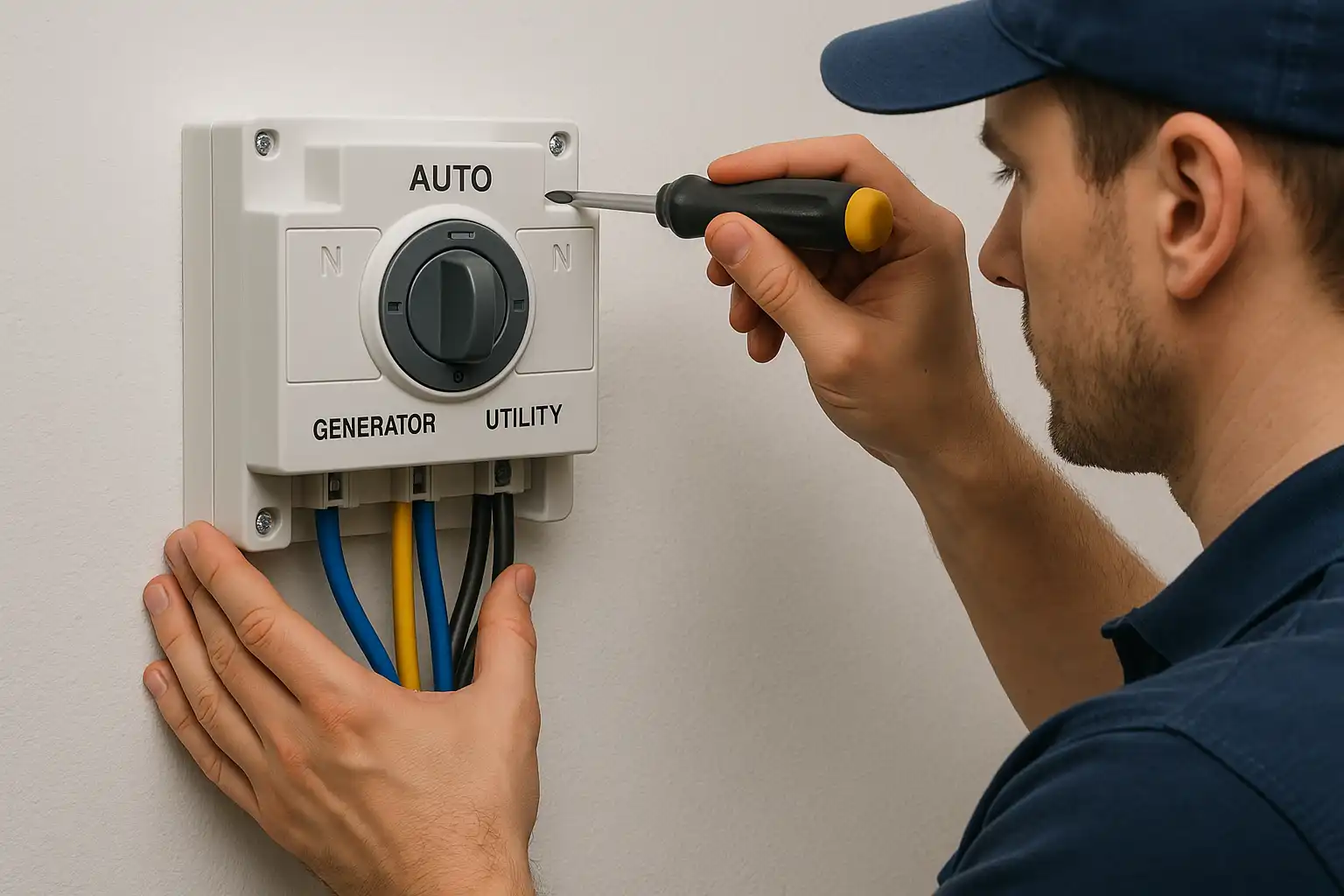
You can put in an automatic transfer switch if you know a lot about electricity and have the right tools. You need to plan well and be careful. Here are the steps you should follow:
- Turn off the main power breaker in your panel. Some parts might still have power, so be careful.
- Pick which circuits need backup power during an outage. Planning helps you not overload the generator.
- Match each important circuit to one on the transfer switch. Use the right type of circuit for each load.
- Take out a knockout from the main panel for the transfer switch conduit. Use a knockout punch or screwdriver.
- Push the labeled wires from the transfer switch through the knockout into the main panel.
- Tighten the flexible conduit with locknuts and bushings. You need a wrench and pliers.
- Put the transfer switch box on the wall near your main panel. Use a drill and screws.
- Take out the breakers for your chosen circuits and disconnect the hot wires. This step needs electrical safety and wiring skills.
- Connect the red wires from the transfer switch to the right breakers. Put the breakers back in.
- Twist the black wires from the transfer switch with the old feed wires using wire strippers and connectors.
- For 240-volt circuits, connect the red leads to double-pole breakers with handle ties.
- Attach the white neutral wire from the transfer switch to the neutral bus bar.
- Attach the green ground wire to the grounding bar.
- Put the panel covers back on and update your circuit map.
- Test the transfer switch by setting all switches to LINE. Make sure the generator is off and set up right.
- Plug the generator power cord into the switch box before starting the generator.
- Turn on the generator and switch each circuit to GEN one at a time. Watch the load and check the wattage.
- After testing, switch back to LINE and turn off the generator.
⚠️ Always use tools with insulation and wear safety gear. If you are not sure about any step, you should hire a licensed electrician.
Some common mistakes are loose connections, wrong wiring, and not keeping the ATS box clean and dry. Water, dust, or rust inside the switch can make it stop working. Not using safety gear can cause bad injuries.
Professional Process
Licensed electricians follow a strict process for the installation of automatic transfer switch systems. Here are the steps they take:
- Plan where to put the switch. The spot must be easy to reach, dry, and follow local rules.
- Find and label all the parts in the transfer switch kit.
- Turn off the main power before doing any wiring.
- Connect the transfer switch to the main electrical panel. Electricians change or connect circuit breakers as the maker says.
- Run cables from the generator to the transfer switch. The cables must be the right size for the load.
- Ground the transfer switch and generator as the code and maker say.
- Check all wiring connections to make sure they are tight and safe.
- Follow the maker’s instructions for every step.
- Follow all local electrical codes and rules.
- Test the setup by pretending there is a power outage. This makes sure the switch works right.
- Fix any problems, like loose wires or grounding issues.
- Set up regular checks, including inspections and cleaning, to keep the system working well.
Professionals use standards like UL 1008 and NFPA 110. These rules cover how to build, wire, and test the system. Electricians must make sure the transfer switch is right for your home’s load and meets all safety needs.
Many electricians take special training classes. These classes have hands-on labs and tests to show they know how to work with transfer switches.
Safety and Code
Safety and following the rules are very important for the installation of automatic transfer switch equipment. You must follow some important codes and standards:
- NFPA 70E: Electrical safety at work.
- NFPA 110: Emergency and standby power systems. This code gives rules for time delays, load order, and overcurrent protection.
- UL 1008: Transfer switch equipment. This rule covers how it is built and how it works.
- IEEE 1584: Arc flash hazard calculations.
Key safety rules are:
- Only people with the right skills should install or fix transfer switches.
- Always use the right bonding, grounding, and GFCI protection when needed.
- Never backfeed the main panel through a breaker without an interlock device.
- Put in a proper transfer switch or interlock to keep the main power supply separate.
- Make sure the ATS can handle all the load or use load shedding to stop overload.
🛑 Inspectors often find rule violations like wrong generator connections, missing bonding jumpers, and no GFCI protection. These mistakes can cause fires, equipment to break, or loss of insurance.
You also need to get the right permits and set up inspections. Local rules may need plan reviews, filing fees, and extra safety checks. Doing these steps makes sure your installation of automatic transfer switch systems is safe, works well, and follows the law.
Pros and Cons
Cost Savings
DIY installation looks cheaper at first. You only pay for materials and your time. But you should think about future costs too. If you make mistakes, you might need repairs. Safety problems or broken equipment can happen. Fixing these issues often costs more than you save. Professional installation costs more at the start. But it helps you avoid big repair bills later. It also keeps your system working longer.
| Aspect | DIY Installation | Professional Installation |
|---|---|---|
| Upfront Cost | $1,000 – $2,000 (materials only) | $3,000 – $5,000+ (labor, materials, permits) |
| Long-term Costs | Higher risk of repairs and failures | Lower risk, longer equipment lifespan |
| Maintenance & Repairs | DIY not recommended, can be costly | $150-$300/year for maintenance, repairs $50-$2,000 |
💡 Tip: Saving money now can mean bigger costs later if you need repairs.
Safety and Risk
Working with electricity is dangerous. If you do the job yourself, you could get shocked. There is a risk of fire or carbon monoxide too. You might connect wires the wrong way. This can hurt your generator or your house wiring. Professionals know the safety rules and use the right tools. They make sure your system is safe and passes checks. Hiring a licensed electrician lowers the chance of accidents and keeps your home safe.
- DIY installation has a high risk of mistakes and danger.
- Professional installation follows the rules and makes safe connections.
- Insurance might not pay for damage from DIY errors.
Warranty and Compliance
Warranties and insurance are important for peace of mind. Most companies want a licensed pro to do the job for the warranty to count. If you do it yourself, you might lose the warranty and pay for repairs. Professionals often give a warranty for their work. This means you do not pay extra if something breaks later. Insurance companies also want proof of professional work before they pay for damage.
- Professional installation gives warranties for labor and materials.
- DIY installation usually cancels the manufacturer warranty.
- Insurance often needs proof of licensed, code-following work.
🛡️ Picking a professional helps keep your warranty and insurance, so your investment is safe.
Picking how to install depends on what you know and want. If you know a lot about electricity and want to save money, DIY might work for you. Most people should hire a licensed electrician for better safety and to follow the rules. You also get a warranty if a pro does the job.
- Some important things to think about:
- Safety and following the rules stop accidents.
- Pros use NEC and local rules for every job.
- Using the right wires and grounding makes things work well.
- Checking your system often keeps it safe and working.
Paying a pro to install gives you less worry and keeps your home safe for a long time.
FAQ
What is an automatic transfer switch?
An automatic transfer switch, or ATS, can tell when the power goes out. It quickly switches your house to generator power. You do not have to flip any switches yourself. When the main power comes back, the ATS switches you back to normal power.
What permits do you need for installation?
You need electrical permits for most ATS jobs. Some places also want building or plumbing permits. Always ask your local building office before you start your project.
What risks come with DIY installation?
DIY installation can cause electric shock, fire, or damage to equipment. You might lose your warranty or insurance if you make mistakes. Always follow safety rules and local codes.
What maintenance does an ATS require?
You should check your ATS once a year. Clean the unit and look for rust or dust. Test the switch to make sure it works. Call a professional if you see problems or if your system runs a lot.
The following information may be of interest to you
Best Solar Energy Kits for Reliable Power Solutions
What Factors Affect the Price of a Distribution Box
How to Safely Install an ATS for Backup Power
How to Replace the Distribution Panel and Wiring in Your Home
What Makes Distribution Boxes and Fuse Boxes Different