
Choosing between ATS vs Interlock Kit for Backup Generators depends on your specific needs. If you prefer a system that automatically switches power and offers ease of use, the ATS is the best option. On the other hand, if you want to maintain control over the power supply and save money upfront, Interlock Kits are a great choice. Safety is paramount; ensuring reliable power and adhering to safety regulations will keep your home or business secure.
Remember, selecting the right option between ATS vs Interlock Kit for Backup Generators helps you avoid mistakes and ensures everyone’s safety.
Key Takeaways
- Pick an Automatic Transfer Switch (ATS) for easy power switching. It works by itself when the power goes out. You do not need to do anything. It helps you feel safe.
- Choose an Interlock Kit if you want to spend less money at first. You must be okay with turning on power by hand during outages.
- Think about how often your power goes out. ATS is best if outages happen a lot. Interlock Kits work well if outages are rare.
- Learn what you need to install each system. ATS usually needs a licensed electrician to set it up. Homeowners can often install Interlock Kits themselves.
- Look at costs over time. ATS costs more at first and needs more care. Interlock Kits cost less but need you to do more work.
- Put safety first. ATS lowers the chance of backfeed problems. Interlock Kits need you to follow steps carefully to stay safe.
- Check your local rules before you install anything. Some places require ATS for safety, especially for important systems.
- Practice using an Interlock Kit before you need it. Knowing the steps can help you avoid mistakes in an emergency.
ATS vs Interlock Kit for Backup Generators: Key Differences
What Is an ATS?
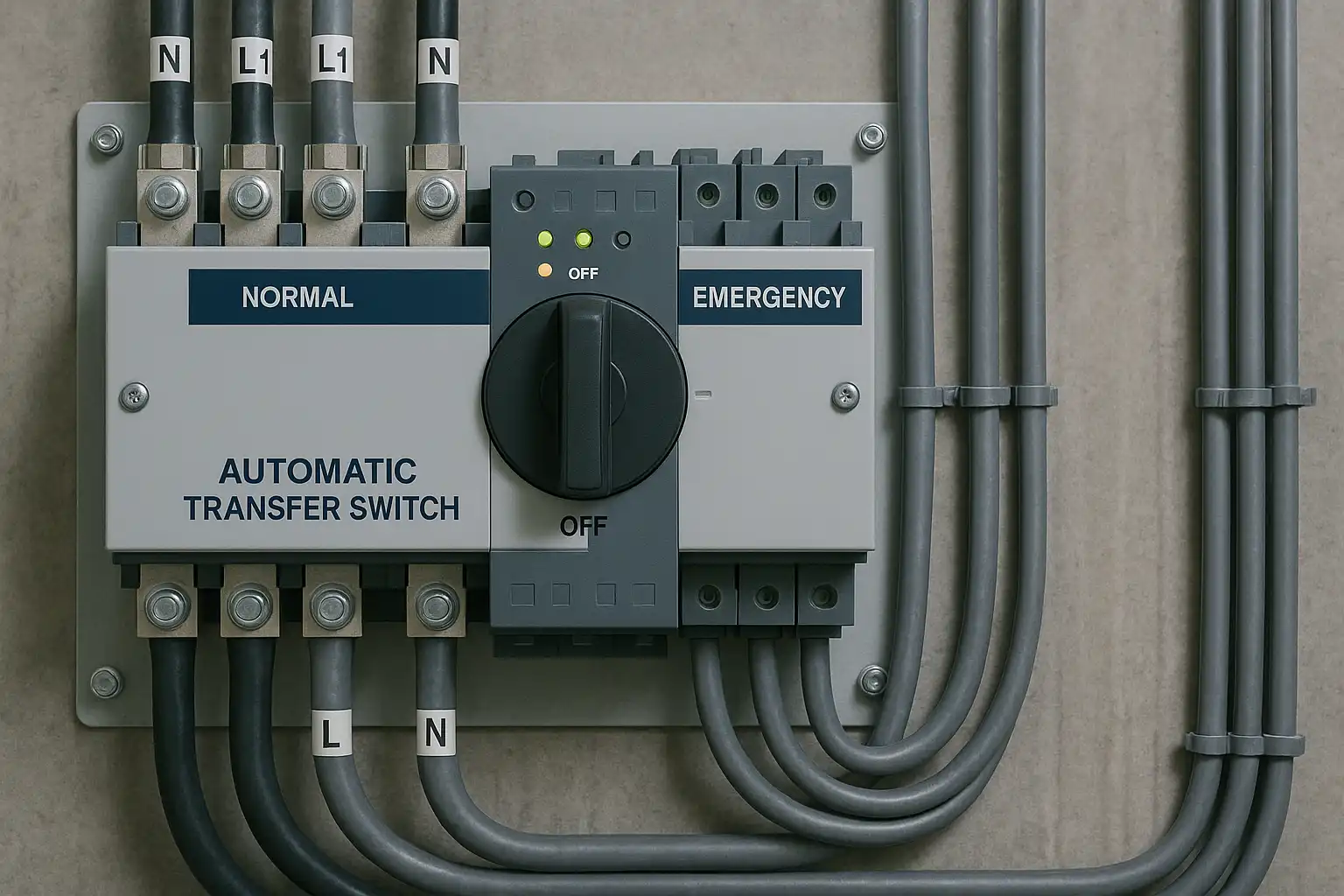
An Automatic Transfer Switch, or ATS, links your backup generator to your home’s power. When the power goes out, the ATS notices right away. It switches your home from the main power to the generator by itself. You do not have to do anything. The ATS does all the work for you. Your lights and appliances turn back on fast and safely. This is good if you want a system that works on its own. It gives you steady power all the time. Setting up an ATS takes more time and wiring than other choices. You need a professional to install it. They will mount the switch, hook it to your main panel, and test it. This makes sure it works when the power goes out.
What Is an Interlock Kit?
An interlock kit is a manual tool for using a portable generator with your home’s panel. It uses metal plates and locks to keep you safe. You cannot turn on both the main breaker and the generator breaker at once. This stops dangerous backfeed. Backfeed can hurt workers or break your things. You pick which circuits get power by flipping breakers yourself. Interlock kits let you choose, but you must watch your generator’s limits. If you use too many circuits, you could overload your generator. Most kits have all the parts you need. They come with instructions and strong pieces that last.
Tip: Interlock kits stop backfeeding and help keep your home safe in outages, but you must follow each step every time.
Who Should Choose Each?

Pick an ATS if you want a system that works by itself. It keeps your power on without you doing anything. This is best if you lose power a lot or need to protect special equipment. It is also good if you want to feel safe. Businesses or places with strict safety rules often need an ATS.
Choose an interlock kit if you want to save money and do not mind switching power yourself. Interlock kits are good for people who want to pick which circuits to use. They work well if you do not lose power often. You get more control, but you must follow the right steps each time.
Here is a quick comparison to help you decide:
| Feature | Interlock Kit | Automatic Transfer Switch |
|---|---|---|
| Installation Time | 2-4 hours | 4-8 hours |
| Complexity | Simple materials, easy steps | More wiring, professional needed |
| Operation | Manual | Automatic |
| Load Management | Any circuit you choose | Pre-selected circuits only |
| Cost Considerations | Lower upfront cost | Higher cost, more features |
| Compliance with Codes | Varies by location | Often required for safety |
When you look at ATS vs Interlock Kit for Backup Generators, think about how much control you want. Also think about your budget and how often you lose power. Both choices can keep your home safe, but they fit different needs.
Comparison Table
When you look at ATS and Interlock Kit, you notice they are very different. They work in different ways. They cost different amounts. They also keep your home safe in different ways. You want to make a good choice, so compare them side by side.
Here is a table that lists the main features, costs, and safety for both:
| Feature | Interlock Kit | Automatic Transfer Switch (ATS) |
|---|---|---|
| Device Cost | $150–$400 | $600–$2,000 |
| Installation Cost | $200–$500 | $800–$1,500 |
| Total Upfront Cost | $350–$900 | $1,400–$3,500 |
| Annual Maintenance Cost | $0–$50 (minimal) | $100–$200 |
| Time Investment per Outage | 15–20 minutes | 0 minutes (fully automatic) |
| Operation | Manual | Automatic |
| Safety Features | Manual lockout, risk of error | Automatic, error-proof |
| Code Compliance | Varies by area | Often required for safety |
| Risk Premium | Can be high | Near-zero for quality units |
ATS works by itself and lowers the chance of mistakes. You do not have to do anything when the power goes out. Interlock kits need you to do each step by hand. If you make a mistake, it can cause backfeed or break things. ATS is best for places that need power all the time. Interlock kits are better for homes that do not lose power often.
ATS costs more at first, but it is easy and safe. You do not need to do anything when the power stops. The switch turns on by itself. You get fast and safe power. Interlock kits cost less, but you must act quickly and follow steps. You pick which circuits get power, but you must be careful.
Interlock kits need you to follow steps in order when the power fails. This can be hard if you are stressed. If you do it wrong, you could cause backfeed or overload the generator.
ATS does everything for you. It finds power loss, starts the generator, and brings power back. You do not have to do anything. This keeps you safe every time.
If you want a system that works alone, pick ATS. If you want to save money and do not mind doing the work, pick an interlock kit. Always think about safety, cost, and how often you lose power before you choose.
Decision Framework
Manual vs. Automatic Operation
Manual Labor
You need to think about how much work you want to do. If you pick a manual system, you must act quickly when the power goes out. You walk to your panel and flip breakers. This needs focus and effort. You have to remember each step and stay calm, even if you feel nervous.
An automatic system does everything for you. When the power stops, the ATS notices and switches to generator power right away. You do not need to move or worry about what to do. The system keeps your home or business running without your help.
Here is a table that shows how manual and automatic systems are different:
| Factor | Automatic Transfer Switch (ATS) | Manual Transfer Switch / Interlock Kit |
|---|---|---|
| Cost | Higher because of automatic features | Cheaper, good for basic needs |
| Installation Complexity | Harder, needs a professional to set up | Easier, you can often do it yourself |
| Power Management | Fully automatic, no steps for you | Needs you to act during outages |
| Response Time | Instant, no waiting | Slower, depends on how fast you act |
| Safety | Less chance of mistakes, safer for important devices | More risk of mistakes, needs careful use |
Tip: Pick ATS if you want a system that works by itself. If you want to save money and do not mind doing the work, an interlock kit may be better for you.
Outage Frequency
Think about how often you lose power. If outages happen a lot, an automatic system helps you feel safe. The ATS acts like a boss. It starts your generator and switches power fast. You do not need to worry about food going bad or medical tools stopping.
If outages are rare, you may not need a system that works alone. You can use a manual interlock kit and switch power only when you need it. This saves money and gives you control.
- An ATS switches to generator power by itself, which helps if you lose power often.
- It keeps important things running, like fridges and medical gear.
- The system protects your home from problems like flooding or spoiled food during long outages.
- When power fails, the ATS tells the generator to start.
- It moves the load from the utility to the generator.
- When power comes back, the ATS switches back, keeping your home safe.
Budget Considerations
Upfront Costs
You need to look at the price before you choose. ATS systems cost more because they work by themselves and need a pro to install. You pay for the device and the work. Interlock kits cost less and you can often put them in yourself.
- Interlock kits usually cost between $250 and $1,100 to install.
- ATS systems cost from $500 to $2,800 for installation.
- If you want to spend less, interlock kits are a better choice.
Long-Term Costs
Think about costs over time. ATS systems need regular checks and care. This helps find problems early and stops big repairs. You pay more for upkeep, but you lower the risk of the system breaking.
- Regular checks for ATS systems help you avoid emergency fixes.
- Preventive care costs less than fixing a broken system.
- Interlock kits need little care, so you save money over time.
Note: If you want to avoid surprise costs, plan for regular ATS checks. If you want low costs over time, interlock kits are easier to handle.
Human Error Risks
Switching Sequence
Manual systems need you to follow steps in order. If you skip a step or do things out of order, you risk backfeed or overload. You must turn off the main breaker before turning on the generator breaker. If you forget, you can cause danger to yourself and others.
Common mistakes include:
- Not finishing or reversing isolations all the way
- Not checking where switches or valves are
- Poor communication when handing over
- Not checking diagrams with the real setup
Failure Modes
Manual systems depend on you to do things right every time. If you make a mistake, you can break equipment or cause safety problems. Automatic systems lower this risk. The ATS follows the right steps every time, so you do not have to worry about mistakes.
Alert: Human error is the biggest risk with manual systems. If you want to avoid mistakes, pick an automatic system.
When you look at ATS vs Interlock Kit for Backup Generators, think about how much work you want to do, how often you lose power, and how much risk you can accept. Your choice affects your safety, your budget, and your peace of mind.
Code and Compliance
Code-Mandated Uses
You have to follow rules when you put in a backup generator. These rules help keep everyone safe. Local, state, and national groups make these rules. They tell you how to set up your system and what steps to follow.
If you use an ATS, there are more rules to meet. The system must switch power in a certain order. Emergency loads need power in 10 seconds. Legally required standby loads must switch in 60 seconds. Optional loads get power last. The system also needs time delays for starting and stopping the generator. For example, it must wait at least one second before starting. It must wait five minutes before shutting down. These delays help protect your equipment and make sure things work right.
Bypass-isolation switches are needed for safe repairs. These switches let you fix things without turning off power to important devices. Overcurrent protective devices must work together to stop short circuits. This keeps your home or business safe if something goes wrong.
Here is a table that lists some main rules for ATS setups:
| Requirement Type | Details |
|---|---|
| Time Delay on Start | 1 second minimum; 0.5 second minimum for gas turbine units |
| Time Delay on Transfer to Emergency | No minimum required |
| Time Delay on Restoration to Normal | 5 minutes minimum |
| Time Delay on Shutdown | 5 minutes minimum |
| Load Switching Priority | 1. Emergency loads (within 10 seconds) 2. Legally required standby loads (within 60 seconds) 3. Optional standby loads |
| Bypass-Isolation Switches | Allows safe access for maintenance without interrupting power to critical loads |
| Overcurrent Protective Devices (OCPD) | Must be coordinated to optimize selective tripping during short circuits |
Tip: Always check your local rules before you put in an ATS. You might need a licensed electrician to help. You often need a permit.
Acceptable Uses
You also need to know what is allowed where you live. Local rules can change what you can do. Some places let you put in an interlock kit yourself. Other places need a pro to do it. You must get the right permits before you start. If you skip this, you could get fined or have insurance problems.
Both ATS and interlock kits must meet safety rules. You have to follow these rules to avoid dangers like backfeed or overload. The setup must match the rules for your area. This keeps your system safe and legal.
Here is a table that compares code and compliance for ATS and interlock kits:
| Aspect | ATS Requirements | Interlock Kit Considerations |
|---|---|---|
| Code Compliance | Must follow local, state, and national codes | Must also comply with local codes |
| Permits | Often requires a permit before installation | May have different permit requirements |
| Safety Standards | Ensures safety and legality of installation | Compliance is crucial to avoid hazards |
| Installation Guidelines | Requires a licensed electrician for proper setup | Can sometimes be installed by homeowners |
Note: If you want to put in a backup generator, always ask your local building office about the rules. This helps you avoid mistakes and keeps your system safe.
When you look at ATS vs Interlock Kit for Backup Generators, you need to think about code and compliance. The best choice depends on your local rules, your safety needs, and how you want to set up your system. Always follow the law and get help if you are not sure.
Operational Comparison

Outage Response
ATS: Automatic Transfer
When the power goes out, the ATS acts fast. You do not have to do anything. The ATS always watches your power. If it sees a problem, it starts your generator. It switches your home to generator power by itself. The ATS keeps checking for normal power to come back. When the main power returns, the ATS switches everything back. This happens in just a few seconds. Your lights and appliances stay on with almost no break.
Interlock: Manual Steps
With an interlock kit, you must do the work. When the power fails, you go to your panel. First, you turn off the main breaker. Next, you turn on the generator breaker. You pick which circuits to power by flipping breakers. When power comes back, you reverse these steps. This takes more time and you must pay attention.
Here is a table that shows how each system works during an outage:
| Feature | ATS Response | Interlock Kit Response |
|---|---|---|
| Monitoring incoming power | Yes | N/A |
| Detecting power failure | Yes | N/A |
| Initiating generator start | Yes | N/A |
| Transferring load | Yes | N/A |
| Monitoring return of normal power | Yes | N/A |
| Automatic operation | Yes | No |
Tip: ATS gives you peace of mind if outages happen often. Interlock kits let you control things, but you must act fast and do it right.
Installation Process
ATS: Complexity
Putting in an ATS is a hard job. You usually need a licensed electrician to help. The ATS connects to your main panel and special circuits. The electrician checks that everything meets safety rules. This setup takes hours and costs more because it needs extra work and parts.
Interlock: Simplicity
An interlock kit is easier to install. Many people can do it themselves if the rules allow. The kit attaches to your main panel with little rewiring. You do not need to connect special circuits. This makes it quicker and cheaper.
Here is a table comparing the installation steps:
| Feature | Interlock Kit | Transfer Switch |
|---|---|---|
| Installation Complexity | Simpler, often DIY-friendly | More complex, typically requires a licensed electrician |
| Wiring Requirements | Minimal rewiring, attaches to main panel | Involves connecting specific circuits and may require rewiring |
| Cost | Generally more affordable | Usually more costly due to complexity |
Note: Always check your local rules before you start. Some places need a pro for both choices.
Maintenance Needs
ATS: Scheduled Service
An ATS needs regular care to work well. You should have a pro check it once a year. The technician will do many things, like:
- Use special tools to scan for heat.
- Turn off the switchgear if needed.
- Take off covers to look inside.
- Test and adjust sensors and timers.
- Clean out dust from the switchgear.
- Look for water or moisture damage.
- Clean with safe chemicals.
- Check main contacts for wear.
- Look at relay contacts for damage.
- Move the switch by hand to check alignment.
- Check all wire connections.
- Test the system by pretending there is a power failure.
These steps help stop problems and keep your backup power ready.
Interlock: User Checks
An interlock kit needs less care. You should look at it every few months. Check for loose parts or signs of wear. Make sure the locking plate moves easily and the breakers work. Clean the panel area to keep dust away. If you see a problem, call an electrician.
Reminder: Regular checks keep your system safe and ready for the next outage.
When you compare ATS and Interlock Kit for Backup Generators, think about how each works in an outage, how easy it is to put in, and how much care it needs. Your choice affects your comfort, safety, and peace of mind.
Financial Analysis
Cost Breakdown
Device and Install
You want to know how much each system costs. The price for an interlock kit is lower. You pay between $150 and $400 for the kit. Installation adds $200 to $500. You can sometimes install it yourself if local rules allow. An ATS costs more. The device price ranges from $600 to $2,000. Professional installation adds $800 to $1,500. You must hire a licensed electrician for an ATS. The total upfront cost for an interlock kit is $350 to $900. The ATS total is $1,400 to $3,500.
| System | Device Cost | Install Cost | Total Upfront Cost |
|---|---|---|---|
| Interlock Kit | $150–$400 | $200–$500 | $350–$900 |
| Automatic Transfer Switch (ATS) | $600–$2,000 | $800–$1,500 | $1,400–$3,500 |
Tip: You save money with an interlock kit, but you must do more work during outages.
Maintenance
You need to think about yearly costs. Interlock kits need little care. You check the panel and locking plate every few months. You may spend $0 to $50 each year. ATS systems need more attention. You pay $100 to $200 each year for professional service. Regular checks help prevent big repairs.
Long-Term Value
Ownership Scenarios
You want to know which system saves money over time. If you own your home for ten years, the interlock kit costs less. You pay about $900 upfront and $500 for maintenance. The total is $1,400. The ATS costs $3,500 upfront and $2,000 for maintenance. The total is $5,500. The ATS gives you peace of mind and fast power. The interlock kit saves money but needs your time and care.
| System | 10-Year Upfront Cost | 10-Year Maintenance | 10-Year Total Cost |
|---|---|---|---|
| Interlock Kit | $900 | $500 | $1,400 |
| ATS | $3,500 | $2,000 | $5,500 |
Note: If you want a hands-off system, ATS is worth the extra cost. If you want to save money and do not mind manual work, choose an interlock kit.
Hidden Costs
You must watch out for costs that do not show up at first. If you install the system wrong, you face extra fees and risks. Permit rejection can force you to redo the work. Improper bonding can damage your generator electronics. Insurance may deny claims after a back-feed incident. You also risk electrical hazards, equipment damage, and safety code violations.
| Hidden Costs or Potential Losses |
|---|
| Permit rejection requiring re-work |
| Damage to generator electronics from improper bonding |
| Insurance claims denied after a back-feed incident |
- Electrical hazards
- Equipment damage
- Violations of safety codes
Alert: Always follow local codes and use a licensed electrician for ATS. Mistakes can cost you more than you expect.
When you compare ATS vs Interlock Kit for Backup Generators, you see that upfront savings can disappear if you ignore safety and rules. Think about long-term costs and risks before you choose.
Safety and Compliance
Backfeed and Liability
ATS: Prevention
You want to keep your home and people safe in outages. An Automatic Transfer Switch helps with this. The ATS only lets one power source connect at a time. When power goes out, the ATS switches to your generator. It blocks electricity from going back to the grid. This stops backfeed, which is very dangerous. Utility workers trust ATS because it keeps lines safe. They can fix lines without worry. Using an ATS lowers the chance of injury or damage.
Interlock: Risks
With an interlock kit, you must follow every step. If you make a mistake, backfeed can happen. Backfeed is when your generator sends power to the utility lines. This can hurt workers who think lines are off. It can also break your equipment. Here are the main risks with interlock kits:
- Power might go from your generator to the grid in an outage.
- Utility workers could get hurt if they touch live lines.
- Your generator or home wiring could get damaged if you skip steps.
Always check your steps when using an interlock kit. Safety is most important.
Code Requirements
When ATS Is Required
Some places say you must use an ATS for backup power. You have to follow local, state, and national rules. If you have medical gear, life safety systems, or a business, you may need an ATS. The law often says ATS is needed for emergency loads. A licensed electrician must install it. You need permits and inspections to make sure it is safe.
When Interlock Is Allowed
You can use an interlock kit in many homes, but check your local rules. Some places let you install it yourself. Others need a pro. You must get a permit before starting. The kit must fit your panel and meet safety rules. If you skip steps, you could get fined or have insurance trouble.
| System | When Required | Who Can Install | Permit Needed |
|---|---|---|---|
| ATS | Emergency, medical, business | Licensed electrician | Yes |
| Interlock Kit | Most homes, some businesses | Homeowner or electrician | Often |
Ask your local building office before picking a system. Rules are different in each place.
Insurance Implications
Insurance companies care about your backup power setup. Using an ATS shows you follow safety rules. This can help you get insurance and avoid denied claims. If you use an interlock kit and make a mistake, insurance may not pay for damage. Keep records of permits and inspections. This proves you did things right.
Good safety and following rules protect you, your home, and your insurance.
You can see that safety and rules matter when you compare ATS and Interlock Kit for Backup Generators. Always follow the rules and put safety first.
Real-World Outcomes

Medical Clinic Case
A medical clinic needs backup power to keep patients safe. Even a short outage can be dangerous. Most clinics pick an ATS for their generator. The ATS switches power by itself during emergencies. Staff do not need to do anything. Here is a real example:
| Client | Location | Business Concern | Solution |
|---|---|---|---|
| Tift Regional Medical Center | Tifton, Georgia | Standby power for mission critical facility | Cat C32 diesel generator set, automatic transfer switch, paralleling switchgear, startup, testing, commissioning & maintenance |
This clinic uses a diesel generator and ATS. The system starts and switches power in seconds. Staff can keep working and do not need to remember steps. The ATS keeps important equipment running. If you work in healthcare, you should think about using an ATS for safety.
Homeowner Stories
Homeowners use these systems too. Many pick interlock kits because they cost less and are easy to put in. You can choose which circuits get power. If you do not lose power often, an interlock kit works well. Some people share stories about saving money and keeping their fridge and lights on during storms.
You must follow each step carefully. One homeowner forgot to turn off the main breaker before starting the generator. This mistake caused backfeed and damaged the generator. It also made things unsafe. You need to stay calm and remember the steps every time. If you want less risk, you may want an ATS, even though it costs more.
Tip: Practice the steps for your interlock kit before an outage. Write them down and keep them near your panel.
Small Business Impact
Small businesses need power to keep working and making money. Many pick an ATS for these reasons:
- Instant power transfer keeps your business running.
- You do not need to be there to switch power.
- The system stops problems and protects your equipment.
Some businesses use interlock kits to save money. You can install them fast and pick which devices to power. But manual steps can slow you down. If you forget a step or cannot reach your panel, you might lose sales or break equipment.
- ATS gives you power all the time, which is important for shops and offices.
- Interlock kits cost less but need you to act quickly during outages.
- ATS systems cost more, but you avoid downtime and keep customers happy.
Note: If your business needs power all the time, an ATS can protect your money and reputation. If you use an interlock kit, train your staff and make a clear outage plan.
You can learn from these real examples. The best choice depends on your needs, your budget, and how much risk you want to take.
Decision Checklist
Key Questions
Before you pick a power transfer system, ask yourself some questions. These questions help you find the best fit for your needs. Use this checklist to help you decide:
- Do you want a system that switches power by itself, or do you want to do it by hand?
- How often does your power go out where you live?
- How much money can you spend on setup and upkeep?
- Do you need a UPS instead of just a backup generator?
- What kind of UPS does your business need?
- Are there local rules or insurance things you must follow?
- Will you need to power important things like medical gear or servers?
- Are you okay with doing steps by hand during an outage?
- Do you want to lower the chance of making mistakes?
- Can you put in the system yourself, or do you need an electrician?
Tip: Write your answers down and look at them next to the features of ATS and interlock kits. This will help you see which one is best for you.
Common Mistakes
People sometimes make mistakes when picking or putting in a power transfer system. You can avoid these problems if you know what to watch for:
- Mixing up transfer switches and interlock kits can make you spend too much or choose the wrong one.
- Skipping steps or doing them out of order with an interlock kit can break your generator or overload your panel.
- Not checking local rules or insurance can lead to fines or denied claims.
- Forgetting about regular care can make your system fail when you need it most.
- Trying to remember steps during an emergency makes mistakes more likely.
- Not getting a pro to install, especially for ATS, can be unsafe.
Automatic transfer switches help stop mistakes because they switch power for you. Interlock kits need you to do each step right every time.
Alert: Always read the directions and practice before an outage. If you are not sure, ask someone for help.
When to Get Help
Sometimes you need a pro to help or install your system. Watch for these warning signs:
| Red Flag | What You Should Do |
|---|---|
| Unsure about local code rules | Call your local building office |
| Complex electrical panel | Hire a licensed electrician |
| Need to power medical equipment | Pick ATS and talk to a pro |
| Insurance requirements unclear | Ask your insurance agent |
| No experience with electrical work | Do not try to install it yourself |
Note: If you see any warning signs, get help from a pro. This keeps your home or business safe and makes sure your system works when you need it.
Use this checklist to find the right system for you. Try not to make common mistakes and know when to ask for help. Your safety and peace of mind depend on making a good choice.
Hybrid and Alternative Solutions
Manual Transfer Switches
Manual transfer switches let you control your backup power. You flip a switch to pick which power source to use. This is good if you want to save money and keep things simple. You do not need an automatic system for this. You get to decide when to change from utility power to generator power.
There are different kinds of manual transfer switches. Some homes use two sets of switches for more options. You can choose which circuits get power. You do not have to run your generator all the time. This helps you save fuel and money.
Tip: Manual switches let you choose what gets power. You stay in control during a power outage.
Here is a table that shows how manual transfer switches compare to other choices:
| Solution Type | Description | Advantages |
|---|---|---|
| Hybrid Inverter | Connects with generator input for easy hookup | Simplifies generator connection |
| Automatic Transfer Switch (ATS) | Switches power sources automatically | Reliable and fast power transfer |
| Manual Transfer Switch | Lets you control power source selection by hand | Cost-effective and flexible |
Load Management
You need to know how much power your generator can give. Load management helps you stop overloads. You can use manual switches to pick which circuits get power. You might turn off big things like air conditioners or water heaters. This keeps your generator safe.
Some systems use load management devices. These devices watch how much power you use. They turn off things you do not need if the generator is almost full. You do not have to worry about tripping breakers or breaking your generator.
- You can use manual switches to control what gets power.
- Load management devices keep your generator from getting overloaded.
- You can keep important things on, like lights and fridges.
Note: Good load management helps your generator last longer and keeps your home safe.
Generator Compatibility
You must check if your generator works with your power transfer system. Not every generator fits every setup. Some generators need special switches or inverters. Hybrid inverters make it easier to connect your generator. They work with many types of generators and make things simple.
Before you buy a transfer switch or interlock kit, read your generator’s manual. Make sure the system matches your generator’s output and wiring. If you use a portable generator, check if it has the right plug and voltage. If you use a standby generator, ask your installer if it will work.
- Check your generator’s manual to see if it supports transfer switches.
- Hybrid inverters work with many kinds of generators.
- Ask your installer if you are not sure about compatibility.
Callout: Making sure your generator and transfer solution match keeps your system safe and working well.
You have many ways to move backup power to your home. Manual switches give you control and help you save money. Load management keeps your generator safe. Checking compatibility helps you avoid problems. Pick the choice that fits your needs and keeps your home safe.
You should pick a backup power solution that fits your needs. Think about how much risk you are okay with. Also, look at your budget. Safety and reliability are more important than saving money at first. Always check the local rules before you install anything. If you are not sure, talk to a licensed electrician.
- Think about how often your power goes out.
- Decide how much work you want to do when the power fails.
- Put safety first every time.
Picking the right system keeps your home, family, and money safe.
FAQ
What is the main difference between an ATS and an interlock kit?
You get automatic switching with an ATS. You must switch power by hand with an interlock kit. ATS works without your help. Interlock kits need you to follow steps during an outage.
Can you install an interlock kit yourself?
You can install an interlock kit if local rules allow. Always check your city’s code first. If you feel unsure, ask a licensed electrician for help.
Does an ATS work with any generator?
You need to match your ATS to your generator. Some generators need special ATS models. Always read your generator’s manual before you buy an ATS.
Is an interlock kit safe for my home?
You stay safe if you follow every step and use the kit as designed. Never skip steps. Always turn off the main breaker before starting your generator.
How often should you maintain your ATS?
You should schedule a professional check once a year. Regular service keeps your ATS working and helps prevent problems during outages.
Will insurance cover damage from a DIY interlock kit?
Insurance may not pay if you install the kit wrong or skip permits. Always follow local rules and keep records of your installation.
What happens if you forget a step with an interlock kit?
You risk backfeed, equipment damage, or injury. Always use a checklist and practice the steps before an outage.
Can you use both an ATS and an interlock kit?
You usually pick one system. Some homes use both for special needs, but you must plan carefully and follow all safety codes.
See also
Best Solar Energy Kits for Reliable Power Solutions
Transfer Switch vs Automatic Transfer Switch: Key Differences
The Best Automatic Transfer Switch for Solar Energy in 2025
Manual or Automatic? Decide on Your 200 Amp Transfer Switch
Automatic transfer switch for solar energy to the grid brings peace of mind fast