

You create miniature circuit breakers by following a detailed manufacturing process. First, you pick strong metals and tough plastics. Next, you shape each part to ensure it is safe and durable. Then, you carefully assemble the parts together. After that, you test each breaker to verify it works properly. Every step in the manufacturing process helps produce a product that keeps electrical systems safe.
Key Takeaways
- Miniature circuit breakers are made with strong metals and hard plastics. These materials help them stay safe and last a long time.
- The manufacturing process has steps like design, molding, welding, and assembly. Each breaker goes through strict testing to make sure it is good quality.
- Automation and smart machines help make breakers faster. They also help reduce mistakes and make breakers more reliable.
- New materials like advanced polymers and special metal alloys are used. These materials make breakers safer and stronger.
- Digital testing with AI finds problems early. This helps breakers work safely for a long time.
Materials
If you open a miniature circuit breaker, you see many materials. Each material does something important. Picking the right ones helps the breaker stay safe and last longer.
Metals
Metals are in almost every part of an MCB. Here are the main ones:
- Steel: Steel is used for the frame and mounting. It makes the breaker strong and steady.
- Copper: Copper is used for the main contacts and paths. It lets electricity move easily because it does not block it much.
- Brass: Brass is found in small contacts and connections. It does not rust and keeps the connection working well.
- Bimetallic Strips: Bimetallic strips are in the trip unit. They use two metals that grow at different rates. If too much current goes through, the strip bends and turns off the breaker.
Tip: Good metals help the breaker handle heat and electricity better.
Thermoplastics
The outside shell and some inside parts are made from thermoplastics. These plastics keep you and the breaker safe.
- Polycarbonate (PC): PC is used for the outside case. It is strong, clear, and does not break or melt easily.
- Polybutylene Terephthalate (PBT): PBT is used for inside parts that hold metal pieces. It can take high heat and does not melt fast.
A tough plastic case stops electric shocks and helps the breaker last longer.
Other Components
There are a few more important parts besides metals and plastics:
- Springs: Springs make the contacts open or close fast.
- Screws and Rivets: These hold all the parts together.
- Insulating Barriers: These keep electric parts from touching each other.
| Material | Main Function | Where You Find It |
|---|---|---|
| Steel | Strength, support | Frame, mounting |
| Copper | Conduct electricity | Contacts, paths |
| Brass | Reliable connections | Small contacts, terminals |
| Bimetallic Strip | Trip mechanism | Trip unit |
| PC/PBT | Insulation, protection | Casing, internal supports |
Each material in an MCB has a job. When you put them together, you get a device that keeps your home and devices safe from electrical trouble.
Manufacturing Process
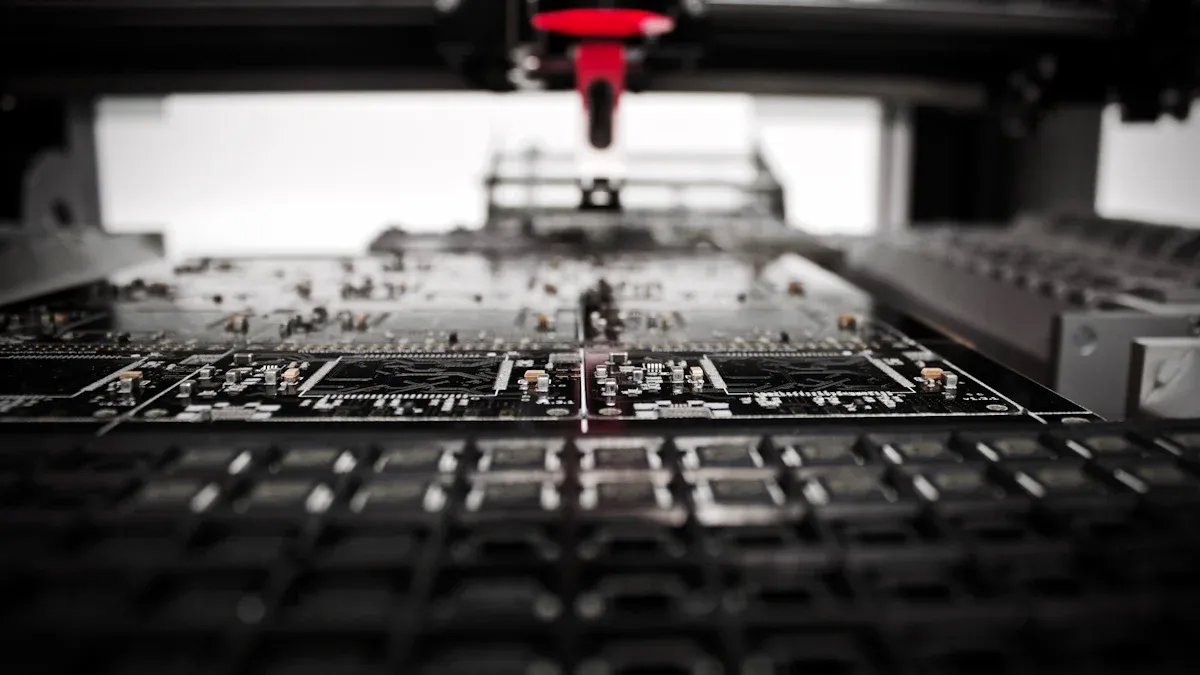
When you make a miniature circuit breaker, you follow many steps. Each step is important for safety and quality. Let’s look at what happens in the factory.
Design
The first step is design. Engineers use computers to draw each part. They use special software to test the parts. This helps them see if the parts can handle heat and stress. They find weak spots before making anything. They check how the frame, trip unit, and contacts work together. Good design helps the rest of the process go well.
Note: A strong design means fewer problems later. You can fix mistakes before you start making the product.
Molding
Next, you shape the plastic parts. Machines melt thermoplastic and pour it into molds. The plastic cools and becomes hard shapes. These shapes make the case and inside supports. The tough shell keeps the inside safe. Barriers are also molded to keep electric parts apart.
Welding
After molding, you join metal parts by welding. You weld the contacts and sometimes the frame. This step helps electricity move well and keeps the breaker strong. Special machines weld small parts very carefully. Good welding helps the breaker work with high currents.
Assembly
Now, you put all the parts together. You fit the frame, contacts, bimetallic strip, trip unit, and springs into the case. Screws and rivets hold everything in place. You check that the mechanism moves easily. Machines help with assembly, but workers check tricky parts. This step brings all the pieces together.
Inspection & Testing
The last step is inspection and testing. Every breaker goes through strict checks. Machines test if the breaker trips at the right current. They check the frame’s strength and the contacts’ movement. Operational testing systems check if the breaker works in real life. Quality teams look for any problems. Only breakers that pass all tests go to customers.
You use key performance indicators (KPIs) to measure success. KPIs help you see how well the process works. Here is a table with some important KPIs:
| KPI Name | Description | Measurement Methodology |
|---|---|---|
| On-Time Delivery to Commit | Shows how often you meet delivery promises. | On-time delivery rate = (Number of products delivered on time) / (Total number of products delivered) |
| Lead Time | Tells you how long it takes from order to delivery. | Lead time = Order process time + production lead time + delivery lead time |
| Customer Fill Rate | Measures how well you fill customer orders from stock. | Customer fill rate = (Number of orders delivered) / (Number of orders placed) × 100 |
| Customer Return Rate | Tracks how many customers come back to buy again. | Customer return rate = (Number of return customers) / (Total number of customers) × 100 |
| Customer Satisfaction | Shows how happy customers are with your product. | Percentage of satisfied customers = (Number of customers very or extremely satisfied) / (Total surveys completed) × 100 |
Tip: Watching these KPIs helps you make better products.
Every step in the manufacturing process is important. You plan with design, shape with molding, join with welding, build with assembly, and check with testing. By following these steps, you make sure each miniature circuit breaker is safe and lasts a long time.
Advancements
Automation
Factories now use new ways to build miniature circuit breakers. Automation helps factories change products in under five minutes. One production line can make many breaker types. Robots and special machines help work faster and make fewer mistakes. For example, seven ABB robots and sixteen custom machines help make more breakers each day. AI checks if parts are in the right place and if prints look good. A flexible transfer system helps with laser printing and keeps things running smoothly. A manufacturing execution system watches every step.
| Improvement Aspect | Description / Statistic |
|---|---|
| Product Changeover Time | Less than 5 minutes |
| Production Flexibility | One line makes all S200 breaker types |
| Automation Devices | 7 ABB robots, 16 custom devices increase efficiency |
| AI Application | Checks positions and prints for stability |
| Flexible Transfer System | Improves laser printing and process capability |
| Upgrade Space | 20% of line space saved for future improvements |
| Execution System | Latest system manages the whole process |
Automated lines and smart assembly are used too. Machines record data like early failures and contact pressure. High-precision tools help with winding, marking, and packaging. These steps make the process faster and more reliable.
Material Innovation
Factories now use better materials in circuit breakers. Advanced polymers and composites give stronger insulation. This lets engineers design smaller and safer breakers. Silver and tungsten alloys help contacts last longer and resist damage from electric arcs. Precision manufacturing keeps every breaker the same size and shape. This makes sure they work as expected.
| Material/Technique | Performance Improvement | Impact on Miniature Circuit Breaker Production |
|---|---|---|
| Advanced Polymers & Composites | Better insulation than old materials | Smaller, safer, and more compact breaker designs |
| Silver and Tungsten Alloys | Improved arc resistance and strength | Longer life and better reliability for contacts |
| Precision Manufacturing | Tighter tolerances and consistency | Reliable tripping and standard sizes |
These new materials and methods help make breakers last longer and cost less.
Digital Testing
Factories now use digital tools to test every breaker. Machines collect data on how each breaker moves and sounds. Deep learning models look at vibration data and find problems like spring fatigue or loose parts. These models are over 95% accurate at finding issues. You can test breakers without stopping them by using real-time monitoring. This keeps products safe and helps track their health over time.
- Deep learning models check vibration data and find problems with high accuracy.
- Machines collect data every millisecond for months, making sure tests are strong.
- You can spot faults like spring fatigue, jamming, or loose parts.
- Online testing lets you monitor breakers without stopping them.
- You use acceptance and maintenance data to track each breaker’s life.
With these digital advances, factories make sure every step meets high standards for safety and quality.
You help at every step when making miniature circuit breakers. You pick strong materials and test each breaker. These careful steps make breakers that keep homes and equipment safe. New things like smart monitoring and energy-saving designs make breakers even better. These changes help keep safety and quality high. More people want these breakers because they work well and follow strict rules. Factories also try to make them in ways that are good for the planet. When you see a finished breaker, you see careful planning and new technology. You also see how much people care about safety.
FAQ
What makes a miniature circuit breaker reliable?
You get reliability from strong materials, careful assembly, and strict testing. Each breaker passes several checks before leaving the factory. This process helps you trust the breaker to protect your home or equipment.
How do you test if a circuit breaker works?
You use machines to check if the breaker trips at the right current. You also test the strength of the frame and the movement of the contacts. These tests help you find any problems before use.
Can you recycle parts of a miniature circuit breaker?
Yes, you can recycle metals like copper, steel, and brass. You should separate the plastic case from the metal parts. Many recycling centers accept these materials.
Why do you use bimetallic strips in breakers?
Bimetallic strips help you detect too much current. When the strip bends from heat, it trips the breaker. This action protects your wires and devices from damage.
The following information may be of interest to you
MCCB and Air Circuit Breaker Comparison Guide
What Happens When Micro-circuit Breakers Overheat for a Long Time
What is a DIN rail mounted miniature circuit breaker and how does it work
9 Leading Manufacturers of MCCB to Know in 2025
What Components Make Up a Standard MCCB