Choosing the best wall socket means thinking about a few things. Safety is important. Compatibility matters too. You should also think about installation and wiring. You need to know which plug types work in your home. You also need to know which plug types fit your devices. Look at this table to see common plug types and where they are used:
| Plug Type | Regions Used | Prevalence in Residential Settings |
|---|---|---|
| A | North America, Japan | Most prevalent |
| B | North America, Japan | Most prevalent |
| C | Europe, Asia, South America | Widely used |
| D | Various regions | Common |
| E | France | Common |
| F | Germany, Europe | Common |
| G | U.K., Ireland | Common |
Think about what your appliances need before you choose. Safety certifications like UL 498 or BS 1363 are important. These certifications show that outlets meet good standards. Picking the right socket is easier when you match it to your space. It is also easier when you match it to your power needs.
Key Takeaways
- Safety is very important when picking wall sockets. Use GFCI outlets in places with water. Use AFCI outlets in rooms where people spend time. These outlets help stop electrical accidents.
- Make sure your wall socket fits your devices. Look at the plug types and how much power they need. This helps you avoid damage and makes sure everything works.
- Think about smart sockets for more ease. Smart sockets let you control them from far away. They also help you watch how much energy you use. This can help you save money on your electric bill.
- Pick the best way to install your outlet. Surface-mounted outlets are simple to put in. Flush-mounted outlets look neater on your wall.
- Always look at your local electrical rules. This makes sure your outlets are safe. It also means you follow the rules in your area.
Wall Socket Safety
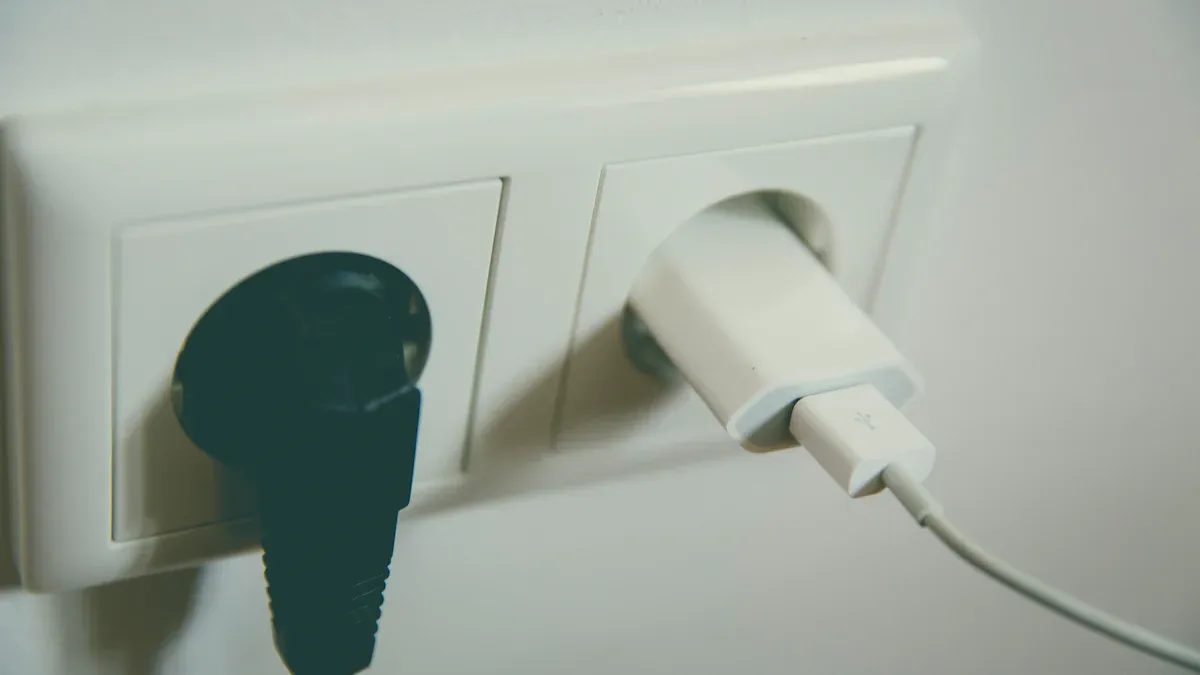
Safety is the most important thing when picking a wall socket. You want to keep your family safe. You also want to protect your devices. Let’s talk about the safety features you should know.
GFCI and AFCI
Some outlets are called GFCI or AFCI. These outlets help stop electrical accidents. They work in different ways. Here is a table to show how they are different:
| Feature | GFCI (Ground Fault Circuit Interrupter) | AFCI (Arc Fault Circuit Interrupter) |
|---|---|---|
| Purpose | Protects against ground faults | Protects against arc faults |
| Common Locations | Wet areas (bathrooms, kitchens) | General living areas |
| Operation | Monitors current flow for discrepancies | Detects unusual power spikes |
| Forms Available | Receptacles or integrated breakers | Stand-alone receptacles or breakers |
| Enhanced Version | N/A | CAFCI detects both arc types |
GFCI outlets are good for places with water, like kitchens. They turn off power if something is wrong. This helps stop electric shocks. AFCI outlets are best for bedrooms and living rooms. They find sparks that could start fires. If you want your home to be safest, use both types in the right rooms.
Tip: Always check your local rules. Some places make you use GFCI or AFCI outlets in certain rooms.
Childproof Options
Kids like to touch things. Regular wall sockets can be dangerous for them. Not every childproof cover works well. Some covers are too small and can be swallowed. Others do not close all the way and leave the outlet open.
Look for these features:
- Spring-loaded sliding covers are best. They close by themselves and keep kids safe.
- Do not use small plastic caps. Kids can pull them out fast, so they do not work well.
- Tamper-resistant receptacles (TRRs) are smart. They have barriers inside that only open for real plugs.
Many children get hurt by electrical outlets every year. Tamper-resistant wall sockets help stop this. They keep kids from putting things into the outlet and getting shocked.
Note: New homes in many states must have tamper-resistant wall sockets. If you are changing your outlets, ask for these.
Surge Protection
Power surges can happen anytime. Lightning or broken wires can cause them. Big appliances turning on and off can also make surges. Surges can break your electronics or start fires.
Surge-protected wall sockets help keep your things safe. Here is how they work:
- They take extra energy from surges and send it to the ground.
- Most surge protectors use metal oxide varistors (MOVs) for this.
- Whole-house surge protectors give the best safety. They protect all your outlets from big surges, like lightning.
If you have computers or TVs, use surge-protected wall sockets. They help your devices last longer and keep you safe.
Tip: Pick wall sockets with surge protection built in. They are easy to install and give extra safety.
Device Compatibility
When you pick a wall socket, think about your devices. You want your plugs to fit. Your appliances should work safely. Your home needs to stay safe. Here is what you should know.
Plug Types
Plugs do not all look the same. If you use a device from another country, it might not fit. You need to match the plug shape to your wall socket. Here are common plug types in North America and Europe:
| Region | Plug Type | Description |
|---|---|---|
| North America | NEMA 1-15 | Ungrounded plug with two blades, rated 15 A at 125 volts. |
| NEMA 5-15 | Grounded plug with two blades and a grounding pin, rated 15 A. | |
| Europe | CENELEC | Standardized plugs and sockets by European Committee for Electrotechnical Standardization. |
Check your device’s plug before you buy a wall socket. Does it have two prongs or three? Is there a grounding pin? Here is how to pick the right one:
- Look at your device’s cord. Three-pronged plugs are best for high-power or metal-cased equipment. Two-pronged plugs work for low-power, double-insulated devices.
- Always follow building and electrical codes like NEC or IEC standards. These rules help keep you safe.
- Never cut off a grounding pin to make a plug fit. This can cause dangerous wiring problems.
Tip: If you do not know your plug type, check your device’s label or ask an electrician. Matching plugs and sockets keeps your home safe and your devices working.
Amperage Needs
You might ask, “How much power does my outlet need?” Most homes use wall sockets rated at 15 amps. These work for lamps, chargers, and small electronics. Some rooms need more power for bigger appliances.
- Bedrooms and living rooms usually have 15-amp outlets.
- Kitchens, garages, and bathrooms often use 20-amp outlets for things like microwaves or power tools.
If you plug a big appliance into a socket with too little amperage, you risk trouble. Here is what can happen:
| Risk Type | Description |
|---|---|
| Fire Risk | Overloaded wiring and overheated breakers can cause fires, especially in older homes. |
| Appliance Damage | High-power appliances may wear out faster or fail early due to low current. |
| Tripped Breakers | Breakers may trip again and again, showing a serious electrical problem. |
- Fire hazards: Too much heat from an overloaded outlet can start a fire.
- Electrical shock: Overloaded outlets can arc, which may shock anyone who touches a bare wire.
- Appliance damage: Sensitive devices can break from overheating or power surges.
Note: Always check the amperage rating on your wall socket before plugging in heavy devices. If your breaker trips often, you may need a higher-rated outlet.
Heavy-Duty Appliances
Some appliances need more power than a regular wall socket can give. Ovens, washing machines, dryers, and refrigerators need special outlets. These appliances usually run on 220 volts, not the standard 120 volts.
| Appliance Type | Voltage Requirement |
|---|---|
| Kitchen Appliances | 220V |
| Washing Machines | 220V |
| Dryers | 220V |
| Refrigerators | 220V |
| Dishwashers | 220V (can be wired on a single circuit) |
Before you install a new wall socket for a heavy-duty appliance, check the voltage and amperage needs. You might need a circuit just for that appliance. Using the wrong outlet can damage your device or start a fire.
Alert: Never plug a high-powered appliance into a standard outlet unless you know it is rated for the right voltage and amperage. If you are not sure, ask a professional.
Picking the right wall socket means matching your plug type, checking the amperage, and knowing your appliance’s needs. This keeps your home safe and your devices working well.
Wall Socket Features
USB Ports
You probably have lots of devices that need charging—phones, tablets, headphones, and more. If you’re tired of searching for adapters or fighting over outlets, USB wall sockets can make life easier. These outlets let you plug your device’s USB cable right into the wall. You don’t need a bulky adapter, so your space stays neat.
USB wall sockets charge your devices up to 40% faster than regular adapters. They use smart chips to give your device the best amount of power. This means your phone or tablet gets charged quickly and safely. You also lower the risk of overloads because you don’t need to stack adapters or use power strips. That helps prevent fire hazards and keeps your home safer.
Tip: If you want to upgrade, look for USB outlets with both standard and USB-C ports. You’ll be ready for new devices and faster charging.
Smart Sockets
Smart sockets bring your home into the future. You can control them with your phone or voice assistant. Want your lamp to turn on before you get home? You can set a schedule. Need to check how much energy your TV uses? Smart sockets show you real-time data.
Here’s a quick look at popular smart socket features:
| Feature | Description |
|---|---|
| Remote Control | Control devices from your phone or voice assistant. |
| Scheduling | Set times for devices to turn on or off automatically. |
| Energy Monitoring | See how much power each device uses. |
| Smart Home Integration | Connect with Alexa, Google Home, or Apple HomeKit. |
| Presence Simulation | Make it look like someone’s home by turning devices on and off randomly. |
| Peak Demand Management | Save money by turning off non-essential devices during busy times. |
| Remote Monitoring | Check and control devices even when you’re away. |
Smart sockets help you save energy and money. You can:
- Minimize standby power by turning off devices when you’re not using them.
- Optimize usage based on real-time needs.
- Reduce waste by preventing lights and appliances from running too long.
- Schedule devices to turn off automatically.
- Monitor energy use to spot high-consumption items.
- Cut power to appliances in standby mode.
- Enjoy cost savings with better control and automation.
If you want a modern, efficient home, adding smart sockets is a smart move. You get more control, save energy, and keep your space safe.
Installation and Placement
Surface vs. Flush Mount
When you pick a new outlet, you need to decide between surface-mounted and flush-mounted styles. Each type has its own benefits and drawbacks.
- Surface-mounted outlets sit on top of the wall. You can install them quickly because you do not have to cut into the wall. If you ever need to move or repair them, it is much easier. However, these outlets stick out and can collect dust. They are also more likely to get bumped or damaged. Some people do not like how they look because they are more visible.
- Flush-mounted outlets sit inside the wall. They blend in and look neat. Many people like them for living rooms and bedrooms because they match the wall. But, installing them takes more work. You might see dust or debris collect around the edges. Sometimes, you can see the outline of the box if the wall is not perfect.
Tip: If you want a quick fix or need to add an outlet in a tricky spot, surface-mounted might be best. For a clean look in main rooms, flush-mounted is a good choice.
Location Tips
Where you put your outlets matters just as much as which type you choose. Good placement keeps your home safe and makes life easier.
- In the living room, place outlets every 6 feet along the walls. Put some up high for TVs and on the floor for lamps. Near the fireplace is also handy.
- In the kitchen, you need GFCI outlets every two feet along counters. Add them on backsplashes, islands, inside pantries, and under bar tops. Keep them no higher than 20 inches above the counter.
- In the bedroom, put outlets on every wall. Place them up high for TVs, on each side of the bed, and even inside closets for small devices.
Proper placement means you will not need as many extension cords. This lowers the risk of tripping and keeps your space tidy. The National Electrical Code says no spot along a wall should be more than 6 feet from an outlet. This rule helps you reach power easily and keeps your circuits safe. In busy areas like kitchens and home offices, USB combo outlets can help reduce cable clutter and make charging devices simple.
Note: Think about how you use each room. Place outlets where you need them most, so you do not have to stretch cords or block walkways. A well-placed wall socket makes your home safer and more convenient.
Wiring and Professional Help
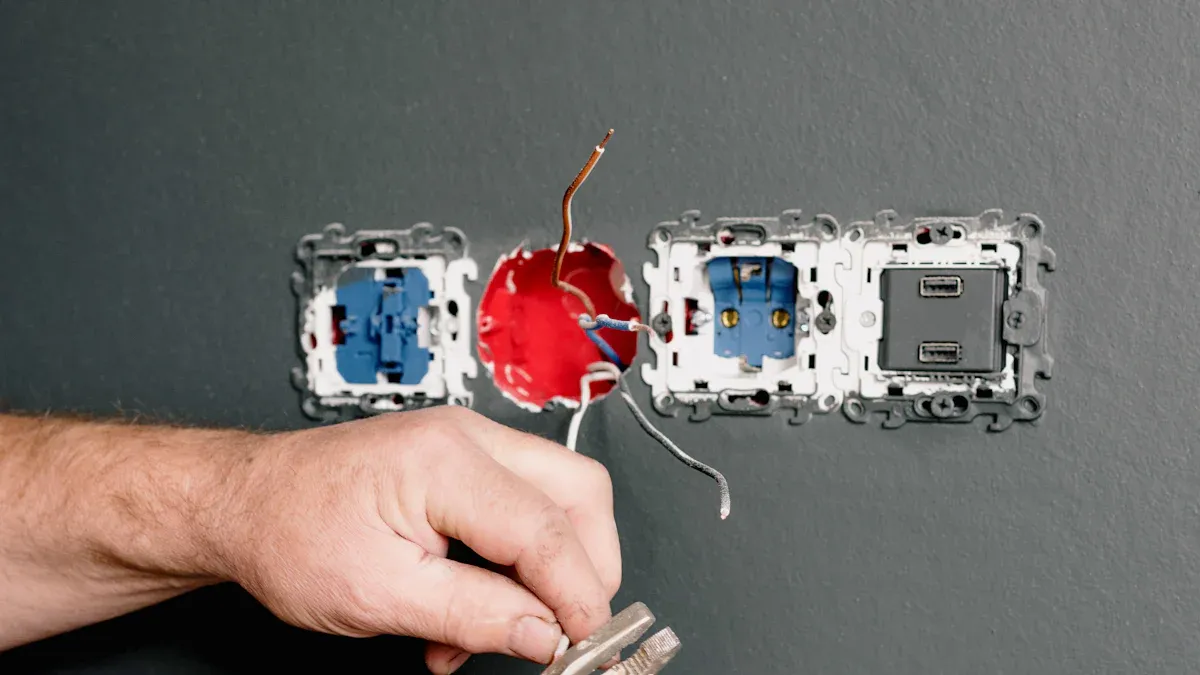
Wiring Check
Before you install a new wall socket, you need to check your wiring. This step helps you avoid problems and keeps your home safe. Start by looking at your service panel. If you see rust or corrosion, you may have moisture issues. Melted wire insulation means wires have overheated. This can happen when connections are loose or the circuit is overloaded.
Here’s a simple checklist to follow:
- Inspect the service panel for any signs of wear or damage.
- Look for rust or corrosion on the service box and wires.
- Check for melted or discolored wire insulation.
- Make sure the circuit breaker matches the needs of your new outlet.
- Always turn off the power at the breaker before you start.
- Use a voltage tester to confirm the power is off.
You should also check for common wiring issues. Loose terminal screws can cause shocks. If plugs fall out easily, the outlet box might be loose. Non-working outlets often mean damaged wiring. Discolored or melted faceplates are a sign of overheating and need quick attention.
Tip: Always follow local electrical codes. This helps prevent hazards and keeps your installation safe.
When to Call an Expert
Sometimes, you need a professional. Here are signs you should not ignore:
- Flickering lights show faulty wiring or loose connections.
- Heat scorch marks mean wires are overheating.
- Fuses that blow often point to short circuits.
- Loose wires can cause overheating and trips.
- Appliances that fall out of sockets show worn outlets.
- A burning smell signals a fire risk.
- Strange sounds from sockets mean wires may be arcing.
Trying to fix these problems yourself can be risky. Incorrect wiring can expose live wires and cause electric shock. Poor connections may lead to fire hazards. Faulty installations can damage your whole electrical system.
Alert: If you notice any of these signs, call a licensed electrician. Your safety comes first.
Choosing the right wall socket for your space is simple when you follow these steps:
- Check that your socket matches local electrical codes and standards.
- Pick sockets built for durability and heavy use.
- Look for smart features to boost energy efficiency.
- Always use plugs that fit your device’s voltage and amperage.
- Ask a licensed electrician for help with tricky installations.
Remember, safety and compatibility come first. Take an honest look at your skills. You can find the perfect wall socket for your home!
FAQ
What should I do if my outlet feels warm?
If your outlet feels warm, unplug everything right away. Warm outlets can mean trouble. You should call a licensed electrician to check it. Do not use the outlet until you know it is safe.
Can I install a wall socket by myself?
You can install a wall socket if you know basic wiring and follow safety rules. Always turn off the power first. If you feel unsure or see old wiring, call a professional. Safety comes first!
How do I know if I need a GFCI outlet?
You need a GFCI outlet in places with water, like kitchens, bathrooms, and laundry rooms. These outlets protect you from shocks. Check your local building codes for exact rules.
Is it safe to use adapters for different plug types?
Adapters work for travel or short-term use. For long-term safety, use the correct wall socket for your plug type. Adapters can wear out or cause loose connections over time.
Why do my plugs keep falling out of the socket?
Loose sockets mean worn contacts inside the outlet. This can cause sparks or overheating. Replace the outlet as soon as possible. You will keep your home safer and your devices working better.
See also
What should I do if the circuit is overloaded?
Introduction to International Standards for Wall Sockets
Washing machine socket: Can you use a regular socket?
What Are the Four Types of Power Sockets You Need to Know
The difference between European and American sockets