

You need to know the difference between circuit breakers vs isolator switches. Understanding this distinction helps keep you and your workplace safe. Many electrical accidents happen each year, often because people use these devices incorrectly or do not fully understand them.
- OSHA states that electrical accidents cause over $1 billion in losses every year in the U.S.
- More than 1,000 people get hurt at work each year because power is not turned off the right way.
When you look at circuit breakers vs isolator switches, you see they each have a special job in maintaining safety. The table below shows how both work together in modern safety systems:
| Component | Function | Purpose in Safety Systems |
|---|---|---|
| Circuit Breakers | They turn off circuits by themselves and monitor current continuously. | They protect against electrical problems. |
| Isolator Switches | They ensure circuits are completely off during repairs. | They allow people to fix things safely and prevent mistakes. |
If you know how these devices work, you can enhance electrical safety. This knowledge also helps you avoid costly accidents.
Key Takeaways
- Circuit breakers turn off power by themselves if there is a problem.
- Isolator switches must be turned off by hand to make circuits safe for repairs.
- Use a circuit breaker to protect from faults and an isolator switch for safe fixing.
- Always turn off the circuit breaker first, then open the isolator switch before repairs.
- Check circuit breakers and isolator switches often to stop accidents and keep people safe.
- Use lockout-tagout (LOTO) steps to stop power from coming back on by mistake during repairs.
- Both devices are needed for a safe electrical system; they work together to protect equipment and keep workers safe.
- Knowing when and how to use each device makes electrical safety better.
Circuit Breakers vs Isolator Switches Overview
Circuit Breaker Basics

Function and Operation
A circuit breaker helps keep electrical systems safe from harm. It shuts off power by itself if there is too much electricity or a short circuit. The device checks the flow of electricity all the time. If something is wrong, it acts fast to stop it. You do not have to turn it off by hand when there is a problem. Circuit breakers use special tools to stop dangerous sparks when they break the current.
Key Features
- Works by itself when there is a problem
- Has tools to stop sparks for safety
- Handles power without you needing to help
- Comes in many types for different jobs:
- Air Circuit Breakers (ACBs) are for low-voltage systems.
- Miniature Circuit Breakers (MCBs) protect lights and small devices.
- Molded Case Circuit Breakers (MCCBs) handle bigger jobs and can watch power with digital tools.
- Ground Fault Circuit Interrupters (GFCIs) and Arc Fault Circuit Interrupters (AFCIs) give extra safety at home.
- Vacuum and SF₆ Circuit Breakers are for medium and high-voltage systems.
- New circuit breakers can watch power and help fix problems before they happen.
Limitations
You cannot use a circuit breaker to safely turn off power for repairs. It often costs more than other choices. It needs to be checked often to make sure it works right. Some types need special care, like those with oil or SF₆ gas.
Isolator Switch Basics
Function and Operation
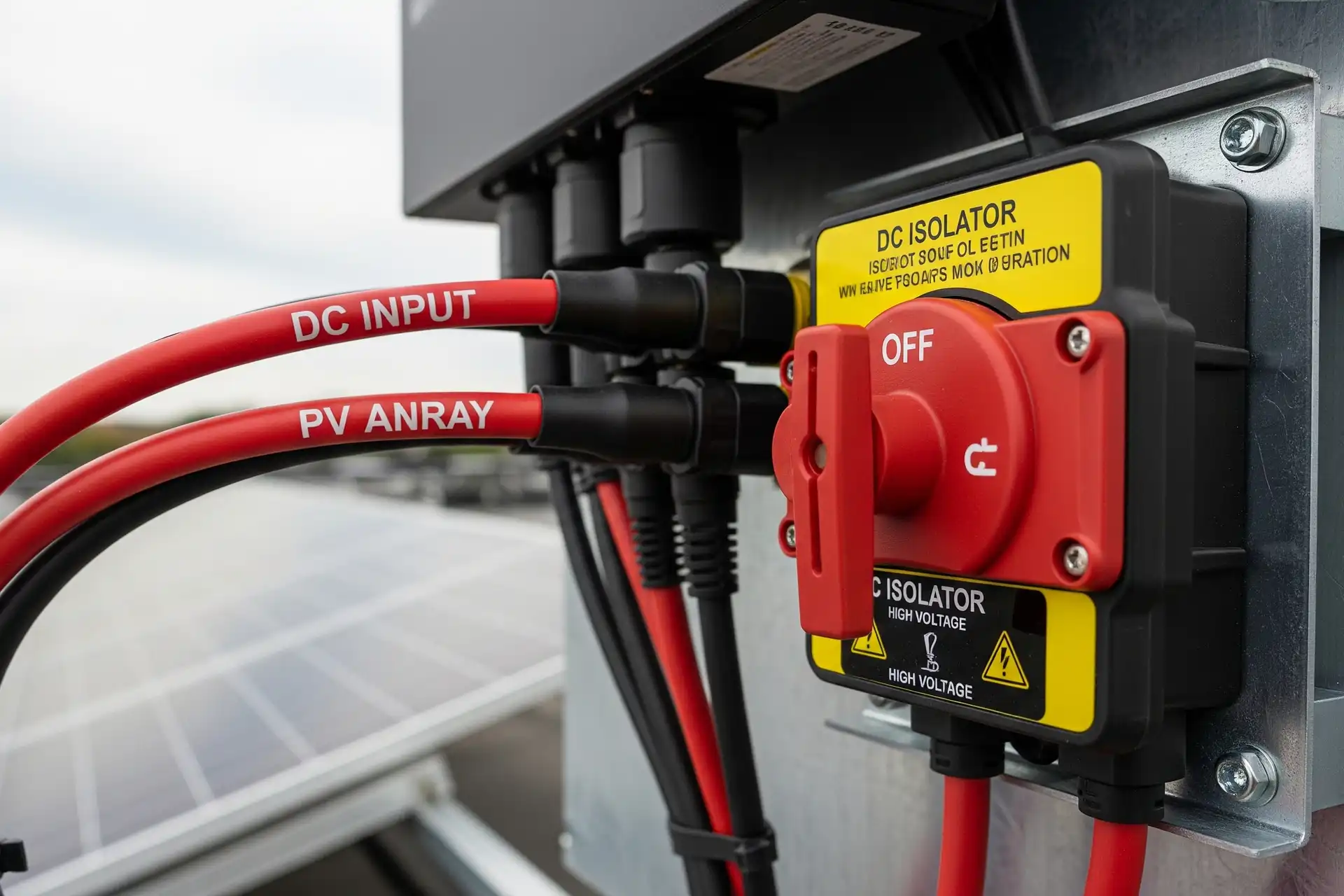
An isolator switch is used to turn off parts of a circuit so you can work safely. You only use it when there is no power running through the wires. You must turn it on or off by hand. The isolator switch does not stop power if there is a problem. It just makes sure no electricity goes to the part you want to fix.
Key Features
- You turn it on or off by hand to separate circuits
- Used mostly for fixing and checking equipment
- Does not have tools to stop sparks
- Costs less than circuit breakers
- Common types are for low voltage, up to 1000V AC or 1500V DC
- Needed for safe work in factories and big buildings
Limitations
You cannot use an isolator switch to stop too much power or a short circuit. It does not work by itself to keep things safe. You must check that the power is off before using it. It is not good for turning off circuits that still have power running.
Tip: Always use a circuit breaker to keep your system safe and an isolator switch to turn off circuits safely when you need to work on them.
Comparison Table
Here is a simple table to show how circuit breakers and isolator switches are different:
| Feature | Circuit Breaker | Isolator Switch |
|---|---|---|
| Operation | Turns off by itself when there is a problem | You turn it off by hand to separate circuits |
| Purpose | Keeps things safe from too much power or shorts | Makes sure power is off for repairs |
| Load Handling | Can work when power is running | Only works when there is no power |
| Arc Quenching | Has tools to stop sparks | Does not have tools to stop sparks |
| Application | Used at home and in factories | Used mostly in factories |
| Cost | Usually costs more | Usually costs less |
You need both devices to keep electrical systems safe and working well. The circuit breaker keeps your system safe from problems, and the isolator switch lets you work safely when you need to fix something.
Key Differences and Comparison
Protection vs Isolation
When you look at circuit breakers vs isolator switches, you see they do different things for safety. A circuit breaker gives automatic protection. It can sense problems like a short circuit or too much current. It shuts off the power right away. You do not have to do anything because it works by itself. This helps keep your equipment and wires safe from harm.
Isolator switches are not the same. They do not protect against faults. You use an isolator switch to make sure power is off before repairs. You must turn it off by hand. The isolator switch does not stop faults or electrical problems. It only makes sure no electricity goes to the part you want to fix. Always use a circuit breaker for fault protection and an isolator switch for safety when working.
| Feature | Circuit Breaker | Isolator Switch |
|---|---|---|
| Operation | Automatic, no human action needed | Manual, needs human action |
| Fault Protection | Yes, protects against faults and short circuit | No, does not protect against faults |
| Safety Isolation | No visible isolation | Provides visible, physical isolation |
Note: You need both devices to get full protection and safety in your electrical system.
Operation Under Load
It is important to know how each device works when power is on. A circuit breaker can stop current even when devices are running. It uses special tools to handle sparks when breaking a live circuit. This is important for fault protection. It lets the circuit breaker act fast in dangerous times.
An isolator switch cannot stop current when power is on. You should only use it when there is no current. If you use an isolator switch with power on, it can cause sparks and damage. The isolator switch does not have tools to stop sparks. It is not made for fault protection or stopping power during normal use. Always use a circuit breaker to handle faults and keep your system safe.
- Circuit breakers can stop big currents and keep things safe.
- Isolator switches are only for turning off circuits that already have no power. They cannot protect against faults or stop live power.
Visibility and Safety
Safety isolation is a main job of isolator switches. When you open an isolator switch, you see a gap in the circuit. You can tell the power is off. This visible gap helps you feel safe to work on equipment. Many isolator switches have signs to show if they are open. Some can be locked so no one turns the power back on by mistake.
A circuit breaker does not give you a visible gap. You cannot always see if the circuit is really off just by looking at the breaker. That is why you should not use only a circuit breaker for safety during repairs. Always use an isolator switch to make sure the power is truly off.
Tip: Before you fix anything, use the isolator switch to make a visible break in the circuit. This step keeps you and your team as safe as possible.
Device Limitations
It is important to know what circuit breakers and isolator switches cannot do. Each device has some weaknesses that can affect safety.
- Circuit breakers do not always make wires completely safe. Some electricity can stay in the wires after you turn them off. You should not trust a circuit breaker alone to keep you safe when working.
- Circuit breakers can break inside. Their moving parts might stop working. If a circuit breaker does not trip, your system will not be protected.
- Isolator switches cannot stop current if power is on. If you open an isolator switch while power is running, it can make a dangerous spark. This spark can start a fire or break equipment.
- Isolator switches do not protect against problems like short circuits. You should only use them when the circuit has no power.
- In high-voltage systems, isolator switches show a clear gap. This gap helps you see the circuit is safe to work on. But isolator switches do not protect equipment while it is running.
Note: Always use a circuit breaker to protect your system during faults. Use an isolator switch to make sure power is off before you work.
Here is a simple list to help you remember:
- Circuit breakers protect against faults but do not make wires totally safe.
- Isolator switches show a clear break but do not protect against faults.
- Never use an isolator switch when power is running. This can cause dangerous sparks.
- Always check that power is off before using an isolator switch.
Comparison Table
The table below shows how circuit breakers and isolator switches are different. It helps you pick the right device for each job and see why you need both for safety.
| Aspect | Isolator Switch | Circuit Breaker |
|---|---|---|
| Functional Differences | Disconnects power without circuit protection | Provides circuit protection by interrupting power |
| Operational Differences | Operated manually, no automatic reclosure | Automatically interrupts power during faults |
| Application Scenario | Used mainly for maintenance in de-energized state | Used for real-time protection of electrical devices |
| Safety Differences | Provides visual isolation, lacks protection features | Offers automatic protection during electrical faults |
| Limitation | Cannot interrupt current safely under load | Not designed to guarantee zero voltage |
You need both devices to keep your electrical system safe. The circuit breaker protects your equipment from faults. The isolator switch lets you see the circuit is off so you can work safely.
Tip: Use a circuit breaker for protection while things are running. Use an isolator switch to make sure power is off before repairs.
Applications in Electrical Installations

Circuit Breaker Applications
You can find circuit breakers in many places. People use them to protect electrical systems. They are in homes, offices, factories, and hospitals. Each kind of circuit breaker has a special job. The table below shows how different circuit breakers work in big buildings:
| Circuit Breaker Type | Common Applications |
|---|---|
| Standard Circuit Breaker | Used in panels for offices, stores, and restaurants, usually up to 480V AC. |
| High-Interrupting Capacity Breakers | Needed for big machines in factories, protecting large equipment and control centers. |
| Ground-Fault Circuit Interrupters (GFCIs) | Keep people safe from ground faults in kitchens, outdoor lights, and near water. |
| Arc-Fault Circuit Interrupters (AFCIs) | Help stop fires in hotels, offices, and hospitals by finding arc faults. |
| Low-Voltage Power Circuit Breakers (LVPCB) | Used in big places like hospitals and data centers, handling lots of power safely. |
A circuit breaker stops dangerous currents and keeps things safe. It also helps you follow safety rules, like the National Electrical Code (NEC) and International Electrotechnical Commission (IEC). These rules say you must use circuit breakers to protect people and property.
Isolator Switch Applications
You use an isolator switch when you need to make sure a part of the system is off. You see these switches in many places. Here are some common uses:
- Industrial Applications: Isolator switches are in power systems, motor centers, and machines. They help you work safely and keep machines working well.
- Commercial Applications: You find isolator switches in offices, malls, and hotels. They let you turn off power for repairs or emergencies.
- Renewable Energy Applications: You need isolator switches in solar and wind power systems. They help you turn off equipment for repairs or if there is a problem.
Electrical rules say you must use isolator switches for repairs and emergencies. You need to follow these rules to keep everyone safe.
Using Both Together
You get the best safety when you use both a circuit breaker and an isolator switch. The circuit breaker protects your system from problems while it is running. The isolator switch lets you see a clear break before you fix anything. Always turn off the circuit breaker first, then open the isolator switch. This order keeps you safe and follows the rules.
Tip: Always do things in the right order when you work on electrical systems. Turn off the circuit breaker first, then use the isolator switch to make sure the circuit is open. Lock the isolator switch if you do not want anyone to turn the power back on.
You see this setup in factories, hospitals, and big buildings. You follow NEC and IEC rules when you use both devices. You also lower the chance of accidents and keep everyone safe.
Best Practices for Safe Installation
Device Specification
When you pick a circuit breaker or isolator switch, you must think about some important things. Choosing the right one helps stop problems and keeps people safe. Here are the main things to look at:
- Overcurrent protection rating: Check how much current is safe and how much the device can break if there is a short circuit.
- Response speed: Decide if your circuit needs fast protection for things like computers or normal protection for machines.
- Special protection: See if you need extra safety for ground faults, arc faults, or motors.
- High-risk circuits: Use isolators for machines that need to be fixed often.
- Safety-critical locations: Choose isolators with locks for dangerous places.
- Accessibility: Put isolators where workers can reach and see them easily.
- Pro-Tip: For important machines, put isolators on both sides of the circuit breaker to make things safer.
Installation Steps
You have to follow the right steps when you put in a circuit breaker or isolator switch. This helps stop mistakes and keeps your system working well. Here is an easy guide:
- Safety Preparation
- Turn off the power at the main source.
- Use lockout and tagout steps.
- Test the wires with a meter.
- Wear the right safety gear.
- Technical Requirements
- Check the voltage and current ratings.
- Make sure the device is safe from water or dust.
- Check if there is enough space to put it in and reach it.
- Look at local electrical rules.
- Wiring Procedures
- Connect the power supply to the input side.
- Attach the cables that go out to the output side.
- Connect the earth wire for safety.
- Add the neutral wire if you use a four-pole switch.
- Common Installation Locations
- Motor control centers
- Distribution panels
- Machinery disconnects
- Emergency shutdown systems
Tip: Always let a trained electrician put in these devices. This stops bad installation and keeps workers safe.
Safe Operation Sequence
You must use the right order when you use circuit breakers and isolator switches, especially when fixing things. This order keeps you safe and stops accidents.
De-energizing and Re-energizing
De-energizing:
- Open the circuit breaker to stop the current safely.
- Check with a meter to make sure no current is flowing.
- Open the isolator switch after you know the current is gone.
- Look for a clear open spot, like a gap in the switch.
- Lock and tag the isolator so no one turns it back on.
- Test for zero voltage before you start working.
Re-energizing:
- Take off the lock and tag from the isolator.
- Close the isolator switch while the circuit breaker is still open.
- Make sure the isolator is closed.
- Close the circuit breaker to turn the power back on safely.
⚡ Always do these steps to keep yourself and others safe. This order helps stop electrical accidents and keeps your system working well.
Maintenance and Lockout-Tagout
You must keep your electrical system safe and working well. Doing regular maintenance and using lockout-tagout (LOTO) steps helps you do this. When you use circuit breakers and isolator switches, you need to follow these steps to stay safe.
Why Maintenance Matters
Check your circuit breakers and isolator switches often. Dust, water, or loose wires can cause trouble. If you see broken parts, change them right away. Clean the devices and tighten all screws. This keeps your system running and helps stop accidents.
Tip: Make a checklist for your maintenance jobs. This helps you remember each step and keeps you on track.
Lockout-Tagout (LOTO) Steps
LOTO keeps you safe when you fix or check electrical equipment. You stop all power from reaching the machines. You also make sure no one turns the power back on by mistake. Here is an easy way to do LOTO:
- Isolate Equipment
Turn off all power sources. Use the circuit breaker to stop electricity. Open the isolator switch so you can see the break in the circuit. - Apply Lockout/Tagout Devices
Put a lock and tag on the circuit breaker and isolator switch. Write your name and the date on the tag. This lets others know you are working on the system. - Check for Residual Energy
Make sure no leftover energy is in the wires or equipment. Get rid of any stored energy before you start working. - Verify Isolation
Test the equipment to see if it is really off. Try to turn it on with the controls. If nothing happens, the power is off. - Turn Off Controls
After testing, set all controls to off or neutral. This stops the equipment from starting by accident. - Return to Service
When you finish, take away all tools and materials. Remove the lock and tag. Close the isolator switch, then reset the circuit breaker to turn the power back on.
⚠️ Always do these steps in order. If you skip a step, you or others could get hurt.
Extra Safety Tips
- Use mechanical interlocks if you can. These stop you from closing the isolator switch when the circuit breaker is on.
- Teach everyone who works with electrical systems about LOTO steps.
- Keep good records of all maintenance and LOTO work.
If you follow these best practices, you help stop injuries and keep your electrical system safe and working well.
Regulatory and Cost Considerations
Compliance Standards
You have to follow rules when you put in electrical safety devices. These rules keep people and buildings safe. Two main standards help you make good choices: the National Electrical Code (NEC) and the International Electrotechnical Commission (IEC).
- NEC says you need a PV DC disconnect where you can reach it. It also wants fast shutdown for solar panels on roofs. Sometimes, rooftop switches are not needed and depend on the project.
- IEC cares about safe isolation and fixing things. Standards like IEC 62548 and 60364-7-712 say you need DC disconnects you can reach.
- IEC 62271-100 is about high-voltage switchgear and circuit breakers for AC power.
- IEC 62271-102 is about AC disconnectors and earthing switches.
You should always look at these rules before you start your work. They help you pick the right circuit breaker and isolator switch for safety.
Cost of Isolators vs Accidents
You might think skipping isolator switches saves money. But the price of an isolator switch is small compared to an accident. Electrical accidents can cost a lot. You might have to pay insurance claims, legal bills, or even close your business. Lost work time and people leaving can make things worse. If someone gets hurt, you may need to pay for help or more training.
If you buy good protection, you lower your risk and avoid these costs. Spending a little on an isolator switch now can save you lots of money later.
Long-Term Safety
Using both a circuit breaker and an isolator switch gives you the best safety for a long time. You protect your equipment from problems and help workers see when it is safe to touch.
- DC isolators and DC circuit breakers are both needed for full safety, especially in solar power systems.
- Using both together keeps you safer than using just one.
- Good quality and correct setup matter. If you install these devices right, your system works better and stays safe.
A good safety plan keeps your system working and your team safe. You avoid expensive repairs and lost time. You also follow NEC and IEC rules, so you do not get fined or in trouble.
Remember: The right mix of devices gives you strong safety and peace of mind for many years.
Actionable Recommendations
Choosing the Right Device
You must pick the right circuit breaker or isolator switch for your job. First, check what your system needs. Each device works best in certain places.
- Single Break Isolator: Use this for low or medium voltages. You often find it in factories or in power networks. It gives you an easy way to turn off a circuit.
- High Voltage Isolation Switches: Pick these for substations or big machines. They help you safely disconnect transformers or large circuit breakers.
- Manual or Automatic Operation: Some isolators use a handle. Others work by themselves. Choose the one that fits your safety plan and how often you use it.
- Circuit Breaker Types: Use standard circuit breakers in homes and offices. For factories or big machines, use high-interrupting capacity breakers. Always check the voltage and current before you pick one.
Tip: Always follow UL and IEC rules when you pick and put in these devices. This keeps your system safe and helps you follow local rules.
Combining Devices for Safety
You get the best safety when you use both circuit breakers and isolator switches together. Each device has its own job. The circuit breaker protects your system while it is working. The isolator switch keeps you safe when you need to fix things.
- Circuit breakers stop dangerous currents and protect your equipment.
- Isolator switches give you a clear break in the circuit. This lets you see the power is off before you start repairs.
- Always turn off power in the right order:
- Open the circuit breaker first.
- Open the isolator switch next.
- Lock and tag the isolator.
- Test for zero voltage.
- Start your work.
- When you finish, close the isolator switch before you close the circuit breaker.
Note: Put isolator switches close to the equipment they protect. Make sure they are easy to reach but not easy to use by mistake.
Key Takeaways
- Circuit breakers and isolator switches work best together.
- Circuit breakers protect against faults and can stop current while things are running.
- Isolator switches give you a clear break for safe repairs but do not protect against faults.
- Always follow safety rules like UL 98, UL 508A, and IEC 60947.
- Keep switches away from places where arc flashes can happen and protect them from rain or dust.
- Make sure all wires are tight and the box is grounded.
- Using both devices lowers your risk of accidents and helps you follow the rules.
✅ When you pick, put in, and use both devices the right way, you keep your electrical system safe and working well.
You need to use both circuit breakers and isolator switches for safety. Circuit breakers protect you from electrical problems. Isolator switches let you turn off power safely when fixing things. If you do not use both, someone could get hurt or things could break.
- Always turn off power in the right order.
- Look at local rules before you put in devices.
- Use lockout-tagout steps every time you work.
Doing these things makes your electrical system safer and keeps people safe.
FAQ
What is the main job of a circuit breaker?
A circuit breaker protects your electrical system. It stops the flow of electricity if there is too much current or a short circuit. You do not need to turn it off by hand.
Can you use an isolator switch instead of a circuit breaker?
No, you cannot. An isolator switch does not protect against electrical faults. You use it only to make sure a circuit is off before you work on it.
When should you use both devices together?
You should use both when you need to fix or check equipment. First, turn off the circuit breaker. Then, open the isolator switch. This keeps you safe and follows safety rules.
How do you know if an isolator switch is open?
You can see a clear gap or open space in the switch. Some isolator switches have a window or sign that shows when they are open.
Do you need to lock isolator switches during repairs?
Yes, you should lock and tag isolator switches during repairs. This stops anyone from turning the power back on while you work.
What happens if you open an isolator switch under load?
If you open an isolator switch while power is running, it can cause dangerous sparks or damage. Always make sure the circuit breaker is off first.
Are circuit breakers required by law?
Yes. Safety codes like the NEC and IEC require circuit breakers in most electrical systems. These rules help protect people and property from electrical accidents.
See also
What should I do if the circuit is overloaded?
What Causes Circuit Breaker Overheating and How to Prevent It
Ground Fault Identification and Repair Tips Every Electrician Should Know
What Are the Top Three Circuit Problems in Modern Homes
